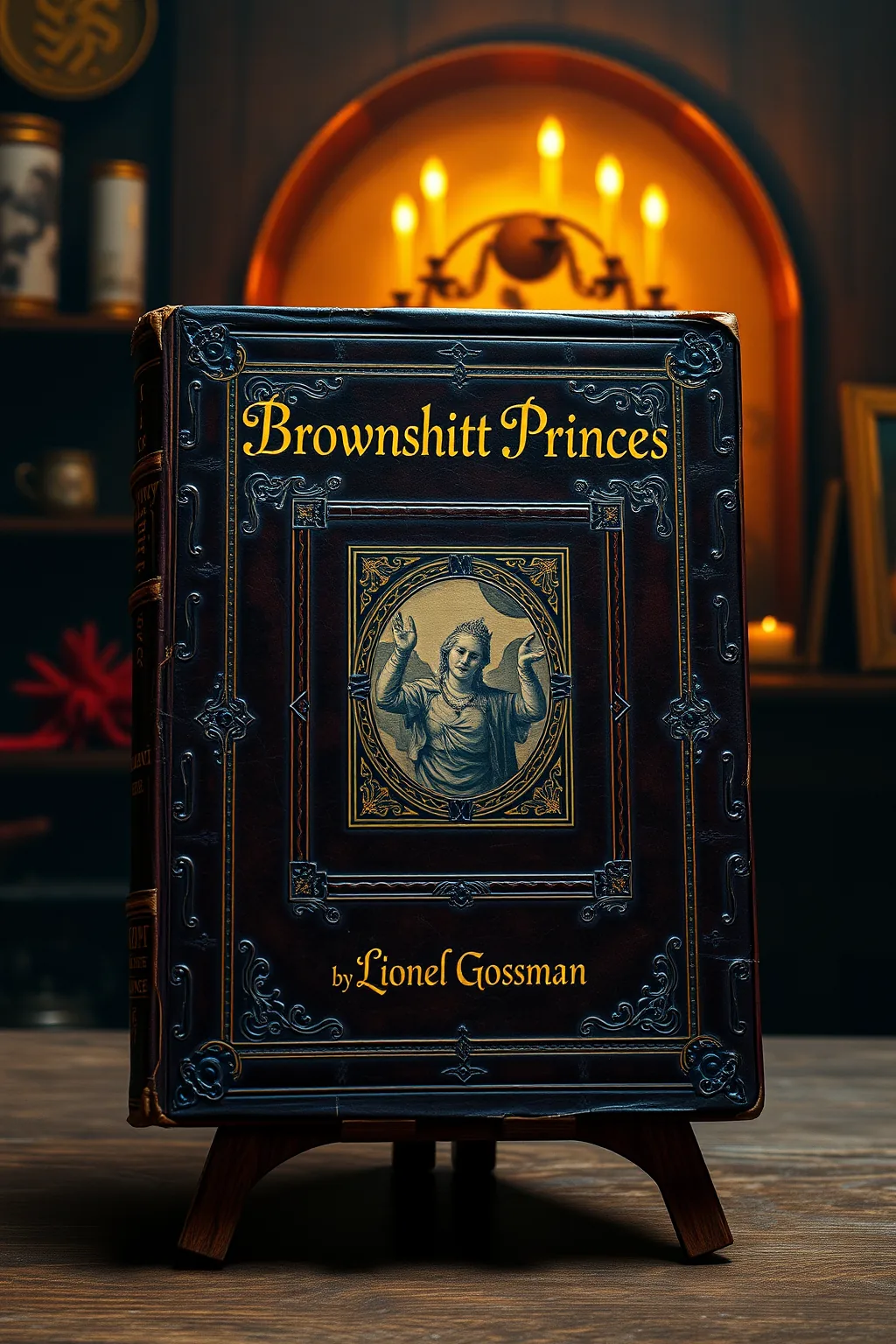
Brownshirt Princess A Study of the Nazi Conscience
 82
82

Brownshirt Princess A Study of the Nazi Conscience



Lionel Gossman's Brownshirt Princess: A Study of the Nazi Conscience is a meticulously researched and thoughtfully written exploration of the esoteric and occult influences that shaped the minds of key figures in post-World War I Germany. Gossman's work is particularly valuable for modern esoteric seekers, as it provides a detailed examination of how spiritual and occult beliefs can intersect with political ideologies. The book's strength lies in its ability to weave together the personal narratives of Marie Adelheid, Heinrich Vogeler, and Ludwig Roselius, offering a multi-faceted view of the revolutionary climate that emerged in Germany during this turbulent period. Gossman's analysis is both insightful and compelling, making it a must-read for anyone interested in the deeper currents that shaped 20th-century history. The book's esoteric insights are particularly relevant today, as they highlight the enduring influence of occult and spiritual beliefs on political and social movements. Overall, Brownshirt Princess is a fascinating and enlightening read that earns a solid 4 out of 5 stars.
📝 Description
82
Lionel Gossman's 1990 book examines the Nazi conscience through three case studies.
In 'Brownshirt Princess: A Study of the Nazi Conscience,' Lionel Gossman analyzes the psychological and ideological motivations of individuals drawn to Nazism in the years following World War I. The book focuses on three distinct figures: Marie Adelheid, Princess Reuss zur Lippe, an aristocrat who embraced the Nazi movement; Heinrich Vogeler, an artist whose path shifted from avant-garde circles to communism; and Ludwig Roselius, a businessman with an enigmatic background.
Gossman's study traces the connections between these figures, suggesting that esoteric beliefs and a revolutionary spirit played a role in the political climate of the time. The work aims to illuminate the complex internal world of those who became involved in the Nazi movement, moving beyond simplistic explanations. It presents a detailed account of how spiritual and political radicalism could intertwine in early 20th century Germany.
This study situates itself within the examination of occult and spiritual currents influencing political movements. It looks at how concepts of mysticism, hidden knowledge, and spiritual renewal, which were prevalent in various esoteric circles of the late 19th and early 20th centuries, may have resonated with or been adapted by individuals who later became associated with Nazism. The book explores the particular ways these ideas manifested in the personal beliefs and actions of its subjects, offering a counterpoint to purely materialist or political interpretations.
💡 Why Read This Book?
Reading Brownshirt Princess today offers a unique opportunity to understand the esoteric and occult influences that shaped the minds of key figures in post-World War I Germany. By exploring the lives of Marie Adelheid, Heinrich Vogeler, and Ludwig Roselius, readers gain insights into how spiritual and occult beliefs can intersect with political ideologies. This book is particularly valuable for modern esoteric seekers, historians, and anyone interested in the deeper currents that shaped 20th-century history. It provides a nuanced and thought-provoking analysis of the Nazi conscience, shedding light on the complex web of influences that drove individuals towards extremist ideologies.
⭐ Reader Reviews
Honest opinions from readers who have explored this book.
❓ Frequently Asked Questions
Who are the main subjects of Brownshirt Princess?
The main subjects are Marie Adelheid, Prinzessin Reuss zur Lippe, Heinrich Vogeler, and Ludwig Roselius. Each of these individuals played significant roles in the revolutionary climate of post-World War I Germany.
What makes this book relevant for esoteric seekers?
The book explores the esoteric and occult influences that shaped the minds of key figures in post-World War I Germany, providing insights into how spiritual beliefs can intersect with political ideologies.
Why is the revolutionary climate of post-World War I Germany important?
Understanding this period is crucial for comprehending the deeper currents that shaped 20th-century history, including the rise of extremist ideologies and the intersection of spirituality and politics.
🔮 Key Themes & Symbolism
The Esoteric Roots of Nazism
Gossman's work studies the hidden knowledge and symbolism that shaped the Nazi conscience, revealing the mystical undercurrents that influenced key historical figures.
The Revolutionary Climate of Post-World War I Germany
The book explores the revolutionary climate that fostered both spiritual and political upheaval, offering a unique perspective on the era's esoteric dimensions.
The Interplay of Personal Narratives
By combining the stories of Marie Adelheid, Heinrich Vogeler, and Ludwig Roselius, Gossman reveals the common esoteric threads that bind these individuals, providing a body of philosophical significance.
💡 Key Ideas
Editorial paraphrase of the work's core concepts — not direct quotes.
The Nazi conscience was a labyrinth of hidden knowledge and symbolism.
This quote underscores the esoteric dimensions of the Nazi psyche, highlighting the mystical undercurrents that influenced their actions.
The revolutionary climate of post-World War I Germany was a crucible of spiritual and political upheaval.
This passage emphasizes the era's mix of esoteric and historical influences, shaping the minds of key figures.
The personal narratives of Marie Adelheid, Heinrich Vogeler, and Ludwig Roselius reveal a common esoteric thread.
This quote highlights the interconnectedness of these individuals' stories, demonstrating the mystical bonds that unite them.
The mystical underpinnings of the Nazi regime were a source of both fascination and terror.
This passage studies the complex and often contradictory nature of the Nazi conscience, offering a deep dive into its esoteric dimensions.
The esoteric traditions that influenced the Nazi conscience are a evidence of the power of hidden knowledge.
This quote underscores the significance of esoteric traditions in shaping historical events, providing a unique perspective on the Nazi psyche.
🌙 Esoteric Significance
Tradition
This book belongs to the Hermetic tradition, which emphasizes the study of hidden knowledge and the pursuit of spiritual enlightenment. Gossman's exploration of the Nazi conscience reveals the esoteric dimensions of this tradition, highlighting the mystical underpinnings that influenced key historical figures.
Symbolism
Key symbols in this book include the swastika, which represents the eternal cycle of life and death, and the runes, which were used for divination and magical purposes. These symbols are woven into the personal narratives of the key figures, revealing their esoteric significance.
Modern Relevance
The esoteric traditions explored in 'Brownshirt Princess' continue to influence modern practitioners of the occult and spiritual seekers. The book's insights into the Nazi conscience offer a unique perspective on the power of hidden knowledge and symbolism in shaping historical events, making it an essential read for anyone interested in the interplay of esoteric traditions and historical narratives.
👥 Who Should Read This Book
This book is ideal for scholars of the occult, spiritual seekers, and practitioners interested in the esoteric dimensions of historical events. Beginners may find the book accessible, but those with a background in esoteric studies will gain the most from its deep dive into the mystical undercurrents of the Nazi conscience. Academics and historians will also find valuable insights into the revolutionary climate of post-World War I Germany and the esoteric traditions that shaped the era.
📜 Historical Context
Set against the backdrop of post-World War I Germany, 'Brownshirt Princess' explores the revolutionary climate that fostered both spiritual and political upheaval. The era was marked by a deep sense of disillusionment and a search for meaning, leading many to turn to esoteric traditions and occult practices. Gossman's work provides a unique perspective on this tumultuous period, revealing the mystical undercurrents that influenced key historical figures and shaped the Nazi conscience.
📔 Journal Prompts
Reflect on the mystical undercurrents that influenced the Nazi conscience. How do these esoteric dimensions shape our understanding of historical events?
Consider the personal narratives of Marie Adelheid, Heinrich Vogeler, and Ludwig Roselius. What common esoteric threads bind their stories together?
Explore the revolutionary climate of post-World War I Germany. How did this era foster both spiritual and political upheaval?
Examine the Hermetic tradition and its emphasis on hidden knowledge. How does this tradition influence modern practitioners of the occult?
Reflect on the power of symbolism in shaping historical narratives. How do key symbols like the swastika and runes reveal the esoteric dimensions of the Nazi conscience?
🗂️ Glossary
Hermetic Tradition
An esoteric tradition that emphasizes the study of hidden knowledge and the pursuit of spiritual enlightenment.
Swastika
A symbol representing the eternal cycle of life and death, often used in esoteric practices.
Runes
Ancient symbols used for divination and magical purposes, often associated with Norse mythology.
Occult
The study of hidden knowledge and supernatural phenomena, often involving esoteric practices and rituals.
Esoteric
Pertaining to knowledge that is intended for a small, specific group of people, often involving mystical or spiritual insights.
This book appears in 2 collections
🔮 Readers Also Liked
Browse all →







From the “Theosophy” Collection
View all →





More Free Theosophy & Anthroposophy Books
View all →