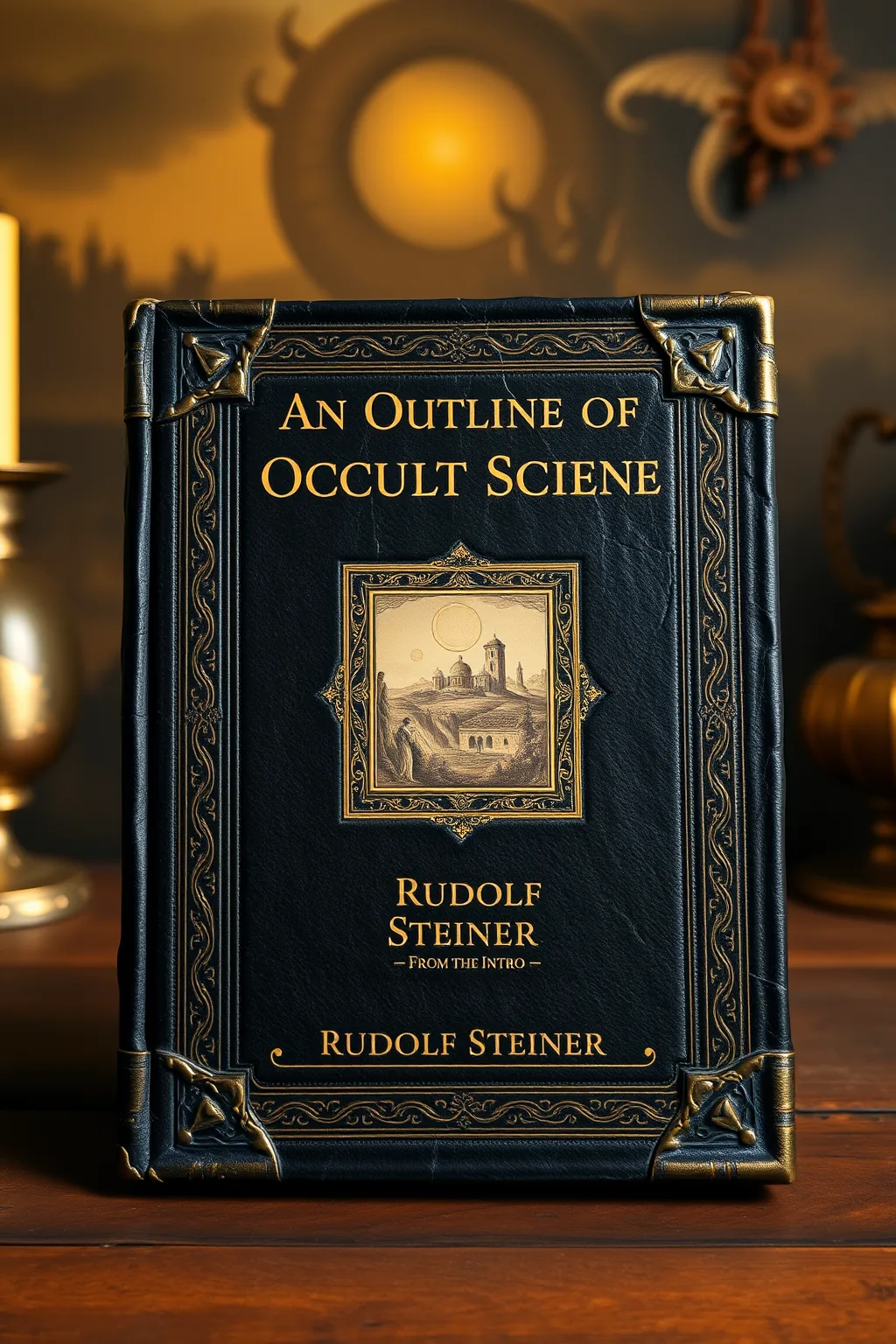
An Outline of Occult Science by Rudolf Steiner
 79
79

An Outline of Occult Science by Rudolf Steiner


Aurelia Blackwood (Occult Philosophy Critic) — Rudolf Steiner's 'An Outline of Occult Science' stands as a monumental testament to the power of direct spiritual cognition. Steiner lays bare the intricate mechanics of the cosmos, from the evolution of consciousness to the profound workings of karma and reincarnation, grounded in his own rigorous, self-aware spiritual investigations. His prose, though dense with esoteric concepts, is remarkably lucid, demystifying complex spiritual processes. This work is indispensable for serious students of Anthroposophy and Theosophy, offering unparalleled insight into the etheric, astral, and egoic bodies, and the very nature of spiritual evolution. It challenges conventional materialism and beckons the reader towards a more comprehensive understanding of existence.
📝 Description
79
Rudolf Steiner published 'An Outline of Occult Science' in 1924 to detail his spiritual research.
Rudolf Steiner's 'An Outline of Occult Science,' first published in 1924, presents his spiritual scientific findings on the evolution of the cosmos and humanity. He describes the nature of spiritual perception and the structure of the spiritual world, detailing concepts such as the different bodies of a human being (physical, etheric, astral, and ego), the planetary stages of evolution, and the role of karma and reincarnation. Steiner sought to provide a clear, systematic understanding of these spiritual realities, contrasting his approach with both materialistic science and traditional religious dogma.
The book maps out the processes through which human consciousness has developed and can continue to evolve. It covers the activity of spiritual beings and forces that influence earthly life, aiming to give the reader a framework for perceiving these dimensions. Steiner's work is an attempt to bridge the gap between the material and spiritual worlds, encouraging a conscious engagement with the unseen aspects of existence.
This work is a central text within Anthroposophy, Rudolf Steiner's spiritual philosophy. It stems from his extensive research and clairvoyant experiences, which he termed 'spiritual science.' Steiner sought to create a detailed, verifiable cosmology and anthropology accessible through conscious effort, moving beyond the symbolic language of earlier esoteric traditions like Theosophy, from which he initially emerged. The book aims to provide a systematic, almost scientific, account of spiritual realities and human development.
✍️ Author
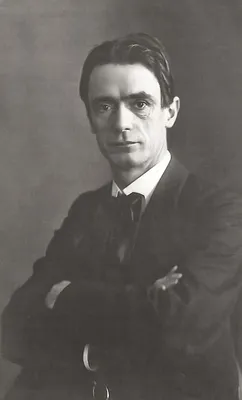
Rudolf Steiner . From the intro
Rudolf Joseph Lorenz Steiner (German: [ˈʃtaɪnɐ]; 27 or 25 February 1861 – 30 March 1925) was an Austrian New Age guru, philosopher, occultist, social reformer, architect, esotericist, and claimed clairvoyant. Steiner gained initial recognition at the end o…
💡 Why Read This Book?
Unravel the profound mysteries of human evolution and cosmic interconnectedness. 'An Outline of Occult Science' offers a direct, experiential path to understanding karma, reincarnation, and the subtle bodies. Ideal for seekers of spiritual truth, scholars of esoteric traditions, and practitioners desiring a deeper comprehension of consciousness beyond the physical realm. Discover the hidden architecture of reality and your place within it.
⭐ Reader Reviews
Honest opinions from readers who have explored this book.
❓ Frequently Asked Questions
What is the core premise of 'An Outline of Occult Science'?
The book's core premise is that spiritual reality is as accessible and investigable as the physical world, provided one cultivates specific inner faculties, as demonstrated by Steiner's own direct spiritual perception.
Is this book suitable for beginners in occult studies?
While comprehensive, Steiner's work assumes a certain intellectual and spiritual maturity. Beginners might find introductory texts on Anthroposophy more accessible before delving into this detailed outline.
How does Steiner claim to acquire his knowledge?
Steiner asserts his knowledge is a direct result of his own conscious spiritual perception, rigorously examined for lucidity and objectivity, akin to mathematical deduction.
What is the significance of 'occult science' in Steiner's context?
For Steiner, 'occult science' refers to the systematic, conscious, and verifiable study of the spiritual world, distinct from sensationalist or purely speculative occultism.
Does this book offer practical exercises?
While the book outlines the principles and structures of the spiritual world, its primary focus is on imparting knowledge. Practical exercises are often found in Steiner's other works or related Anthroposophical studies.
🔮 Key Themes & Symbolism
The Conscious Cultivation of Spiritual Perception
Steiner emphasizes that spiritual knowledge is not a matter of faith or blind belief, but rather the result of disciplined, conscious inner work. He likens the development of spiritual perception to the rigorous methodology of mathematics, where each step is verifiable and proceeds with full awake consciousness. This theme underscores the scientific nature of his 'occult science,' inviting readers to understand that the spiritual realm is an observable and investigable dimension, accessible through dedicated inner development and the awakening of latent human faculties.
Cosmic Evolution and Reincarnation
A central pillar of the book is the intricate depiction of humanity's and the cosmos' evolutionary journey through successive epochs and spiritual hierarchies. Steiner elucidates the principles of reincarnation and karma not as abstract concepts, but as fundamental forces driving this cosmic unfolding. He details how past actions and choices shape present and future lives, offering a profound understanding of personal destiny within a grand, universal scheme. This perspective transforms individual existence into an integral part of a vast, dynamic cosmic process.
The Subtle Bodies and the Nature of Consciousness
Steiner meticulously describes the human being as a complex entity composed of physical, etheric, astral, and egoic bodies, each with its unique functions and evolutionary significance. The book explores how these subtle sheaths interact with the material world and how their development is crucial for higher consciousness. It explains the nature of thinking, feeling, and willing from a spiritual perspective, challenging materialistic views and revealing the profound interconnectedness between the inner human being and the outer spiritual universe.
💬 Memorable Quotes
Direct passages from the work, attributed to the author.
“My knowledge of things of the spirit is a direct result of my own perception.”
— This highlights Steiner's claim of direct, verifiable spiritual insight, positioning his work as experiential rather than theoretical.
“I am fully conscious of this fact.”
— Emphasizes the self-awareness and lucidity with which Steiner claims to have undertaken his spiritual investigations.
“Every step I took in the progress of my perception was accompanied by a fully awake consciousness.”
— Stresses the disciplined, non-subconscious nature of his spiritual perception, akin to scientific observation.
“Just as the mathematician advances from thought to thought without the unconscious or autosuggestion playing a role, so I told myself — spiritual perception...”
— Draws a powerful analogy between rigorous mathematical reasoning and the intended clarity and objectivity of spiritual cognition.
“Spiritual perception must be cultivated with the same exactness as physical science.”
— A call to treat the study of the spiritual realm with scientific rigor, clarifying it and making it accessible through dedicated effort.
🌙 Esoteric Significance
Tradition
This work is a central to Anthroposophy, a spiritual philosophy founded by Rudolf Steiner. While deeply rooted in the Western esoteric tradition, drawing from Hermeticism, Gnosticism, and Theosophy, Anthroposophy presents a unique, systematic approach to understanding the spiritual world and human evolution through 'spiritual science.' It aims to provide a verifiable path to spiritual knowledge accessible to modern consciousness.
Symbolism
Steiner employs a body of symbolism, often reinterpreting ancient archetypes within his evolutionary framework. Key symbols include the 'threefold man' (physical, etheric, astral), the seven planets (representing cosmic forces), the zodiac (as a cosmic influence on earthly life), and hierarchical beings (representing stages of spiritual development). These symbols are not mere allegories but are presented as living forces and structures within the spiritual cosmos.
Modern Relevance
In an age often dominated by materialism and existential uncertainty, Steiner's 'Occult Science' offers a profound, comprehensive worldview that integrates the spiritual dimension with scientific inquiry. It provides a framework for understanding the deeper causes of societal and personal challenges, the nature of consciousness, and the potential for human spiritual development. Its relevance lies in its ability to offer hope, meaning, and a path towards conscious evolution for individuals and humanity as a whole.
👥 Who Should Read This Book
This profound work is essential for anyone seeking to transcend materialistic limitations and explore the deeper currents of existence. Scholars of comparative religion, philosophy, and esoteric traditions will find it a vital reference. Spiritual seekers and practitioners of various disciplines will discover a comprehensive map of the spiritual realms and human potential. While its depth requires dedicated study, beginners interested in Anthroposophy or the nature of consciousness will find it a challenging yet rewarding initiation into Steiner's vast spiritual cosmology.
📜 Historical Context
Published in the early 20th century, 'An Outline of Occult Science' emerged during a period of intense intellectual and spiritual ferment. The rise of scientific materialism had led many to question traditional religious doctrines, fostering a search for new frameworks to understand existence. Esoteric movements like Theosophy gained traction, offering alternative perspectives on spirituality and consciousness. Rudolf Steiner, initially associated with Theosophy, developed his own distinct path, Anthroposophy, emphasizing the developability of human consciousness through spiritual science. This book represents a foundational text of Anthroposophy, aiming to bridge the gap between the material and spiritual worlds, providing a comprehensive cosmology for a modern, scientifically-minded individual seeking deeper meaning.
📔 Journal Prompts
Reflect on Steiner's assertion of direct spiritual perception. How does this differ from your current understanding of knowledge acquisition?
Consider the concepts of karma and reincarnation. How might these principles offer a new perspective on challenges or events in your life?
What are your initial thoughts on the idea of 'subtle bodies' (etheric, astral)? How might these invisible aspects of yourself influence your experience of the world?
Steiner likens spiritual perception to mathematics. What qualities of mathematical thinking could be applied to developing inner awareness?
How does understanding human evolution from a spiritual perspective change your view of your own life's journey and purpose?
🗂️ Glossary
Anthroposophy
A spiritual philosophy founded by Rudolf Steiner, aiming to understand the spiritual aspects of the human being and the cosmos through 'spiritual science.'
Etheric Body
The vital or life force body, responsible for life processes, growth, and healing; considered a subtle body distinct from the physical.
Astral Body
The body of feelings, desires, and instincts; the vehicle of consciousness that connects the individual to the wider emotional and sensory world.
Karma
The universal law of cause and effect, where actions in one life influence subsequent lives and experiences, shaping destiny.
Reincarnation
The process by which the soul or consciousness is reborn into new physical bodies after death, continuing its evolutionary journey.
This book appears in 2 collections
🔮 Readers Also Liked
Browse all →







From the “Theosophy” Collection
View all →



More Free Theosophy & Anthroposophy Books
View all →