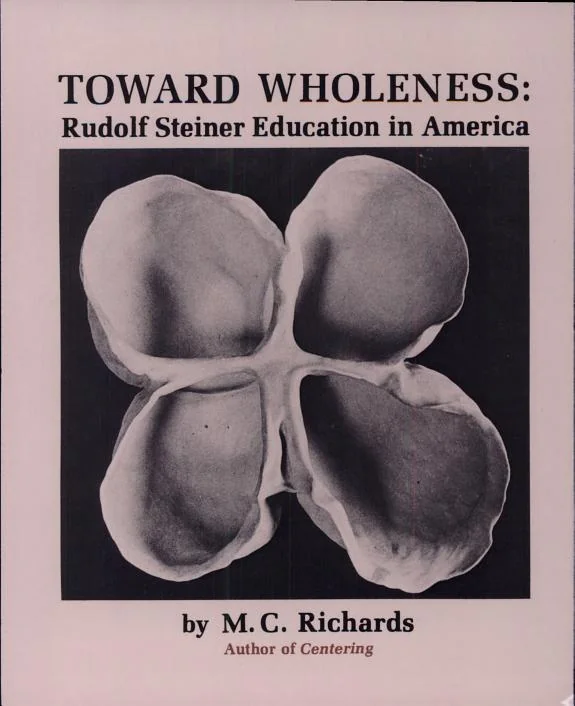
Toward Wholeness
 83
83

Toward Wholeness
Mary Caroline Richards' Toward Wholeness presents a compelling, if sometimes elliptical, perspective on the artist's life. The book excels in its detailed examination of the tactile experience of creation, drawing parallels between pottery, writing, and a deeper existential engagement. Richards articulates a philosophy where the act of making becomes a profound spiritual practice, a means of apprehending reality. A notable strength is her ability to imbue the mundane with extraordinary significance, particularly in her discussions of clay and form. However, the work's introspective nature can occasionally render its narrative arc somewhat elusive for readers seeking a more conventional biographical structure. The passages exploring the "potter's wheel" offer a potent metaphor for cyclical creation and personal transformation, but these moments are embedded within a dense, highly personal exposition. Ultimately, Toward Wholeness offers a unique lens for understanding the artist as a metaphysical explorer.
📝 Description
83
Mary Caroline Richards published Toward Wholeness in July 1980, reflecting on art and existence.
Toward Wholeness is not a typical biography; instead, it immerses the reader in the mind of an artist confronting form, meaning, and the physical world. Richards examines the connections between artistic practice, individual growth, and a deeper grasp of what it means to be. The book details her experience as a creator.
This work will resonate with those drawn to the convergence of art, spirituality, and personal development. It is for readers who appreciate introspective accounts of the creative process and wish to understand its psychological and metaphysical dimensions. Those already engaged with philosophical questions about existence and consciousness will find particular insight here.
Published in 1980, Toward Wholeness appeared as disciplines like psychology, art theory, and spiritual inquiry began to overlap more freely. Richards' focus on the artist's personal path aligns with a wider cultural interest in self-discovery and alternative views of consciousness prevalent in the late 20th century. It offers a distinct perspective compared to more traditional academic or doctrinaire approaches to art and spirituality.
💡 Why Read This Book?
• Gain insight into the transformative power of artistic practice, as exemplified by Richards' engagement with pottery and writing, detailed from her perspective in the 1980 publication. • Understand the concept of 'making' as a fundamental mode of knowing, a core idea explored throughout the text, offering a distinct approach to learning. • Discover the inherent wholeness within the creative process itself, a central theme Richards articulates, providing a unique framework for personal integration.
⭐ Reader Reviews
Honest opinions from readers who have explored this book.
❓ Frequently Asked Questions
When was Mary Caroline Richards' book Toward Wholeness first published?
Toward Wholeness by Mary Caroline Richards was first published in July 1980. This initial release marked its entry into discussions on art, spirituality, and personal development.
What is the central theme of Mary Caroline Richards' Toward Wholeness?
The central theme revolves around the profound connection between the artistic process, personal growth, and the discovery of inherent wholeness. It explores 'making' as a way of knowing.
Who might find Toward Wholeness particularly relevant?
Individuals interested in the metaphysical aspects of art, creators seeking deeper meaning in their practice, and those exploring consciousness and personal development will find it relevant.
Does the book focus on biography or artistic technique?
The book is more of an immersion into the artist's consciousness and philosophy of making, rather than a traditional biography or a technical manual on artistic techniques.
What artistic medium is frequently referenced in Toward Wholeness?
Pottery and the use of clay are frequently referenced throughout the book, serving as a primary example for Richards' exploration of form, material, and transformation.
What does Mary Caroline Richards suggest about the relationship between art and spirituality?
Richards suggests that the act of artistic creation, particularly 'making,' is inherently a spiritual practice that leads to a deeper understanding of oneself and the universe.
🔮 Key Themes & Symbolism
The Art of Making
Richards positions 'making' not merely as production but as a fundamental mode of cognition and being. In Toward Wholeness, the transformation of raw materials, particularly clay, becomes a metaphor for personal integration and spiritual discovery. This theme challenges conventional views of art as solely aesthetic, framing it instead as an active, participatory engagement with reality that reveals inherent structures of existence. The tactile nature of the creative process is emphasized as a direct conduit to understanding.
Wholeness in Process
The book argues that wholeness is not a destination but is present within the ongoing creative act. Through the lens of artistic practice, Richards explores how engaging fully with the process of transformation leads to a sense of completion and integration. This perspective offers an alternative to fragmented experience, suggesting that the very act of bringing something into being inherently contains a complete, self-contained universe of meaning and form.
Materiality and Consciousness
Toward Wholeness investigates the intricate relationship between physical materials and conscious awareness. Richards imbues substances like clay with symbolic and existential weight, demonstrating how working with them can unlock deeper levels of self-understanding. The exploration suggests that by engaging directly with the material world, one can achieve a more integrated and conscious state of being, blurring the lines between the external object and the internal experience.
Artist as Metaphysician
Richards presents the artist not just as a creator of objects but as an individual engaged in a profound metaphysical inquiry. The act of shaping, forming, and bringing forth art is depicted as a philosophical exploration, a means of questioning and understanding existence. This elevates the artistic endeavor to a form of spiritual practice, where the studio becomes a site for existential discovery and the development of a more authentic self.
💬 Memorable Quotes
Direct passages from the work, attributed to the author.
“Making is knowing.”
— This concise statement expresses Richards' philosophy that the act of creation is a primary form of understanding. It suggests that through the physical engagement of shaping materials, one gains insights that are otherwise inaccessible through purely intellectual means.
“The pot is a universe.”
— This phrase highlights the idea that a completed work of art, like a pot, contains within itself a complete and self-sufficient world of form, meaning, and potential. It speaks to the inherent wholeness found in the creative act and the object it produces.
“To find wholeness in the process itself.”
— This concept emphasizes that the journey of creation, with all its challenges and discoveries, is where true integration and completeness are found, rather than solely in the final product.
“Clay remembers.”
— This evocative phrase suggests that the material itself holds a kind of inherent wisdom or history, and that working with it is a dialogue with its intrinsic properties and potential.
“The center is everywhere.”
— This metaphysical notion, applied to the context of art and life, implies that meaning and wholeness are not confined to a single point but are immanent and accessible throughout all aspects of experience and creation.
🌙 Esoteric Significance
Tradition
While not explicitly aligning with a single named esoteric tradition, Toward Wholeness draws implicitly from Hermetic principles concerning the correspondence between the macrocosm and microcosm, and the idea that 'As Above, So Below.' The focus on transforming matter (clay) into form mirrors alchemical processes of transmutation. It shares with Gnosticism an emphasis on inner knowing and the discovery of inherent divinity through personal experience, reframing the artist's studio as a space for spiritual realization.
Symbolism
The primary symbol is **clay**, representing primal matter, potentiality, and the earth itself. Its malleability symbolizes the human capacity for transformation and the responsive nature of reality. The **potter's wheel** symbolizes cyclical processes, the forces that shape existence, and the balance required for creation. The **form** of the finished piece represents the manifestation of idea into reality, a completed universe within itself.
Modern Relevance
Contemporary thinkers in fields such as mindful making, contemplative arts, and eco-psychology find resonance in Richards' work. Her articulation of 'making as knowing' continues to inform discussions on embodied cognition and the therapeutic benefits of creative engagement. Practices that emphasize process over product, and the spiritual dimensions of craft, often reference or echo the core ideas presented in Toward Wholeness.
👥 Who Should Read This Book
• Artists and craftspeople seeking to deepen their understanding of the spiritual dimensions of their work, moving beyond technique to explore the existential implications of making. • Students of comparative spirituality and philosophy interested in how creative practice can serve as a path to metaphysical insight and self-realization. • Individuals engaged in personal development who are exploring embodied knowing and seeking frameworks for integrating mind, body, and spirit through tangible creation.
📜 Historical Context
Published in July 1980, Toward Wholeness arrived during a period of significant cross-pollination between artistic, psychological, and spiritual disciplines. The late 1970s and early 1980s saw a growing interest in holistic approaches and the burgeoning New Age movement, which encouraged exploration beyond established academic and religious frameworks. Richards' work resonated with this milieu, offering a personal articulation of creative practice as a path to self-discovery and existential understanding. While figures like Joseph Campbell were popularizing mythological studies and Carl Jung's archetypal psychology was influential, Richards offered a more direct, practice-based exploration of consciousness through making. The book's reception likely aligned with a broader cultural shift towards introspection and alternative forms of wisdom, moving away from the more dogmatic pronouncements of earlier mid-century art criticism.
📔 Journal Prompts
The concept of 'making is knowing' and its application to your own creative or daily activities.
Reflecting on the 'universe' contained within a single object you have made or encountered.
Exploring the symbolic potential of raw materials in your environment.
Consider the cyclical nature of creation as represented by the potter's wheel in your life.
The idea of finding wholeness within a specific process you are currently engaged in.
🗂️ Glossary
Making
In Richards' context, 'making' transcends mere production. It refers to a fundamental mode of cognition and being, an active, engaged process of creation that leads to understanding and self-discovery.
Wholeness
The state of being complete, integrated, and undivided. Richards suggests that wholeness is inherent in the creative process itself, rather than being a final achievement.
Process
The ongoing series of actions or changes involved in creating something. Richards emphasizes the importance of the journey and the experience of transformation within the process.
Materiality
The quality or state of being material; the physical substance of things. Richards explores how engaging with the materiality of objects, like clay, can lead to useful insights.
Embodied Knowing
Knowledge or understanding gained through physical experience and direct engagement with the world, often contrasted with purely intellectual or abstract knowledge.
Form
The shape, structure, and arrangement of an object or concept. In Richards' work, form is explored not just aesthetically but as a manifestation of underlying principles and meaning.
Transformation
A thorough or dramatic change in form or appearance. Richards uses the transformation of materials in art as a metaphor for personal and spiritual growth.
This book appears in 1 collection
🔮 Readers Also Liked
Browse all →






From the “Anthroposophy” Collection
View all →


More Free Theosophy & Anthroposophy Books
View all →