The Christian kabbalah
 61
61

The Christian kabbalah


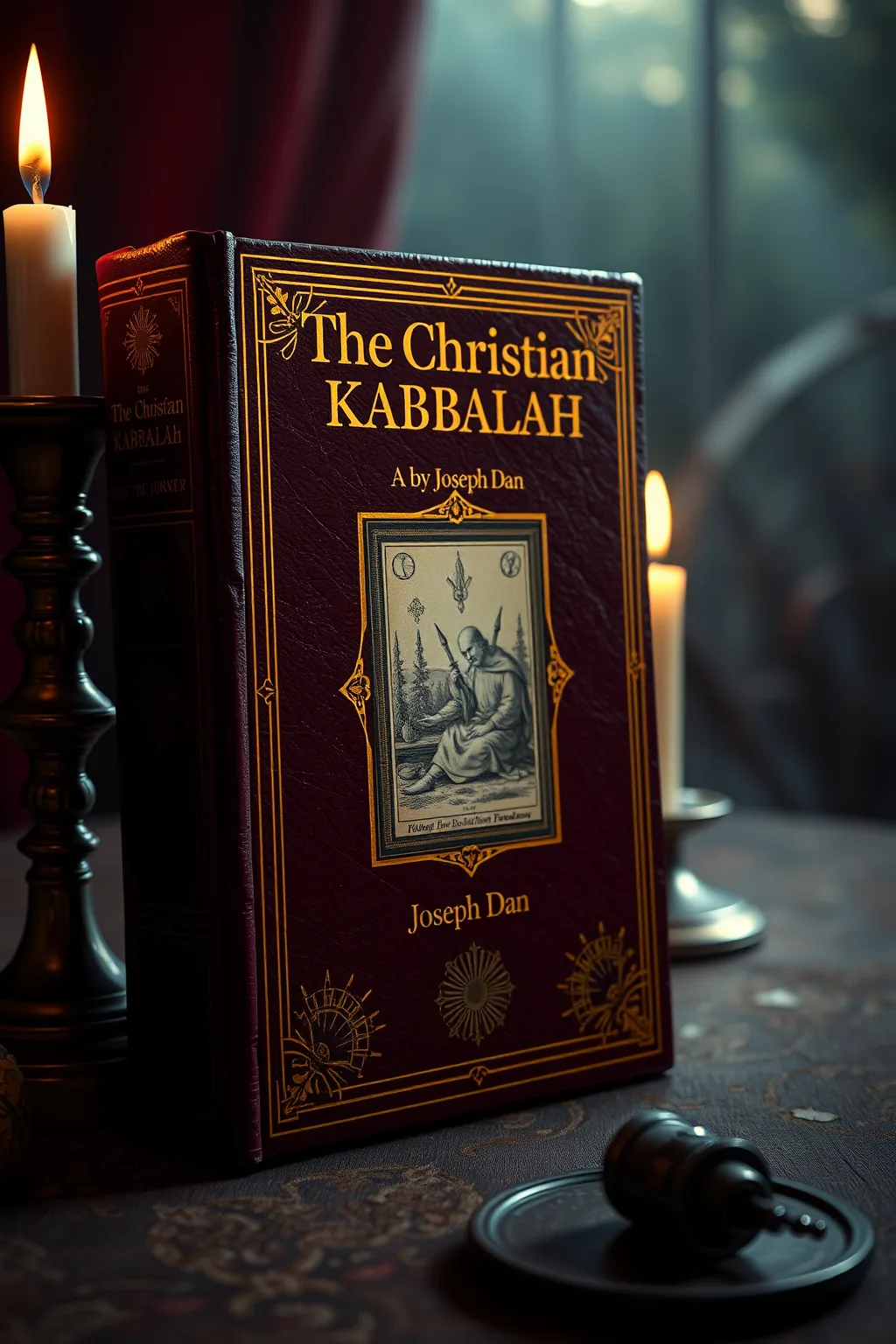
Joseph Dan's 'The Christian Kabbalah' is an indispensable scholarly work for anyone interested in the cross-pollination of mystical traditions. Dan masterfully navigates the complex history of Kabbalistic influence on Christian thought, from its early reception to its sophisticated integration. He illuminates the intellectual and spiritual currents that allowed for such a profound synthesis, offering unparalleled insights into the esoteric interpretations of biblical texts and theological concepts. This book is a testament to Dan's deep scholarship and his ability to present dense material with remarkable clarity. Essential reading for scholars of mysticism, comparative religion, and practitioners seeking a deeper understanding of Kabbalistic roots within a broader Western esoteric context.
📝 Description
61
Joseph Dan examines the Christian reception of Kabbalah starting in the Renaissance.
Joseph Dan's study investigates how Kabbalistic thought was adopted and transformed by Christian thinkers from the Renaissance onward. The book details the ways Jewish mystical concepts, including gematria and the Tree of Life, were reinterpreted within Christian theological frameworks. Dan shows how Christian scholars and mystics engaged with Kabbalistic texts to understand divine mysteries and Christian doctrine. This engagement led to the development of a distinct branch of Christian Kabbalah, influencing esoteric thought and Western mysticism.
The work traces the historical trajectory of this intellectual exchange, highlighting key figures and texts that shaped this tradition. It reveals how Kabbalah, originally a Jewish mystical system, became a tool for Christian esoteric exploration. The book addresses the reception and adaptation of these ideas across different Christian denominations and intellectual circles, demonstrating a complex dialogue between traditions.
Christian Kabbalah emerged during the Renaissance as a significant current within Western esotericism. It represented a period of intense intellectual curiosity where scholars sought to synthesize Jewish mystical traditions with Christian theology. This movement aimed to uncover hidden meanings in scripture and understand the divine through symbolic and numerological methods derived from Kabbalistic sources. Christian Kabbalah became a bridge between different religious and intellectual worlds, contributing to the broader landscape of esoteric thought that flourished during this era.
💡 Why Read This Book?
For seekers of esoteric wisdom, 'The Christian Kabbalah' offers a vital bridge between two major spiritual traditions. Uncover how Christian thinkers reinterpreted Kabbalistic symbols and concepts to unlock deeper theological truths. It's an essential read for understanding the historical development of Western mysticism and the enduring power of symbolic language. Ideal for scholars, students, and anyone fascinated by the hidden dialogues between faiths.
⭐ Reader Reviews
Honest opinions from readers who have explored this book.
❓ Frequently Asked Questions
What is Christian Kabbalah?
Christian Kabbalah refers to the mystical and philosophical movement within Christianity that sought to interpret Jewish Kabbalistic texts and concepts, believing they held keys to understanding Christian doctrine and divine mysteries.
Who was Joseph Dan?
Joseph Dan (1935-2021) was a preeminent scholar of Kabbalah and Jewish mysticism, renowned for his extensive research and influential publications on the history and development of these traditions.
What are the key differences between Jewish and Christian Kabbalah?
While Christian Kabbalah drew heavily from Jewish sources, its interpretations often served Christian theological frameworks, sometimes leading to unique symbolic readings and doctrinal emphases not found in traditional Judaism.
Does this book require prior knowledge of Kabbalah?
While prior knowledge enhances the reading experience, Joseph Dan's clear prose and scholarly approach make the book accessible to motivated readers with a general interest in mysticism and religious history.
What historical period does the book primarily cover?
The book predominantly focuses on the Renaissance and early modern periods, when Christian engagement with Kabbalah was most intense and influential, though it may touch upon earlier and later developments.
🔮 Key Themes & Symbolism
Syncretic Mysticism
This theme explores the fascinating fusion of Jewish Kabbalistic doctrines with Christian theological frameworks. It highlights how Christian thinkers adopted and adapted concepts like the Sefirot, divine names, and angelic hierarchies to illuminate Christian mysteries, creating a unique syncretic mystical tradition. The emphasis is on the transformative power of cross-cultural spiritual exchange and the search for universal truths within specific religious contexts.
Symbolic Interpretation and Hermeneutics
Examine the intricate world of symbolic interpretation as applied to both Kabbalistic and biblical texts. This theme examines the methods of Gematria, Notarikon, and Temurah, and how they were employed by Christian Kabbalists to uncover hidden meanings and divine secrets. It underscores the profound belief that the universe is a coded message, and that through rigorous hermeneutics, one could access higher levels of spiritual understanding and communion with the divine.
The Quest for Divine Knowledge
Fundamentally, this theme addresses the enduring human desire to comprehend the divine and the cosmos. 'The Christian Kabbalah' illustrates how this quest manifested in the synthesis of traditions, as individuals sought esoteric pathways to spiritual enlightenment and a more profound relationship with God. It showcases the intellectual and spiritual dynamism of the Renaissance and beyond, where the pursuit of hidden knowledge was paramount.
💬 Memorable Quotes
Direct passages from the work, attributed to the author.
“Christian thinkers found in Kabbalah a blueprint for the divine order.”
— This highlights how the structured cosmology of Kabbalah, particularly the Tree of Life, was reinterpreted as a map for understanding God's creation and the pathways to spiritual ascent within a Christian context.
“The convergence of traditions ignited new spiritual insights.”
— This speaks to the creative and transformative power that arises when different mystical streams intersect, leading to novel theological understandings and spiritual experiences.
“Hidden correspondences revealed the unity of divine revelation.”
— This points to the belief that by finding symbolic links between seemingly disparate texts and traditions, one could demonstrate an underlying, unified divine message intended for all.
“Esoteric knowledge became a key to spiritual liberation.”
— This suggests that the acquisition of secret or hidden wisdom, as offered by Kabbalah, was viewed by some as a direct path to spiritual freedom and a closer union with the divine.
💡 Key Ideas
Editorial paraphrase of the work's core concepts — not direct quotes.
The Kabbalah offered a universal language of divine secrets.
This quote emphasizes the perceived ability of Kabbalistic symbolism and numerology to transcend specific religious boundaries and reveal fundamental truths about the cosmos and the divine.
🌙 Esoteric Significance
Tradition
Christian Kabbalah represents a unique esoteric synthesis, bridging the ancient Jewish mystical tradition with the Christian theological framework. It's significant for its attempt to integrate Kabbalistic cosmology, divine names, and numerological techniques into Christian mysticism, seeking to reveal hidden truths about God, creation, and salvation within a Christian context.
Symbolism
Key symbols include the Tree of Life (Sefirot), which was reinterpreted to align with Christian concepts like the Trinity and Christ's role; divine names, used for angelic invocation and understanding divine attributes; and numerical correspondences (Gematria) applied to biblical texts to uncover deeper, often Christological, meanings.
Modern Relevance
The study of Christian Kabbalah offers clear insights into the historical development of Western esoteric thought and the enduring human search for spiritual meaning. It demonstrates the permeability of religious boundaries and the universal desire to find deeper, symbolic layers of reality, relevant to contemporary explorations of comparative mysticism and interfaith dialogue.
👥 Who Should Read This Book
This key work is essential for scholars of Kabbalah, Jewish mysticism, and Christian theological history. It is also highly recommended for esoteric practitioners and spiritual seekers interested in the historical interplay between traditions and the ways in which hidden knowledge has been sought and applied across different faiths. Beginners curious about the mystical dimensions of religious history will find Joseph Dan's clear scholarship clear, while advanced students will appreciate the depth and nuance of his analysis.
📜 Historical Context
The era of Christian Kabbalah, primarily the Renaissance and early modern period, was a time of immense intellectual ferment and spiritual exploration. Following the expulsion of Jews from Spain in 1492, many Kabbalistic texts became more widely accessible in Christian Europe. This coincided with a burgeoning humanist interest in ancient wisdom traditions, including Neoplatonism, Hermeticism, and Gnosticism. Christian scholars, theologians, and mystics, eager to find deeper meaning in scripture and to bolster Christian theology, saw in Kabbalah a powerful esoteric system. Figures like Pico della Mirandola and Johannes Reuchlin championed the study of Kabbalah, believing it held keys to understanding the Trinity, the nature of angels, and the divine plan. This engagement was not merely academic; it was deeply spiritual, aiming for mystical union and a more profound understanding of God's immanence and transcendence.
📔 Journal Prompts
Reflect on a moment when you perceived a hidden connection between two seemingly unrelated concepts or traditions. How did this realization deepen your understanding?
Consider the concept of 'divine names' in various spiritual traditions. What power do you believe names hold in invoking or understanding the divine?
Explore the idea of a 'universal language' of spirituality. What elements do you think might constitute such a language, and how do symbols play a role?
How might symbolic interpretation be applied to your own spiritual or philosophical beliefs to uncover new layers of meaning?
Imagine you are a Renaissance scholar encountering Kabbalistic texts for the first time. What questions would you ask, and what knowledge would you hope to gain?
🗂️ Glossary
Kabbalah
An esoteric tradition within Judaism that seeks to understand the nature of God and the universe through mystical contemplation, symbolism, and interpretation of sacred texts, often focusing on divine emanations and hidden spiritual realms.
Sefirot
The ten divine emanations or attributes described in Kabbalah, often represented visually as the Tree of Life, through which God manifests in the world and which serve as a map for spiritual ascent.
Gematria
A method of Kabbalistic interpretation that assigns numerical values to Hebrew letters and words to find hidden meanings and connections between different scriptural passages or concepts.
Hermeneutics
The theory and methodology of interpretation, especially the interpretation of biblical texts, literary works, or philosophical writings, focusing on uncovering meaning and intent.
Syncretism
The merging or blending of different, often seemingly contradictory, beliefs, practices, or traditions, particularly in religion, creating a new, composite system.
This book appears in 1 collection
🔮 Readers Also Liked
Browse all →








More by Joseph Dan
All books →

From the “Kabbalah” Collection
View all →







More Free Kabbalah & Jewish Mysticism Books
View all →