Secularism, Identity, and Enchantment
 74
74

Secularism, Identity, and Enchantment
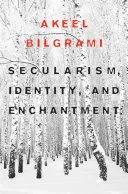
Akeel Bilgrami's "Secularism, Identity, and Enchantment" offers a bracingly intellectual approach to perennial questions about meaning in a disenchanted world. Bilgrami excels at dissecting the philosophical architecture that frames our understanding of secularism, particularly his argument that we have wrongly assumed secularism necessitates a void of meaning. His critique of identity politics, while sharp, occasionally feels like it could benefit from greater engagement with the lived experiences of marginalized groups, moving beyond abstract philosophical construction. The strength lies in his ambitious proposal of 'secular enchantment'—a concept that, while challenging, provides a novel lens through which to view secular modernity not as inherently empty, but as a space that can be imbued with value. The section grappling with the anxiety that any search for enchantment is mere nostalgia is particularly compelling. Bilgrami ultimately presents a robust philosophical argument for finding value within the secular framework itself, avoiding easy answers or appeals to tradition.
📝 Description
74
Akeel Bilgrami argues in 2014 that secular modernity need not lack enchantment.
Akeel Bilgrami's 2014 book confronts the idea that secular modernity inevitably leads to a loss of meaning. He contends that enchantment, often seen as tied to religious or pre-modern worldviews, can be found within secular life itself. Bilgrami proposes a concept of 'secular enchantment' as a way to counter anxieties about a purely instrumentalized existence.
The work examines how identity has become a central, and often contentious, aspect of modern life. It questions the assumption that secular public spheres are inherently at odds with particularist identity claims. Bilgrami engages with contemporary debates surrounding secularism, nationalism, and the search for value in a post-religious era.
While not strictly occult, the book engages with the philosophical quest for meaning and value outside traditional religious frameworks. It speaks to a modern esoteric impulse to find transcendence or deep significance within the immanent world, rather than relying on supernatural beliefs. Bilgrami's 'secular enchantment' can be seen as a contemporary articulation of finding wonder and depth in human experience, echoing historical traditions that sought the sacred in the everyday, albeit through a secular lens.
💡 Why Read This Book?
• Gain a framework for finding meaning within secular modernity, moving beyond traditional religious or nostalgic frameworks, as Bilgrami elaborates his concept of 'secular enchantment'. • Understand the philosophical origins of identity as a modern construct and its complex relationship with secular public life, as analyzed in the text's exploration of identity politics. • Engage with a rigorous philosophical argument presented in 2014 that directly addresses the anxieties surrounding meaning and value in contemporary, secularized societies.
⭐ Reader Reviews
Honest opinions from readers who have explored this book.
❓ Frequently Asked Questions
What is the core argument of Akeel Bilgrami's 'Secularism, Identity, and Enchantment'?
The book argues that secular modernity, often perceived as devoid of meaning, can actually be a source of 'secular enchantment.' Bilgrami posits that we can find value and meaning within secular life itself, challenging the notion that enchantment is exclusive to religious or pre-modern worldviews.
How does the book define 'identity'?
Bilgrami examines 'identity' as a distinctly modern concept, exploring how its formation became intertwined with, and often in conflict with, the principles and practices of secular public life.
What is 'secular enchantment' according to Bilgrami?
'Secular enchantment' is Bilgrami's proposed notion for locating meaning and value within secular modernity. It suggests that secular life itself can be a site of profound experience and significance, without recourse to supernatural beliefs.
What anxiety does the book address regarding meaning?
The book squarely addresses the anxiety that any attempt to find meaning or enchantment in secular modernity is simply an exercise in nostalgia, an attempt to recapture a lost past rather than a genuine engagement with the present.
When was 'Secularism, Identity, and Enchantment' first published?
Akeel Bilgrami's 'Secularism, Identity, and Enchantment' was first published on April 21, 2014.
What intellectual traditions does Bilgrami engage with?
Bilgrami engages with contemporary philosophy of religion, political philosophy, and cultural theory, notably referencing thinkers who have discussed secularism and the search for meaning in modernity, such as Charles Taylor.
🔮 Key Themes & Symbolism
The Possibility of Secular Enchantment
This theme centers on Bilgrami's audacious proposal that secular modernity need not be a realm devoid of enchantment. He argues against the common assumption that meaning and value are exclusively the domain of religion or pre-modern belief systems. Instead, he constructs a philosophical case for finding profound significance and wonder within secular life itself. This involves redefining enchantment not as a supernatural phenomenon, but as a deeply felt connection to values, practices, and the world that can be cultivated within a secular framework, thereby countering the existential void many associate with modern secular existence.
Identity as a Modern Construct
Bilgrami meticulously dissects the concept of 'identity,' framing it as a relatively recent development in human history. He explores how the modern era, with its emphasis on individualism and self-definition, has led to identity becoming a central concern. The book examines the often-fraught relationship between the construction of personal and collective identities and the public sphere governed by secular principles, highlighting how these two forces can become antagonistic.
Secularism's Crisis of Meaning
A significant theme is the perceived crisis of meaning that has accompanied the rise of secularism. Bilgrami acknowledges the widespread anxiety that as societies become more secular, they risk losing their sources of value and purpose. He directly confronts the notion that this loss is inevitable, arguing instead for the potential for secularism to host its own forms of meaning and enchantment, thus reframing the discourse around secularization not as an endpoint of meaning, but as a transition.
The Anxiety of Nostalgia
The book grapples with the persistent fear that any attempt to find meaning or enchantment in the contemporary world is merely a futile exercise in nostalgia. Bilgrami recognizes that modern individuals often look back to perceived golden ages or religious traditions for solace and meaning. He addresses this anxiety head-on, asserting that the pursuit of secular enchantment is not about recapturing the past, but about forging new avenues of meaning relevant to our present secular condition.
💬 Memorable Quotes
Direct passages from the work, attributed to the author.
“Secular modernity is not inherently devoid of meaning or value.”
— This interpretation captures Bilgrami's core assertion that the secular condition does not automatically equate to existential emptiness. It challenges the widespread assumption that meaning must be derived from religious or transcendental sources, paving the way for his concept of secular enchantment.
“The search for enchantment in secular life is not necessarily an act of nostalgia.”
— This interpretation emphasizes Bilgrami's counter-argument against the idea that any modern quest for meaning is simply a longing for a lost past. It suggests that finding enchantment within secular modernity is a forward-looking endeavor, a re-evaluation of present possibilities.
“The anxiety that secularism erases meaning needs to be directly addressed.”
— This interpretation points to Bilgrami's commitment to confronting the perceived crisis of meaning in secular societies. It indicates his intention to tackle this widespread apprehension head-on, rather than dismissing it.
💡 Key Ideas
Editorial paraphrase of the work's core concepts — not direct quotes.
Identity became a modern preoccupation, often in conflict with secular public life.
This paraphrased concept highlights Bilgrami's analysis of how 'identity' emerged as a key concern in modernity. It points to the tension he identifies between how individuals and groups define themselves and the universalist aspirations often associated with secular governance and public discourse.
We must find a locus of meaning and value within secular modernity itself.
This paraphrased concept underscores Bilgrami's project to locate the sources of meaning and value within the secular framework, rather than seeking them in external or historical traditions. It is the foundational idea for his concept of secular enchantment.
🌙 Esoteric Significance
Tradition
While not explicitly rooted in a single esoteric lineage, Bilgrami's work touches upon themes resonant with Hermeticism and Neoplatonism, particularly in its search for immanent value and meaning within the material world. The concept of 'enchantment' itself, when divorced from supernaturalism, carries the Hermetic idea of the world as a living, animated entity capable of inspiring awe and connection. His project to find a locus of meaning within secular modernity can be seen as a contemporary philosophical echo of ancient quests to understand the divine or the meaningful principle inherent in existence, albeit framed through modern secular lenses.
Symbolism
The primary 'symbol' Bilgrami works with is not a visual motif but the abstract concept of 'enchantment' itself, re-imagined within a secular context. He deconstructs the traditional association of enchantment with the supernatural or the magical, seeking to imbue secular experiences—like intellectual pursuit, ethical action, or aesthetic appreciation—with a profound sense of wonder and value. The 'anxiety of nostalgia' also functions symbolically, representing the modern psyche's struggle to find grounding and meaning without recourse to past certainties or transcendent guarantees.
Modern Relevance
Bilgrami's ideas on secular enchantment have found resonance among contemporary philosophers, cultural theorists, and even those in secular spiritual communities seeking meaning beyond traditional religious structures. Thinkers who engage with the philosophy of secularism, the nature of value, and the critique of disenchantment may draw upon his work. His contribution is particularly relevant to ongoing debates about the public role of secularism and its capacity to foster a sense of shared meaning and belonging in pluralistic societies, influencing discussions on post-secularism and the search for non-religious forms of transcendence.
👥 Who Should Read This Book
• Students and scholars of philosophy, particularly those in political philosophy, philosophy of religion, and ethics, seeking a rigorous analysis of secularism and meaning. • Cultural critics and theorists interested in the construction of identity, the impact of secularization on society, and the search for value in contemporary life. • Individuals grappling with existential questions about meaning and purpose in a secular world, who are looking for philosophical frameworks that offer hope beyond religious dogma or nihilism.
📜 Historical Context
Published in 2014, Akeel Bilgrami's "Secularism, Identity, and Enchantment" arrived at a central moment in global intellectual and political discourse. The early 21st century witnessed a significant resurgence of identity politics and a complex, often contentious, re-evaluation of secularism's efficacy in increasingly diverse societies. Thinkers like Charles Taylor had already extensively explored the 'secular age,' but Bilgrami offered a distinct philosophical intervention. His work engaged with the prevailing anxieties about meaning and value loss that many associated with secularization, a sentiment amplified by the rise of religious fundamentalisms and nationalist movements. The book was part of a broader academic conversation questioning whether secularism could truly provide a robust framework for meaning or if it inevitably led to disenchantment. Bilgrami's proposal of 'secular enchantment' stood in contrast to purely instrumentalist or minimalist conceptions of secularism prevalent at the time, seeking to reclaim a richer understanding of secular life.
📔 Journal Prompts
The possibility of secular enchantment: how can secular experiences foster a sense of wonder?
The construction of identity: how does your personal identity interact with public secular norms?
The anxiety of nostalgia: what past certainties do you find yourself longing for, and why?
Finding value in secular modernity: what secular practices or beliefs provide you with a sense of meaning?
Secularism and identity: explore a point of tension between your personal identity and secular societal expectations.
🗂️ Glossary
Secular Enchantment
Akeel Bilgrami's concept proposing that meaning and value can be found within secular modernity itself, independent of religious or supernatural beliefs. It suggests a profound engagement with secular life that inspires wonder and significance.
Secular Modernity
The historical and cultural condition characterized by the increasing separation of religious institutions from public life and governance, and the prevalence of rational, empirical, and humanistic modes of thought.
Identity
In Bilgrami's context, 'identity' refers to the modern concept of self-definition and group affiliation, often explored as a construct that can be in tension with the universalist ideals of secular public life.
Disenchantment
A term, often associated with Max Weber, describing the process by which modern society moves away from magical, spiritual, or superstitious explanations towards rational, scientific, and bureaucratic ones, leading to a perceived loss of meaning.
Locus of Meaning
A specific place, framework, or source from which meaning and value can be derived. Bilgrami seeks to establish secular modernity as such a locus.
Anxiety of Nostalgia
The fear that any attempt to find meaning or enchantment in the present secular world is merely an act of longing for a perceived better past, rather than a genuine engagement with current possibilities.
Public Life
The sphere of social and political activity that is accessible to all members of a community or society, typically governed by secular principles and laws.
This book appears in 1 collection
🔮 Readers Also Liked
Browse all →







From the “Enchantment” Collection
View all →



More Free Occult Philosophy Books
View all →