Secret societies-- and how they affect our lives today
 82
82

Secret societies-- and how they affect our lives today
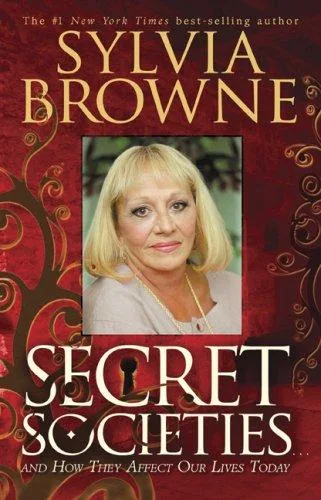
Sylvia Browne, a name often associated with psychic phenomena, turns her attention to the persistent mythos surrounding secret societies in her 2008 work. The book offers a broad overview, touching on groups ranging from the Knights Templar to more contemporary, albeit vaguely defined, influential circles. Browne's strength lies in her accessible prose, making complex historical threads and speculative theories digestible for a general audience. However, the work's primary limitation is its reliance on assertion rather than rigorous evidence, a characteristic that may frustrate seasoned researchers. A passage discussing the alleged influence of certain societies on Enlightenment thinkers, for example, presents conjecture as fact without robust citation. While it provides an engaging introduction to the *idea* of secret societies and their supposed impact, it lacks the critical depth required for serious historical or sociological analysis. It serves as an entry point for the curious but not a definitive scholarly resource.
📝 Description
82
Sylvia Browne's 2008 book examines how clandestine organizations shape global events and individual destinies.
Sylvia Browne's "Secret Societies-- and how they affect our lives today" looks at the historical presence and current impact of hidden groups. Published in 2008, the book treats these organizations not just as historical footnotes but as active forces influencing world events and people's lives. Browne argues that understanding these societies is key to grasping the deeper structures of power. The work is for readers who question common explanations and want to learn about the unseen elements that might affect societal changes, political directions, and personal beliefs. It invites a closer look at areas of inquiry often overlooked.
Browne dissects how secret societies operate, focusing on their use of symbols, ceremonies, and tiered systems to keep members together and their activities concealed. The book considers how groups, from the Freemasons to less visible organizations, supposedly exert influence through connections, shared beliefs, and management of information. She also discusses why people are drawn to these groups, noting their role in giving members a sense of identity and purpose.
Browne's work connects to a long history of fascination with hidden groups, from ancient mystery cults to Enlightenment fraternities. The book acknowledges the enduring human interest in exclusivity, secret knowledge, and collective action that has sustained these organizations for centuries. It also reflects the post-9/11 environment where discussions about global power and hidden motives became more common.
💡 Why Read This Book?
• Understand the enduring allure of clandestine organizations by examining their historical manifestations, such as the Knights Templar, and how their secrecy fuels speculation. • Gain insight into Browne's perspective on how symbols and rituals, prevalent in groups like the Freemasons, function to create internal cohesion and external mystique. • Explore the author's theories on the potential mechanisms of influence these societies may employ, particularly in the context of societal structures and information control.
⭐ Reader Reviews
Honest opinions from readers who have explored this book.
❓ Frequently Asked Questions
When was Sylvia Browne's book on secret societies first published?
Sylvia Browne's "Secret Societies-- and how they affect our lives today" was first published in 2008, reflecting on the historical and contemporary presence of clandestine organizations.
What kind of secret societies does the book discuss?
The book discusses a wide range of secret societies, touching upon historical groups like the Knights Templar and mentioning the broader context of organizations such as the Freemasons.
Does the book provide concrete proof of secret society influence?
While the book explores theories and potential influences, it often relies on assertion and conjecture rather than presenting rigorously cited, verifiable proof of direct impact.
Who is the intended audience for this book?
The book is aimed at general readers interested in historical mysteries, conspiracy theories, and the underlying forces that may shape societal events.
What is Sylvia Browne's general approach to the topic?
Browne takes an accessible, speculative approach, examining the historical presence and alleged contemporary impact of secret societies through the lens of symbolism, ritual, and hidden influence.
Does the book mention specific symbols used by secret societies?
Yes, the book touches upon the use of symbols and rituals as key elements in the structure and operation of secret societies, contributing to their mystique and internal bonding.
🔮 Key Themes & Symbolism
Historical Clandestine Groups
The work traces the lineage of secret societies, highlighting their persistent presence throughout history. It examines organizations like the Knights Templar, exploring their rise, alleged secrets, and eventual dissolution or transformation. Browne suggests that the methods and motivations of these ancient groups laid groundwork for later clandestine organizations, impacting historical narratives and sparking ongoing speculation about hidden agendas.
Symbolism and Ritual
A core theme is the function of symbols and rituals within secret societies. Browne suggests these elements are not mere decoration but vital tools for communication, indoctrination, and maintaining group identity. The book touches on how specific symbols, understood only by initiates, create an esoteric language and reinforce the exclusivity and perceived power of groups like the Freemasons.
Contemporary Influence
Beyond historical accounts, the book speculates on the continuing influence of secret societies in modern times. Browne posits that these organizations, through networks and shared ideologies, may subtly shape political, economic, and social landscapes. The work encourages readers to consider how hidden structures might affect world events, even if direct evidence remains elusive.
Psychology of Belonging
The book also touches upon the psychological appeal of joining secret societies. Browne explores how the promise of exclusive knowledge, a sense of purpose, and belonging to an elite group can be deeply attractive. This theme addresses why individuals are drawn to these organizations and how membership can provide identity and a framework for understanding the world.
💬 Memorable Quotes
Direct passages from the work, attributed to the author.
“History is written by the victors, but secrets are kept by the initiated.”
— This interpretation suggests that official historical accounts may be incomplete, while the true narratives and influences often reside within clandestine organizations, accessible only to their members through protected knowledge.
“The power of a group lies not in its numbers, but in its shared vision and secrecy.”
— This idea emphasizes Browne's perspective that the effectiveness and influence of secret societies stem from their cohesive ideology and the exclusivity of their membership, rather than overt public presence.
“Ritual binds the past to the present, creating an unbroken chain of knowledge.”
— This interpretation reflects the notion that rituals serve as a mechanism for transmitting traditions and esoteric wisdom across generations, ensuring continuity and the preservation of sacred or secret information.
💡 Key Ideas
Editorial paraphrase of the work's core concepts — not direct quotes.
Symbols are the language of the soul.
This concept, likely paraphrased or a thematic representation, highlights Browne's view that esoteric symbols transcend ordinary language, speaking directly to deeper consciousness and shared understanding within secretive groups.
We are all part of unseen currents.
This quote points to Browne's belief that individuals are influenced by forces, including those of secret societies, that operate beneath the surface of everyday awareness, shaping events and personal experiences.
🌙 Esoteric Significance
Tradition
Browne's work loosely fits within the modern esoteric tradition, particularly its popular, speculative branches. While not strictly adhering to a specific lineage like Hermeticism or Gnosticism, it draws on the general theme of hidden knowledge and influential, unseen forces prevalent in Theosophy and New Age thought. It departs from traditional lineages by prioritizing psychic intuition and anecdotal evidence over established doctrines or philosophical systems.
Symbolism
Key symbols explored include the Knights Templar's Cross, often representing a blend of martial and spiritual authority, and Masonic symbols like the Square and Compasses, which Browne might interpret as tools for ethical guidance and cosmic order. These symbols function as shorthand for complex ideas about power, initiation, and hidden truths within these organizations.
Modern Relevance
Contemporary interest in conspiracy theories, alternative histories, and the perceived influence of powerful, hidden groups echoes themes found in Browne's work. Thinkers and communities exploring deep state theories, the enduring impact of historical secret societies on modern structures, or the psychology behind clandestine group formation may find conceptual links, even if they critique Browne's methodology.
👥 Who Should Read This Book
• Curious readers new to the topic of secret societies: This book offers an accessible, narrative-driven introduction to historical groups and speculative theories without overwhelming jargon. • Fans of Sylvia Browne's previous work: Those familiar with and receptive to Browne's psychic and intuitive approach will find this book aligns with her characteristic style and perspective. • Individuals interested in historical mysteries and speculation: Readers who enjoy exploring 'what if' scenarios and the enduring legends surrounding influential, hidden organizations will find material to ponder.
📜 Historical Context
Published in 2008, Sylvia Browne's "Secret Societies-- and how they affect our lives today" emerged during a period of heightened public interest in conspiracy theories and hidden global influences, often fueled by online discourse. The work engages with a long tradition of literature examining clandestine organizations, a lineage that includes influential texts from the Enlightenment and the Victorian era. Browne's approach, however, is less academic and more speculative than that of scholars like David Kaczynski or figures associated with the earlier Illuminati scare. While not directly engaging with contemporary academic debates, the book tapped into a popular fascination with groups like the Freemasons and the Knights Templar, which had seen resurgences in public consciousness partly through popular fiction and media. The reception was likely mixed, appealing to those already inclined towards Browne's psychic interpretations while potentially being dismissed by more critical audiences for its lack of rigorous sourcing.
📔 Journal Prompts
The concept of 'unseen currents' and their potential impact on your life.
Reflect on the function of symbols within groups you are familiar with, secret or otherwise.
Consider the historical legacy of the Knights Templar and the speculation surrounding them.
Analyze the psychological appeal of belonging to exclusive groups, as discussed by Browne.
Explore the idea that 'history is written by the victors' versus 'secrets kept by the initiated'.
🗂️ Glossary
Secret Societies
Organizations that conceal their membership, rituals, or objectives from the general public, often operating with strict internal hierarchies and exclusive knowledge.
Knights Templar
A medieval Catholic military order founded around 1119, known for its role in the Crusades and its subsequent mysterious dissolution in the early 14th century, sparking centuries of legend.
Freemasons
A fraternal organization originating in the late 16th to early 17th century, with members who are bound by oaths and meet in lodges, using symbolic rituals derived from stonemasonry.
Esoteric
Intended for or likely to be understood by only a small number of people with a specialized knowledge or interest; relating to secret or mysterious knowledge.
Ritual
A set of actions, often performed in a specific order, that have symbolic meaning or are part of a ceremony or tradition, used to reinforce group identity and transmit beliefs.
Symbolism
The use of symbols to represent ideas or qualities; in secret societies, symbols often convey complex meanings understood only by initiates.
Initiation
The process by which a person is formally admitted into an organization, often involving ceremonies, oaths, and the revelation of specific knowledge or secrets.
🔮 Readers Also Liked
Browse all →







More by Sylvia Browne
All books →





More Free Occult Philosophy Books
View all →