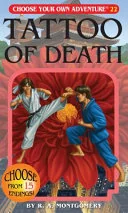
Tattoo of Death
 73
73

Tattoo of Death
R. A. Montgomery’s Tattoo of Death offers a chillingly methodical examination of occult practices surrounding mortality. Unlike many contemporary works that shy away from the grimmer aspects of magic, Montgomery confronts them head-on, presenting a framework for understanding death as a controllable force. The book excels in its detailed descriptions of ritualistic processes and the underlying philosophy that animates them, particularly its exploration of the 'death tattoo' as a conceptual and operational sigil. Its primary limitation, however, lies in its density; the text demands significant prior knowledge of esoteric symbolism and ritualistic theory, which may alienate less experienced readers. A particularly striking passage details the concept of spectral bindings, illustrating the book's commitment to exploring the mechanics of soul manipulation. Tattoo of Death is a challenging but rewarding text for serious students of the darker arts.
📝 Description
73
Published in 1995, Tattoo of Death examines how death can be invoked, controlled, or defied through ritual.
R. A. Montgomery's Tattoo of Death delves into arcane practices and shadowy organizations that exist outside ordinary perception. The book investigates the mechanisms by which death might be invoked, controlled, or even defied through ritual and occult knowledge. It examines the theoretical foundations of these forbidden arts, presenting them as systems of power with their own distinct logic and consequences.
This work is suited for students of esoteric philosophy, particularly those interested in the darker aspects of magical theory and practice. It addresses individuals seeking to understand historical occult traditions concerning necromancy, soul transference, and the manipulation of vital energies. Readers who appreciate rigorous, speculative examinations of forbidden knowledge and the philosophical questions surrounding mortality will find considerable material within its pages.
Tattoo of Death emerged in 1995 amidst a resurgence of interest in occultism, distinguishing itself from the more generalized New Age spirituality prevalent at the time. Unlike contemporaries who often focused on personal empowerment, Montgomery engaged with older, more challenging currents of magical thought. The book departed from mainstream occult literature by not softening or sensationalizing topics like death magic, earning its recognition within specific esoteric circles for its direct approach.
💡 Why Read This Book?
• Gain an understanding of the historical occult concept of 'death tattoos' as sigils of power, offering a unique perspective on symbolic imprinting beyond mere aesthetics. • Explore the theoretical underpinnings of necromantic practices as presented in the 1995 text, differentiating it from sensationalized portrayals and focusing on ritualistic mechanics. • Examine the philosophical implications of death as a controllable force, as detailed in the book’s unique exploration of spectral entities and soul transference.
⭐ Reader Reviews
Honest opinions from readers who have explored this book.
❓ Frequently Asked Questions
What is the significance of the 'Tattoo of Death' mentioned in the book's title?
The 'Tattoo of Death' serves as a central metaphor and concept within the book, representing a potent sigil or inscription that grants control over or connection to the forces of death, mortality, and spectral energies.
Does R. A. Montgomery's 'Tattoo of Death' discuss real-world occult practices?
The work explores theoretical and ritualistic frameworks for manipulating death and spectral forces, drawing upon esoteric traditions. It presents these as systems of knowledge rather than historical accounts of specific events.
When was 'Tattoo of Death' first published?
R. A. Montgomery's 'Tattoo of Death' was first published in 1995, placing it within a specific period of esoteric literature development.
What kind of esoteric traditions does 'Tattoo of Death' engage with?
The book engages with traditions concerning necromancy, soul manipulation, and the symbolic use of death as a transformative force, operating within darker currents of occult philosophy.
Is 'Tattoo of Death' suitable for beginners in occult studies?
While informative, the book's dense theoretical nature and focus on complex concepts like spectral bindings may be more challenging for absolute beginners. It is best suited for those with some foundational knowledge.
Are there any specific symbols discussed in 'Tattoo of Death'?
Yes, the book heavily features the concept of the 'death tattoo' as a primary symbol of power and control over mortality, alongside discussions of spectral entities and their associated symbolism.
🔮 Key Themes & Symbolism
The Sigil of Mortality
The 'Tattoo of Death' itself functions as a potent sigil, a conceptual and potentially literal inscription designed to invoke and control the forces associated with death. This theme explores the power of symbolic representation to influence existential states. Montgomery posits that such an inscription can act as a conduit, binding an individual to spectral realms or granting them dominion over the process of dying, moving beyond mere physical markings to a deep, metaphysical imprint.
Spectral Mechanics and Entities
This theme examines the nature of spectral beings and the mechanics of their interaction with the material world. The book posits that these entities are not merely ghosts but operate according to specific, albeit arcane, laws. Understanding these 'spectral mechanics' is crucial for any practitioner seeking to harness or communicate with them, forming a core element of the death magic discussed. It examines the energetic and spiritual frameworks that govern these non-corporeal existences.
Death as a Transformative Force
Rather than viewing death as an absolute end, Tattoo of Death presents it as a threshold, a point of profound transformation that can be consciously navigated or manipulated. This perspective shifts the focus from cessation to transition, exploring how occult knowledge allows for a degree of agency even in the face of mortality. The book investigates rituals and philosophies aimed at mastering this transition, emphasizing the potential for spiritual evolution or power acquisition through controlled encounters with the dying process.
Forbidden Knowledge and Power
The book centers on knowledge deemed 'forbidden' within many societal and religious structures, particularly concerning the manipulation of life and death. It examines the inherent power derived from possessing and applying such esoteric lore. This theme questions the ethical boundaries of occult pursuits and the potential consequences of wielding influence over fundamental forces, positioning the 'Tattoo of Death' as a symbol of ultimate, often dangerous, mastery.
💬 Memorable Quotes
Direct passages from the work, attributed to the author.
“To command the cessation is to understand the continuity.”
— This concept emphasizes that true mastery over death requires a deep comprehension of life's ongoing energies. It suggests that controlling the end necessitates understanding the inherent flow and persistence of vital force.
“The threshold of death is a doorway, not a wall.”
— This interpretation frames death as a transitional phase rather than an absolute conclusion. It implies that with the right knowledge, one can consciously move through this transition, rather than simply experiencing it passively.
💡 Key Ideas
Editorial paraphrase of the work's core concepts — not direct quotes.
The mark is not merely ink, but a binding of will to spectral resonance.
This quote highlights the symbolic and energetic nature of the 'death tattoo,' suggesting it's more than a physical adornment. It represents a deliberate act of magical will, designed to create a connection with the ethereal planes associated with death.
Spectral entities operate by laws as rigid as gravity, though unseen.
This paraphrase points to the book's assertion that the spirit world is governed by structured principles, not chaos. Understanding these 'spectral mechanics' is presented as key to interacting with or controlling non-corporeal beings.
Power lies in the inscription of intent upon the fabric of being.
This paraphrase suggests that the core of magical power, as explored in the book, comes from effectively imprinting one's will and intentions onto the fundamental structure of reality or existence itself.
🌙 Esoteric Significance
Tradition
Tattoo of Death can be seen as drawing from a syncretic blend of Western magical traditions, particularly those that explore necromancy, spirit invocation, and the manipulation of vital energies. It departs from more purely ceremonial magic by focusing on specific, often visceral, applications of power related to mortality. While not strictly Gnostic or Kabbalistic, it echoes certain themes of bridging material and spiritual realms through forbidden knowledge, positioning itself within the broader spectrum of esoteric practices concerned with transcending natural limitations.
Symbolism
The primary symbol is the 'death tattoo' itself, representing a potent sigil that binds the practitioner to the forces of death, mortality, or spectral realms. Beyond this, the work engages with the symbolism of spectral entities, which are presented not as mere ghosts but as beings operating under specific, albeit occult, laws. The act of inscription and the concept of a 'threshold' also carry significant symbolic weight, representing the conscious manipulation of existential boundaries and the transition between states of being.
Modern Relevance
Contemporary practitioners and theorists interested in the darker or more challenging aspects of magic, particularly those exploring necromantic currents or the philosophy of death within esoteric frameworks, find relevance in Montgomery's work. Thinkers who focus on applied sigil magic or the energetic mechanics of spirit interaction might draw conceptual parallels. Its systematic approach to taboo subjects continues to appeal to those seeking a rigorous, albeit speculative, understanding of occult power dynamics beyond mainstream esoteric discourse.
👥 Who Should Read This Book
• Advanced students of Western esotericism seeking to explore the theoretical and ritualistic aspects of necromancy and death magic. • Occult researchers interested in historical and speculative frameworks for understanding spectral entities and the manipulation of mortality. • Practitioners of sigil magic and symbolic inscription who wish to examine the concept of a 'death tattoo' as a potent magical tool.
📜 Historical Context
Published in 1995, R. A. Montgomery's 'Tattoo of Death' emerged during a period where esoteric literature was experiencing a resurgence, albeit often leaning towards New Age spirituality or self-help occultism. Unlike many contemporaries who focused on positive manifestation or generalized spiritual growth, Montgomery’s work explored the more challenging and traditionally 'darker' aspects of Western esotericism, including necromancy and spectral manipulation. This placed it in contrast to the more popular, less confrontational occult writings of the era. While specific reception events like major reviews or bans are not widely documented, its circulation was primarily within dedicated occult and magical communities. The book engaged with speculative theories on death and spirit, existing in a lineage that includes older grimoires and occult philosophies, while offering its own unique, systematized approach to these potent forces.
📔 Journal Prompts
The nature of the 'death tattoo' as a binding sigil.
Mechanisms for interacting with spectral entities.
The concept of death as a navigable threshold.
The ethics of wielding forbidden knowledge concerning mortality.
The relationship between inscription and existential power.
🗂️ Glossary
Death Tattoo
A central concept in the book, referring to a symbolic inscription or sigil that grants the bearer control over or connection to the forces of death, mortality, and spectral realms.
Spectral Entities
Beings that exist beyond the physical body, described in the book as operating according to specific, arcane laws and capable of interaction with the material world.
Sigil
A symbol or sign intentionally created to represent a magical intent or to act as a conduit for occult energies and forces.
Vital Energy
The life force or animating principle within living beings, which the book suggests can be manipulated or transferred through occult practices.
Spectral Resonance
A concept referring to the sympathetic vibration or connection between an individual or object and the energetic frequencies of spectral or non-corporeal realms.
Necromancy
A form of magic focused on the evocation of the dead, divination through the dead, or the manipulation of death-related energies and spirits.
Threshold
In this context, the boundary or transitional state between life and death, presented not as an absolute end but as a point of potential conscious navigation or transformation.
🔮 Readers Also Liked
Browse all →









More by R. A. Montgomery
All books →



More Free Occult Philosophy Books
View all →