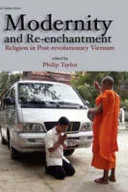
Modernity and Re-enchantment
 71
71

Modernity and Re-enchantment
Philip Taylor’s "Modernity and Re-enchantment" offers a compelling counterpoint to narratives of inevitable secularization. By examining the "shared logics of spiritual efficacy" across disparate traditions, Taylor successfully demonstrates how supernatural belief systems maintain their power. A particular strength is the detailed analysis of Vietnamese ancestor veneration, which serves as a crucial case study. While the book commendably avoids generalizations, at times the broad scope leads to sections that feel more descriptive than deeply analytical, particularly when touching upon Catholic myths. The work's central argument, however, that efficacy is a key, shared component of spiritual systems, remains potent and well-supported. It is a valuable contribution to understanding the persistence of the sacred in contemporary life.
📝 Description
71
Philip Taylor's 2007 book analyzes the common logic of spiritual efficacy across diverse practices.
Philip Taylor's 2007 study, "Modernity and Re-enchantment," analyzes how spiritual efficacy operates across different traditions. It moves past simple secular vs. religious divides to examine how supernatural claims are constructed and validated. Taylor investigates the shared logical frameworks that underpin practices from Vietnamese ancestor veneration to Catholic understandings of miracles. He argues these disparate traditions often function on similar principles for understanding, invoking, and experiencing spiritual power.
The book emerged during a time of increased academic focus on non-Western religions and critiques of secularization. Taylor's work addresses the continued presence of religious belief in modern societies, challenging assumptions that often stem from a Eurocentric viewpoint. It offers a more comprehensive view of what enchantment means in contemporary life.
This work engages with the philosophical underpinnings of belief systems, particularly how seemingly supernatural phenomena are conceptualized and integrated into lived experience. It touches upon traditions where the spiritual is not compartmentalized but is an active force in daily life, such as certain forms of animism, shamanism, and folk Catholicism. The book's focus on "re-enchantment" speaks to a broader interest in understanding the persistence of non-rational or supra-rational frameworks of understanding in societies often characterized by scientific materialism.
💡 Why Read This Book?
• You will learn how ancestor veneration in Vietnam shares "logics of spiritual efficacy" with seemingly unrelated practices, challenging assumptions about modernity's impact on belief. • You will gain an understanding of the comparative methodology Taylor employs, particularly his focus on the year 2007 and the academic discussions surrounding secularization theory. • You will appreciate a nuanced perspective on how Buddhist sectarianism and Catholic miracle narratives construct spiritual power, moving beyond simplistic categorizations.
⭐ Reader Reviews
Honest opinions from readers who have explored this book.
❓ Frequently Asked Questions
What specific Vietnamese practices does "Modernity and Re-enchantment" explore?
The book extensively covers Vietnamese ancestor veneration, examining its ritualistic aspects and the perceived efficacy of spiritual intervention in daily life, as detailed in the work first published in 2007.
How does Philip Taylor define "spiritual efficacy"?
Taylor defines spiritual efficacy as the perceived power or effectiveness of spiritual practices, beliefs, or entities to produce tangible or intangible results in the lives of adherents, regardless of the specific tradition.
What is the main argument against secularization theory presented in the book?
The book argues against a simple linear progression towards secularization by demonstrating that "re-enchantment" persists through shared logics of spiritual efficacy, evident even in modern contexts.
Besides Vietnamese practices, what other traditions are discussed?
The work also analyzes Buddhist sectarianism and Catholic myths and miracles, comparing their mechanisms of spiritual efficacy with those found in ancestor veneration.
When was "Modernity and Re-enchantment" originally published?
The book was first published in 2007, placing it within a specific academic discourse on religion and modernity.
What does the book suggest about the relationship between modernity and belief?
It suggests that modernity does not necessarily eradicate belief but can reshape how spiritual efficacy is understood and sought, often through practices that appear superficially traditional yet possess modern logics.
🔮 Key Themes & Symbolism
Shared Logics of Efficacy
The central thesis posits that diverse spiritual practices, from Vietnamese ancestor veneration to Catholic miracles, operate on common principles of perceived effectiveness. Taylor moves beyond cultural specificity to identify underlying structural similarities in how spiritual power is understood and activated. This comparative approach highlights that the 'logic' of why a ritual or belief 'works' can transcend cultural boundaries, suggesting a universal human engagement with the supernatural.
Ancestor Veneration
This practice serves as a primary case study, illustrating how familial and social bonds are intertwined with spiritual obligations and perceived benefits. Taylor examines the mechanisms through which ancestors are believed to exert influence, offering protection or demanding respect. The analysis underscores the enduring power of lineage and ritual in maintaining spiritual efficacy within communities, challenging notions that such practices are relics of a pre-modern past.
Re-enchantment vs. Secularization
The book directly confronts the secularization thesis, arguing that modernity does not equate to a complete loss of enchantment. Instead, it proposes a 're-enchantment,' where spiritual efficacy finds new expressions or persists through established channels. This perspective suggests that the desire for spiritual meaning and intervention remains potent, adapting to contemporary social and intellectual landscapes.
Comparative Religious Frameworks
Taylor applies a rigorous comparative method to Buddhist sectarianism, Catholic myths, and Vietnamese spiritual traditions. By analyzing shared conceptualizations of spiritual power, the work aims to build a more integrated understanding of global religious phenomena. This interdisciplinary approach, first presented in 2007, offers a valuable tool for scholars seeking to map the complex terrain of belief and practice.
💬 Memorable Quotes
Direct passages from the work, attributed to the author.
“shared logics of spiritual efficacy”
— This core phrase captures Taylor's argument that different religious and spiritual systems, despite surface differences, often share fundamental assumptions about how spiritual power operates and produces results.
“Catholic myths and miracles”
— References the inclusion of Western Christian traditions within the comparative framework, suggesting that even highly institutionalized religions contain elements of supernatural efficacy that align with Taylor's broader thesis.
“spirit mediumship”
— Highlights a specific practice analyzed, indicating the book's engagement with direct, experiential forms of spiritual communication and their perceived effectiveness.
“Buddhist sectarianism”
— Points to the examination of divisions and diverse practices within Buddhism, exploring how these internal variations also contribute to the varied logics of spiritual efficacy.
“ancestor veneration”
— Identifies a key focus of the book, emphasizing its role as a primary example for understanding how efficacy is maintained through ritual and social obligation.
🌙 Esoteric Significance
Tradition
While not strictly confined to a single esoteric lineage, Taylor's work touches upon themes resonant with Hermeticism and Gnosticism through its exploration of hidden logics and the efficacy of ritual. It departs from traditional Western esotericism by focusing on empirically observable spiritual practices in diverse cultural contexts rather than solely on codified magical or mystical systems.
Symbolism
The book's focus is less on specific esoteric symbols and more on the symbolic *function* of practices. For instance, the act of ritualistic offering in ancestor veneration functions symbolically to maintain social order and ensure spiritual reciprocity, a logic also found in sacramental systems within other traditions.
Modern Relevance
Contemporary scholars of religion, ritual studies, and anthropology continue to draw upon Taylor's framework for understanding the persistence of belief and practice. His concept of 'shared logics of spiritual efficacy' remains relevant for analyzing new religious movements, the resurgence of traditional spiritualities, and the integration of spiritual practices into secular wellness cultures.
👥 Who Should Read This Book
• Scholars of comparative religion and anthropology: To gain a nuanced understanding of how spiritual efficacy operates across diverse cultural contexts, challenging standard secularization narratives. • Students of Southeast Asian studies: To find in-depth analysis of Vietnamese spiritual practices, particularly ancestor veneration, within a broader theoretical framework. • Practitioners interested in ritual and belief systems: To explore the underlying mechanisms that make spiritual practices effective, regardless of tradition, offering a new perspective on their own work.
📜 Historical Context
Philip Taylor's "Modernity and Re-enchantment," published in 2007, emerged within a vibrant academic milieu debating the enduring relevance of religion in increasingly secularized societies. It critically engaged with established secularization theories, offering a counter-narrative focused on the persistence and adaptation of spiritual efficacy. Contemporaries like Charles Taylor (no relation), whose work "A Secular Age" (2007) also grappled with similar themes, represent the intellectual currents of the time. While not a direct engagement, the shared publication year highlights a collective scholarly effort to re-examine the nature of modernity and belief. The book's comparative approach, linking Vietnamese practices to broader religious phenomena, provided a valuable lens for understanding non-Western spiritualities in dialogue with globalizing forces, challenging Western-centric views of religious decline.
📔 Journal Prompts
The concept of shared logics of spiritual efficacy across ancestor veneration and Catholic myths.
Philip Taylor's 2007 publication date in relation to secularization debates.
The role of spirit mediumship in validating spiritual efficacy.
Comparing the efficacy logic in Buddhist sectarianism with other traditions discussed.
How ancestor veneration exemplifies re-enchantment in the modern world.
🗂️ Glossary
Spiritual Efficacy
The perceived power or effectiveness of spiritual beliefs, rituals, or entities to produce desired outcomes, whether material, psychological, or social, within a given worldview.
Logics of Efficacy
The underlying principles, assumptions, and reasoning processes that explain why and how spiritual practices are believed to be effective within a specific cultural or religious context.
Re-enchantment
The idea that despite modernization and secularization, enchantment or a sense of spiritual meaning and intervention persists, often adapting or reconfiguring existing belief systems.
Secularization Theory
The hypothesis that as societies become more modern, they inevitably become less religious, with traditional beliefs and practices declining in influence.
Ancestor Veneration
A religious or social practice involving a set of beliefs and rituals that are directed towards deceased human beings who are regarded as ancestors.
Spirit Mediumship
The practice of intentionally communicating with spirits, often involving a person (the medium) believed to be able to bridge the gap between the physical and spiritual realms.
Buddhist Sectarianism
The existence of distinct schools or branches within Buddhism, each with its own interpretations, practices, and emphasis, often leading to differing views on spiritual efficacy.
This book appears in 1 collection
🔮 Readers Also Liked
Browse all →









From the “Enchantment” Collection
View all →







More Free Occult Philosophy Books
View all →