Disney Enchanted Tales
 74
74

Disney Enchanted Tales
The decision to compile these Disney narratives into a single volume, first appearing in 2005, is an interesting one. It bypasses the original cinematic context to present the stories as discrete, though thematically linked, fables. The strength lies in its accessibility; a reader can quickly engage with the distilled essence of each film's plot. However, this condensation inevitably strips away the visual artistry and nuanced character development that made these films impactful. For instance, the transformation of the Beast in 'Beauty and the Beast' loses much of its symbolic weight without the visual cues of the animation. The work serves best as a reference for plot points rather than a deep exploration of narrative depth. It's a collection of summaries, not an analysis. Ultimately, Disney Enchanted Tales functions as a convenient plot archive for popular animated features.
📝 Description
74
Disney Enchanted Tales, published in 2005, compiles narratives from iconic Disney animated features.
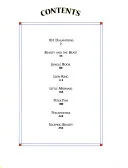
This 2005 volume gathers stories from well-known Disney films, including '101 Dalmatians,' 'Beauty and the Beast,' 'The Jungle Book,' 'The Lion King,' 'The Little Mermaid,' 'Peter Pan,' 'Pocahontas,' and 'Sleeping Beauty.' The book's goal is to condense the main plots and character developments of these popular movies into a single, accessible text. It presents a streamlined version of each narrative for readers.
The collection is designed for a wide audience. It serves first-time young readers and adults looking to revisit classic Disney tales. The book also speaks to those interested in the archetypal patterns found in popular folklore and modern mythology, as interpreted by a major media company. Readers who prefer concise retellings of familiar stories will find this volume useful.
Published during a period of significant digital growth for Disney, this book is part of a larger effort to organize and present the company's animated library. It aligns with the increasing market for home video and digital media consumption, offering these celebrated stories in convenient formats.
While ostensibly a collection of children's stories, Disney Enchanted Tales can be viewed through the lens of modern mythmaking. These films, now cultural touchstones, echo ancient fable structures. The book implicitly examines how contemporary narratives, disseminated through mass media, function similarly to older oral traditions. Each tale, from the cautionary elements in 'The Little Mermaid' to the growth depicted in 'The Lion King,' showcases recurring archetypes of the hero's journey, moral struggles, and personal change. It is a compendium of narrative patterns shaped by a prominent 20th and 21st-century storytelling entity.
💡 Why Read This Book?
• Understand the archetypal narrative structures underlying popular Disney films, as exemplified by the transformation motif in 'Beauty and the Beast,' offering a framework for analyzing modern storytelling. • Gain a concise overview of the plot resolutions in films like 'The Lion King' (released 1994), allowing for quick comparison of heroic journeys across different Disney productions. • Appreciate the distillation of classic fairy tale elements into accessible formats, recognizing how stories like 'Sleeping Beauty' continue to be retold and reinterpreted for contemporary audiences.
⭐ Reader Reviews
Honest opinions from readers who have explored this book.
❓ Frequently Asked Questions
What specific Disney movies are included in Disney Enchanted Tales from 2005?
The 2005 collection features '101 Dalmatians,' 'Beauty and the Beast,' 'The Jungle Book,' 'The Lion King,' 'The Little Mermaid,' 'Peter Pan,' 'Pocahontas,' and 'Sleeping Beauty'.
Is Disney Enchanted Tales an analysis of the films' symbolism?
No, the book primarily retells the plots of the featured Disney films. It offers the core narrative structure rather than an in-depth symbolic or thematic analysis.
Who is the author of Disney Enchanted Tales?
The book is attributed to 'Unknown' as the author, with its first publication date listed as 2005.
Does this book offer critical commentary on the Disney narratives?
The book focuses on presenting the stories themselves, not on offering critical commentary. It serves as a compilation of plot summaries for the selected animated features.
What is the primary purpose of Disney Enchanted Tales?
Its purpose is to consolidate and present the essential narratives of eight popular Disney animated films in a single, accessible volume for readers.
When was Disney Enchanted Tales first published?
Disney Enchanted Tales was first published in 2005.
🔮 Key Themes & Symbolism
Archetypal Hero's Journey
The collection showcases recurring patterns of the hero's journey, a concept central to Joseph Campbell's work. From Simba's exile and return in 'The Lion King' (1994) to Ariel's quest for a different life in 'The Little Mermaid,' each narrative follows a distinct departure, initiation, and return structure. These tales, despite their modern animation origins, map onto ancient mythological frameworks, illustrating how fundamental human narratives are perpetuated and adapted through popular media. The book presents these journeys in their most distilled plot form.
Transformation and Identity
Several narratives within Disney Enchanted Tales explore themes of transformation and self-discovery. The most prominent example is 'Beauty and the Beast,' where the Beast's physical and emotional change is contingent on love and acceptance. Similarly, Pocahontas undergoes a profound shift in understanding as she bridges two cultures. These stories highlight the esoteric idea that true identity is not fixed but can be revealed or reshaped through experience, moral choice, and connection with others, reflecting a deeper engagement with selfhood.
The Power of Storytelling
This compilation implicitly emphasizes the enduring power of narrative, particularly those that have achieved widespread cultural penetration. By collecting these specific Disney tales, the book acknowledges their status as modern folklore. The enduring appeal of characters like Peter Pan, who actively resists growing up, or the moral lessons embedded in '101 Dalmatians,' demonstrate storytelling's capacity to transmit values, entertain, and shape collective imagination across generations. The book itself is an artifact of this phenomenon.
Moral Dualism and Resolution
Many of the featured stories engage with a clear dichotomy between good and evil, or order and chaos. 'Sleeping Beauty,' for instance, presents a stark conflict between benevolent fairy magic and malevolent curses. 'The Lion King' depicts the struggle for rightful leadership against usurping forces. The book compiles these narratives, showing how they often resolve through the triumph of virtue, the restoration of balance, or the learning of crucial life lessons, reflecting a fundamental human desire for justice and order.
💬 Memorable Quotes
Direct passages from the work, attributed to the author.
“Ariel longed for a life beyond the sea.”
— This captures the core desire driving 'The Little Mermaid.' It speaks to the universal yearning for the unknown and the pursuit of a different existence, even at great personal risk, reflecting themes of ambition and dissatisfaction with one's current state.
“Wendy and her brothers flew to Neverland with Peter Pan.”
— This highlights the fantastical element of 'Peter Pan.' It represents the allure of escape from the mundane and the embrace of imagination, a core theme of the story's appeal to childhood wonder and adventure.
“Maleficent placed a curse upon Princess Aurora.”
— This refers to the central conflict in 'Sleeping Beauty.' It underscores the presence of malevolent forces and the dramatic tension that drives the narrative, setting the stage for the eventual triumph of good.
💡 Key Ideas
Editorial paraphrase of the work's core concepts — not direct quotes.
The Beast was cursed and could only be freed if he learned to love.
This paraphrased concept from 'Beauty and the Beast' highlights the central theme of redemption through affection. It suggests that external circumstances or appearances can be overcome by internal growth and the capacity for genuine emotional connection, a common motif in transformative narratives.
Simba was forced into exile but eventually returned to claim his throne.
This summarizes the heroic arc of 'The Lion King.' It illustrates the classic 'exile and return' narrative structure, where the protagonist must overcome adversity and personal doubt to fulfill their destiny and restore order to their world.
🌙 Esoteric Significance
Tradition
While not explicitly an esoteric text, Disney Enchanted Tales engages with narrative structures that resonate with archetypal psychology, a field influenced by Carl Jung and his exploration of universal symbols. The collection implicitly presents modern myths that, like ancient fables, contain patterns of initiation, transformation, and the shadow self. The book's compilation of these tales can be seen as a secularized expression of mythological storytelling, where the 'magic' lies in the narrative's ability to evoke deep psychological responses and transmit cultural values, akin to how Hermetic texts transmit wisdom through allegory.
Symbolism
The 'Beast' in 'Beauty and the Beast' serves as a potent symbol of the untamed, primal self that requires integration and love for transformation. Similarly, Ariel's desire to walk on land in 'The Little Mermaid' symbolizes the yearning for a different plane of existence or a higher state of consciousness, often represented by the terrestrial realm in contrast to the watery subconscious. The curse in 'Sleeping Beauty' can be interpreted as an externalization of inner psychological blocks or negative patterns that must be overcome for spiritual awakening.
Modern Relevance
Contemporary explorations of transmedia storytelling and the psychology of narrative often reference the enduring impact of Disney's animated features. Thinkers and practitioners in fields like Jungian analysis, mythopoeticism, and even certain branches of popular psychology draw upon these widely recognized stories as accessible examples of archetypal patterns. The book's compilation makes these narratives readily available for analysis, demonstrating how mass media continues to shape our understanding of universal human experiences and symbolic language in the 21st century.
👥 Who Should Read This Book
• Students of comparative mythology and folklore seeking to understand how ancient narrative structures are adapted into modern, widely-consumed media like the films featured (e.g., 'The Little Mermaid'). • Individuals interested in archetypal psychology, particularly those exploring Jungian concepts of the hero's journey and the shadow, as exemplified in tales like 'The Lion King' (1994). • Parents and educators looking for concise summaries of classic Disney animated features to share with younger audiences, providing a foundation for discussing themes present in stories like 'Pocahontas.'
📜 Historical Context
Published in 2005, Disney Enchanted Tales arrived at a time when Disney was solidifying its status as a global media conglomerate, deeply embedded in popular culture. The early 2000s saw a surge in digital media consumption and DVD sales, making compilations of beloved animated features highly marketable. This period followed the 'Disney Renaissance' of the 1990s, which revitalized the studio with films like 'The Lion King' (1994) and 'Pocahontas' (1995), many of which are represented here. The book can be seen as a product of Disney's strategic efforts to leverage its extensive intellectual property library for various platforms. Unlike earlier eras where animated fairy tales might have been viewed through a lens of literary criticism or folklore studies, this collection reflects a more commercial, mass-market approach to storytelling dissemination. Its release predates the widespread streaming era, positioning it as a physical artifact of Disney's narrative reach.
📔 Journal Prompts
The Beast's transformation and its connection to acceptance.
Ariel's yearning for a different world and its symbolic implications.
Simba's journey through exile and return.
The nature of curses and blessings as depicted in 'Sleeping Beauty.'
Peter Pan's resistance to adulthood and its meaning.
🗂️ Glossary
Archetype
A recurring symbol, character type, or motif in literature and mythology that represents universal patterns of human nature and experience, such as the hero, the mentor, or the shadow.
Hero's Journey
A narrative pattern identified by Joseph Campbell, describing the typical adventure of the archetype, involving departure, initiation, and return, as seen in 'The Lion King'.
Modern Myth
Stories originating in contemporary culture, often through mass media like film, that acquire symbolic meaning and resonate with audiences on a deep, psychological level.
Transformation
A significant change in form, appearance, or character, often central to narratives like 'Beauty and the Beast,' symbolizing inner growth or metamorphosis.
Fable
A short story, typically with animals as characters, conveying a moral. While Disney tales are more complex, they share this didactic quality.
Allegory
A story, poem, or picture that can be interpreted to reveal a hidden meaning, typically a moral or political one. Many Disney narratives contain allegorical elements.
Neverland
The fictional island setting in 'Peter Pan,' representing a area of eternal childhood, imagination, and adventure, free from the constraints of adult reality.
This book appears in 1 collection
🔮 Readers Also Liked
Browse all →








From the “Incantations” Collection
View all →



More Free Occult Philosophy Books
View all →