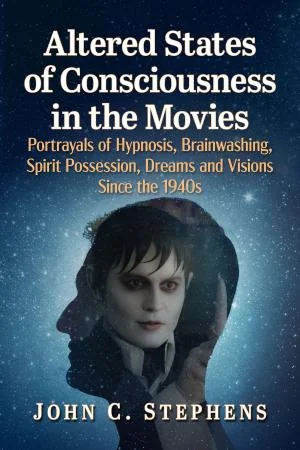
Altered States of Consciousness in the Movies
 71
71

Altered States of Consciousness in the Movies
John C. Stephens' "Altered States of Consciousness in the Movies" offers a compelling argument for cinema as a significant, albeit often unconscious, disseminator of esoteric thought. The book’s strength lies in its meticulous tracing of how Hollywood, particularly from the 1960s onward, translated complex psychological and spiritual states into visual language. Stephens effectively demonstrates how advancements in special effects in films like *2001: A Space Odyssey* (1968) provided new vocabularies for depicting subjective realities. A notable limitation, however, is the occasional reliance on interpretation without always grounding it in the specific directorial intent or critical reception of the films discussed. While the analysis of brainwashing tropes is particularly insightful, the broader assertion that all such cinematic explorations are direct reflections of esoteric traditions requires a more nuanced approach. Nevertheless, the work provides a valuable framework for understanding cinema's role in popularizing concepts of consciousness expansion and alteration, serving as a solid starting point for further inquiry.
📝 Description
71
John C. Stephens' 2007 book examines how films visualize dreams, hypnosis, and dissociation.
This 2007 study analyzes the representation of altered states of consciousness (ASCs) in cinema, beginning with the disorienting narratives of the 1960s. Stephens details how filmmakers moved beyond simple plot devices to employ cinematic techniques that can evoke subjective experiences in the viewer. The book traces the visual evolution of these depictions, showing how early films established a visual language for internal states. It discusses how advancements in special effects, particularly after the 1960s, enabled more complex and visceral portrayals of psychological shifts, from subtle suggestions to explicit visual metaphors.
Beyond mere entertainment, the book argues that the integration of ASCs into film acts as a reflection of societal preoccupations. Stephens connects these cinematic portrayals to collective desires for escapism, self-understanding, or anxieties about mental control. By examining specific film examples, the study illustrates cinema's role in shaping and responding to public discourse on reality and the mind. The work bridges film studies with psychological and esoteric thought, showing how concepts from philosophy and spiritual practices found expression in popular cinema and how these interpretations might challenge traditional understandings of ASCs.
This book fits within esoteric traditions by examining how popular media, specifically film, has engaged with concepts often found in mystical and psychological practices. It looks at how cinema visualizes subjective states like dreams, dissociation, and altered perceptions, which are central to many esoteric paths. The study considers how these mainstream portrayals might influence or interact with deeper philosophical and spiritual understandings of consciousness, reality, and the self. It bridges academic film analysis with the exploration of inner experience.
💡 Why Read This Book?
• Understand how cinematic special effects, particularly post-1960s innovations, visually translated abstract concepts of altered states, offering viewers tangible representations of internal shifts. • Gain insight into how Hollywood films, from the psychedelic era onwards, have mirrored and influenced societal perceptions of phenomena like hypnosis and spirit possession, concepts explored in specific film analyses. • Discover the unexpected intersections between popular film and esoteric thought, recognizing how visual storytelling in movies like *Altered States* (1980) can demystify or reframe traditional spiritual and psychological explorations.
⭐ Reader Reviews
Honest opinions from readers who have explored this book.
❓ Frequently Asked Questions
When did Hollywood's depiction of altered states of consciousness begin to surge?
The depiction of altered states of consciousness in Hollywood films saw a significant surge with the advent of advanced special effects, particularly starting in the 1960s, allowing for more elaborate visual representations.
What types of altered states does the book cover?
The book covers a range of altered states including dreams, hypnosis, spirit possession, and brainwashing, examining their cinematic representations.
Does the book focus only on modern films?
No, the book traces the rise of altered states depictions from early cinematic groundwork laid in the 20th century through to more contemporary prevalence, highlighting the evolution.
What is the connection between special effects and ASCs in film?
Special effects provided filmmakers with the technical means to visually manifest and explore subjective experiences, making altered states of consciousness more tangible and explorable for audiences.
Who is the author of 'Altered States of Consciousness in the Movies'?
The author is John C. Stephens, with the book first published in 2024.
What is the main argument about Hollywood and ASCs?
The book argues that Hollywood's integration of ASCs reflects and potentially shapes society's fascination with these phenomena, using cinema as a cultural mirror.
🔮 Key Themes & Symbolism
Visualizing the Unseen Mind
The book meticulously examines how filmmakers have translated abstract internal experiences—dreams, hallucinations, dissociative states—into concrete visual language. It highlights the key role of evolving special effects technology, particularly post-1960s, in creating cinematic representations of altered consciousness. This section explores how visual metaphors and narrative structures in films serve as surrogates for subjective psychological journeys, enabling audiences to engage with concepts previously confined to introspective or esoteric practices.
Cultural Barometer of Fascination
Stephens posits that Hollywood's recurring engagement with altered states of consciousness (ASCs) acts as a significant cultural barometer. The prevalence of themes like hypnosis, spirit possession, and psychological manipulation in films mirrors societal anxieties and curiosities regarding control, perception, and the boundaries of reality. This analysis connects cinematic trends to broader cultural dialogues, suggesting that film narratives reflect and influence public understanding of the mind's potential and vulnerabilities.
Esoteric Concepts in Popular Media
This theme focuses on the surprising infiltration of esoteric ideas into mainstream cinema. The book argues that popular films often serve as accessible conduits for concepts traditionally explored within mystical or psychological traditions. By analyzing specific film examples, Stephens demonstrates how cinematic storytelling can explain, popularize, or even reframe complex notions of consciousness, perception, and transformation for a mass audience, often without explicit acknowledgment of their esoteric origins.
The Evolution of Cinematic Representation
The work traces the historical development of depicting ASCs on screen. It contrasts early, more rudimentary portrayals with the sophisticated visual techniques that emerged from the 1960s onwards. This section details how narrative arcs and visual styles evolved to better capture the disorienting, expansive, or frightening aspects of altered mental states, making cinema an increasingly potent medium for exploring the frontiers of human consciousness.
💬 Memorable Quotes
Direct passages from the work, attributed to the author.
“Hollywood integrated ASCs into an array of films, reflecting society's fascination with the subject.”
— This statement expresses the book's core thesis: cinema is not merely entertainment but a mirror reflecting collective psychological and cultural preoccupations with non-ordinary states of awareness.
“The depiction of ASCs on the silver screen surged with the advent of special effects in the 1960s.”
— This highlights a key turning point, identifying technological advancement as a crucial catalyst that empowered filmmakers to visually represent complex internal states more effectively than ever before.
“Early cinematic portrayals laid the groundwork, but visual complexity increased dramatically.”
— This suggests a developmental trajectory in film history, where initial, simpler explorations of altered consciousness paved the way for the more intricate and varied depictions enabled by later cinematic innovations.
“ASCs, including dreams, hypnosis, spirit possession, and brainwashing, have long captivated contemporary culture.”
— This frames the subject matter as a persistent area of human interest, establishing the cultural relevance and enduring appeal of exploring non-ordinary states of consciousness across different eras.
“The book traces the rise and proliferation of these cinematic explorations.”
— This indicates the book's methodological approach, promising a historical and analytical survey of how altered states have been increasingly featured and visually elaborated upon within the medium of film.
🌙 Esoteric Significance
Tradition
While not explicitly aligning with a single lineage, the work draws implicitly from Gnostic and Hermetic traditions that emphasize subjective experience and the hidden nature of reality. It connects cinematic portrayals of mind-bending experiences to a broader cultural resonance with non-dualistic thinking and the exploration of inner dimensions, often found in mystical traditions. The book positions popular cinema as an unwitting, yet powerful, vehicle for disseminating concepts related to consciousness expansion beyond traditional esoteric circles.
Symbolism
Key symbols explored include the 'mindscape' as a visual representation of internal reality, often depicted through surreal imagery, kaleidoscopic patterns, or labyrinthine structures. Another motif is the 'dissolving self,' where characters lose their ego boundaries, symbolizing a transition into a more unified or chaotic state of being. The motif of 'possession' or 'channeling' also appears, representing the incursion of external or non-ordinary consciousness into the individual, a concept rich with esoteric meaning across various traditions.
Modern Relevance
Contemporary thinkers in consciousness studies and transpersonal psychology, as well as filmmakers exploring psychological thrillers and speculative fiction, find resonance in Stephens' analysis. The work provides a framework for understanding how visual media continues to shape our perception of mental states, influencing modern practices that utilize visualization or explore altered states through technology. It offers a critical lens for analyzing how concepts of selfhood, reality, and consciousness are continuously reinterpreted and broadcast through popular culture.
👥 Who Should Read This Book
• Film scholars and critics seeking to analyze the psychological and symbolic dimensions of cinema beyond traditional genre studies. • Students of esoteric traditions interested in understanding how concepts of altered states are represented and disseminated in contemporary popular culture. • Media theorists and cultural historians examining the role of film in reflecting and shaping societal attitudes towards consciousness, perception, and the human mind.
📜 Historical Context
Published in 2024, John C. Stephens' work arrives at a time when film studies increasingly engage with psychological and philosophical underpinnings. Its exploration of altered states of consciousness (ASCs) on screen builds upon decades of cinematic experimentation. The surge in ASC depictions from the 1960s aligns with the counter-cultural movements and the burgeoning interest in Eastern philosophies and psychedelic exploration, exemplified by films like *Easy Rider* (1969). While psychologists like Timothy Leary were popularizing altered states, filmmakers were independently developing visual vocabularies to represent these experiences. The book implicitly engages with the psychoanalytic interpretations of film prevalent in the mid-20th century, such as those by the Frankfurt School, which often viewed cinema as a tool of social control or escapism. Stephens' contribution lies in connecting these visual narratives more directly to the cultural fascination and the potential dissemination of esoteric concepts, offering a counterpoint to purely critical or sociological analyses.
📔 Journal Prompts
The cinematic representation of hypnosis in film: analyze its visual tropes.
Dreams as depicted on screen: what narrative functions do they serve?
Spirit possession in movies: compare its visual portrayal to traditional descriptions.
The concept of brainwashing as visualized in film: identify key techniques.
Reflect on a film that evoked a sense of altered consciousness in you.
🗂️ Glossary
Altered States of Consciousness (ASCs)
Subjective experiences characterized by a deviation from ordinary waking consciousness, encompassing states like dreams, hypnosis, mystical experiences, and induced psychological shifts.
Mindscape
A visual metaphor used in film to represent the internal psychological or imaginative world of a character, often employing surreal or abstract imagery.
Spirit Possession
A phenomenon, often depicted in film, where an entity or consciousness is believed to enter and control a person's body, altering their behavior and identity.
Brainwashing
A coercive process aimed at altering an individual's core beliefs, attitudes, and behaviors, frequently portrayed in cinema through psychological manipulation and sensory deprivation.
Visual Metaphor
The use of imagery or visual elements in film to represent abstract ideas or concepts, particularly relevant for depicting internal psychological states.
Psychedelic Era
A cultural period, roughly the 1960s, characterized by widespread experimentation with psychedelic drugs and a burgeoning interest in altered states of consciousness and Eastern spirituality.
Ego Dissolution
A psychological state characterized by the loss of the sense of a separate self, often experienced during intense altered states of consciousness, and frequently visualized in film.
This book appears in 1 collection
🔮 Readers Also Liked
Browse all →









From the “Altered States of Consciousness” Collection
View all →


More Free Occult Philosophy Books
View all →