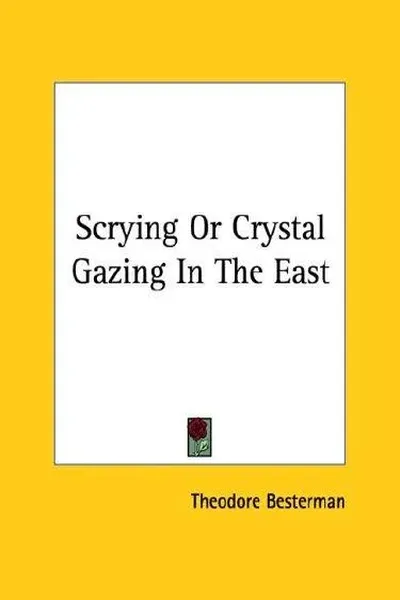
Scrying Or Crystal Gazing Among The Germans And Scandinavians

 61
61

Scrying Or Crystal Gazing Among The Germans And Scandinavians



Lorelei Sage (Contemplative Literature Editor) — Theodore Besterman's 'Scrying or Crystal Gazing' is an indispensable cornerstone for any serious student of Germanic and Scandinavian esoteric traditions. Besterman masterfully navigates the labyrinthine paths of historical evidence, presenting a compelling account of scrying practices that were integral to these ancient cultures. He unveils not just the 'how' but the profound 'why,' connecting these rituals to deeper spiritual and psychological states. This work is a testament to the enduring power of focused introspection and the belief in accessing veiled truths. It is essential reading for those seeking to understand the roots of Western divination and the profound wisdom held within ancestral practices.
📝 Description
61
Theodore Besterman's 1930 study examines scrying among ancient Germanic and Scandinavian peoples.
This 1930 study by Theodore Besterman examines the practice of scrying, or crystal gazing, within Germanic and Scandinavian cultures. Besterman investigates how ordinary objects were used as tools for divination, connecting them to the spiritual beliefs and daily lives of these societies. The book details the symbolism, folklore, and rituals associated with these practices, shedding light on how people sought to perceive the unseen. It explores the psychological and spiritual aspects of scrying, showing its integration into the broader cultural fabric.
Besterman's work focuses on the human drive to acquire hidden knowledge and understand fate through intuition and symbols. The research presents a view of how these cultures attempted to commune with the divine. It offers a specific look at a historical form of divination that has roots in ancestral wisdom.
Theodore Besterman's work belongs to the early 20th-century academic interest in comparative mythology and esoteric traditions. It sits alongside studies that sought to document and understand folk magic, divination, and spiritual beliefs outside mainstream religious or scientific frameworks. This tradition often involved collecting folklore and analyzing historical accounts to reconstruct past practices, aiming to uncover universal patterns in human spiritual seeking and belief systems.
💡 Why Read This Book?
Uncover the forgotten art of scrying within ancient Germanic and Scandinavian cultures. This book offers a rare glimpse into ancestral divination, revealing the symbolic language of the unseen. Ideal for occult scholars, spiritual seekers, and practitioners of divination who wish to expand their understanding of historical practices and connect with deeper layers of intuitive wisdom.
⭐ Reader Reviews
Honest opinions from readers who have explored this book.
❓ Frequently Asked Questions
What is scrying?
Scrying is a form of divination that involves gazing into a reflective surface, such as a crystal ball, water, or a mirror, to receive visions or insights from the spiritual realm or the subconscious mind.
What cultures does this book focus on?
The book specifically examines scrying practices among the ancient Germans and Scandinavians, exploring their unique traditions and interpretations of this divination method.
Is this book suitable for beginners in divination?
While rich in historical detail, the book's depth may be best appreciated by those with some foundational interest in divination or esoteric studies. However, its insights are valuable for all levels of curiosity.
What kind of reflective surfaces were used?
Historically, various surfaces were employed, including natural pools of water, polished stones, obsidian, mirrors, and of course, crystal balls, depending on availability and cultural tradition.
Does the book offer practical scrying techniques?
The book primarily focuses on the historical and cultural context of scrying, rather than providing step-by-step modern practical guides, though understanding the historical practices can inform contemporary methods.
🔮 Key Themes & Symbolism
Ancestral Divination and Foresight
This theme explores how ancient Germanic and Scandinavian peoples utilized scrying as a primary method for seeking divine guidance, predicting future events, and understanding cosmic forces. It studies the rituals, beliefs, and societal roles associated with these practices, highlighting how foresight was integrated into their worldview and decision-making processes. The focus is on the profound connection between the visible and invisible worlds, where the scryer acted as a bridge between mortal concerns and the wisdom of the gods or spirits.
Symbolism of Reflective Surfaces
The symbolic power of reflective surfaces is a central theme, examining how water, mirrors, crystals, and other polished mediums were perceived as gateways to other realities. Besterman illuminates the inherent symbolism of reflection itself – a mirroring of the outer world and the inner psyche – and how this duality was exploited for divinatory purposes. The book uncovers the collection of interpretations associated with these objects, revealing their sacred significance and their capacity to reveal hidden truths and spiritual messages.
The Psychology of Visionary States
This theme investigates the psychological and spiritual states induced by scrying. It moves beyond mere technique to explore the altered consciousness, focused attention, and intuitive leaps that characterized the scrying experience. Besterman examines how these practices fostered a deep connection with the subconscious and facilitated visionary experiences, offering insights into the human capacity for perception beyond ordinary sensory input. The emphasis is on the internal journey of the scryer and the transformation of consciousness through focused contemplation.
💬 Memorable Quotes
Direct passages from the work, attributed to the author.
“Water holds the elements of time.”
— This phrase evokes the idea that water, as a natural reflective medium, can retain spiritual or historical impressions, acting as a conduit to past events or ancestral wisdom.
“In the stillness, the veil thins.”
— This aphorism highlights the importance of inner calm and focused meditation in scrying, suggesting that a tranquil mind is essential for perceiving subtle spiritual energies and visions.
“The crystal's heart whispers secrets.”
— This poetic line personifies the crystal, implying that it possesses an inherent consciousness or spiritual essence capable of communicating profound, hidden truths to the attuned observer.
💡 Key Ideas
Editorial paraphrase of the work's core concepts — not direct quotes.
The mirror of the soul reflects truths unseen.
This quote suggests that the inner self, much like a reflective surface, holds hidden knowledge and insights that can be accessed through introspection and dedicated practice.
Fate is but a reflection in the looking glass.
This quote presents a deterministic view, suggesting that destiny is already laid out and can be glimpsed or understood by carefully observing the patterns and images revealed through divination.
🌙 Esoteric Significance
Tradition
This work deeply engages with the esoteric traditions of Northern Europe, particularly the pre-Christian spiritual and magical practices of Germanic and Scandinavian peoples. It illuminates a facet of folk magic and shamanic practices, where divination was not merely fortune-telling but a vital method for maintaining spiritual equilibrium, seeking guidance from the divine, and understanding one's place in the cosmos. The book connects these practices to broader Indo-European shamanic roots, emphasizing the visionary aspect and the role of the seer or Völva.
Symbolism
The symbolism explored is rich and complex, centering on the reflective surface as a threshold between worlds. Water symbolizes purity, the subconscious, and the flow of time; crystals and polished stones represent concentrated spiritual energy and clarity of vision. Mirrors act as portals, reflecting both the external world and the inner landscape. The act of gazing itself symbolizes focused intention, the journey inward, and the receptivity required to perceive subtle energies and symbolic messages emanating from the divine or the collective unconscious.
Modern Relevance
In an era often characterized by rapid technological advancement and superficial connections, Besterman's work offers a powerful reminder of the enduring human need for introspection, intuition, and connection to deeper, more ancient wisdom. The principles of focused attention, symbolic interpretation, and the cultivation of inner vision inherent in scrying remain profoundly relevant for modern practitioners of divination, meditation, and mindfulness. The book encourages a re-evaluation of our relationship with the unseen and the potential for accessing clear insights through dedicated practice and open-hearted inquiry.
👥 Who Should Read This Book
This meticulously researched volume is essential for occult scholars and historians of religion seeking to understand the foundational divinatory practices of Germanic and Scandinavian cultures. Spiritual seekers interested in the historical roots of divination and the symbolic language of vision will find clear insights. Practitioners of witchcraft, shamanism, or any form of esoteric art seeking to connect with ancestral wisdom and expand their understanding of meditative and visionary techniques will find this book invaluable. Even the curious lay reader fascinated by the human quest for hidden knowledge and the enduring power of intuition will be captivated by its depth.
📜 Historical Context
Theodore Besterman's 'Scrying or Crystal Gazing Among the Germans and Scandinavians' emerges from a period of intense scholarly interest in folklore, mythology, and comparative religion, particularly in the late 19th and early 20th centuries. This era saw a resurgence of attention to pre-Christian European traditions, as scholars sought to understand the roots of modern European cultures and their spiritual heritage. Besterman's work stands as a proof of the rigorous, often ethnographic, approach of the time, meticulously gathering and analyzing historical accounts, sagas, and ethnographic records. The book reflects a growing awareness of the psychological and symbolic dimensions of ancient practices, moving beyond purely historical or anthropological descriptions to explore the deeper esoteric meanings embedded within these traditions. It contributes to a broader understanding of Western esoteric history and the enduring human fascination with divination and altered states of consciousness.
📔 Journal Prompts
Reflect on a time you felt a strong intuition. How did this experience compare to the historical accounts of scrying?
Consider the symbolism of water in your own life or culture. What deeper meanings might it hold?
Explore the concept of a 'threshold' – physical or metaphorical. How can reflective surfaces serve as thresholds in your spiritual practice?
Imagine you are an ancient Germanic or Scandinavian seer. What questions would you pose to a reflective surface, and what answers might you hope to receive?
How can the practice of focused gazing, as described in scrying, be applied to enhance your awareness of the subtle energies in your environment?
🗂️ Glossary
Scrying
The practice of looking into a reflective surface, such as a crystal ball, water, or mirror, to receive visions, insights, or messages from the spiritual or subconscious realms.
Divination
The practice of seeking knowledge of the future or the unknown by supernatural means, often through the interpretation of omens, signs, or symbols.
Völva
A female seer or prophetess in ancient Norse society, believed to possess supernatural powers and the ability to foretell the future, often through ritualistic practices like Seidr.
Seidr
A form of Norse magic, often associated with prophecy, fate manipulation, and journeying to other realms. It was typically practiced by women, including the Völva.
Esoteric
Intended for or likely to be understood by only a small number of people with a specialized knowledge or interest; relating to occult or mystical subjects.
This book appears in 3 collections
🔮 Readers Also Liked
Browse all →







More by Theodore Besterman
All books →
From the “Tarot” Collection
View all →








More Free Divination & Tarot Books
View all →