The I ching and modern man
 61
61

The I ching and modern man



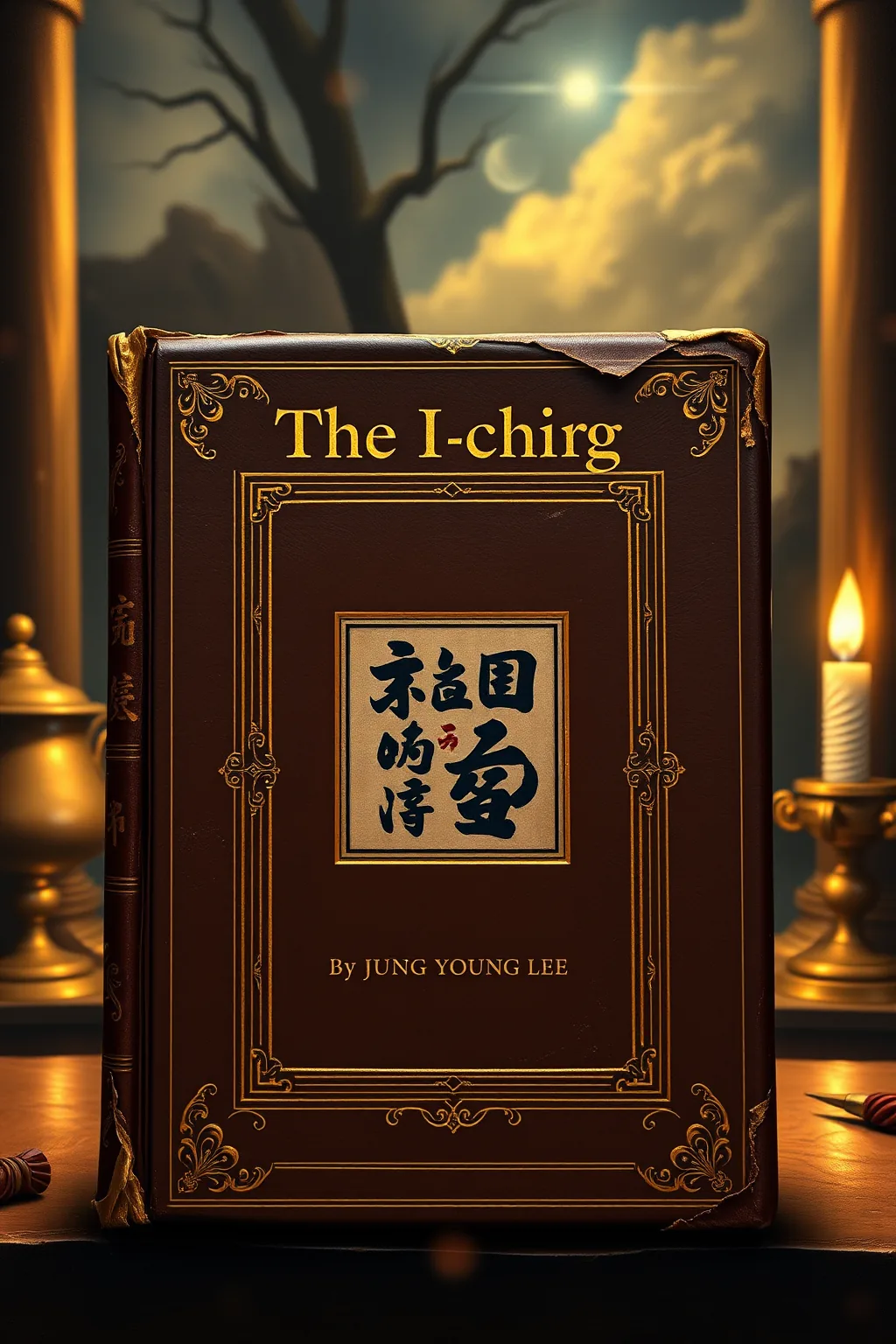
Jung Young Lee's 'The I Ching and Modern Man' stands as a luminous beacon for contemporary seekers navigating the labyrinth of existence. Lee's profound scholarship and intuitive understanding of the *Book of Changes* breathe vibrant life into its ancient symbols, presenting the hexagrams not as static pronouncements, but as dynamic reflections of universal principles and psychological archetypes. This work transcends mere divination, offering a sophisticated framework for self-discovery and existential insight. It is an indispensable guide for anyone yearning to harmonize with the subtle energies of the cosmos and to cultivate profound wisdom in their personal and spiritual journey. A truly transformative read.
📝 Description
61
Jung Young Lee's 1981 book applies the I Ching to modern psychological concerns.
Jung Young Lee's book, published in 1981, examines the I Ching, the ancient Chinese divination text, through the lens of modern psychology. He moves beyond simple fortune-telling to present the *Book of Changes* as a system of universal principles and psychological archetypes. Lee connects the symbolic language of the hexagrams to contemporary human experience.
The text aims to help readers understand how the I Ching's patterns can inform their lives. It discusses synchronicity and the relationship between the individual and the wider world. The book encourages integrating this ancient wisdom into daily life for greater self-awareness and understanding of life's unfolding events.
This work sits within the Western esoteric tradition's engagement with Eastern philosophies, particularly following Carl Jung's own interest in the I Ching. It translates the principles of a classical Chinese divination text, often considered a form of spiritual technology, into a framework understandable for a modern audience grappling with existential and psychological questions. The book bridges the gap between traditional Chinese cosmology and contemporary Western psychological theory.
💡 Why Read This Book?
This book offers a rare synthesis of ancient esoteric wisdom and modern psychological insight, making the profound oracular system of the I Ching accessible and relevant to contemporary life. It is an essential read for those seeking to understand life's patterns, navigate personal challenges with wisdom, and connect with a deeper, cosmic order. Ideal for spiritual seekers, students of Eastern philosophy, and anyone interested in the art of self-reflection through symbolic guidance.
⭐ Reader Reviews
Honest opinions from readers who have explored this book.
❓ Frequently Asked Questions
What is the I Ching?
The I Ching, or *Book of Changes*, is an ancient Chinese divination text and philosophical classic, revered for its profound insights into the workings of the universe and the human condition through a system of 64 hexagrams.
How does Jung Young Lee approach the I Ching?
Lee presents the I Ching not just as a tool for fortune-telling, but as a sophisticated system of cosmic principles and psychological archetypes, offering a bridge between ancient wisdom and modern understanding of self and destiny.
Is this book suitable for beginners?
Absolutely. Lee's clear prose and thoughtful explanations make the complex symbolism of the I Ching accessible to newcomers, while still offering depth for seasoned practitioners.
What are hexagrams?
Hexagrams are the core symbolic units of the I Ching, consisting of six stacked lines, each either broken or unbroken, representing specific states of change and offering guidance on situations and actions.
Can the I Ching help with decision-making?
Yes, the I Ching is renowned for its ability to offer perspective and guidance on complex decisions, revealing potential outcomes and suggesting paths aligned with universal harmony.
🔮 Key Themes & Symbolism
The Oracle of Cosmic Harmony
This theme explores the I Ching as a profound system that reflects the cyclical nature of the universe and the interconnectedness of all phenomena. It looks at how the 64 hexagrams act as archetypal patterns, mirroring the dynamic flow of existence and offering guidance for aligning one's actions with the natural order. Readers will discover how to perceive the subtle currents of destiny and the inherent wisdom embedded in the ebb and flow of life's experiences, fostering a sense of peace and understanding.
Synchronicity and the Inner Compass
Central to Lee's interpretation is the concept of synchronicity – meaningful coincidences that reveal underlying patterns. The book illuminates how consulting the I Ching can attune the individual to these synchronicities, acting as an inner compass that guides towards authentic choices. It emphasizes the oracle's role in fostering intuition and self-awareness, empowering readers to navigate life's complexities with clarity and purpose by listening to the whispers of the unconscious.
The Hexagrams as Psychological Archetypes
This theme unpacks the profound psychological depth of the I Ching, presenting the hexagrams as symbolic representations of fundamental human experiences and archetypal energies. Lee guides readers to see how these ancient symbols resonate with the modern psyche, offering clear insights into personal growth, relationships, and spiritual development. Understanding these archetypes allows for a deeper self-exploration and a more conscious engagement with the challenges and opportunities that arise in life.
💬 Memorable Quotes
Direct passages from the work, attributed to the author.
“Change is the only constant, but harmony is the eternal principle.”
— This emphasizes the dynamic nature of existence, yet points to an underlying order and balance that can be sought and achieved, suggesting a path towards equilibrium amidst flux.
“Within the oracle lies the blueprint of your becoming.”
— This suggests that the I Ching is not merely a predictive tool, but a profound guide for personal evolution, offering insights into one's potential and the path towards self-realization.
“Seek not answers, but understanding; not fate, but flow.”
— This encourages a shift in perspective from seeking definitive predictions to cultivating a deeper comprehension of life's processes and learning to move with its natural currents.
“The greatest wisdom is found in the silence between the lines.”
— This points to the intuitive and contemplative aspect of engaging with the I Ching, suggesting that true insight often emerges not from the explicit text, but from the quiet contemplation and inner resonance it inspires.
💡 Key Ideas
Editorial paraphrase of the work's core concepts — not direct quotes.
The universe speaks in symbols; learn to listen.
This quote highlights the fundamental premise that the cosmos communicates through a rich symbolic language, and that developing the capacity to perceive and interpret these symbols is key to understanding life's deeper meanings.
🌙 Esoteric Significance
Tradition
The book draws deeply from the Taoist and Confucian traditions of ancient China, particularly the esoteric layers of the I Ching. It aligns with hermetic principles of correspondence and the understanding of universal laws governing both the macrocosm and the microcosm. The work bridges these ancient currents with modern psychological interpretations, making its esoteric significance accessible to a broader, contemporary audience.
Symbolism
Key symbols include the Yin and Yang, representing complementary forces, and the 64 hexagrams, each a complex arrangement of broken (Yin) and unbroken (Yang) lines. These symbols are presented as potent archetypes that mirror the cycles of nature and the human psyche, offering clear insights into balance, change, and the unfolding of destiny. The trigrams and their combinations form a sophisticated symbolic language for understanding universal patterns.
Modern Relevance
In an era often characterized by rapid change, uncertainty, and a sense of disconnection, the I Ching, as interpreted by Lee, offers a grounding framework for understanding life's complexities. Its emphasis on balance, adaptability, and inner wisdom provides a timeless guide for navigating personal and collective challenges. The book's relevance lies in its ability to foster self-awareness, encourage mindful decision-making, and reconnect individuals with a sense of cosmic order and purpose.
👥 Who Should Read This Book
This informative text is a treasure for the spiritual seeker yearning for deeper meaning and guidance. Scholars of comparative religion and Eastern philosophy will find its insightful interpretations invaluable. Practicing diviners and those interested in the art of introspection through oracular systems will discover a rich resource for expanding their understanding. Beginners to the I Ching will find Lee's approach clear and accessible, offering a profound entry point into this ancient wisdom tradition, while experienced practitioners will appreciate the fresh, modern perspective.
📜 Historical Context
Written during a period of burgeoning interest in Eastern philosophies and psychologies in the West, 'The I Ching and Modern Man' emerged as a significant bridge between ancient Chinese wisdom and contemporary Western thought. The mid-20th century saw figures like Carl Jung himself deeply engage with the *Book of Changes*, recognizing its profound psychological and philosophical implications. Lee's work arrived in this fertile intellectual landscape, offering a nuanced and accessible interpretation that resonated with a generation seeking to integrate spiritual and esoteric knowledge into their lives. It contributed to the growing dialogue between Eastern oracular traditions and Western analytical psychology, positioning the I Ching as more than a historical artifact but a living source of guidance for the modern individual.
📔 Journal Prompts
Reflect on a recent situation where you felt out of balance. How might a hexagram from the I Ching offer guidance or a new perspective on this imbalance?
Consider the concept of 'synchronicity.' Describe a recent meaningful coincidence in your life and what it might signify.
Which hexagrams resonate most strongly with your current life path or challenges? Explore the symbolic meanings and their personal relevance.
How can the principles of Yin and Yang be applied to bring more harmony into your daily routines or relationships?
What does it mean to you to 'listen to the universe'? How can you cultivate this awareness in your everyday life?
🗂️ Glossary
Hexagram
A fundamental symbol of the I Ching, composed of six stacked lines, either broken (Yin) or unbroken (Yang), representing a specific state of change and offering symbolic guidance.
Yin
The feminine, passive, dark, and receptive principle in Taoist philosophy, often represented by a broken line in the I Ching.
Yang
The masculine, active, light, and creative principle in Taoist philosophy, often represented by an unbroken line in the I Ching.
Trigram
A component of a hexagram, consisting of three lines (Yin or Yang), forming one of the eight fundamental symbolic configurations.
Synchronicity
Meaningful coincidences that suggest an underlying order or connection between the inner psychological state and external events, as described by Carl Jung.
This book appears in 6 collections
🔮 Readers Also Liked
Browse all →









More by Jung Young Lee
All books →From the “I Ching” Collection
View all →







More Free Divination & Tarot Books
View all →