Palm Reading and Tarot for Beginners
 61
61

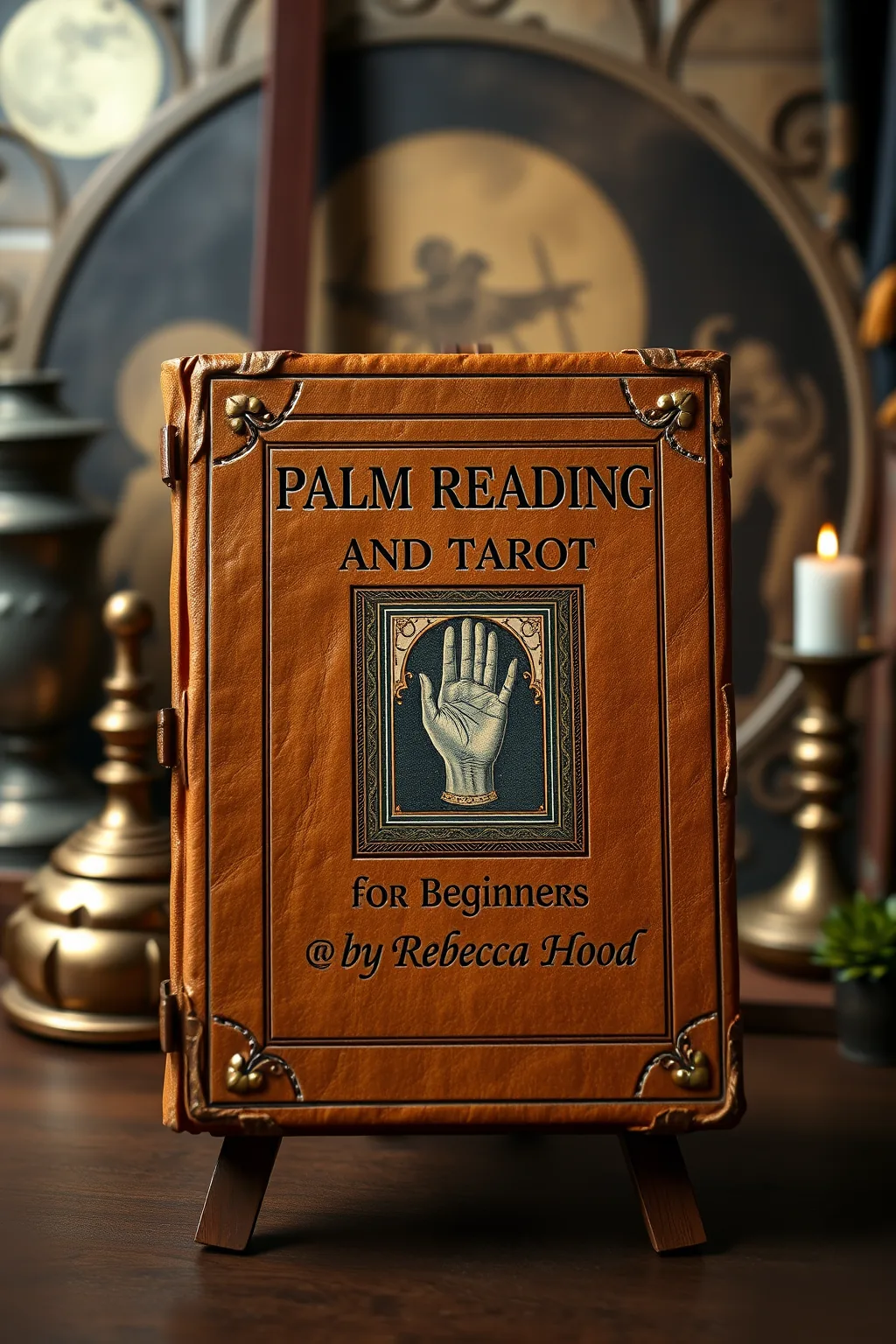
Palm Reading and Tarot for Beginners



Rebecca Hood's 'Palm Reading and Tarot for Beginners' is a beacon for those venturing into the arcane arts. Evander Ashcroft, Editor of Alchemy & Hermeticism, commends its lucid exposition of complex divinatory systems. Hood masterfully demystifies palmistry and Tarot, rendering their profound symbolism accessible without sacrificing their inherent mystique. The book's strength lies in its balanced approach, weaving practical instruction with philosophical depth. It empowers the novice to not only interpret external signs but also to explore the internal cosmos reflected within these ancient practices. An essential primer for any serious student of the esoteric, offering a solid foundation for a lifelong journey of self-discovery.
📝 Description
61
Rebecca Hood's 2021 guide makes palmistry and Tarot accessible to newcomers.
Rebecca Hood's 'Palm Reading and Tarot for Beginners' aims to demystify two classic divination methods. The book covers the basics of interpreting hand lines, including the major lines like the life line and head line, as well as the significance of mounts on the palm. It also introduces the Tarot deck, explaining the meanings of the major and minor arcana cards. Hood structures the content to build understanding step by step, moving from foundational concepts to more complex interpretations.
The intention is to equip readers with practical skills for personal insight. The text focuses on the symbolic language within both palmistry and Tarot, encouraging readers to develop their intuitive abilities. It avoids overly technical jargon, making the material suitable for those new to esoteric practices. The book offers a straightforward approach to learning these arts for self-reflection and understanding personal circumstances.
This book fits within the modern Western esoteric tradition that seeks to make ancient or occult knowledge available to a general audience. Practices like palmistry and Tarot card reading have long histories, often integrated into various spiritual and folk traditions. Hood's approach aligns with a contemporary trend of secularizing or popularizing these divinatory arts, presenting them as tools for psychological insight and personal growth rather than solely religious or magical practices. It follows in a lineage of popularizers who aim to bridge the gap between complex symbolic systems and the everyday individual.
💡 Why Read This Book?
Unlock the secrets of destiny and self-knowledge. 'Palm Reading and Tarot for Beginners' provides a clear, empowering pathway into the mystical arts. Ideal for curious beginners, spiritual seekers, and those wishing to deepen their intuitive abilities, this book offers practical techniques and profound insights into the symbolic language of the universe. Discover how to read the lines of your palm and the cards of the Tarot to navigate life's path with greater clarity and wisdom.
⭐ Reader Reviews
Honest opinions from readers who have explored this book.
❓ Frequently Asked Questions
Is this book suitable for absolute beginners with no prior knowledge?
Absolutely. Rebecca Hood has crafted this guide with the complete novice in mind, offering clear explanations and step-by-step instructions to ensure a smooth and engaging learning experience without any prior esoteric background.
What specific palmistry features are covered?
The book delves into the major lines (Life, Head, Heart, Fate), the mounts, hand shapes, and finger formations, providing interpretations for each element and how they interconnect to form a holistic reading.
How does the Tarot section differ from other beginner guides?
Beyond basic card meanings, Hood emphasizes the archetypal symbolism and narrative structure of the Tarot, encouraging a deeper intuitive connection with the cards and their profound messages for personal growth.
Can I use this book to read for others?
Yes, the practical exercises and clear interpretive frameworks provided are designed to equip you with the confidence and skills to perform readings for yourself and others.
What philosophical underpinnings are explored?
The book touches upon concepts of synchronicity, fate versus free will, and the interconnectedness of the individual with the cosmos, grounding the divinatory practices in a broader metaphysical understanding.
🔮 Key Themes & Symbolism
The Language of the Hand
Explore the ancient art of palmistry, a profound system of interpreting the lines, mounts, and shapes of the hand as a map of one's destiny, character, and potential. This section clarifies the intricate patterns etched upon the palm, revealing how they reflect the inner workings of the psyche and the subtle influences shaping our lives. It's a journey into understanding the physical manifestation of our spiritual and energetic blueprint, offering insights into our strengths, challenges, and the unique path we are meant to tread.
The Archetypal Wisdom of Tarot
Examine the detailed symbolism and narrative power of the Tarot. This theme unpacks the Major and Minor Arcana as a deck of profound archetypes, each card a gateway to understanding universal human experiences, psychological states, and spiritual truths. Beyond simple fortune-telling, the Tarot serves as a mirror to the soul, facilitating self-reflection, intuition development, and the exploration of life's intricate cycles and lessons. It's a visual language designed to illuminate the path of personal transformation and spiritual awakening.
Intuitive Connection and Self-Discovery
This central theme emphasizes the development of personal intuition as the central to effective divination. The book guides readers to move beyond rote memorization of meanings, fostering a deeper, more personal connection with the symbols of palmistry and Tarot. It champions the idea that these practices are not merely predictive tools but potent catalysts for self-awareness, personal growth, and the empowerment to consciously shape one's own destiny through understanding and inner wisdom.
💬 Memorable Quotes
Direct passages from the work, attributed to the author.
“Each Tarot card is a portal, not a prison.”
— Highlighting the active role of the reader, this suggests that Tarot cards offer insights and opportunities for interpretation rather than fixed pronouncements, empowering choice.
“Your intuition is the compass that navigates the sea of symbols.”
— This emphasizes the crucial role of the reader's inner knowing in understanding the complex language of divination, positioning intuition as the primary tool for interpretation.
“Within the lines and the cards, lies the blueprint of your becoming.”
— Suggesting that divination tools reveal not just who we are, but also our potential for growth and transformation, linking present circumstances to future development.
💡 Key Ideas
Editorial paraphrase of the work's core concepts — not direct quotes.
The lines on your palm are not chains, but whispers of possibility.
This quote reframes palmistry from a deterministic system to one of potential and guidance, emphasizing that the hand reveals tendencies, not unchangeable futures.
The universe speaks in patterns; learn to read them.
This quote underscores the idea that seemingly random events and symbols are part of a larger cosmic order, and that divination is the art of deciphering these meaningful connections.
🌙 Esoteric Significance
Tradition
This book draws heavily from Western esoteric traditions, particularly those influenced by Hermeticism, Kabbalah, and Renaissance occultism. It connects the symbolic language of the Tarot to archetypal psychology and the ancient practice of physiognomy found in palmistry. The emphasis on personal interpretation and self-discovery aligns with the alchemical principle of 'as above, so below,' viewing the microcosm of the individual as a reflection of the macrocosm of the universe.
Symbolism
The core symbolism revolves around the hand as a microcosm of the universe and the Tarot deck as a visual representation of the soul's journey. Palmistry's lines and mounts are interpreted as energetic pathways and personality traits, while Tarot's Major Arcana represent universal archetypes and life lessons, and the Minor Arcana depict the unfolding of these themes in daily life. Both systems are presented as symbolic languages for understanding cosmic patterns and personal destiny.
Modern Relevance
In an age of rapid change and information overload, 'Palm Reading and Tarot for Beginners' offers a grounding in ancient wisdom and a pathway to cultivating intuition and self-awareness. These practices provide a framework for navigating uncertainty, fostering a deeper connection with one's inner self, and understanding life's challenges from a more profound, symbolic perspective. The book empowers individuals to access their innate wisdom and make more conscious, aligned choices, making it highly relevant for contemporary seekers of meaning and guidance.
👥 Who Should Read This Book
This comprehensive guide is a treasured resource for a diverse audience. Aspiring practitioners and complete novices will find an invaluable foundation in its clear, accessible explanations of both palmistry and Tarot. Spiritual seekers and those on a path of self-discovery will appreciate its insights into personal growth and intuitive development. Even seasoned practitioners may find fresh perspectives and a renewed appreciation for the fundamental principles of these ancient arts. It is for anyone yearning to understand the symbolic language of the universe and harness its wisdom for a more enlightened existence.
📜 Historical Context
The practice of palmistry and the use of Tarot cards as divinatory tools emerged from rich historical tapestries, deeply rooted in ancient traditions of scrying, astrology, and symbolic interpretation. Palmistry, with its origins tracing back to India and later disseminated through Greek and Roman cultures, was considered a serious study of physiognomy and character analysis. The Tarot, while its exact origins are debated, gained prominence in 15th-century Europe, initially as a game, but its allegorical imagery soon lent itself to esoteric interpretations. By the 18th and 19th centuries, figures like Etteilla and the Hermetic Order of the Golden Dawn codified and popularized Tarot as a profound system of divination and spiritual development. 'Palm Reading and Tarot for Beginners' stands as a proof of the enduring human fascination with deciphering the unseen, bridging the gap between these historical practices and the modern seeker, offering a curated entry point into centuries of accumulated esoteric wisdom.
📔 Journal Prompts
Reflect on the most prominent line on your dominant hand. What does its interpretation suggest about your core nature or life path?
Choose a Tarot card that speaks to you today. Write a short story or poem inspired by its imagery and symbolism.
How can the lessons learned from a specific Tarot spread be applied to a current challenge you are facing?
Consider the relationship between a particular palm line and a specific Tarot archetype. How do they complement or contrast each other's meanings?
What intuitive nudges or gut feelings have you experienced recently? How might palmistry or Tarot help you to better understand or trust these inner signals?
🗂️ Glossary
Major Arcana
The 22 trump cards of the Tarot deck, representing significant life events, archetypal figures, and profound spiritual lessons in a reading.
Minor Arcana
The 56 cards of the Tarot deck, divided into four suits (Wands, Cups, Swords, Pentacles), which represent the daily experiences, challenges, and opportunities of life.
Mounts
Fleshy, raised areas on the palm, named after planets, believed to influence personality traits and potential associated with that planetary energy.
Ascendant Line
Often synonymous with the Heart Line, this line traces the upper palm and is interpreted as relating to emotional matters, relationships, and the heart's desires.
Synchronicity
Meaningful coincidences that occur without a causal relationship, often interpreted as the universe providing guidance or confirmation through seemingly random events.
This book appears in 3 collections
🔮 Readers Also Liked
Browse all →
More by Rebecca Hood
All books →

From the “Tarot” Collection
View all →
More Free Divination & Tarot Books
View all →