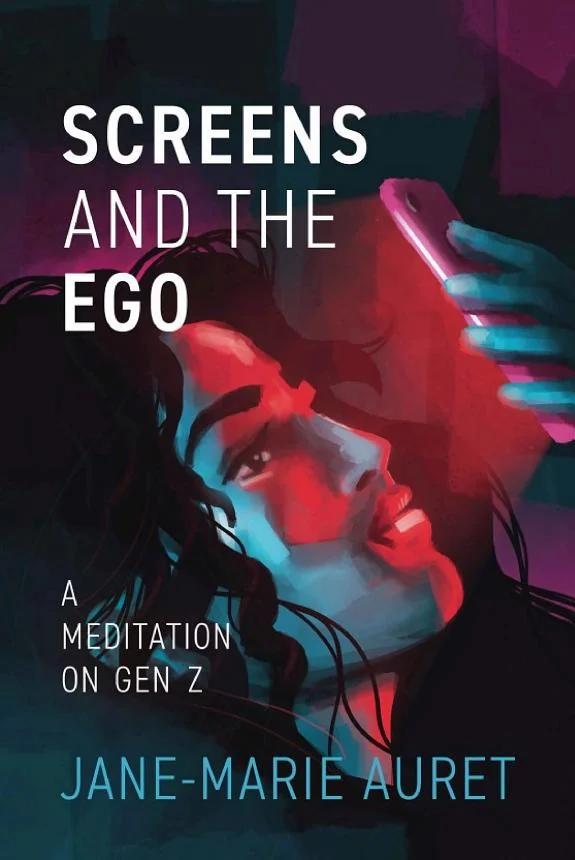
Screens and the Ego
 72
72

Screens and the Ego
Jane-Marie Auret’s "Screens and the Ego" offers a bracing, often uncomfortable, examination of a generation tethered to the digital ether. The author’s frank depiction of her own struggles, interwoven with broader cultural observations, lends the work a visceral urgency. A particular strength lies in Auret’s ability to articulate the specific anxieties of digital natives, moving beyond generalized critiques. For instance, her exploration of how algorithmic curation shapes internal desires, rather than merely reflecting them, feels acutely observed. However, the work occasionally struggles to fully integrate its memoiristic and analytical threads, leaving some passages feeling more like personal reflection than cohesive argument. The book’s central assertion that we have "traded spiritual wisdom for psychological diagnoses" is a powerful, if contentious, claim that warrants deeper engagement with specific spiritual traditions beyond what is offered. "Screens and the Ego" provides a vital, albeit imperfect, lens on contemporary existential malaise.
📝 Description
72
Jane-Marie Auret's 2023 book examines how digital immersion shapes Generation Z's identity.
Screens and the Ego, published in 2023, scrutinizes the psychological and spiritual unease affecting Generation Z. Jane-Marie Auret combines personal narrative, autofiction, and cultural analysis to understand how continuous engagement with digital devices influences how young people form their identities. The book addresses individuals struggling with the constant presence of screens in their lives, especially younger adults and those interested in the connections between technology, spirituality, and current psychology. It also speaks to readers looking for perspectives outside of standard medical explanations.
The work arose in the early 2020s, a time of increased digital connection and growing worries about mental health, particularly after the pandemic. It touches upon current conversations about social media's effects, the curated realities presented by algorithms, and the quest for genuine meaning in a world saturated with media. Auret questions the 'ego death' that digital interfaces can cause, the decline of established spiritual foundations, and the generation's search for meaning. The narrative contrasts algorithmic pressures with the ancestral knowledge from her grandmother's background, pointing out differences in coping and spiritual understanding across generations.
This book engages with contemporary spiritual development by examining the impact of digital environments on the self. It looks at how constant exposure to screens and algorithmic curation can disrupt traditional pathways to self-understanding and spiritual grounding. Auret contrasts this with ancestral knowledge, suggesting a modern reinterpretation of spiritual practices that acknowledge the pervasive influence of technology. The work is situated within a discourse concerned with finding authentic existence and inner peace amidst rapid technological change.
💡 Why Read This Book?
• Understand the specific anxieties of digital natives regarding identity, as detailed through Auret's experiences with algorithmic influence, offering a unique perspective not found in general psychology texts. • Gain insight into the tension between modern therapeutic culture and ancestral spiritual practices, as exemplified by the juxtaposition of her grandmother's wisdom and contemporary diagnosis. • Grasp the concept of "screen-induced ego dissolution," a novel framework for understanding how digital interfaces alter self-perception, directly challenging conventional notions of selfhood.
⭐ Reader Reviews
Honest opinions from readers who have explored this book.
❓ Frequently Asked Questions
What is the primary argument of 'Screens and the Ego' regarding Generation Z?
The book argues that Generation Z faces a soul-deep crisis due to growing up immersed in digital environments, leading to a search for meaning that often bypasses traditional spiritual wisdom in favor of psychological frameworks.
How does Jane-Marie Auret blend memoir and fiction in this book?
Auret uses autofiction, merging personal experiences and reflections with fictionalized elements to create a narrative that is both deeply personal and broadly representative of her generation's struggles.
What historical period does 'Screens and the Ego' primarily address?
The book focuses on the contemporary digital age, particularly the experiences of those who came of age from the late 1990s onwards, heavily influenced by the rise of social media and pervasive internet access.
What is the significance of the contrast between ancestral wisdom and modern therapy culture in the book?
This contrast highlights a perceived generational shift in how individuals seek understanding and healing, questioning whether modern psychology adequately addresses deeper existential needs met by older spiritual traditions.
What does the book suggest about the impact of algorithms on identity?
Auret suggests that algorithms, by curating online experiences and shaping perceptions, actively contribute to identity formation and can lead individuals away from authentic self-discovery towards algorithmically defined personas.
Is 'Screens and the Ego' considered an esoteric text?
Yes, it is categorized as Esoteric literature due to its exploration of spiritual crises, the search for meaning beyond material existence, and its engagement with alternative frameworks for understanding the self and consciousness.
🔮 Key Themes & Symbolism
Algorithmic Shaping of Self
The work scrutinizes how algorithms, which curate digital experiences from the late 1990s onward, actively shape not only perceptions of the world but also the internal field of identity. Auret posits that this curated reality can lead to a manufactured sense of self, diverging from authentic being. This theme is central to understanding the "soul-deep crisis" she identifies, where external digital prompts replace internal spiritual guidance.
Ancestral Wisdom vs. Modern Diagnosis
A core tension in the book is the contrast between ancient spiritual or ancestral knowledge, exemplified by the author's Arab grandmother, and the contemporary reliance on psychological diagnoses. Auret questions whether modern therapeutic culture adequately addresses existential voids, suggesting that older wisdom traditions offered more holistic pathways to meaning and self-understanding.
The Ego in the Digital Age
The book examines how constant engagement with screens and digital interfaces impacts the ego. It explores concepts of mediated selfhood and the potential for digital interactions to foster a fragmented or inflated ego, detached from embodied experience. This digital ego is depicted as vulnerable and constantly seeking validation through online metrics.
Spiritual Seeking in a Hyper-Mediated World
Auret chronicles the search for meaning undertaken by Generation Z, a generation raised with ubiquitous screens. This search is portrayed as occurring within a cultural landscape that often prioritizes psychological frameworks over spiritual exploration, leading individuals to seek answers in unconventional or digitally mediated ways.
💬 Memorable Quotes
Direct passages from the work, attributed to the author.
“We've traded spiritual wisdom for psychological diagnoses.”
— This concise statement captures Auret's central critique: that contemporary society, particularly for younger generations, has substituted deeper, perhaps more existential, forms of understanding and healing with clinical psychological frameworks.
“A generation raised by screens, shaped by algorithms.”
— This phrase highlights the formative influence of digital technology on Generation Z. It suggests that their development, identity, and worldview have been profoundly molded by the specific environments and forces inherent in screen-based digital interaction.
“Searching for meaning in a world that has traded spiritual wisdom for psychological diagnoses.”
— This captures the existential quest of the generation discussed. It points to a perceived deficit in spiritual guidance and a resulting reliance on therapeutic language and diagnoses to navigate life's complexities and uncertainties.
“At the intersection of her Arab grandmother's ancient wisdom and modern therapy culture.”
— This signifies the unique perspective Auret brings, bridging traditional, possibly esoteric, knowledge systems with contemporary psychological approaches. It suggests a potential synthesis or conflict between these two paradigms for understanding the human condition.
“A soul-deep crisis facing Generation Z.”
— This phrase emphasizes the profound and internal nature of the challenges confronting the younger generation. It implies a spiritual or existential malaise that goes beyond surface-level issues, affecting their core sense of being and purpose.
🌙 Esoteric Significance
Tradition
While not strictly adhering to a single esoteric lineage, "Screens and the Ego" appeals to Gnostic themes of alienation from a false or constructed reality (the digital world) and the search for authentic gnosis (self-knowledge) beyond superficial appearances. It also echoes certain Hermetic principles concerning the correspondence between the microcosm (the individual psyche) and the macrocosm (the digital and physical environment), and the idea of the 'as above, so below' being reinterpreted through the lens of technologically mediated consciousness.
Symbolism
The "screen" itself functions as a primary symbol, representing a veil between the individual and authentic reality, or a distorted mirror reflecting a curated self. "Algorithms" act as modern-day demiurges, shaping perception and desire within this digital cosmos. The "ego," amplified and fragmented by digital interaction, symbolizes the modern Western concept of selfhood under siege from external, often unseen, forces.
Modern Relevance
Contemporary thinkers exploring digital consciousness, transhumanism, and the philosophy of technology, such as those examining the ethical implications of AI and virtual reality, find resonance in Auret's critique. Her work informs discussions within fields like digital hermeneutics and the psychology of online identity, relevant to practitioners of mindfulness seeking to disconnect from digital noise and individuals exploring alternative spiritual paths in the 21st century.
👥 Who Should Read This Book
• Digital natives (Gen Z and Millennials) grappling with identity, anxiety, and the pervasive influence of screens, seeking language and frameworks to understand their lived experience. • Students of cultural criticism and media studies interested in the psychological and spiritual impacts of technology, particularly concerning the formation of self in the 21st century. • Individuals exploring alternative paths to meaning-making who are questioning the sufficiency of contemporary psychological models and seeking connections to ancestral wisdom or spiritual frameworks.
📜 Historical Context
Published in 2023, "Screens and the Ego" emerged during a period of intense global digital saturation, exacerbated by the COVID-19 pandemic which further cemented online life. This era saw burgeoning discourse around "digital wellness," "screen addiction," and the mental health impacts of social media platforms that became integral to daily existence for millions, particularly younger demographics. Auret's work engages with thinkers like Sherry Turkle, who in her 2011 book "Alone Together," explored similar themes of technological mediation and social connection. Unlike purely sociological analyses, Auret's approach incorporates memoir and a critique of the perceived spiritual vacuum created by this technological milieu. The book implicitly responds to a cultural moment where secularization trends met the rise of personalized digital realities, prompting a search for meaning that often looked towards both therapeutic language and renewed interest in alternative or ancestral belief systems.
📔 Journal Prompts
The screen as a distorted mirror of the ego.
Comparing your grandmother's wisdom to modern therapy culture.
Algorithmic shaping of desires versus inner spiritual guidance.
The soul-deep crisis and its digital manifestations.
Defining authentic selfhood beyond screen validation.
🗂️ Glossary
Algorithmic Shaping
The process by which algorithms, through data analysis and prediction, influence user behavior, perception, and even identity formation by curating digital content and experiences.
Screen-Induced Ego Dissolution
A concept suggesting that prolonged immersion in digital environments can lead to a fragmentation or alteration of the traditional sense of self (ego) due to mediated interactions and curated realities.
Soul-Deep Crisis
A profound existential or spiritual distress that affects an individual's core sense of being, purpose, and connection, often exacerbated by societal or environmental factors like digital saturation.
Ancestral Wisdom
Knowledge, practices, and spiritual understanding passed down through generations within a family or cultural lineage, often contrasting with modern, secularized approaches to life and well-being.
Therapy Culture
A societal tendency to frame personal problems and experiences predominantly through the language and frameworks of psychotherapy and psychological diagnosis.
Autofiction
A literary genre that blends autobiographical elements with fictional narrative techniques, blurring the lines between the author's life and the story being told.
Digital Native
A person belonging to a generation that grew up with digital technology, possessing an intuitive understanding of and comfort with the internet, computers, and mobile devices.
This book appears in 1 collection
🔮 Readers Also Liked
Browse all →









From the “Ego Death” Collection
View all →






More Free Occult Philosophy Books
View all →