Sacred Geometry

 71
71

Sacred Geometry
The 'Sacred Geometry: Mandala Pattern Journal Notebook Cornell Notes' offers a functional, if somewhat basic, entry point for those interested in integrating structured note-taking with esoteric aesthetics. Its primary strength lies in its straightforward application of the Cornell note system, a proven method for information retention, within a visually appealing cover. The integration of a mandala motif provides a subtle nod to spiritual inquiry, making it more than just a generic notebook. However, its limitation is its shallowness; it provides the *structure* for esoteric exploration but little in the way of actual content or guidance. The book's premise, as indicated by its original blurb, seems to lean towards a DIY approach rather than offering deep dives into geometric principles themselves. A specific passage, or rather the lack thereof, is its reliance on the user to fill the pages with meaning, which might be a strength for some but a void for others seeking curated knowledge. It serves well as a blank slate for personal practice, but not as a source of information on sacred geometry itself. Ultimately, it's a well-designed notebook with an esoteric theme, best suited for active practitioners rather than passive learners.
📝 Description
71
Published in 2019, this journal uses a mandala pattern and Cornell Notes format for spiritual and personal reflection.
This journal, released by Simple Planners and Journals in 2019, combines a mandala pattern cover with the Cornell Notes layout. The mandala, a symbol of wholeness found in traditions like Hinduism and Buddhism, sets a spiritual tone. The interior adapts the Cornell system, traditionally used for academic note-taking, for personal use. It is designed as a space for users to record thoughts, dreams, and practices such as yoga and meditation.
Its structure suits individuals involved in spiritual practices, creative work, or study. Students might use it for lectures, while yoga and meditation practitioners can document their progress. Artists and writers can utilize the format for idea generation. The journal's simple design and the appeal of mandalas make it a versatile tool for anyone appreciating the utility of structured note-taking for organization.
The journal draws on the historical use of geometric forms in spiritual understanding, a practice seen in ancient Egypt and Greece. Thinkers like Plato considered geometry fundamental to the universe's structure. The 19th-century revival of esoteric studies, notably through Theosophy, re-emphasized these principles, connecting them to cosmic order. This journal follows that tradition, using the mandala, a symbol representing the universe in Hinduism and Buddhism, as a central motif for seeking meaning.
💡 Why Read This Book?
• You will learn to apply the structured Cornell Notes system, developed by Walter Pauk in the 1950s, to your spiritual and creative practices, enhancing memory and organization for ideas encountered during meditation or study. • You will gain a practical tool for documenting personal insights related to esoteric concepts, using the journal's mandala-themed cover as a visual anchor for contemplation and self-discovery. • You will develop a habit of consistent reflection by having a dedicated space for notes on yoga, dream analysis, or creative ideation, fostering a deeper connection with your inner world.
⭐ Reader Reviews
Honest opinions from readers who have explored this book.
❓ Frequently Asked Questions
What is the primary purpose of the Sacred Geometry Mandala Pattern Journal?
The journal is designed for note-taking and personal reflection. It utilizes the Cornell Notes format, making it suitable for documenting ideas, dreams, and practices like yoga or meditation, all within a cover featuring a mandala pattern.
When was the Sacred Geometry Mandala Pattern Journal first published?
The journal was first published on February 3, 2019, by Simple Planners and Journals.
What is the significance of the mandala pattern on the cover?
The mandala is a spiritual and ritual symbol often representing the universe, wholeness, and unity in traditions like Hinduism and Buddhism, intended to provide a contemplative aesthetic for the user.
What is the Cornell Notes system mentioned in the journal's description?
The Cornell Notes system is a note-taking method developed by Walter Pauk in the 1950s, designed to facilitate organized note-taking and review, typically dividing the page into sections for notes, cues, and summary.
Can this journal be used for academic purposes?
Yes, while designed with spiritual and creative uses in mind, its Cornell Notes format makes it perfectly suitable for students taking lecture notes or organizing study material for college or school.
What kind of content does the interior of the journal feature?
The interior features blank pages formatted in the Cornell note style, providing sections for main notes, a cue column, and a summary area, ideal for jotting down ideas or detailed reflections.
🔮 Key Themes & Symbolism
Mandala as Contemplative Tool
The journal prominently features a mandala pattern on its cover, a symbol deeply rooted in Buddhist and Hindu traditions. Mandalas are often used as spiritual tools for focusing attention, aiding meditation, and representing the cosmos. This journal leverages the mandala's inherent symbolic power to create a visually calming and spiritually resonant space for the user's reflections and notes, encouraging a deeper engagement with the practice of journaling.
Cornell Notes for Esoteric Learning
Repurposing the Cornell Notes system, originally developed by Walter Pauk in the 1950s for academic efficiency, this journal applies its structured format to esoteric studies. The system's division into main note-taking, cue, and summary sections can be adapted to organize complex metaphysical concepts, track spiritual progress, or analyze dream symbolism, facilitating a more structured approach to unconventional learning.
Geometry in Spiritual Traditions
The title 'Sacred Geometry' points to a long-standing esoteric tradition that views geometric shapes and patterns not merely as mathematical constructs but as fundamental principles of creation and divine order. This journal serves as a practical medium for individuals to engage with this concept, whether through personal artistic expression, recording observations during meditation, or documenting studies in fields like cosmology and numerology.
Personal Practice and Documentation
Ultimately, the journal is a facilitator for personal practice. Its blank pages invite users to document their journey through various disciplines—be it yoga, meditation, creative writing, or academic pursuits. By providing a dedicated space and a visually thematic cover, it encourages consistency and aids in the process of externalizing internal experiences, making them tangible and reviewable.
💬 Memorable Quotes
Direct passages from the work, attributed to the author.
“Mandala Pattern Journal Notebook Cornell Notes”
— This phrase expresses the book's dual nature: a visually symbolic cover ('Mandala Pattern Journal') combined with a structured note-taking method ('Cornell Notes Notebook'), suggesting a tool for organized spiritual or creative exploration.
“perfect for a Dream Diary or journal for taking notes for Yoga, Meditation or just everyday notes for college or school”
— This highlights the journal's versatility, positioning it as a practical instrument adaptable to diverse user needs, from the deeply personal (dream diary) to the academic (college notes).
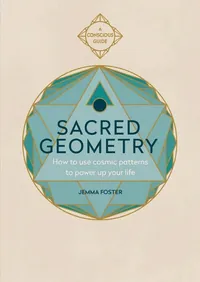
“The cover features a unique beautiful mandala pattern.”
— This emphasizes the aesthetic and symbolic value of the journal's exterior, suggesting that the visual design is intended to evoke a sense of peace, order, or spiritual significance.
“Content features blank Cornell note style book perfect for note taking and jotting down ideas.”
— This points to the functional core of the journal: its interior layout. It's designed specifically to aid in capturing thoughts and information efficiently using a recognized note-taking methodology.
“Perfectly suited for many purposes such as creative writing, keep a yoga or meditation practice journal, design notes and much more.”
— This reiterates the journal's adaptability, framing it as a flexible tool that can support a wide range of personal and professional activities requiring documentation and ideation.
🌙 Esoteric Significance
Tradition
This journal connects to the broader Western Esoteric Tradition, particularly drawing from Hermeticism and Neoplatonism, which emphasize the mathematical and geometric underpinnings of the cosmos. It echoes Theosophical ideas that saw geometry as a key to understanding divine creation. While not a text *teaching* these traditions, it provides a practical tool for individuals engaging with these concepts in their personal spiritual journeys.
Symbolism
The primary symbols are the mandala and geometric forms implied by 'Sacred Geometry.' The mandala, originating in Hinduism and Buddhism, represents the universe and the seeker's journey towards wholeness. Geometric shapes, fundamental to sacred geometry, symbolize divine order, cosmic blueprints, and the underlying structure of reality, from the smallest atom to the largest galaxy.
Modern Relevance
Contemporary practitioners of mindfulness, yoga, meditation, and even art therapy can utilize this journal. Its blend of aesthetic symbolism (mandala) and structured note-taking (Cornell) appeals to modern seekers looking for practical tools to integrate spiritual concepts into daily life. It appeals to current trends in journaling for mental well-being and self-discovery.
👥 Who Should Read This Book
• Individuals practicing yoga or meditation who wish to document their experiences, track progress, and record insights gained during practice. • Students of esoteric philosophy or comparative religion interested in exploring the symbolic language of geometry and mandalas in a structured notebook format. • Creative individuals, writers, and artists seeking a dedicated space for ideation, brainstorming, and capturing inspiration, enhanced by a visually calming cover design.
📜 Historical Context
The concept of sacred geometry traces back to antiquity, notably explored by Greek philosophers like Plato, who in his dialogues (e.g., Timaeus, circa 360 BCE) posited that geometric forms were fundamental to the universe's structure. This intellectual current influenced Neoplatonism and later Renaissance thinkers. In the 19th century, the rise of Theosophy, spearheaded by figures like Helena Blavatsky, revived interest in ancient wisdom traditions, often linking geometric principles to spiritual cosmology and occult philosophy. While this journal itself is a modern publication from 2019, it taps into this enduring esoteric lineage. It emerged in an era where interest in mindfulness, personal growth, and alternative spiritualities has seen significant resurgence, often paralleled by a renewed academic and popular fascination with historical esoteric doctrines. Unlike purely academic treatises on geometry, this journal’s focus is on practical application for personal development and spiritual practice, reflecting a broader trend of integrating esoteric ideas into everyday life.
📔 Journal Prompts
Mandala's circular symmetry and your personal sense of balance.
The fundamental geometric shapes and their representation of universal order.
Dream imagery and its potential connection to symbolic geometry.
The structure of Cornell Notes and its application to spiritual learning.
Personal reflections on the concept of the universe as a geometric pattern.
🗂️ Glossary
Sacred Geometry
The study and practice of geometric shapes and patterns believed to hold symbolic, spiritual, or cosmological significance, seen as fundamental blueprints of creation.
Mandala
A spiritual and ritual symbol in Hinduism and Buddhism, representing the universe; a circular design often used as a focal point for meditation and contemplation.
Cornell Notes System
A note-taking method developed by Walter Pauk, dividing the page into sections for main notes, cues/questions, and a summary, designed for efficient learning and recall.
Esoteric
Relating to or accessible only by a small number of people with a specialized knowledge or interest; often pertaining to mystical, occult, or spiritual traditions.
Hermeticism
A philosophical and religious tradition based on writings attributed to Hermes Trismegistus, emphasizing divine knowledge, the interconnectedness of all things, and the pursuit of spiritual enlightenment.
Theosophy
A spiritual movement founded in the late 19th century, seeking to uncover the hidden 'divine wisdom' in ancient religions and philosophies, often incorporating elements of Hinduism, Buddhism, and Western occultism.
Dream Diary
A journal specifically used to record dreams upon waking, often for the purpose of analysis, personal insight, or creative inspiration.
This book appears in 1 collection
🔮 Readers Also Liked
Browse all →







From the “Sacred Geometry” Collection
View all →








More Free Occult Philosophy Books
View all →