Tai Chi for Women Over 60
 81
81

Tai Chi for Women Over 60
Donald Richard’s *Tai Chi for Women Over 60* arrives as a practical manual, eschewing grand pronouncements for clear instruction. The strength of the book lies in its directness; it avoids esoteric jargon and instead focuses on actionable steps for improving balance and reducing fall risk, a crucial concern for its target demographic. Richard's explanation of the ‘Cloud Hands’ movement, for instance, is particularly lucid, breaking down the complex rotation into manageable components. However, the book’s limitation is its lack of deeper exploration into the philosophical underpinnings of Tai Chi, which might leave practitioners seeking a more holistic understanding wanting. It functions primarily as a physical training guide, not a spiritual text. Nevertheless, for its intended audience, it offers accessible and effective exercises.
📝 Description
81
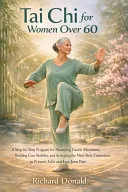
Donald Richard's 2026 book, Tai Chi for Women Over 60, adapts ancient movement for modern seniors.
This guide presents a method for Tai Chi specifically designed for women past sixty. It breaks down gentle movements into a clear program aimed at improving balance and reducing the chance of falls. The exercises focus on building strength and flexibility while easing joint discomfort. The book's approach is practical, showing readers how to integrate these motions into their daily lives for better physical health and a greater sense of security.
It is written for women experiencing common age-related physical changes. Readers concerned with reduced mobility, stiff joints, or a fear of falling will find targeted advice. The aim is to offer a gentle exercise routine that can restore confidence in one's physical abilities and enhance overall life quality.
While published in 2026, the book's principles are drawn from the long history of Tai Chi Chuan, originating in Taoist monasteries. This practice emphasizes the harmonious interplay between mind and body, a concept central to many Taoist disciplines. The adaptation for seniors reflects a modern application of these ancient ideas, building on late 20th-century efforts to make Tai Chi accessible for specific health needs, such as those promoted by Dr. Paul Lam.
💡 Why Read This Book?
• Gain specific fall prevention techniques by practicing the balance drills detailed in Chapter 2, designed to enhance stability and reduce the risk of falls, a critical concern for individuals over 60. • Learn joint pain alleviation methods through the gentle, fluid movements described in Chapter 4, which promote circulation and flexibility without undue stress. • Cultivate a stronger mind-body connection by engaging with the calming principles of Tai Chi Chuan, as introduced in the historical context section, fostering mental clarity and relaxation.
⭐ Reader Reviews
Honest opinions from readers who have explored this book.
❓ Frequently Asked Questions
What specific benefits does Tai Chi offer women over 60 according to this book?
The book highlights benefits such as improved balance to prevent falls, reduced joint pain and stiffness through gentle movements, and enhanced overall physical strength and vitality, helping women over 60 regain independence.
Is prior experience with martial arts necessary to follow this guide?
No, prior experience is not necessary. Donald Richard designed this program specifically for beginners, with step-by-step instructions and clear illustrations to guide women over 60 through each movement.
How does Tai Chi help with joint pain for older women?
Tai Chi movements are slow, deliberate, and circular, which encourages joint lubrication and improves circulation without the impact associated with other exercises, thereby alleviating pain and stiffness.
What is the publication date of Tai Chi for Women Over 60?
The book was first published on February 8, 2026, making it a contemporary guide to the practice of Tai Chi for its target audience.
Does the book cover the philosophical aspects of Tai Chi, or is it purely physical?
While the book focuses primarily on the physical benefits and practical application for women over 60, it touches upon the mind-body connection inherent in Tai Chi, promoting mental clarity and calm.
How does this book address the fear of falling common in older adults?
It directly addresses this fear by providing dedicated fall prevention techniques and balance drills, empowering readers with the physical confidence and stability to move more freely and safely.
🔮 Key Themes & Symbolism
Fall Prevention
This section focuses on the practical application of Tai Chi principles to mitigate the significant risk of falls among women over 60. It details specific balance drills and stability exercises, explaining how the slow, controlled movements and weight transference inherent in Tai Chi cultivate proprioception and improve lower body strength. The emphasis is on building confidence in mobility, transforming fear into empowered movement through consistent practice.
Joint Health and Mobility
The book addresses the common concern of joint pain and stiffness prevalent in women over 60. It illustrates how Tai Chi's fluid, circular motions promote joint lubrication and increase range of motion without the high impact of other exercises. By focusing on gentle stretching and strengthening, the practice aims to alleviate discomfort and improve overall flexibility, fostering sustained physical well-being.
Mind-Body Integration
Beyond the physical benefits, the guide touches upon the meditative aspect of Tai Chi. It explores how the focused attention required during the movements can calm the mind, reduce stress, and enhance mental clarity. This integration of physical activity with mindful awareness is presented as crucial for holistic health, offering a sense of peace and control.
Empowerment and Independence
A central theme is the restoration of personal agency and independence for women over 60. By improving physical capabilities, reducing pain, and increasing confidence in movement, the book aims to empower readers to maintain an active lifestyle. This regained vitality allows them to continue engaging in daily activities with greater ease and security.
💬 Memorable Quotes
Direct passages from the work, attributed to the author.
“Master balance drills and stability exercises that dramatically reduce your risk of falling.”
— This statement directly highlights the book's primary practical benefit: providing actionable techniques for improving balance and preventing falls, a critical concern for the target demographic.
“Reclaim your strength, balance, and vitality through gentle, proven movement.”
— This expresses the overarching goal of the book, emphasizing the restoration of physical capabilities and energy through a safe and effective exercise modality.
“Specifically designed for mature women who want to reclaim their strength.”
— This points to the tailored nature of the content, indicating that the exercises and advice are carefully selected to meet the unique needs and challenges faced by women in their later years.
“Discover the Ancient Practice That's Transforming Lives for Women Over 60.”
— This suggests the profound positive impact Tai Chi can have, framing it as a life-enhancing ancient tradition adapted for contemporary relevance and specific demographic needs.
“Struggling with joint pain, stiffness, or losing your independence?”
— This question directly addresses the pain points of the intended reader, immediately establishing the book's relevance and the problems it aims to solve.
🌙 Esoteric Significance
Tradition
While presented as a practical health guide, *Tai Chi for Women Over 60* draws from the Taoist tradition, a core lineage within Chinese esoteric thought. Tai Chi Chuan, originating from Taoist monasteries, embodies principles of balance (Yin and Yang), natural flow, and cultivation of internal energy (Qi). Richard’s adaptation focuses on the physical manifestation of these principles for therapeutic benefit, aligning with the Taoist emphasis on harmony with nature and the body.
Symbolism
The movements themselves are symbolic. The 'Cloud Hands' form, for example, represents the interplay of Yin and Yang, the constant shifting and yielding. The circular pathways of the movements symbolize the cyclical nature of life and the universe, encouraging practitioners to move in accordance with natural rhythms. The deliberate, flowing posture embodies the Taoist ideal of effortless action (Wu Wei).
Modern Relevance
This work is relevant to contemporary discussions in embodied cognition and somatic psychology, which explore the intricate connection between physical movement and mental well-being. It also appeals to the burgeoning field of active aging and preventative healthcare, demonstrating how ancient practices can be effectively repurposed to address modern health challenges faced by the elderly, such as balance disorders and chronic pain.
👥 Who Should Read This Book
• Women over 60 experiencing issues with balance, joint pain, or stiffness, seeking a gentle, low-impact exercise program to improve their physical health and confidence. • Individuals interested in learning practical Tai Chi techniques specifically adapted for senior fitness, focusing on fall prevention and mobility enhancement. • Healthcare professionals and caregivers looking for accessible resources to recommend to older adult clients or patients aiming to improve their physical well-being through movement.
📜 Historical Context
Published in 2026, Donald Richard's *Tai Chi for Women Over 60* enters a landscape already populated by numerous guides on gentle exercise for seniors. The practice of integrating Tai Chi into Western health paradigms accelerated significantly in the late 20th and early 21st centuries, spurred by research demonstrating its efficacy in balance improvement and fall prevention. This wave was notably advanced by figures like Dr. Paul Lam, whose Tai Chi for Arthritis program gained widespread recognition. Richard’s work builds upon this foundation, offering a specialized focus for older women. While not a direct contemporary, Lam’s earlier efforts represent a competing yet complementary school of thought in senior fitness, highlighting the growing academic and practical interest in mind-body practices for aging populations.
📔 Journal Prompts
The Fall Prevention Techniques described in Chapter 2.
The concept of reclaiming strength and vitality.
The specific focus on joint pain and stiffness for women over 60.
The gentle, proven movement approach advocated by Richard.
The ancient practice’s transformation of lives.
🗂️ Glossary
Tai Chi Chuan
An ancient Chinese martial art practiced for both defense training and its health benefits. It involves slow, flowing movements, deep breathing, and mental concentration, often described as meditation in motion.
Qi (Chi)
A fundamental concept in traditional Chinese culture, referring to the vital life force or energy that flows through all living things. Tai Chi aims to cultivate and balance this energy.
Yin and Yang
A core Taoist concept representing complementary opposites; for example, passive and active, dark and light. Tai Chi movements often embody the dynamic interplay between these forces.
Balance Drills
Specific exercises designed to improve a person's stability and ability to maintain an upright posture, crucial for preventing falls, especially in older adults.
Joint Pain Alleviation
Methods and techniques aimed at reducing discomfort and inflammation in the joints, often achieved through gentle movement, stretching, and improved circulation.
Proprioception
The body's ability to sense its position, movement, and balance. Tai Chi enhances proprioception, contributing to better coordination and stability.
Wu Wei
A Taoist concept often translated as 'non-action' or 'effortless action.' It refers to acting in alignment with the natural flow of the universe, without forcing or striving.