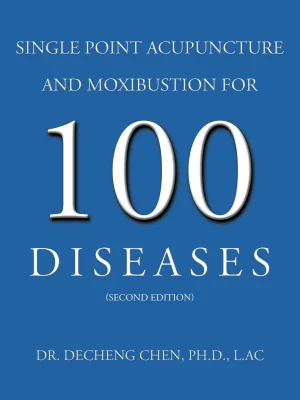
Single Point Acupuncture and Moxibustion for 100 Diseases
 82
82

Single Point Acupuncture and Moxibustion for 100 Diseases
Decheng Chen's "Single Point Acupuncture and Moxibustion for 100 Diseases" presents a compelling argument for therapeutic economy. Its strength lies in the clear, methodical breakdown of how to achieve significant results with minimal intervention. The focus on single-point efficacy, a principle often overshadowed by more complex protocols, is refreshingly direct. Chen's explanations of needle techniques and moxibustion application for specific points are particularly well-articulated, offering practical guidance. However, the book's conciseness, while a virtue, might leave some practitioners wishing for more discussion on differential diagnosis that leads to these single-point choices. The text assumes a certain level of existing knowledge in TCM diagnostics. A standout aspect is the detailed instruction on treating specific conditions, such as the section on using a single point for certain types of pain, demonstrating the practical power of this approach. Overall, it serves as a potent reminder of the depth achievable through focused, precise application in acupuncture.
📝 Description
82
Decheng Chen's 2010 book presents a focused approach to acupuncture and moxibustion for 100 diseases.
Decheng Chen's "Single Point Acupuncture and Moxibustion for 100 Diseases" (2010) distills Traditional Chinese Medicine (TCM) protocols into the application of specific acupuncture or moxibustion points. Chen emphasizes efficiency and rapid results by identifying the most potent point for a given condition. The text offers clear guidance on point selection, needle manipulation, and moxibustion techniques. It equips practitioners with a streamlined therapeutic toolkit for numerous ailments. This book appeals to acupuncture and TCM practitioners aiming to refine their clinical strategies. It is useful for those who prefer a direct, point-focused method, either as a primary approach or as a supplement to broader studies. Students of TCM will find it valuable for grasping the principle of selecting fewer points for greater effect. Its detailed methodology may also interest individuals studying the historical evolution of specific TCM techniques.
The practice of using single points for healing has historical roots in early Chinese medicine, predating the more elaborate point combinations found in later texts. Chen revisits this foundational principle, framing it within contemporary clinical practice. While TCM has developed over centuries, the effectiveness of carefully chosen single points has endured. This book's focus on a singular approach can be seen as a return to core principles, contrasting with some modern practices that might favor multi-point prescriptions for every ailment. It reflects a lineage that values precision and efficacy through economy of means within the broader spectrum of Chinese energetic medicine.
💡 Why Read This Book?
• Gain a focused therapeutic strategy: Learn how to select and effectively use single acupuncture or moxibustion points for rapid treatment, a method detailed by Decheng Chen for over 100 conditions. • Master precise techniques: Understand the specific needle manipulations and moxibustion methods Chen advocates to maximize the potency of individual points, as outlined in the book's practical sections. • Enhance clinical efficiency: Discover how a singular point approach, as presented in "Single Point Acupuncture and Moxibustion for 100 Diseases," can lead to quicker patient responses and streamlined treatment plans.
⭐ Reader Reviews
Honest opinions from readers who have explored this book.
❓ Frequently Asked Questions
What is the core principle of single point acupuncture as presented by Decheng Chen?
The core principle is selecting and stimulating just one potent acupuncture or moxibustion point per session to achieve a rapid therapeutic response for a specific condition, emphasizing efficiency and direct action.
Is this book suitable for beginners in acupuncture?
While it offers clear techniques, the book assumes a foundational understanding of TCM diagnostics and point locations. It's best suited for students or practitioners looking to refine their single-point strategies.
How many diseases does the book claim to address with single point therapy?
The title indicates coverage for '100 Diseases,' suggesting a broad application of the single-point method across a wide range of common ailments.
What differentiates single point acupuncture from other acupuncture methods discussed in the book?
Unlike methods using multiple points per session, single point acupuncture, as detailed by Chen, focuses solely on one meticulously chosen point for maximum impact and speed.
Does Decheng Chen's book focus more on acupuncture or moxibustion?
The book covers both acupuncture and moxibustion, providing specific techniques and applications for each modality when used as a single-point therapy.
When was 'Single Point Acupuncture and Moxibustion for 100 Diseases' first published?
The book was first published in 2010, reflecting a modern clinical perspective on ancient therapeutic principles.
🔮 Key Themes & Symbolism
The Power of Simplicity
This work champions the idea that therapeutic efficacy doesn't necessitate complexity. By focusing on the most potent single point for a condition, practitioners can achieve remarkable results with minimal intervention. This principle challenges the notion that more points always equate to better treatment, highlighting instead the importance of precise selection and focused energy stimulation. Chen's methodical approach underscores how a singular focus can unlock profound healing potential within the body's energetic pathways.
Precision in Practice
The book emphasizes meticulousness in both point selection and application. It details specific needle techniques and moxibustion methods tailored to maximize the effect of each individual point. This is not about random selection but about understanding the unique energetic signature of each point and how to best activate it for specific therapeutic goals, ensuring that the chosen point delivers its maximum benefit efficiently.
Broad Clinical Applicability
Despite its focused methodology, the single-point approach is presented as versatile enough to address a significant number of ailments, as indicated by the '100 Diseases' in the title. This suggests that underlying patterns of disharmony can often be effectively treated by targeting a key nodal point within the energetic system, demonstrating the depth and breadth of TCM principles when applied with precision.
Efficiency and Efficacy
A core tenet is the rapid therapeutic response achieved through single-point therapy. The book argues that by correctly identifying and stimulating the most influential point, practitioners can expedite the healing process. This focus on swift and effective outcomes makes it a valuable resource for clinicians aiming to provide timely relief and demonstrable results for their patients.
💬 Memorable Quotes
Direct passages from the work, attributed to the author.
“Single point acupuncture and moxibustion therapy differs from other forms of acupuncture in that only one point is selected during each session.”
— This highlights the distinct methodology Decheng Chen advocates, setting it apart from more common practices that often involve stimulating multiple acupoints simultaneously within a single treatment session.
“A special emphasis on methods and needle techniques.”
— This indicates the book's practical orientation, focusing not just on 'what' point to use, but 'how' to use it effectively, detailing the specific manipulations required for optimal therapeutic outcomes.
“Decheng Chen's work offers a comprehensive yet easy-to-follow guide to the clinical application of single point acupuncture and moxibustion therapy.”
— This suggests the book aims to balance depth of information with accessibility, making advanced clinical strategies understandable and implementable for practitioners.
💡 Key Ideas
Editorial paraphrase of the work's core concepts — not direct quotes.
The single point technique is noted for its quick therapeutic response and exceptional results, despite using far fewer points.
This quote captures the book's central thesis: that potent healing can be achieved through focused, economical application of TCM principles, challenging the assumption that complex, multi-point treatments are always superior.
The single point technique is noted for its quick therapeutic response and exceptional results.
This paraphrase emphasizes the tangible benefits practitioners can expect from adopting Decheng Chen's approach, focusing on the speed and quality of the healing outcomes.
🌙 Esoteric Significance
Tradition
While rooted in the empirical and energetic framework of Traditional Chinese Medicine (TCM), Decheng Chen's focus on single-point efficacy can be viewed through an esoteric lens of energetic resonance and focused intent. Within esoteric traditions, the principle of "as above, so below" often implies that microcosm (a single point) can influence macrocosm (the entire body or a specific disease). This work aligns with the Hermetic idea of "the Art of Conjunction," where precise manipulation of a single element (the point) yields a significant transformation.
Symbolism
The 'single point' itself functions as a potent symbol of focus, concentration, and the power of the minimal. In esoteric thought, a single point can represent the origin, the undifferentiated potential, or the singular truth from which all emanates. The '100 Diseases' symbolizes the totality of manifest suffering or imbalance, suggesting that mastery over this focused technique offers a key to addressing the vast spectrum of human ailments. The 'needle' and 'moxa' are tools of energetic transformation, symbolizing the active, directed force used to correct energetic deviations.
Modern Relevance
Contemporary esoteric practitioners and those interested in mind-body medicine find resonance in Chen's emphasis on focused intention and precise energetic manipulation. Schools focusing on energetic healing, quantum healing, and advanced acupuncture techniques often draw upon principles of minimal intervention yielding maximum effect. Thinkers exploring the intersection of consciousness and physiology might see the single-point approach as a practical application of directed energetic influence, aligning with modern explorations into psychosomatic interactions and the power of focused therapeutic intent.
👥 Who Should Read This Book
['• Acupuncturists and TCM practitioners seeking to streamline their treatment protocols and achieve faster results by mastering single-point techniques.', "• Students of Traditional Chinese Medicine looking for a practical, point-focused guide to complement their theoretical studies, particularly interested in Decheng Chen's methods.", '• Holistic health enthusiasts curious about efficient and effective methods within TCM that emphasize precision and minimal intervention for a wide range of conditions.']
📜 Historical Context
Decheng Chen's "Single Point Acupuncture and Moxibustion for 100 Diseases," published in 2010, emerges within a long lineage of Traditional Chinese Medicine (TCM) that has seen evolving theoretical frameworks and clinical practices. While ancient texts like the *Huangdi Neijing* (Yellow Emperor's Inner Canon), compiled over centuries but largely solidified by the Han Dynasty (206 BCE – 220 CE), laid the groundwork for acupuncture theory, later dynasties saw the development of more intricate point combinations. Chen's work revisits and refines the efficacy of single-point selection, a principle present in early TCM but perhaps less emphasized in some modern, multi-point-heavy approaches. The early 21st century saw a significant global surge in interest and integration of TCM, with practitioners and scholars worldwide engaging with its principles. This book's publication date places it within this period of intense cross-cultural exchange and clinical application, offering a focused methodology that contrasts with some broader, more generalized approaches to TCM popular at the time.
📔 Journal Prompts
The principle of 'Single Point Selection' for diverse ailments.
Methodologies and needle techniques for maximizing point efficacy.
The concept of 'Quick Therapeutic Response' in practice.
Decheng Chen's approach to treating specific conditions.
The comparative advantage of single versus multiple point prescriptions.
🗂️ Glossary
Single Point Acupuncture
A therapeutic technique in Traditional Chinese Medicine where only one specific acupuncture point is selected and stimulated during a single treatment session to address a particular health condition.
Moxibustion
An external therapy in Traditional Chinese Medicine involving the burning of dried mugwort (Artemisia vulgaris) near the skin surface over specific acupuncture points to warm and invigorate the flow of Qi and blood.
Qi (Chi)
The fundamental concept in Traditional Chinese Medicine representing vital life force energy that flows through the body, essential for maintaining health and function.
Needle Techniques
Specific methods of inserting, manipulating (e.g., lifting, thrusting, rotating), and withdrawing acupuncture needles to effectively stimulate acupoints and achieve desired therapeutic effects.
Therapeutic Response
The physiological and symptomatic changes observed in a patient following a medical treatment, indicating the effectiveness or ineffectiveness of the intervention.
Acupoint
Specific locations on the body, identified in Traditional Chinese Medicine, where Qi and blood are believed to converge and be accessible for therapeutic stimulation via acupuncture or acupressure.
Clinical Application
The practical use of medical knowledge, techniques, and therapies in the direct treatment of patients in a healthcare setting.
This book appears in 1 collection
🔮 Readers Also Liked
Browse all →








From the “Acupuncture” Collection
View all →






More Free Occult Philosophy Books
View all →