Rule by Secrecy

 77
77

Rule by Secrecy
Jim Marrs’ "Rule by Secrecy" is a sprawling investigation that posits a hidden hand guiding humanity’s trajectory. Marrs, known for his work on JFK and UFOs, here turns his attention to the alleged machinations of secret societies. The book’s strength lies in its sheer breadth, attempting to connect disparate historical threads into a single, overarching narrative of control. He meticulously details alleged linkages between groups like the Bavarian Illuminati and modern global institutions, citing historical texts and figures with impressive diligence. However, the work’s ambitious scope sometimes becomes its weakness. The constant assertion of a unified conspiracy can feel overwhelming, and the book occasionally falters in distinguishing between historical fact and speculative inference. A particularly compelling section details the alleged influence of the Council on Foreign Relations on post-WWII policy. While "Rule by Secrecy" offers a fascinating, if often unsettling, perspective on power dynamics, readers should approach its conclusions with a critical eye, recognizing the inherent challenges in definitively proving such pervasive, covert influence. Verdict: A comprehensive, if sometimes speculative, survey of alleged hidden global control.
📝 Description
77
Jim Marrs' 2000 book, 'Rule by Secrecy,' posits a persistent, covert influence of secret societies on global events.
Published in 2000, Jim Marrs' 'Rule by Secrecy' investigates the alleged influence of hidden organizations on history. Marrs traces a lineage of clandestine groups from antiquity to modern times, suggesting their involvement in shaping political, economic, and social structures. The book links various historical occurrences and powerful figures, proposing a coordinated, covert agenda behind them. It focuses on the concept of an 'invisible government' or a 'cabal' manipulating world events. Marrs examines ideas of long-term planning by these groups, their use of symbolic language, and their infiltration of key institutions. The work connects historical roots of such organizations to figures and events across centuries, suggesting a continuity of purpose and method.
This book is for readers interested in conspiracy theories, hidden histories, and the alleged forces guiding world affairs. It appeals to those who question official narratives and look for alternative explanations for historical developments. Individuals curious about groups like the Illuminati and Freemasons will find extensive material.
Marrs' work fits within a tradition of examining hidden power structures, often linked to esoteric or secret societies. While not strictly an esoteric text itself, it engages with themes found in occult and conspiratorial literature concerning hidden knowledge and control. The book draws from earlier analyses of secret societies, like those by Nesta Webster, and contemporary writers such as David Icke, positioning itself within a discourse that seeks to uncover concealed influences on society.
💡 Why Read This Book?
• Understand the alleged historical lineage of secret societies, tracing influences from groups like the Bavarian Illuminati to their purported modern-day successors, offering a unique perspective on global power dynamics. • Gain insight into specific historical junctures where Marrs suggests clandestine forces exerted control, such as the formation of international bodies post-World War II, providing concrete examples of his thesis. • Explore the concept of an "invisible government" and its alleged methods, learning how to critically assess claims of hidden agendas and symbolic communication in historical events.
⭐ Reader Reviews
Honest opinions from readers who have explored this book.
❓ Frequently Asked Questions
What historical groups does Jim Marrs claim are involved in global control in "Rule by Secrecy"?
Jim Marrs identifies several groups, including the Bavarian Illuminati, Freemasons, the Council on Foreign Relations, and the Bilderberg Group, as key players allegedly manipulating world events from behind the scenes.
When was "Rule by Secrecy" by Jim Marrs originally published?
"Rule by Secrecy" was first published in the year 2000, making it a product of late 20th-century interest in conspiracy literature.
What is the central argument of "Rule by Secrecy"?
The book's central argument is that a select, secretive group of elites has been orchestrating major historical events for centuries to establish a totalitarian world government.
Does "Rule by Secrecy" offer verifiable evidence for its claims?
Marrs presents a significant amount of historical detail and references various documents and historical accounts. However, the interpretation of this evidence as proof of a unified, covert conspiracy is often speculative and debated by historians.
What is the author's background in relation to conspiracy theories?
Jim Marrs was an investigative journalist with a long-standing interest in controversial topics, including the assassination of John F. Kennedy and UFO phenomena, which informed his approach to "Rule by Secrecy."
How does "Rule by Secrecy" connect historical events?
The book connects events by positing that a consistent, hidden agenda driven by powerful secret societies has been the underlying cause for shifts in political power, economic systems, and social movements across different eras.
🔮 Key Themes & Symbolism
The Invisible Government
The core concept explored is that of an "invisible government"—a clandestine network of powerful individuals and secret societies that allegedly manipulates global affairs. Marrs argues that this entity operates beyond democratic oversight, orchestrating political shifts, economic policies, and societal trends to achieve its long-term objectives. The book details how this supposed cabal utilizes influence, infiltration, and propaganda to maintain its control, presenting a chilling perspective on the true nature of power structures.
Lineage of Secret Societies
Marrs traces a historical lineage of influential secret organizations, beginning with groups like the ancient mystery schools and the Bavarian Illuminati, founded in 1776. He posits that these early societies laid the groundwork for subsequent organizations, such as the Freemasons and later, more modern groups like the Council on Foreign Relations and the Bilderberg Group. The work suggests a continuity of purpose and method across these varied historical entities, linking them through a shared ambition for global dominance.
Symbolism and Codes
A recurring theme is the alleged use of symbolism and coded language by these secret groups to communicate their agenda and assert their influence. Marrs examines how symbols found in architecture, currency, and official insignia might represent the hidden hand at work. This aspect examines the esoteric communication methods attributed to these organizations, suggesting that their presence is often subtly signaled to those who understand the codes, adding a layer of mystique to the alleged conspiracy.
Historical Manipulation
The book systematically examines various historical events—from revolutions and wars to economic crises and the formation of international bodies—as deliberate outcomes of the secret societies' agenda. Marrs presents a narrative where important moments in history are not accidental but carefully engineered consequences of covert planning. This perspective challenges conventional historical accounts by attributing agency to these hidden forces, suggesting a grand, overarching plan guiding human civilization.
💬 Memorable Quotes
Direct passages from the work, attributed to the author.
“The Council on Foreign Relations (CFR) is a front group for the international bankers and the Council of National Policies is a front group for the Eastern Establishment.”
— This statement, representing Marrs' interpretation of organizational structures, suggests that seemingly legitimate influential bodies are merely facades for a deeper, more powerful financial and social elite operating behind them.
“The Illuminati was founded on May 1, 1776, by Adam Weishaupt.”
— This factual anchor establishes a specific origin point and key figure for one of the most frequently cited secret societies in conspiracy literature, highlighting the book's focus on historical roots.
“The Bilderberg Group has met annually since 1954.”
— This verifiable detail points to the continuity and longevity of a modern, secretive international forum, which Marrs presents as a crucial platform for global elites to coordinate their agenda.
“Symbols on currency and in architecture often carry hidden meanings related to secret societies.”
— This interpretation highlights Marrs' focus on esoteric symbolism, suggesting that these hidden groups communicate their presence and intentions through visual cues embedded in public spaces and artifacts.
💡 Key Ideas
Editorial paraphrase of the work's core concepts — not direct quotes.
The author suggests that major wars and economic depressions are not accidental but are engineered.
This is a conceptual paraphrase of Marrs' central thesis, emphasizing his belief that significant global disruptions are deliberately orchestrated by hidden powers rather than arising spontaneously.
🌙 Esoteric Significance
Tradition
While not strictly adhering to a single esoteric lineage, Marrs' work draws heavily from the historical narratives surrounding Western esotericism, particularly the lore of the Bavarian Illuminati and Freemasonry. It engages with themes often found in Hermeticism and Gnosticism concerning hidden knowledge and a controlling elite, but frames them within a geopolitical conspiracy rather than a spiritual or philosophical path. The book departs from traditional esoteric study by focusing on tangible, worldly power structures and alleged manipulation, rather than inner transformation or metaphysical realities.
Symbolism
The work frequently points to symbols such as the Eye of Providence (often seen on the US dollar bill), pyramids, and Masonic imagery as markers of secret society influence. These symbols, in esoteric traditions, often represent divine oversight, hidden wisdom, or cosmic order. Marrs interprets them through the lens of conspiracy, suggesting they are not merely historical or spiritual emblems but coded signals of the "invisible government's" pervasive control and long-term agenda for humanity.
Modern Relevance
Contemporary thinkers and online communities focused on deep state theories, geopolitical analysis, and critical examinations of global power structures continue to engage with Marrs' work. His detailed historical tracing of alleged conspiracies provides a foundational text for those seeking to understand the purported origins and evolution of hidden influence. Modern researchers often cite "Rule by Secrecy" when discussing groups like the Bilderberg Group or the Council on Foreign Relations, using it as a reference point for a persistent narrative of elite control.
👥 Who Should Read This Book
• Researchers of alternative history and geopolitical conspiracies: Individuals seeking to understand the arguments presented about clandestine organizations influencing world events will find a comprehensive overview. • Students of secret societies: Those interested in the historical development and alleged modern manifestations of groups like the Illuminati and Freemasons will appreciate the detailed tracing of their purported lineage. • Skeptical but curious readers: Individuals who question official narratives and are open to exploring controversial theories about power structures, provided they approach the material with a critical and analytical mindset.
📜 Historical Context
Published in 2000, "Rule by Secrecy" arrived at a moment when interest in conspiracy theories was amplified by the burgeoning internet and a public appetite for alternative explanations of historical events. Jim Marrs built upon a long tradition of exposing alleged secret societies, dating back to figures like John Robison and Augustin Barruel in the late 18th century who warned of Masonic and Illuminati plots. The work emerged in a landscape populated by authors exploring similar themes, such as Fritz Springmeier, who focused on "bloodlines," and David Icke, who introduced extraterrestrial elements. Unlike some more esoteric or New Age authors, Marrs generally maintained a journalistic tone, grounding his claims in historical documents and investigative reporting, though the interpretive leap to a unified conspiracy remained his signature. The book tapped into anxieties about globalization and the perceived erosion of national sovereignty, resonating with readers who felt disenfranchised by powerful international bodies.
📔 Journal Prompts
The concept of the "invisible government" as presented by Marrs.
Bavarian Illuminati's founding date and purported objectives.
Symbolism on the US dollar bill and its alleged connection to secret societies.
The Bilderberg Group's annual meetings since 1954.
How historical events like major wars are interpreted as engineered outcomes.
🗂️ Glossary
Bavarian Illuminati
A historical secret society founded in Bavaria in 1776 by Adam Weishaupt. Marrs posits it as a foundational organization for many subsequent conspiracy theories concerning global control.
Council on Foreign Relations (CFR)
A US-based think tank founded in 1921. Marrs alleges it functions as a front group for international bankers and the Eastern Establishment, influencing US foreign policy.
Bilderberg Group
An annual private conference of approximately 120-150 influential figures from politics and industry. Marrs views its consistent meetings since 1954 as evidence of coordinated global elite planning.
Invisible Government
A central concept in Marrs' work, referring to a clandestine, powerful elite or cabal that allegedly manipulates world events from behind the scenes, operating beyond public scrutiny.
Eye of Providence
A symbol depicting an eye within a triangle, often surrounded by rays of light. Marrs suggests its presence on currency and in architecture signifies the watchful, controlling presence of secret societies.
Eastern Establishment
A term used to describe a powerful social and financial elite in the Northeastern United States. Marrs links this group to organizations like the Council on Foreign Relations.
New World Order (NWO)
A concept frequently discussed in conspiracy theories, referring to a totalitarian world government. Marrs argues that secret societies have been working towards establishing such an order for centuries.
🔮 Readers Also Liked
Browse all →








More by Jim Marrs
All books →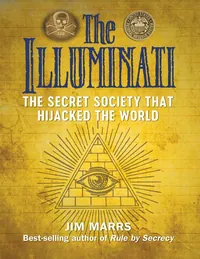





More Free Occult Philosophy Books
View all →