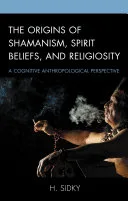
The Origins of Shamanism, Spirit Beliefs, and Religiosity
 82
82

The Origins of Shamanism, Spirit Beliefs, and Religiosity
H. Sidky's *The Origins of Shamanism, Spirit Beliefs, and Religiosity* offers a refreshingly analytical approach to a subject often shrouded in romanticized notions. Sidky’s central thesis—that shamanism represents a fundamental, adaptive magico-religious tradition rooted in human cognitive and evolutionary processes—is robustly supported by a synthesis of ethnographic data and scientific theory. The book excels in its interdisciplinary scope, seamlessly integrating archaeology, psychology, and neurotheology to build a compelling case. A notable strength is Sidky's meticulous use of firsthand ethnographic fieldwork, lending an authenticity often missing in purely theoretical treatments. However, the dense academic prose, while precise, can present a barrier for readers not deeply versed in evolutionary psychology or cognitive science terminology. A passage discussing the neurobiological underpinnings of trance states, for instance, is both illuminating and demanding. Ultimately, Sidky provides a crucial, empirically-driven framework for understanding humanity's earliest spiritual expressions.
📝 Description
82
H. Sidky's 2017 book examines shamanism as a diverse global tradition, not a single practice.
Published in 2017, H. Sidky's "The Origins of Shamanism, Spirit Beliefs, and Religiosity" analyzes shamanism as a varied, ancient human tradition rather than a uniform phenomenon. The book integrates magico-religious, divinatory, medical, and psychotherapeutic elements observed across different world cultures. Sidky builds his arguments using detailed ethnographic research, archaeological findings, and insights from cognitive and evolutionary psychology, as well as neurotheology. He situates shamanism within a wide historical framework, considering its possible beginnings in early hominid cognitive evolution and its development into complex ritual practices.
The work considers theories on the evolution of consciousness and the emergence of symbolic thought, connecting with pioneers in evolutionary psychology and cognitive science. Sidky's central argument is that shamanism functions as a universal human adaptation, stemming from inherent neurological and psychological traits. The book addresses the development of spirit beliefs, the roots of ritualistic behavior, and the evolutionary path of human religiosity. It highlights the practical roles of shamanic practices in early human societies, essential for healing, social unity, and comprehending the world.
This book engages with the study of shamanism, a practice often discussed within esoteric traditions concerning altered states of consciousness, spirit communication, and healing. While Sidky approaches the subject from an academic, evidence-based perspective, his work touches upon themes that resonate with esoteric interests in the deep roots of human spirituality and connection to the unseen. It provides a scholarly framework for understanding phenomena that many esoteric paths explore through direct experience or tradition.
💡 Why Read This Book?
• Gain a scientifically grounded understanding of shamanism's origins, moving beyond speculative interpretations by exploring Sidky's synthesis of ethnographic fieldwork and evolutionary psychology. • Grasp the developmental arc of human consciousness and religiosity, as Sidky charts the emergence of ritual behavior and spirit beliefs from early human history. • Appreciate the functional role of shamanism in ancient societies, understanding its practical applications in magico-religious, divinatory, medical, and psychotherapeutic contexts as detailed in the book.
⭐ Reader Reviews
Honest opinions from readers who have explored this book.
❓ Frequently Asked Questions
What is the primary focus of H. Sidky's The Origins of Shamanism, Spirit Beliefs, and Religiosity?
The book examines shamanism as an ancient magico-religious, divinatory, medical, and psychotherapeutic tradition, exploring its origins through ethnographic fieldwork and scientific theories from archaeology, psychology, and neurotheology.
What scientific disciplines does H. Sidky draw upon to explain shamanism?
Sidky integrates insights from archaeology, cognitive psychology, evolutionary psychology, and neurotheology to provide a multi-faceted understanding of shamanism's roots and evolution.
When was The Origins of Shamanism, Spirit Beliefs, and Religiosity first published?
The book was first published on June 21, 2017, positioning it within contemporary academic discourse on religion and human evolution.
How does Sidky approach the concept of spirit beliefs?
Sidky explores the evolutionary origins of spirit beliefs as a fundamental aspect of human consciousness and religiosity, examining how these beliefs developed alongside ritual behavior.
What kind of fieldwork does the author utilize?
The author employs first-hand ethnographic fieldwork, meaning direct observation and interaction with communities where shamanic practices are or were prevalent.
Does the book discuss the evolution of human consciousness?
Yes, a central theme is the exploration of the evolution of human consciousness and its connection to the development of shamanic traditions and early religious practices.
🔮 Key Themes & Symbolism
Shamanism as Universal Tradition
Sidky posits shamanism not as an isolated phenomenon but as a fundamental, ancient tradition present in various global cultures. It encompasses a spectrum of practices—magico-religious, divinatory, medical, and psychotherapeutic—suggesting a shared human propensity for altered states and spiritual engagement. The work uses ethnographic evidence to demonstrate the widespread functional roles these traditions played in early societies, from healing to understanding the cosmos.
Evolution of Consciousness
A core argument revolves around the co-evolution of human consciousness and spiritual practices. Sidky examines how the development of cognitive abilities, symbolic thought, and potentially specific neurological structures laid the groundwork for the emergence of shamanic experiences and the formation of early belief systems. This perspective links the subjective experience of altered states to objective evolutionary pressures.
Origins of Religiosity
The book traces the genesis of religious behavior and belief systems back to the earliest human societies. It analyzes how shamanistic practices, with their emphasis on altered states and spirit communication, represent foundational elements of human religiosity. Sidky explores the adaptive advantages of these early forms of spirituality for social cohesion and survival.
Methodological Synthesis
Sidky's approach is characterized by its interdisciplinary methodology. By combining rigorous ethnographic fieldwork with theoretical frameworks from archaeology, cognitive and evolutionary psychology, and neurotheology, the book offers a robust, scientifically informed perspective. This synthesis aims to move beyond speculative interpretations and provide empirical grounding for understanding ancient spiritual phenomena.
💬 Memorable Quotes
Direct passages from the work, attributed to the author.
“Shamanism is examined as an ancient magico-religious, divinatory, medical, and psychotherapeutic tradition.”
— This captures the book's broad definition of shamanism, moving beyond simple spiritualism to include its practical, therapeutic, and societal functions across diverse cultures.
“Sidky uses first-hand ethnographic fieldwork and scientific theoretical work.”
— Highlights the dual approach of the book: empirical observation from direct cultural immersion combined with established academic theories from multiple scientific fields.
“The work explores the origins of shamanism, spirit beliefs, the evolution of human consciousness, and the origins of ritual behavior and religiosity.”
— This statement outlines the comprehensive scope of the book's inquiry, connecting the specific practice of shamanism to fundamental aspects of human psychological and social development.
“The book integrates archaeology, cognitive and evolutionary psychology, and neurotheology.”
— This points to the interdisciplinary nature of Sidky's research, drawing connections between material evidence, mental processes, evolutionary pressures, and brain function to understand spiritual traditions.
“Focus on shamanism as a tradition found in various parts of the world.”
— Emphasizes the global and cross-cultural perspective taken in the book, viewing shamanism as a widespread human phenomenon rather than a localized or singular practice.
🌙 Esoteric Significance
Tradition
While not strictly belonging to a single esoteric lineage like Hermeticism or Theosophy, Sidky's work engages with the universal archetypes and practices that underpin many esoteric traditions. It provides a scholarly, empirically grounded lens through which to view the shamanic elements found within or influencing various Western esotericism movements, such as certain forms of Neo-Shamanism or ecstatic traditions. The book offers a framework for understanding the common human impulse towards altered states and spirit communion that resonates across esoteric paths.
Symbolism
The work implicitly addresses the symbolic language of shamanism, such as the 'spirit world' often depicted as a parallel reality accessible through altered states. Concepts like the 'shamanic journey' or the use of animal spirits as guides are examined not merely as symbolic representations but as functional components of a psychotherapeutic and divinatory system rooted in human psychology and neurology. The book explores how these symbolic landscapes facilitated healing and understanding in early human societies.
Modern Relevance
Contemporary Neo-Shamanic practitioners, psychotherapists exploring altered states, and scholars of comparative religion draw on works like Sidky's to contextualize modern practices within a deep historical and evolutionary framework. Thinkers in consciousness studies and those investigating the neurological basis of spirituality also find value in its synthesis of ethnographic and scientific data. The book provides a critical foundation for understanding the resurgence of interest in shamanic techniques in the 21st century.
👥 Who Should Read This Book
• Students of anthropology and religious studies seeking a rigorous, interdisciplinary examination of shamanic traditions and their origins. • Researchers in cognitive science and evolutionary psychology interested in the deep roots of human consciousness, belief formation, and ritual behavior. • Individuals exploring the historical and scientific underpinnings of spiritual and therapeutic practices, desiring a perspective grounded in empirical evidence and ethnographic data.
📜 Historical Context
Published in 2017, H. Sidky's *The Origins of Shamanism, Spirit Beliefs, and Religiosity* arrived at a time when cognitive archaeology and evolutionary psychology were increasingly influencing the study of religion. The work builds upon decades of anthropological research into shamanic practices, from Mircea Eliade's foundational texts to more contemporary, nuanced ethnographies. Sidky's integration of neurotheology places his work within a growing scientific interest in the biological underpinnings of religious experience. While not directly engaging with specific contemporaries in a polemical manner, the book implicitly addresses and refines earlier theories that often posited shamanism as a primitive precursor to 'organized' religion. Its comprehensive, interdisciplinary approach represented a significant effort to synthesize disparate fields, offering a robust, evidence-based framework for understanding the deep history of human spirituality.
📔 Journal Prompts
The concept of shamanism as a magico-religious tradition. What parallels or divergences do you see with contemporary spiritual practices?
Evolution of human consciousness. How might early symbolic thought have influenced the development of spirit beliefs?
Ritual behavior. Analyze a personal ritual through the lens of its potential psychological or social functions.
The integration of ethnographic fieldwork and scientific theory. How does this approach strengthen the understanding of religiosity?
Divinatory practices. Consider the historical role of divination in understanding the unknown and fostering social cohesion.
🗂️ Glossary
Shamanism
A range of beliefs and practices concerning communication with the spirit world, often involving altered states of consciousness and healing, found in indigenous cultures worldwide.
Magico-religious tradition
A system of beliefs and practices that intertwines supernatural or magical elements with religious observances, often serving social, healing, or divinatory purposes.
Divinatory
Relating to the practice of seeking knowledge of the future or the unknown by supernatural means, such as interpreting omens or consulting spirits.
Psychotherapeutic
Relating to the treatment of mental or emotional disorders or problems by psychological means, often involving dialogue and exploration of inner states.
Ethnographic fieldwork
The systematic study of people and cultures through direct observation and interaction within their natural environment over an extended period.
Cognitive psychology
The scientific study of the mind and mental processes, including perception, attention, memory, language, and problem-solving.
Neurotheology
An interdisciplinary field that studies the relationship between the brain and religious or spiritual experience, exploring the neurological basis of belief and altered states.