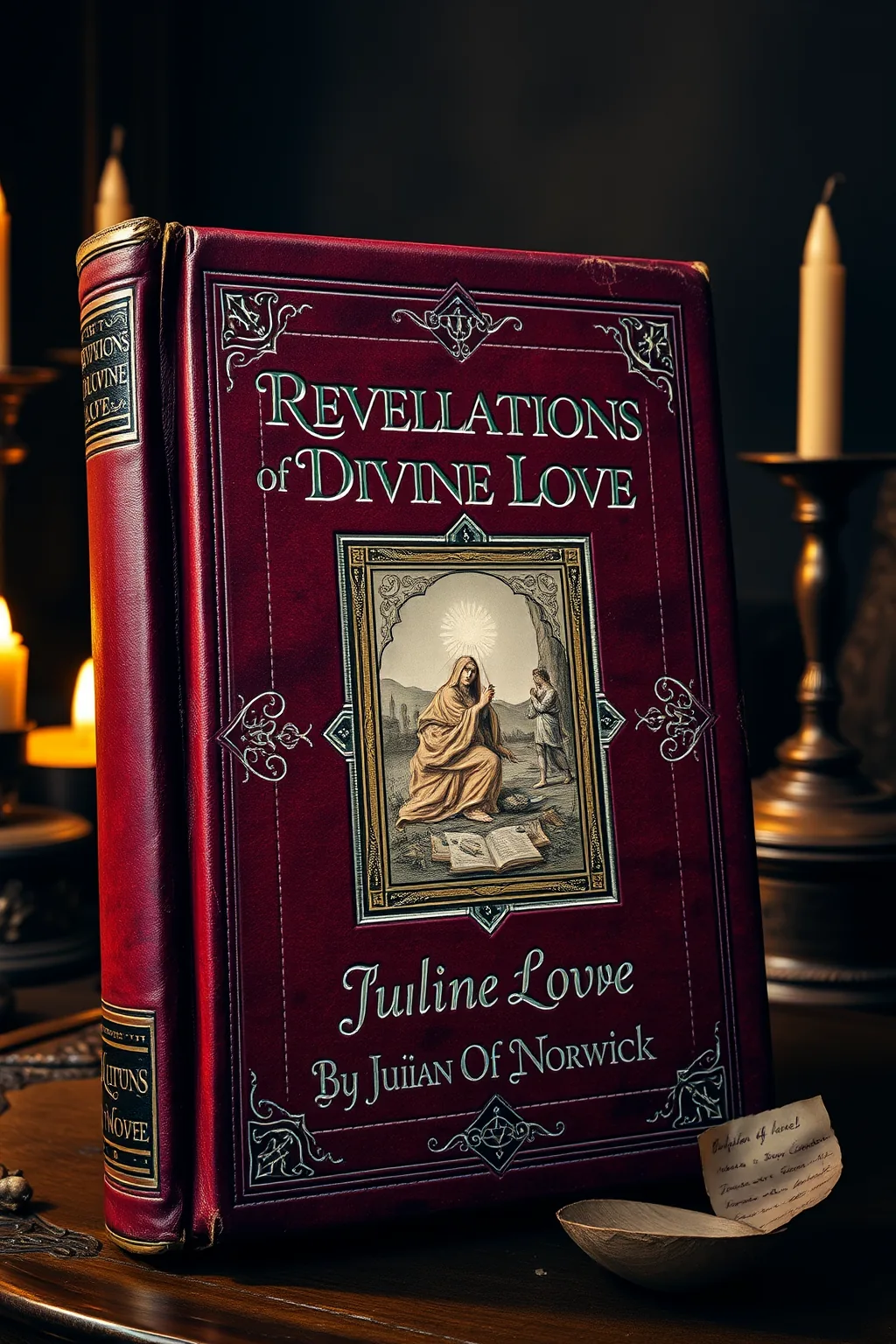
Revelations of Divine Love
 80
80

Revelations of Divine Love



Cassian Rothmann, Senior Critic, Ancient Wisdom: Julian of Norwich's 'Revelations of Divine Love' remains an unparalleled cornerstone of English Christian mysticism. Its enduring power lies not in abstract dogma, but in the raw, visceral articulation of profound spiritual insight born from direct visionary encounter. Rothmann highlights Julian's remarkable ability to reconcile the harsh realities of human suffering with an unwavering certainty of divine benevolence. The work offers a deeply personal yet universally applicable blueprint for spiritual resilience and transformative contemplation. Its esoteric value resides in its intuitive grasp of divine interconnectedness, making it essential reading for serious seekers of hidden wisdom and contemplative practitioners.
📝 Description
80
Julian of Norwich recorded her visions in 'Revelations of Divine Love' around 1393.
Julian of Norwich wrote 'Revelations of Divine Love' after a severe illness in 1393, detailing sixteen visions she received. These visions focus on God's unwavering love and the nature of sin and suffering within that divine framework. She presents a vision of the Trinity and a compassionate Christ, emphasizing that all will be well. Her theological insights go beyond standard medieval doctrine, offering a personal and accessible vision of God's relationship with humanity. The work is structured around these visions, with Julian interpreting their meaning and implications for faith. She concludes that God's love is the ultimate reality, encompassing all things and ensuring eventual redemption for creation.
The book's language is direct yet infused with contemplative depth. Julian uses everyday analogies and vivid imagery to convey complex spiritual truths. She addresses the problem of evil and suffering by grounding it in God's infinite goodness, suggesting that sin is a necessary precursor to salvation, but will ultimately be overcome. Her perspective is one of profound assurance in God's redemptive plan. The text invites readers to contemplate divine presence in their own lives, finding solace and strength in the concept of God's all-encompassing affection.
Julian of Norwich's work sits within the tradition of late medieval English Christian mysticism. While not strictly 'esoteric' in the modern sense, it shares common ground with later esoteric movements through its emphasis on direct, personal experience of the divine and its symbolic interpretation of spiritual realities. Her visions and their theological implications, particularly her optimistic view of salvation and the overcoming of evil, resonate with certain strands of mystical thought that look beyond orthodox dogma to inner revelation. The book's focus on the soul's union with God and the transformative power of divine love aligns with contemplative practices found across various spiritual traditions.
✍️ Author
💡 Why Read This Book?
Uncover the profound mystery of divine love as revealed through a unique visionary experience. 'Revelations of Divine Love' offers solace, wisdom, and a path to spiritual renewal by exploring the interconnectedness of suffering and grace. Ideal for seekers of deeper spiritual understanding, scholars of mysticism, and practitioners of contemplative prayer who wish to explore the transformative power of faith.
⭐ Reader Reviews
Honest opinions from readers who have explored this book.
❓ Frequently Asked Questions
What is the primary message of 'Revelations of Divine Love'?
The central message is the overwhelming and unconditional nature of God's love, which encompasses and ultimately redeems all suffering, revealing a universe of profound grace and inherent goodness.
Who was Julian of Norwich?
Julian of Norwich was an English anchoress and mystic of the late 14th century, renowned for her profound spiritual visions and her seminal work, 'Revelations of Divine Love,' one of the earliest known English mystical texts written by a woman.
What makes this book considered 'mystical'?
It is considered mystical due to its focus on direct, personal experience of the divine, visionary insights, and contemplative practices aimed at achieving union with God, rather than solely relying on external dogma.
Is this book suitable for beginners in mysticism?
Yes, while profound, Julian's accessible language and compassionate tone make it a welcoming entry point for those new to mystical literature, offering a gentle yet powerful introduction to spiritual contemplation.
What is the significance of the 'showings' mentioned in the book?
The 'showings' are the sixteen visionary experiences Julian received, which form the core of the book, providing her with divine revelations about God's love, the nature of sin, and the ultimate destiny of humanity.
🔮 Key Themes & Symbolism
The All-Encompassing Nature of Divine Love
This theme studies Julian's central revelation: that God's love is not conditional but an infinite, omnipresent force that permeates all of creation. It explores how this love acts as the ultimate redemptive power, capable of transforming suffering and restoring brokenness. The text illustrates this through vivid imagery and profound theological insights, suggesting that 'all shall be well' is not merely a hopeful platitude but a fundamental truth of the divine order, accessible through deep contemplation and unwavering faith in God's unwavering affection.
Suffering as a Path to Understanding
Julian confronts the reality of human pain and sin not as evidence of God's absence, but as a necessary crucible for spiritual growth and deeper understanding of divine mercy. Her visionary 'showings' illuminate how suffering, when embraced within the framework of God's love, can lead to useful insights into compassion, forgiveness, and the ultimate triumph of good over evil. The book offers a transformative perspective, suggesting that our deepest wounds can become gateways to divine intimacy and spiritual resilience, revealing the hidden blessings within hardship.
The Unity of All Creation
A core esoteric insight within Julian's work is the profound interconnectedness of all beings and the cosmos within the divine will. She emphasizes that nothing exists in isolation; rather, everything is held within the loving embrace of God, who is both immanent and transcendent. This theme encourages a holistic worldview, fostering a sense of unity and shared spiritual destiny. By understanding this inherent oneness, readers are invited to cultivate a deeper reverence for life and to recognize the divine spark present in every aspect of existence, promoting spiritual harmony and universal compassion.
💬 Memorable Quotes
Direct passages from the work, attributed to the author.
“All shall be well, and all shall be well, and all manner of thing shall be well.”
— This iconic declaration expresses Julian's ultimate vision of divine optimism and the pervasive nature of God's redemptive love, assuring followers of universal well-being despite present hardships.
“For I saw truly that God never begins to do any thing, but that he doth it himself.”
— This emphasizes divine agency and the active role of God in all creation and salvation, highlighting the inherent perfection and self-sufficiency of the divine will in bringing about all things.
“He is thy life, thy joy, thy bliss, thy sustenance, thy counsel, thy help, thy wisdom, thy might, thy comfort; and all thy.”
— This enumerates the many-sided nature of God's presence and provision in the life of the believer, illustrating the comprehensive and all-sustaining relationship God offers to the soul.
“The ground of prayer is the love that God hath to us.”
— This highlights the divine impetus behind spiritual practice, suggesting that prayer is not solely a human endeavor but a response to the inherent love God freely offers, drawing us into communion.
💡 Key Ideas
Editorial paraphrase of the work's core concepts — not direct quotes.
Sin is necessary, but all shall be well, and all shall be well, and all manner of thing shall be well.
A profound paradox, this quote acknowledges the reality of sin while asserting God's ultimate power to redeem and transcend it, assuring a future of complete spiritual reconciliation and wholeness.
🌙 Esoteric Significance
Tradition
Julian's work is deeply rooted in the Christian contemplative tradition, particularly the lineage of 'knowing God through love.' It shares common ground with Neoplatonism in its emphasis on divine unity and the soul's ascent, yet it is distinctly Christian in its Christocentric focus and sacramental understanding. Esoterically, it offers a practical guide to inner transformation, utilizing visionary experience and contemplative prayer as pathways to direct apprehension of divine truth, akin to Gnostic or Hermetic traditions in its pursuit of hidden knowledge.
Symbolism
The 'Revelations' are rich with potent symbolism. The hazelnut, representing creation held in God's hand, signifies divine providence and the seemingly small yet all-encompassing nature of God's care. The flowing blood of Christ symbolizes divine sacrifice and redemption, while the imagery of the Church as a mother embodies divine nurturing and the spiritual rebirth of humanity. The recurring motif of the 'showings' themselves acts as symbolic gateways into deeper spiritual realities, revealing the divine through sensory and visionary language.
Modern Relevance
In an age often characterized by fragmentation and existential angst, Julian's unwavering message of divine love and the ultimate goodness of creation offers a profound antidote. Her insights into the transformative power of suffering and the inherent unity of all things resonate deeply with contemporary seekers of meaning and spiritual wholeness. The book provides a timeless blueprint for cultivating inner peace, fostering compassion, and rediscovering a sense of divine connection in a complex and often challenging world, making its wisdom more relevant than ever.
👥 Who Should Read This Book
This timeless work is a treasure for a diverse range of readers. **Beginners** in spiritual exploration will find Julian's gentle yet profound prose an accessible entry into the world of Christian mysticism, offering comfort and hope. **Scholars** of theology and comparative religion will appreciate its historical significance as a foundational text and its unique theological insights. **Seekers** of deeper spiritual meaning will be drawn to its direct articulation of divine love and its contemplative practices. **Practitioners** of prayer and meditation will find abundant inspiration for deepening their connection with the divine, offering a profound framework for understanding God's presence in all aspects of life.
📜 Historical Context
Written in the late 14th century, 'Revelations of Divine Love' emerged from a period of profound upheaval in England, marked by the Black Death, social unrest, and religious schism. Julian, an anchoress who lived a life of cloistered contemplation, experienced her visions during a severe illness, offering a unique perspective on divine solace amidst earthly tribulation. Her work stands out of medieval Christian mysticism, blending orthodox theology with deeply personal, visionary experiences. It reflects the rich contemplative traditions of the era, while also pioneering a more intimate and accessible exploration of God's immanent presence. The book’s survival and eventual widespread publication in 1670 brought its profound message of divine love and hope to subsequent generations, influencing spiritual thought and practice.
📔 Journal Prompts
Reflect on a time you experienced profound suffering. How might Julian's concept of 'all shall be well' offer a new perspective on that experience?
Consider the symbolism of the hazelnut in Julian's visions. What does it mean for you to hold something precious in the hand of the Divine?
How does Julian's emphasis on God's immanent love challenge or affirm your current understanding of spirituality?
Explore the idea of 'sin is necessary' within Julian's framework. What does this paradox reveal about divine mercy and redemption?
Meditate on the concept of the 'ground of prayer being God's love.' How does this shift your approach to your own spiritual practices?
🗂️ Glossary
Anchoress
A religious recluse, typically a woman, who lives in a small cell attached to a church, devoting her life to prayer and contemplation.
Showings
The sixteen visionary experiences Julian of Norwich received, which form the core content and divine revelations within her book, 'Revelations of Divine Love'.
Contemplation
A form of prayer or meditation focused on deep reflection and direct experience of the divine, often involving stillness and inward focus.
Mysticism
The pursuit of direct, intuitive knowledge of or communion with ultimate reality or the divine, often through altered states of consciousness or intense spiritual practice.
Compassio
A term Julian uses to refer to God's deep empathy and suffering alongside humanity, highlighting the divine participation in human pain and the profound connection between God and creation.
This book appears in 1 collection
🔮 Readers Also Liked
Browse all →








More by Julian Of Norwich
All books →

From the “Christian Mysticism” Collection
View all →








More Free Mysticism & Contemplation Books
View all →