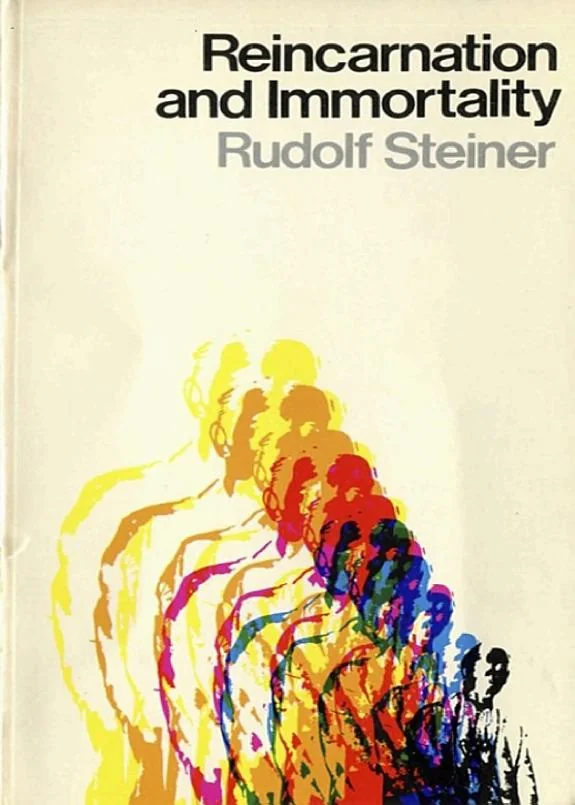
Reincarnation and Immortality
 77
77

Reincarnation and Immortality
Rudolf Steiner’s "Reincarnation and Immortality" attempts to demystify his complex spiritual science for the uninitiated. The strength lies in its presentation of esoteric concepts through lectures, aiming for clarity. Steiner’s assertion that immortality is an active spiritual process, not just survival, is compelling. However, the accessibility is relative; the inherent density of Anthroposophical thought can still present a significant hurdle. A particular passage discussing the post-mortem life stages, while intended to illuminate, requires careful rereading. The work ultimately offers a distinctive, though demanding, perspective on existence beyond the physical.
This volume provides a challenging yet rewarding exploration of spiritual continuity.
📝 Description
77
Rudolf Steiner's 1970 book 'Reincarnation and Immortality' explains his spiritual science to a general audience.
Published in 1970, Rudolf Steiner's "Reincarnation and Immortality" comprises five lectures and an essay designed to make his spiritual science accessible. Steiner, a central figure in Western esotericism, sought to connect spiritual realities with contemporary thought. He delivered these lectures to the public, aiming for clarity without sacrificing the rigor of his ideas. The work addresses readers interested in the Western esoteric tradition and questions about human consciousness after death. It offers a distinct perspective for those familiar with Anthroposophy or exploring alternatives to materialist views on life after death.
This volume delves into spiritual evolution and the soul's path. Steiner's ideas, emerging from the Theosophical movement and later developed into Anthroposophy, offered a unique approach compared to earlier esoteric systems and prevailing academic philosophies. The book's posthumous publication reflects ongoing interest in his comprehensive spiritual worldview. Steiner’s connections to thinkers like Helena Blavatsky place him within a significant lineage of esoteric thought.
Rudolf Steiner's work on reincarnation and immortality emerged from the Theosophical movement and his subsequent formalization of Anthroposophy. He engaged with spiritual and scientific discussions of the mid-20th century, proposing a path distinct from both earlier esoteric traditions and dominant materialist philosophies. Steiner's ideas on the spiritual realities of human existence and the soul's development offered a comprehensive worldview that often stood apart from contemporary intellectual currents. His engagement with figures like Helena Blavatsky situates him within a lineage of Western esotericism.
💡 Why Read This Book?
• Gain insight into Rudolf Steiner’s specific conception of the soul’s journey after death, as presented in the five lectures of 1912, offering a unique perspective on post-mortem existence. • Understand the Anthroposophical view of karma not as fate, but as a dynamic force shaping spiritual evolution across lifetimes, as discussed in the essay "Karma of Vocation." • Explore Steiner's call for a 'science of spirit,' emphasizing the possibility of directly perceiving spiritual realities through developed inner faculties, a core tenet of his teaching.
⭐ Reader Reviews
Honest opinions from readers who have explored this book.
❓ Frequently Asked Questions
When was Rudolf Steiner's 'Reincarnation and Immortality' originally published?
Rudolf Steiner's 'Reincarnation and Immortality' was first published in 1970, many years after his passing in 1925, compiling lectures and essays from earlier periods.
What is the main difference between Steiner's view of immortality and traditional views?
Steiner posits that immortality is not a passive state after death but an active, conscious process of spiritual development and evolution, requiring inner work.
What is Anthroposophy and how does this book relate to it?
Anthroposophy is Rudolf Steiner's comprehensive spiritual philosophy. This book is a direct presentation of key Anthroposophical concepts regarding reincarnation and the spiritual life.
Are the lectures in this book suitable for beginners to Steiner's work?
The lectures were intended for the general public, aiming for accessibility. However, the depth of Steiner's concepts means some readers may benefit from introductory material on Anthroposophy first.
Does the book discuss karma in detail?
Yes, the book, particularly through the essay "Karma of Vocation," explores the principles of karma and its connection to individual destiny and spiritual evolution.
What historical esoteric traditions influenced Rudolf Steiner?
Steiner's work drew heavily from Western esoteric traditions, including Gnosticism, Hermeticism, and Kabbalah, as well as his early involvement with the Theosophical Society.
🔮 Key Themes & Symbolism
The Soul's Post-Mortem Journey
Steiner elaborates on the experiences of the human soul following physical death. This is not a static afterlife but a dynamic phase of purification and spiritual learning. He details how the soul sheds its earthly sheaths and engages with spiritual worlds, preparing for subsequent incarnations. This process is framed as essential for the soul's ongoing evolution, directly linking earthly life's actions to post-mortem experiences and future rebirths.
Karma as Creative Force
The work presents karma not as a rigid, punitive system, but as a law of spiritual cause and effect that guides individual development. Steiner emphasizes the creative aspect of karma, suggesting that our actions and intentions shape not only future lives but also our capacity for spiritual understanding and growth. This perspective encourages personal responsibility and active participation in one's own destiny and evolution.
Spiritual Science as Inner Perception
Steiner advocates for a 'science of spirit' that complements natural science. This involves cultivating inner faculties—clairvoyance, telepathy, and spiritual intuition—through disciplined practice. He argues that these capacities allow for direct perception of spiritual realities, including the processes of reincarnation and immortality, making them verifiable through inner experience rather than solely through faith or external authority.
The Evolution of Consciousness
A central theme is the ongoing evolution of human consciousness, both individually and collectively. Steiner outlines how humanity has progressed through different stages and will continue to evolve. Reincarnation and the experiences between lives are crucial mechanisms in this grand evolutionary process, enabling the development of higher spiritual capacities and a deeper understanding of the cosmos.
💬 Memorable Quotes
Direct passages from the work, attributed to the author.
“Immortality is not merely a continuation of life after death, but a process of spiritual becoming.”
— This captures Steiner's core argument that the afterlife is an active phase of development, not a passive waiting period, highlighting the dynamic nature of spiritual evolution.
“The spiritual world is as real and knowable as the physical world.”
— This statement underscores Steiner's belief in the objective reality of spiritual realms and the possibility of their scientific investigation through inner development.
“Through inner discipline, one can develop faculties to perceive spiritual realities.”
— This highlights Steiner's pedagogical approach, suggesting that spiritual perception is not innate for most but can be cultivated through dedicated inner work and practice.
“The human being is a threefold entity: body, soul, and spirit.”
— This fundamental Anthroposophical concept defines the different aspects of the human constitution, crucial for understanding Steiner's views on life, death, and rebirth.
💡 Key Ideas
Editorial paraphrase of the work's core concepts — not direct quotes.
Karma determines the conditions of a new birth, shaping the soul's path for growth.
This paraphrase emphasizes the formative role of karma in guiding the soul's journey across multiple lifetimes, focusing on its function in facilitating spiritual learning.
🌙 Esoteric Significance
Tradition
Steiner's work builds upon the Western esoteric lineage, particularly Hermeticism, Kabbalah, and Gnosticism, reinterpreting their core ideas through the lens of Anthroposophy. He sought to synthesize these traditions with a modern, post-Darwinian scientific worldview, creating a distinct spiritual cosmology. Unlike purely mystical or occult paths, Steiner emphasized a rigorous, almost scientific method for exploring the spiritual, aiming for verifiable inner experience and conscious evolution.
Symbolism
Key motifs include the threefold nature of humanity (body, soul, spirit), reflecting ancient divisions but updated for modern understanding. The concept of 'spiritual hierarchies' represents cosmic intelligences guiding evolution, a theme found in various Gnostic and Kabbalistic systems. The process of reincarnation itself functions as a profound symbol of continuous spiritual growth and the soul's unfolding journey through diverse earthly experiences.
Modern Relevance
Contemporary thinkers and practitioners in fields like Waldorf education, biodynamic agriculture, and integral spirituality continue to draw from Steiner's extensive corpus. His detailed cosmology and emphasis on the conscious development of spiritual perception remain influential for those seeking a holistic understanding of humanity and the cosmos. Anthroposophical study groups and individuals exploring the nature of consciousness and post-mortem life frequently engage with his foundational texts.
👥 Who Should Read This Book
• Students of Rudolf Steiner's Anthroposophy seeking foundational texts on reincarnation and spiritual evolution. • Individuals interested in Western esoteric traditions looking for a comprehensive, non-dogmatic approach to the nature of the soul and afterlife. • Researchers of comparative religion and philosophy interested in alternative cosmological models and spiritual philosophies of the 20th century.
📜 Historical Context
Rudolf Steiner's "Reincarnation and Immortality" emerged from a rich milieu of late 19th and early 20th-century spiritual inquiry. As a prominent figure who initially led the Theosophical Society in Germany before founding Anthroposophy, Steiner engaged deeply with esoteric traditions while seeking to establish a 'science of spirit.' This period saw widespread interest in spiritualism, Theosophy, and alternative philosophies, often as a reaction against the perceived materialism of the age. Steiner's work offered a more individualized and ethically grounded path compared to some contemporary movements. He presented his ideas publicly through lectures, distinguishing his approach from more secretive occult circles. His teachings, particularly those on reincarnation and spiritual evolution, provided a comprehensive worldview that significantly influenced subsequent esoteric thought and alternative educational movements, standing apart from the prevailing scientific paradigms of his time.
📔 Journal Prompts
The soul's journey after death as described by Steiner.
The creative potential of karma in shaping future incarnations.
Developing inner faculties for spiritual perception.
The connection between earthly actions and post-mortem experiences.
Humanity's spiritual evolution across lifetimes.
🗂️ Glossary
Anthroposophy
A spiritual philosophy founded by Rudolf Steiner, aiming to understand the spiritual in humanity and the world through a synthesis of science, art, and philosophy.
Karma
In Steiner's view, the law of cause and effect governing spiritual development, influencing the conditions and lessons encountered in successive incarnations.
Spiritual Science
Steiner's term for the disciplined study and perception of spiritual realities, intended to be as rigorous as natural science.
Reincarnation
The concept that the individual soul or consciousness is reborn into a new physical body after death, continuing its evolutionary path.
Soul
The non-physical aspect of the human being, comprising feeling, intellect, and consciousness, which undergoes development through life and between incarnations.
Spirit
The higher, enduring essence of the human being, which guides the soul's evolution and connects it to cosmic forces.
Spiritual Hierarchies
Various orders of spiritual beings (e.g., Angels, Archangels, Thrones) that Steiner described as guiding cosmic and human evolution.
This book appears in 1 collection
🔮 Readers Also Liked
Browse all →







From the “Anthroposophy” Collection
View all →




More Free Theosophy & Anthroposophy Books
View all →