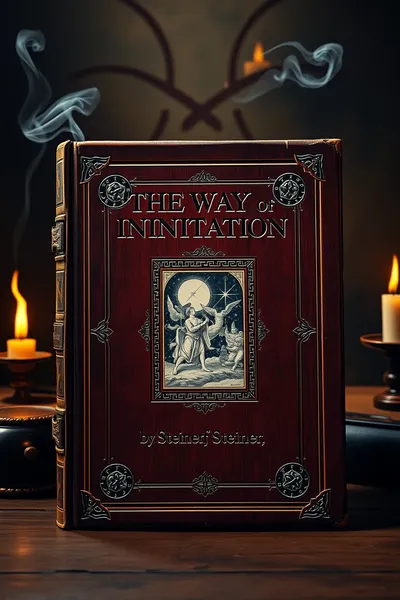
Studies in the middle way

 74
74

Studies in the middle way
Christmas Humphreys' 'Studies in the Middle Way' is an admirable attempt to bridge the gap between Buddhist philosophy and the Western mind. Humphreys, a foundational figure in the Western Buddhist Society, brings a judge's clarity and a humanist's empathy to his subject. The book excels in its systematic breakdown of complex doctrines, particularly the Four Noble Truths and the Eightfold Path, rendering them accessible without significant dilution. A particular strength lies in his consistent emphasis on the Middle Way as a practical guide for everyday living, rather than an abstract theological system. However, the work occasionally suffers from a slightly dated, almost paternalistic tone, and a tendency to interpret Buddhist concepts through a predominantly Western philosophical framework, which some might find limits its universality. The chapter on 'The Doctrine of Anatta' offers a particularly incisive, though brief, examination of non-self. Ultimately, 'Studies in the Middle Way' serves as a solid, if not revolutionary, introduction to core Buddhist principles for the Western reader.
📝 Description
74
Christmas Humphreys first published 'Studies in the Middle Way' in 1984.
Christmas Humphreys' 1984 book, 'Studies in the Middle Way,' examines Buddhist philosophy for a Western audience. Humphreys, a key figure in bringing Buddhism to the West, wrote this not as an academic text but as a practical guide for living. He clarifies core Buddhist ideas like karma, rebirth, and consciousness, making them accessible to those new to Eastern religions.
The book targets readers interested in comparative religion, Eastern philosophy, and the practical use of spiritual ideas. It is especially helpful for understanding the Buddhist concept of the Middle Way and its impact on personal ethics and mental focus. Those who enjoy clear explanations of complex spiritual concepts will find value here, as will individuals curious about the overlap between Buddhist thought and Western philosophy.
Published during a time of growing Western interest in Eastern religions, Humphreys' work was influential. As a judge and former president of the Buddhist Society in London, he focused on Buddhism's ethical and philosophical dimensions. He drew connections to Western thought, presenting Buddhism as a universal spiritual path. The book reflects a post-war intellectual openness to non-Western spiritual traditions.
Published in 1984, 'Studies in the Middle Way' emerged within a Western intellectual climate increasingly open to Eastern spiritual traditions. Humphreys, a prominent judge and Buddhist Society president, sought to bridge Buddhist thought with Western philosophy. His work contributed to a broader esoteric movement that saw Buddhism not merely as a religion but as a path to self-understanding and ethical living, accessible through rational inquiry and contemplation.
💡 Why Read This Book?
• Gain a clear understanding of the Buddhist 'Middle Way' as a practical approach to life, distinct from asceticism or indulgence, as detailed in Humphreys' extensive discussions. • Learn about the concept of Anatta (non-self) and its implications for personal identity and liberation, as explored in the book's dedicated sections. • Discover the ethical and psychological dimensions of Buddhist practice, including karma and rebirth, presented with Western philosophical context from the 1984 publication.
⭐ Reader Reviews
Honest opinions from readers who have explored this book.
❓ Frequently Asked Questions
What is the core philosophy presented in 'Studies in the Middle Way'?
The book centers on the Buddhist concept of the 'Middle Way,' which Humphreys interprets as a path avoiding extremes in thought and action, promoting balance and moderation for spiritual development.
When was 'Studies in the Middle Way' first published?
The book was first published in 1984, reflecting a significant period of Western engagement with Eastern spiritual traditions.
Who was Christmas Humphreys and why is he important?
Christmas Humphreys was a British judge and a key figure in introducing Buddhism to the West, serving as President of the Buddhist Society for many years.
Does the book discuss Buddhist meditation?
Yes, 'Studies in the Middle Way' touches upon meditation and mindfulness as practical tools for cultivating wisdom and understanding, essential components of the Middle Way path.
Is this book suitable for absolute beginners to Buddhism?
Yes, Humphreys' clear exposition aims to make complex Buddhist concepts accessible to those new to the subject, particularly those with a Western philosophical background.
What is the significance of the term 'Anatta' as discussed in the book?
'Anatta,' or non-self, is a core Buddhist doctrine explored in the book, questioning the existence of a permanent, unchanging self or soul.
🔮 Key Themes & Symbolism
The Middle Way
Humphreys meticulously unpacks the 'Middle Way' not merely as a philosophical stance but as a practical method for navigating life. He presents it as an antidote to the spiritual and psychological extremes that plague human experience, advocating for balance, moderation, and the avoidance of rigid dogmatism. This concept, central to Buddhist teachings, is explored in the context of ethics, understanding, and the path to liberation, making it relatable to readers seeking equilibrium in their own lives.
Anatta and the Self
A significant portion of the work is dedicated to the doctrine of Anatta, or non-self. Humphreys grapples with this challenging concept, seeking to convey its meaning without resorting to nihilism. He argues that the absence of a permanent, independent self is not a cause for despair but a liberation from ego-clinging. The book explores how understanding Anatta can dismantle the illusion of a fixed identity, leading to greater compassion and a less obstructed view of reality.
Karma and Rebirth
The interconnected principles of karma and rebirth are examined as fundamental to understanding the cycle of existence. Humphreys explains karma not as fatalistic destiny but as the law of cause and effect, where volitional actions shape future experiences. The concept of rebirth is presented as a continuation of this causal process, a natural unfolding rather than a supernatural event. The book seeks to clarify these doctrines, highlighting their ethical implications for present conduct.
Practical Application
Throughout 'Studies in the Middle Way,' Humphreys consistently emphasizes the practical application of Buddhist principles. He views Buddhist philosophy not as an abstract intellectual pursuit but as a transformative discipline for daily living. Concepts like mindfulness, ethical conduct, and wisdom are presented as tools to be cultivated through practice, leading to inner peace and a more profound understanding of oneself and the world.
💬 Memorable Quotes
Direct passages from the work, attributed to the author.
“The Middle Way is the only way to the cessation of suffering.”
— This statement captures the book's central thesis, positioning the Middle Way as not just one path, but the essential path for achieving liberation from dissatisfaction and pain.
“To see things as they are is the beginning of wisdom.”
— This points to the importance of clear perception and unbiased observation, a key element in Buddhist practice for overcoming delusion and gaining insight.
“Suffering is inherent in existence, but it is not inevitable.”
— This captures the essence of the Four Noble Truths, acknowledging the reality of Dukkha (suffering) while asserting that its cessation is attainable through the Noble Eightfold Path.
“Action without desire is the seed of liberation.”
— This interpretation speaks to the Buddhist understanding of karma, where actions performed without attachment to personal gain or aversion can lead to spiritual freedom.
💡 Key Ideas
Editorial paraphrase of the work's core concepts — not direct quotes.
There is no self, but there is a continuity of cause and effect.
This paraphrased concept highlights the Buddhist doctrine of Anatta (non-self) and its relationship with karma, suggesting that while a fixed ego is an illusion, the chain of causality persists.
🌙 Esoteric Significance
Tradition
Humphreys' work draws heavily from the Theravada and Mahayana traditions of Buddhism, presenting them through a lens informed by Western philosophical inquiry and a desire for universal spiritual understanding. It fits within the broader esoteric movement of the 20th century that sought to synthesize Eastern and Western mystical thought, though Humphreys' focus remained distinctly Buddhist in its core doctrines and terminology.
Symbolism
While not overtly symbolic in the manner of Hermeticism or Kabbalah, the book implicitly engages with potent Buddhist symbols. The 'Middle Way' itself functions as a symbol of balance and non-extremism, contrasting with dualistic thinking. The concept of 'Anatta' (non-self) challenges the ego-construct, a primary obstacle in many esoteric paths. The wheel of 'Karma' and 'Rebirth' symbolizes the causal interconnectedness of all phenomena.
Modern Relevance
Contemporary mindfulness movements, secular Buddhist practices, and psychospiritual integration draw implicitly or explicitly on the principles Humphreys elucidated. Thinkers and practitioners focusing on applied ethics, cognitive psychology, and the practical benefits of meditation often find resonance in his clear articulation of Buddhist principles, making his work relevant to modern seekers of well-being and self-understanding.
👥 Who Should Read This Book
['• Students of comparative religion and philosophy seeking a clear exposition of core Buddhist tenets from a Western perspective.', '• Individuals interested in practical ethics and psychological well-being who are drawn to Buddhist principles of balance and mindfulness.', '• Readers exploring the history of Western Buddhism and the contributions of figures like Christmas Humphreys to its dissemination.']
📜 Historical Context
Published in 1984, 'Studies in the Middle Way' emerged in a climate of significant Western interest in Eastern thought, a trend amplified by the post-war era. Christmas Humphreys, a prominent figure as President of the Buddhist Society in London from 1944 to 1957, played an important role in popularizing Buddhism in the West. His approach, while deeply rooted in Buddhist principles, often engaged with Western philosophical discourse, aiming to present Buddhism as a universal, ethical, and psychological path. This contrasted with more religiously focused presentations or interpretations, such as those emerging from the Tibetan tradition which was gaining visibility. Humphreys' work was part of a broader movement that included scholars and practitioners seeking to integrate Eastern wisdom into Western life, making Buddhism accessible beyond its traditional cultural contexts.
📔 Journal Prompts
The practical implications of the Middle Way for daily decision-making.
Reflections on the concept of Anatta and its impact on personal identity.
How the law of karma, as explained, influences perceived causality.
Exploring the balance between personal effort and universal principles.
The role of clear perception in overcoming suffering.
🗂️ Glossary
Middle Way
The central Buddhist concept, articulated by Humphreys, representing a path of moderation and balance, avoiding extremes of asceticism and indulgence, and of rigid views.
Anatta
A fundamental Buddhist doctrine signifying 'non-self' or 'no-soul,' asserting that there is no permanent, unchanging, independent self or ego.
Dukkha
A Pāli term often translated as 'suffering,' dissatisfaction, or stress, understood as an inherent characteristic of conditioned existence in Buddhist philosophy.
Karma
The principle of cause and effect governing volitional actions; the consequences of one's deeds that shape present and future experiences.
Rebirth
The continuation of the process of existence, driven by karma, beyond a single lifespan, understood as a causal continuum rather than transmigration of a fixed soul.
Mindfulness
A state of present-moment awareness, cultivated through practice, enabling clear perception and understanding of phenomena without judgment.
Eightfold Path
The Noble Eightfold Path, comprising Right Understanding, Right Thought, Right Speech, Right Action, Right Livelihood, Right Effort, Right Mindfulness, and Right Concentration, as the way to end suffering.
🔮 Readers Also Liked
Browse all →






More by Christmas Humphreys
All books →





More Free Theosophy & Anthroposophy Books
View all →