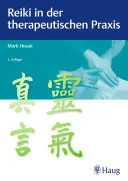
Reiki in der therapeutischen Praxis
 74
74

Reiki in der therapeutischen Praxis
Mark Hosak's "Reiki in der therapeutischen Praxis" offers a welcome departure from the often-generalized literature on Reiki, focusing instead on its precise application in a therapeutic context. The book's strength lies in its commitment to providing actionable techniques and evidence-based approaches, a rarity in many esoteric texts. Hosak's exploration of how to enhance "Reiki-Kraft" and tailor techniques to specific indications, such as the discussion on using specific hand positions for chronic pain management, is particularly commendable. However, the work occasionally leans into jargon without fully elucidating its esoteric underpinnings for the uninitiated, potentially leaving some readers wanting more theoretical grounding alongside the practical advice. A particular passage that stands out is the detailed breakdown of integrating Reiki with conventional post-operative care, which exemplifies the book's practical, albeit sometimes narrowly focused, utility. Ultimately, this is a valuable manual for the seasoned practitioner aiming to refine their clinical practice, though newcomers might require supplementary reading.
📝 Description
74
Mark Hosak's 2021 book details specific Reiki techniques for therapeutic use.
Mark Hosak's "Reiki in der therapeutischen Praxis," published in 2021, moves beyond basic introductions to the Usui system. It focuses on practical techniques and their effectiveness for various conditions, aiming to increase the potency of Reiki treatments. The book offers actionable strategies for practitioners to enhance their professional application of Reiki. It discusses methods for substantiating the effects of these treatments, providing concrete advice for targeted and effective use. This text is primarily for individuals already practicing Reiki, especially those using it in a therapeutic context. It seeks to deepen their understanding of energetic principles and refine their treatment protocols. The book explains how to activate a patient's self-healing abilities through specific Reiki interventions. It also appeals to those interested in complementing conventional medicine with energy healing, highlighting the spiritual aspects of recovery.
Published in 2021, this work enters a contemporary discussion on energy healing modalities. While Reiki's roots are in early 20th century Japan with Mikao Usui, Hosak's book engages with modern applications. It reflects a growing interest in mind-body connections and the potential integration of alternative therapies within mainstream healthcare. Unlike earlier foundational texts, Hosak's approach prioritizes observable therapeutic outcomes and practical application, aligning with current trends in esoteric studies that look for tangible results.
💡 Why Read This Book?
• Learn specific techniques for enhancing "Reiki-Kraft" and discover which methods are most effective for particular medical indications, as detailed in the book's practical application sections. • Understand how to activate a patient's self-healing mechanisms by addressing the spiritual and energetic levels of well-being, a core principle explored by Hosak. • Gain insights into substantiating Reiki's effectiveness and explore its role as a complementary therapy alongside conventional treatments, a key theme discussed in the context of modern healthcare.
⭐ Reader Reviews
Honest opinions from readers who have explored this book.
❓ Frequently Asked Questions
What is the primary focus of "Reiki in der therapeutischen Praxis"?
The book focuses on the effective application of Reiki in therapeutic settings, detailing specific techniques for various indications and exploring methods to enhance treatment potency and demonstrate efficacy.
Who is the intended audience for this book?
It is intended for Reiki practitioners, particularly those using the therapy professionally, who wish to deepen their understanding and refine their treatment protocols for better patient outcomes.
When was "Reiki in der therapeutischen Praxis" first published?
The book was first published on August 4, 2021.
Does the book suggest replacing conventional medical treatment with Reiki?
No, the book positions Reiki as a complementary therapy, intended to support and enhance conventional medical treatments rather than replace them.
What does "Reiki-Kraft" refer to in the context of this book?
"Reiki-Kraft" refers to the potency or power of the Reiki energy transmitted during a healing session, and the book offers techniques to amplify this force.
Are there practical tips for practitioners included?
Yes, the book is designed to be immediately practical, offering "Praxistipps" (practical tips) and new impulses for therapy, aiming for targeted and effective Reiki application.
🔮 Key Themes & Symbolism
Therapeutic Technique Refinement
This theme centers on the practical refinement of Reiki techniques for clinical use. Hosak moves beyond generic energy work to explore which specific hand placements and energetic focuses yield the best results for particular ailments. The emphasis is on moving from a broad application of Reiki to a targeted, condition-specific approach. This involves understanding how to modulate the flow of "Reiki-Kraft" to address issues ranging from physical discomfort to emotional imbalance, making the practice more effective and professional.
Activating Self-Healing
A core esoteric concept explored is the facilitation of the patient's innate self-healing capabilities. The book suggests that Reiki practitioners act as conduits, not only channeling universal life force but also subtly influencing the patient's energetic and spiritual systems. This activation is presented as a crucial element in achieving lasting well-being. The work posits that by addressing the spiritual dimension, practitioners can unlock deeper healing potentials within the individual, making the process more holistic.
Efficacy and Complementary Care
This theme addresses the practical challenge of demonstrating Reiki's effectiveness and integrating it into conventional healthcare. Hosak explores methods to substantiate the results of Reiki sessions, moving towards a more empirically-minded approach within esoteric healing. Furthermore, the book positions Reiki as a valuable complementary therapy, designed to work alongside and enhance standard medical treatments. This perspective acknowledges the limitations of energy healing while highlighting its significant supportive role in patient recovery.
Spiritual Dimension of Healing
The book emphasizes that healing transcends the purely physical. It studies the spiritual or energetic plane as a significant factor in a patient's overall well-being. By focusing on this dimension, practitioners are encouraged to address root causes that may manifest as physical symptoms. This perspective aligns with many esoteric traditions that view the body, mind, and spirit as interconnected, suggesting that true healing involves balancing all these aspects.
💬 Memorable Quotes
Direct passages from the work, attributed to the author.
“Which techniques have proven effective for which indications?”
— This question highlights the book's practical, evidence-informed approach to Reiki, seeking to move beyond general principles to specific, results-oriented applications in therapy.
“How can Reiki potency be increased?”
— This inquiry points to the book's focus on enhancing the energetic transmission of Reiki, suggesting methods and techniques to amplify its healing force for greater efficacy.
“How can the effectiveness of Reiki be demonstrated?”
— This reflects a desire to bridge the gap between esoteric practice and observable results, a key aspect of the book's aim to provide a practical, therapeutic framework for Reiki.
“Activating the self-healing powers of your patient: The spiritual level of...”
— This phrase underscores the book's emphasis on the holistic nature of healing, suggesting that practitioners can facilitate deeper recovery by addressing the patient's energetic and spiritual well-being.
“Reiki to complement conventional medical treatment”
— This statement clarifies the book's stance on Reiki's role within healthcare, positioning it as a supportive modality that works in conjunction with, rather than as a replacement for, standard medical interventions.
🌙 Esoteric Significance
Tradition
This work engages with the modern esoteric tradition of Usui Reiki Ryoho, a lineage originating in early 20th century Japan. While rooted in a spiritual healing system, Hosak's approach situates Reiki within a therapeutic framework, seeking to bridge esoteric practice with observable outcomes. It departs from purely spiritual interpretations by focusing on tangible results and practical application, aligning with a contemporary movement within esoteric studies that values empirical observation and clinical utility, sometimes drawing parallels with bioenergetic therapies.
Symbolism
While the book focuses on practical application rather than deep symbolic interpretation, the core concept of "Reiki-Kraft" itself can be seen as symbolic of universal life force or divine energy. The act of channeling this energy through specific hand positions symbolizes the practitioner's role as a conduit and healer. The emphasis on activating self-healing also points to the symbolic representation of the body's inherent wisdom and spiritual interconnectedness, a common motif in holistic healing traditions.
Modern Relevance
Contemporary holistic health practitioners, energy healers, and those exploring mind-body medicine draw upon the principles outlined in Hosak's work. Thinkers and practitioners in fields like integrative medicine and therapeutic touch, who seek to validate and refine energy healing modalities, find resonance with its focus on efficacy and application. The book's emphasis on Reiki as a complementary therapy also speaks to current trends in patient-centered care and the growing acceptance of non-pharmacological approaches to wellness.
👥 Who Should Read This Book
• Experienced Reiki practitioners seeking to elevate their practice from general healing to specialized therapeutic intervention, aiming for more targeted and effective client outcomes. • Healthcare professionals interested in understanding and potentially integrating complementary energy healing modalities like Reiki into their existing treatment plans, seeking practical applications. • Students of esoteric healing arts who wish to explore advanced techniques and gain insights into substantiating the efficacy of energy work within a therapeutic context.
📜 Historical Context
Published in 2021, "Reiki in der therapeutischen Praxis" arrives at a moment when complementary and alternative medicine (CAM) is increasingly integrated into mainstream wellness discussions. The early 21st century has seen a surge of interest in energy healing, building upon foundations laid by figures like Mikao Usui in the early 20th century and later popularized by authors such as Hawayo Takata. Hosak’s work fits into a contemporary trend within esoteric studies to provide practical, clinically-oriented guides that move beyond purely spiritual or philosophical discussions. It engages with a readership familiar with the broader New Age movement and the growing academic interest in the placebo effect and psychosomatic healing. Unlike the more foundational texts of the late 20th century, this book emphasizes demonstrable efficacy and specific therapeutic applications, reflecting a mature phase in the discourse surrounding Reiki, where practitioners seek advanced techniques and validation.
📔 Journal Prompts
The "Reiki-Kraft" amplification techniques discussed in the text.
Specific Reiki techniques for distinct medical indications.
The spiritual level of healing and patient self-activation.
Demonstrating the effectiveness of Reiki in therapeutic practice.
Integrating Reiki as a complementary therapy alongside conventional treatments.
🗂️ Glossary
Reiki-Kraft
Literally "Reiki power" or "Reiki potency." Refers to the strength and effectiveness of the universal life energy channeled during a Reiki healing session. The book aims to provide methods for enhancing this force.
Indikationen
In a medical context, "indications" refer to the specific conditions, symptoms, or diseases for which a particular treatment or therapy is known to be effective.
Selbstheilungskräfte
The body's innate ability to heal itself. The book explores how Reiki can be used to stimulate and enhance these natural self-healing powers within a patient.
Schulmedizinische Behandlung
Conventional or mainstream medical treatment, as practiced by licensed physicians and healthcare professionals. The book discusses Reiki as a complement to this.
Geistige Ebene
The spiritual or energetic level. The book suggests that addressing this dimension is crucial for holistic healing and activating self-healing capabilities.
Praxistipps
Practical tips or actionable advice derived from real-world experience, aimed at helping practitioners apply theoretical knowledge effectively in their professional work.
Usui System of Reiki
The original system of Reiki founded by Mikao Usui. This book builds upon the foundational principles of this system to explore advanced therapeutic applications.