Mystic Faerie Tarot
 72
72

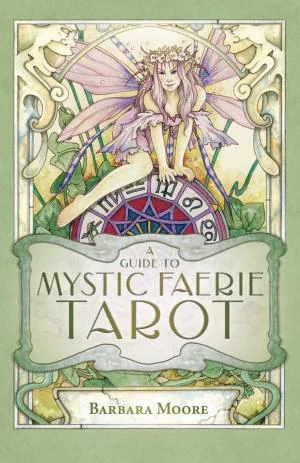
Mystic Faerie Tarot
Barbara Moore and Linda Ravenscroft's Mystic Faerie Tarot presents a charmingly accessible entry into the world of card divination. Ravenscroft's artwork is undoubtedly the deck's strong suit, offering vibrant, detailed depictions of fae creatures and natural settings that are both inviting and evocative. The guidebook, as intended, provides a friendly primer on tarot basics, making it a viable option for absolute novices. However, for seasoned practitioners, the interpretations can sometimes feel a touch generalized, lacking the nuanced depth one might find in decks rooted in older, more complex esoteric traditions. A passage describing the 'Four of Flowers' (Wands) as simply representing "a new beginning in a creative project" feels somewhat superficial when compared to the rich symbolism often associated with the Wands suit. Despite this limitation, the deck succeeds in its stated goal of demystifying tarot, offering a visually appealing and approachable tool for self-exploration.
📝 Description
72
Published in 2007, the Mystic Faerie Tarot by Barbara Moore and Linda Ravenscroft connects traditional tarot with fae imagery.
This tarot deck and its guide introduce users to faerie-inspired cartomancy. It blends classic tarot archetypes with the distinct visual style of the fae, as rendered by artist Linda Ravenscroft. The deck is designed to be an approachable entry point for individuals new to tarot reading, offering fundamental knowledge alongside its specialized theme.
The Mystic Faerie Tarot appeals to those interested in nature spirituality and folklore. It provides a gentler introduction for beginners who might find traditional tarot intimidating. Readers drawn to the symbolic language of the fae and art that conveys enchantment and natural magic will find this deck engaging.
Reflecting a trend in esoteric arts toward personalized, visually rich tools, this deck offers a contemporary take on divination. While tarot has ancient roots, the Mystic Faerie Tarot focuses on accessible themes and art that connects with the mystical aspects of the natural world.
The Mystic Faerie Tarot situates itself within modern occult practices that draw from folklore and nature symbolism. It interprets faerie not just as mythical beings but as metaphors for inner wisdom and natural forces. This approach aligns with esoteric traditions that seek guidance through connections to the natural world and its unseen energies, using visual art as a primary conduit for symbolic communication.
💡 Why Read This Book?
• Gain an introduction to tarot fundamentals through the accessible framework of faerie imagery, as presented in the guidebook accompanying the 2007 deck, making complex concepts easier to grasp for beginners. • Explore the symbolic language of the fae and nature, learning how to interpret specific motifs like the 'Willow' card, which offers a unique perspective on emotional flow and intuition. • Develop a personal connection with divination through visually rich artwork by Linda Ravenscroft, encouraging intuitive readings by focusing on the emotional and naturalistic elements present in each card.
⭐ Reader Reviews
Honest opinions from readers who have explored this book.
❓ Frequently Asked Questions
What is the primary focus of the Mystic Faerie Tarot deck?
The Mystic Faerie Tarot focuses on using faerie imagery and nature symbolism as a lens for tarot readings. It aims to provide an accessible introduction to card reading, particularly for beginners, emphasizing gentle guidance and intuitive interpretation.
Who illustrated the Mystic Faerie Tarot?
The illustrations for the Mystic Faerie Tarot were created by Linda Ravenscroft, whose distinctive art style brings the fae realm and natural elements to life within the deck.
When was the Mystic Faerie Tarot first published?
The Mystic Faerie Tarot, by Barbara Moore and Linda Ravenscroft, was first published in 2007, positioning it as a contemporary entry in the field of tarot decks.
Is the Mystic Faerie Tarot suitable for experienced tarot readers?
While primarily designed for beginners, experienced readers may appreciate the unique artistic style and thematic focus. However, those accustomed to decks with deeper historical or complex symbolic systems might find its interpretations less intricate.
What kind of guidance does the Mystic Faerie Tarot offer?
The deck offers guidance inspired by the natural world and faerie folklore. It encourages intuitive understanding and connection with unseen forces, often framing interpretations around themes of growth, emotion, and creativity.
Does the deck come with a guidebook?
Yes, the Mystic Faerie Tarot comes with an accompanying guidebook authored by Barbara Moore. This guide provides essential information on tarot reading and card meanings specific to this deck.
🔮 Key Themes & Symbolism
Faerie Realm Archetypes
The deck translates traditional tarot archetypes through the lens of faerie lore and mythology. Figures like faerie queens, sprites, and nature spirits are presented as embodiments of the Major and Minor Arcana suits. This approach imbues familiar concepts with a sense of otherworldly magic and connection to the natural world, suggesting that faerie symbolism can offer unique insights into personal challenges and opportunities.
Nature's Wisdom and Intuition
A central theme is the inherent wisdom found within nature, channeled through the fae. The cards often feature flora, fauna, and landscapes to represent emotional states, spiritual growth, and practical advice. This connection emphasizes intuition and the subtle messages conveyed by the environment, encouraging readers to attune themselves to these natural rhythms for guidance.
Accessible Cartomancy for Beginners
The Mystic Faerie Tarot is explicitly designed to be a welcoming introduction to tarot reading. The accompanying guidebook provides clear explanations of card meanings and basic divination techniques. The artwork itself is intended to be less intimidating than some traditional decks, fostering a sense of playfulness and ease for those new to the practice.
Creative Inspiration and Manifestation
Several cards, particularly those aligned with the suit of Flowers (representing Wands), touch upon themes of creativity, inspiration, and the manifestation of ideas. The fae are often depicted as creators and bringers of magic, suggesting that by connecting with this energy, readers can unlock their own potential for bringing new projects and desires into being.
💬 Memorable Quotes
Direct passages from the work, attributed to the author.
“Offers a friendly introduction to tarot, card-reading essentials, and quick reference guide for beginners.”
— This statement from the original blurb highlights the deck's core intention: to explain tarot for newcomers. It signals that the accompanying materials are designed for ease of use, focusing on foundational knowledge rather than advanced esoteric theory.
“Discover the many enchanting possibilities in your own life using the Mystic Faerie cards.”
— This phrase suggests that the deck acts as a key to unlocking hidden potential and positive outcomes. It frames the tarot reading process as an exploration of beneficial opportunities that might otherwise remain unseen.
“The artwork evokes a sense of wonder and connection to the natural world.”
— This is an interpretation of the general visual style. It suggests that Linda Ravenscroft's illustrations are designed to transport the reader, fostering a feeling of enchantment and grounding them in the subtle energies of nature.
“Each card presents a unique faerie character or natural scene.”
— This highlights the visual specificity of the deck. It indicates that the imagery is rich with fae beings and elements of the natural environment, each intended to convey a distinct message or archetype.
“The guidebook provides essential knowledge for understanding the deck's symbolism.”
— This points to the instructional component of the Mystic Faerie Tarot. It assures users that the accompanying book offers the necessary context to interpret the unique imagery and meanings presented by Moore and Ravenscroft.
🌙 Esoteric Significance
Tradition
While not strictly adhering to a single historical esoteric lineage like Hermeticism or Kabbalah, the Mystic Faerie Tarot draws heavily from modern interpretations of nature spirituality and folklore, particularly Faerie traditions. It aligns with contemporary approaches that see the fae not just as mythological beings but as representations of natural energies and psychic forces. It departs from older traditions by prioritizing accessible, nature-centric symbolism over complex, formalized systems, making it a unique branch of modern esoteric practice.
Symbolism
Key symbols include various faerie archetypes (e.g., King, Queen, Sprite) representing different facets of human experience and archetypal energies. Natural elements like flowers, trees (e.g., Willow), and water bodies are prevalent, symbolizing growth, rootedness, emotional flow, and intuition respectively. These symbols are employed to convey messages about inner states, relationships, and the unfolding of potential, drawing on a symbolic language deeply connected to the cycles of nature.
Modern Relevance
This deck remains relevant for contemporary practitioners of nature-based spirituality, modern witchcraft, and those interested in intuitive divination. It appeals to thinkers and artists who explore the intersection of folklore, psychology, and personal growth. Its accessibility also appeals to current trends in mindfulness and self-care, where connecting with nature and cultivating intuition are emphasized for well-being.
👥 Who Should Read This Book
• **Beginners in Tarot:** Individuals new to card reading will find the gentle approach and clear guidebook useful for learning fundamental concepts and interpretations. • **Admirers of Faerie and Nature Lore:** Those drawn to mythology, folklore, and the natural world will appreciate the deck's thematic focus and evocative artwork. • **Seekers of Intuitive Guidance:** Readers looking for a deck that emphasizes emotional connection, natural symbolism, and accessible insights into personal development will find this a supportive tool.
📜 Historical Context
The Mystic Faerie Tarot emerged in 2007, a period characterized by a burgeoning interest in nature-based spirituality and a diversification of tarot deck themes. While tarot itself has a long history tracing back to 15th-century Italy, the early 21st century saw a significant expansion beyond traditional Rider-Waite-Smith interpretations. Authors like Doreen Virtue were popularizing angel and faerie-related divination systems, creating a receptive market for decks like Moore and Ravenscroft's. This work fits within a broader contemporary movement that sought to personalize esoteric practices, making them more accessible and visually appealing to a modern audience. Unlike the more academic or strictly Hermetic approaches prevalent in some earlier esoteric circles, this deck reflects a trend towards intuitive, art-driven divination, often drawing inspiration from Neo-Pagan and modern witchcraft influences, though it remains distinct from explicitly religious practices.
📔 Journal Prompts
Reflection on the 'Faerie Queen' card's representation of inner power.
Consider the symbolism of natural elements in the 'Three of Blossoms' (Cups).
Analyze how the 'Guardian Sprite' card might advise on personal protection.
Explore the meaning of the 'River of Dreams' card in relation to subconscious messages.
Connect the 'Sunbeam Sprite' card's energy to a current creative endeavor.
🗂️ Glossary
Faerie
In the context of this tarot, 'Faerie' refers to a field of nature spirits and archetypal energies, often associated with folklore and mythology. It symbolizes unseen forces, intuition, and the magic inherent in the natural world.
Arcana
The two divisions of a tarot deck: the Major Arcana, representing significant life lessons and spiritual journeys, and the Minor Arcana, depicting more mundane events and challenges, often divided into suits.
Suits (Flowers, Leaves, Brooks, Stones)
These are the four suits in the Mystic Faerie Tarot, analogous to the traditional Wands, Cups, Swords, and Pentacles. Flowers represent creativity and inspiration; Leaves symbolize emotions and relationships; Brooks relate to thoughts and communication; Stones signify material matters and grounding.
Archetype
A universal, primordial symbol or motif that recurs in the literature, art, and mythology of diverse cultures. In tarot, archetypes represent fundamental human experiences and patterns of behavior.
Intuition
The ability to understand something immediately, without the need for conscious reasoning. In tarot, intuition is key to interpreting the cards beyond their literal meanings, connecting with their symbolic messages.
Divination
The practice of seeking knowledge of the future or the unknown by supernatural means. Tarot is a form of divination used for insight, self-reflection, and guidance.
Symbolism
The use of symbols to represent ideas or qualities. Tarot decks rely heavily on visual symbolism to convey complex meanings and messages through imagery.
This book appears in 1 collection
🔮 Readers Also Liked
Browse all →

From the “Divination” Collection
View all →
More Free Occult Philosophy Books
View all →