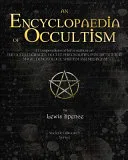
Encyclopaedia of Occultism
 78
78

Encyclopaedia of Occultism
Lewis Spence’s Encyclopaedia of Occultism attempts a monumental task: to corral the sprawling, often contradictory world of esoteric knowledge into a single volume. It succeeds admirably in its breadth, covering everything from obscure magical orders to the history of spiritism with a remarkable degree of detail. Spence’s prose, while academic, possesses an earnestness that suggests a genuine desire to document rather than sensationalize. However, the sheer scope means that depth can sometimes be sacrificed; certain topics feel summarized rather than fully explored. A notable strength lies in its historical context, particularly its discussion of figures and movements active around the turn of the 20th century, such as the Hermetic Order of the Golden Dawn. Its primary limitation, inherent in its encyclopedic format, is that it can feel like a collection of entries rather than a cohesive narrative. Despite this, for anyone seeking a broad, factually grounded overview of occult subjects, this work is an indispensable reference.
This encyclopaedia offers a solid, if sometimes dry, foundation for understanding the esoteric landscape.
📝 Description
78
Lewis Spence's 1920 Encyclopaedia of Occultism aimed to organize esoteric knowledge.
Lewis Spence compiled the Encyclopaedia of Occultism, a reference work published in 1920 that systematically catalogs a wide range of occult subjects. It provides definitions, historical background, and explanations for topics spanning from magic and demonology to spiritualism and mysticism. The goal was to present these often poorly understood areas in a clear and structured manner, making them accessible to serious students. The book is designed for scholars, researchers, and dedicated practitioners within occult and metaphysical studies. It assists those looking for a fundamental grasp of various spiritual traditions and practices. Individuals interested in the history of magical thought, comparative religion, and the development of psychic science will find this volume a valuable source for detailed information.
This encyclopaedia systematically defines and examines many esoteric concepts. It covers the methods and historical foundations of practices like ceremonial magic, divination, and mediumship. Additionally, it discusses the pantheon of beings and figures central to demonology and angelology, analyzing their roles and interpretations across different cultures and belief systems. The subject of psychic science, including phenomena such as telepathy and clairvoyance, is also a prominent area of focus within the work.
Published in 1920, the Encyclopaedia of Occultism appeared during a period of significant interest in spiritualism and the occult across Europe and America. This era saw movements like Theosophy gain traction and notable figures such as Aleister Crowley emerge. Spence's encyclopaedia sought to bring order to the varied and often scattered lore of esotericism prevalent at the time. It offered a structured method for understanding complex subjects that were frequently subject to debate or sensationalism.
💡 Why Read This Book?
• Gain a structured understanding of disparate occult disciplines, from demonology to spiritism, grounded in Spence's detailed cataloging of early 20th-century esoteric thought. • Explore the historical roots of modern occultism by examining figures and movements prevalent around the time of the book's original publication, such as the burgeoning field of psychic science. • Acquire precise definitions and historical context for key esoteric terms and concepts, providing a crucial reference point for further academic or personal study in comparative mysticism.
⭐ Reader Reviews
Honest opinions from readers who have explored this book.
❓ Frequently Asked Questions
What is the original publication date of Lewis Spence's Encyclopaedia of Occultism?
While this edition was first published on November 9, 2023, Lewis Spence's original work on occultism dates back to the early 20th century, reflecting the intellectual climate of that era.
Does the Encyclopaedia of Occultism cover modern spiritualism and psychic phenomena?
Yes, the encyclopaedia extensively covers spiritism and psychic science, detailing historical developments, key figures, and reported phenomena from the 19th and early 20th centuries.
Is Lewis Spence considered a reliable source for occult information?
Spence was a prolific writer and folklorist who approached occult subjects with an academic and historical perspective, aiming for comprehensive documentation rather than personal advocacy.
What is the primary focus of the "Occult Sciences" section?
The "Occult Sciences" section provides an overview of various disciplines believed to possess hidden knowledge, including astrology, alchemy, divination, and magic, detailing their historical contexts and theoretical frameworks.
How does this book differ from other occult encyclopedias?
Spence's work is notable for its comprehensive scope and its attempt to provide a systematic, historical account of occultism during a period of significant public and scholarly interest in the subject.
Is the Encyclopaedia of Occultism suitable for beginners?
It is suitable for beginners interested in a detailed, factual overview. However, its academic tone and encyclopedic nature may require dedicated study rather than casual reading.
🔮 Key Themes & Symbolism
Magic and Ritual Practice
The work meticulously details various forms of magic, from ceremonial and elemental to folk practices. It explores their historical origins, theoretical underpinnings, and the purported effects of rituals. Spence examines the role of intention, symbolism, and the invocation of entities within magical systems, providing a structured overview of how these practices were understood and executed by different groups and individuals throughout history.
Spiritism and Mediumship
A significant portion is dedicated to spiritism, particularly as it manifested in the 19th and early 20th centuries. The book discusses the phenomenon of communication with the deceased, the role of mediums, séances, and the societal impact of these beliefs. Spence attempts to provide a historical and cultural context for spiritualist movements, analyzing their philosophical underpinnings and the scientific or pseudoscientific explanations offered at the time.
Demonology and Angelology
The encyclopaedia offers a comprehensive survey of demonology and angelology across diverse religious and occult traditions. It catalogues various entities, their hierarchies, attributes, and historical significance in folklore, theology, and magical grimoires. Spence presents these figures not as matters of faith but as subjects of historical study, examining their evolution and the cultural anxieties or aspirations they represent.
Psychic Science and Paranormal Phenomena
Spence addresses the emerging field of "psychic science," which sought to investigate phenomena such as telepathy, clairvoyance, precognition, and psychokinesis through empirical methods. The book reviews early experiments and theories related to these abilities, placing them within the broader context of occultism and spiritualism. It highlights the attempts to rationalize and categorize these experiences, often drawing parallels with earlier mystical traditions.
💬 Memorable Quotes
Direct passages from the work, attributed to the author.
“The occult sciences are those which seek to understand the hidden forces of nature and the universe.”
— This statement frames the core purpose of occult studies as an investigative pursuit, distinguishing them from purely philosophical or religious dogma by focusing on observable, albeit hidden, energetic principles.
“Spiritism posits a continued existence of the soul after death, with the possibility of communication.”
— This defines the fundamental tenet of spiritism, emphasizing its focus on post-mortem survival and the interactive potential between the living and the departed, a central theme in early occult investigations.
“Demonology catalogues the varied entities believed to influence the material world.”
— This highlights the systematic approach to cataloging supernatural beings within the encyclopaedia, presenting demonology as a field of study concerned with classification and influence rather than solely theological condemnation.
“Psychic science attempts to explain extraordinary mental faculties through observation.”
— This emphasizes the book's engagement with early attempts to scientifically validate psychic phenomena, framing it as an effort to apply observational methods to subjective experiences and alleged mental powers.
“Mysticism often involves direct, intuitive apprehension of divine or ultimate reality.”
— This expresses the essence of mysticism as presented, focusing on the experiential and non-rational pathways to knowledge and spiritual attainment, contrasting with more dogmatic or ritualistic approaches.
🌙 Esoteric Significance
Tradition
The work draws heavily from Western Esotericism, particularly its manifestations in the late 19th and early 20th centuries, encompassing spiritualism, occultism, and early parapsychology. It attempts to synthesize and document diverse traditions rather than strictly adhering to a single lineage like Hermeticism or Kabbalah. Its value lies in cataloging contemporary understandings and practices, serving as a bridge between older esoteric lore and nascent scientific inquiry into the paranormal.
Symbolism
While not heavily focused on symbolic interpretation, the book implicitly engages with symbols through its discussion of ritual objects, angelic and demonic hierarchies, and mythological figures. For instance, the various angelic or demonic names cataloged in demonology function as symbolic representations of cosmic forces or psychological archetypes within specific magical or theological frameworks. The very act of cataloging these entities reflects an attempt to map the unseen spiritual architecture.
Modern Relevance
Contemporary students of esoteric history, comparative religion, and the sociology of belief find Spence's encyclopaedia important for its historical documentation of occult movements. Thinkers exploring the roots of modern paranormal research, the cultural impact of spiritualism, or the evolution of magical theory often reference Spence for his comprehensive overview of the era. It provides a foundational text for understanding the intellectual currents that shaped later esoteric developments and modern interest in the supernatural.
👥 Who Should Read This Book
• Students of comparative religion and folklore seeking to understand the historical development and cross-cultural expressions of occult beliefs and practices. • Researchers of early 20th-century spiritualism and psychical research interested in primary source material documenting the era's key concepts and figures. • Aspiring occultists or historians of magic needing a foundational reference work that systematically categorizes and defines a wide range of esoteric subjects from a historical perspective.
📜 Historical Context
Lewis Spence's Encyclopaedia of Occultism emerged from the fertile ground of early 20th-century British occultism, a period marked by intense interest in spiritualism, psychical research, and esoteric philosophies. It was published during an era when figures like Arthur Conan Doyle championed spiritualism and organizations such as the Society for Psychical Research were actively investigating paranormal claims. Spence's work sought to provide a comprehensive, if somewhat academic, survey of a field often characterized by sensationalism and fragmented literature. It appeared in a landscape populated by thinkers like Aleister Crowley and the legacy of Helena Blavatsky's Theosophical Society, offering a more systematic and historical approach. While not directly engaging in the same practical magical systems as the Hermetic Order of the Golden Dawn, it documented their historical context and related phenomena. Reception was generally favorable among those seeking scholarly overviews, though its broad scope meant it could not satisfy practitioners demanding initiation-level detail.
📔 Journal Prompts
The concept of psychic science as explored by Spence: how does it intersect with modern psychology?
Spiritualism's portrayal in the encyclopaedia: what societal anxieties did it reflect in the early 1900s?
Demonology's historical cataloguing: reflect on the archetypal nature of named entities.
The definition of magic within the book: how does Spence differentiate it from religion?
Mysticism's emphasis on intuition: contrast this with the encyclopaedia's systematic approach.
🗂️ Glossary
Occultism
A broad term encompassing beliefs and practices related to hidden knowledge, supernatural phenomena, and esoteric traditions beyond mainstream science and religion.
Spiritism
A philosophical doctrine and religious movement centered on the belief in communication with spirits of the deceased, often facilitated by mediums.
Demonology
The study or belief in demons, their characteristics, hierarchies, and influence, often drawing from religious texts, folklore, and grimoires.
Mysticism
The pursuit of direct, intuitive experience of ultimate reality, divinity, or spiritual truth, often through practices like meditation and contemplation.
Psychic Science
An early term for the investigation of paranormal mental abilities such as telepathy, clairvoyance, and precognition, often attempting empirical study.
Magic
Practices aimed at influencing events or achieving specific outcomes through supernatural or esoteric means, often involving rituals, spells, and invocation.
Compendium
A collection of concise information on a particular subject, presented in an organized and systematic manner.