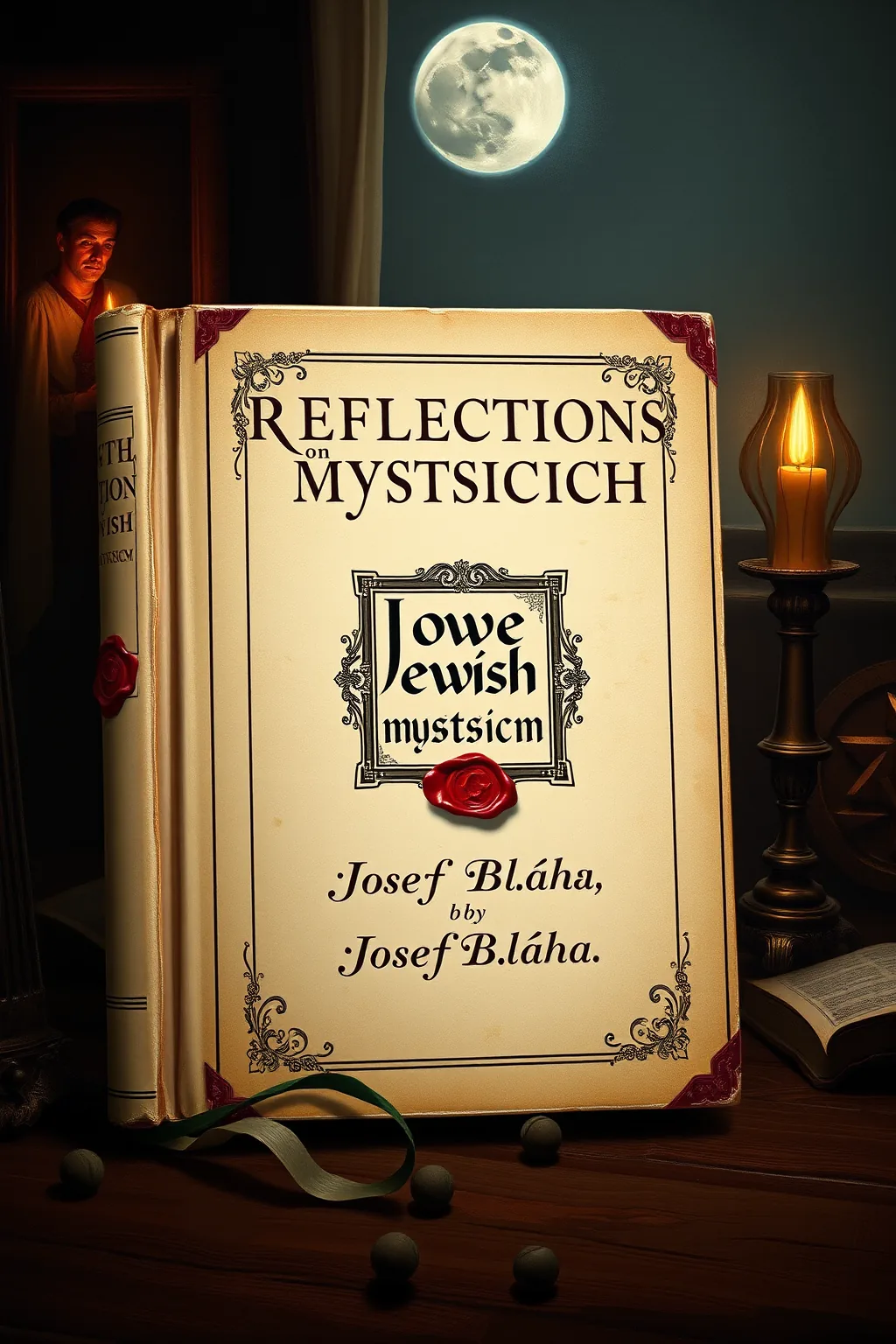
Reflections on Jewish Mysticism
 71
71

Reflections on Jewish Mysticism
Josef Bláha’s *Reflections on Jewish Mysticism* attempts a formidable synthesis, juxtaposing the esoteric dimensions of Kabbalah with the rigorous inquiries of 20th-century philosophers like Heidegger and Levinas. The strength of the book lies in its detailed exposition of specific Kabbalistic texts and concepts, particularly its exploration of how Hebrew poetry serves as a vehicle for mystical apprehension. However, the integration with modern philosophy, while ambitious, occasionally feels strained. The discussion on the *Sefirot*, for instance, presents a clear, if somewhat abstract, account of their function within the divine emanatory process. The limitation appears when the dialogue with Levinas feels more like a forced comparison than a genuine dialectic, potentially overstating the direct influence or conceptual overlap. The verdict here is that Bláha offers a valuable scholarly bridge, albeit one that sometimes creaks under the weight of its own dual construction.
📝 Description
71
Josef Bláha's 2013 book examines Kabbalistic thought alongside Hebrew literature and philosophy.
Reflections on Jewish Mysticism, published in 2013, offers a scholarly look at Kabbalistic thought. Josef Bláha connects this tradition to Hebrew literature and poetry, moving past simple historical or textual study. The book engages with current philosophical ideas, bridging older mystical traditions and modern intellectual trends.
This work is for readers who already understand Jewish mysticism and Western philosophy. It will interest scholars of religion, philosophy students focused on existentialism and phenomenology, and serious Kabbalah practitioners. The book requires a willingness to engage with difficult concepts from various fields.
This book addresses Jewish mysticism, specifically Kabbalah, a tradition that emerged in the medieval period and developed complex systems of cosmology, theology, and meditation. It focuses on concepts like the divine emanations (Sefirot) and the nature of the Infinite (Ein Sof). Bláha's work situates these ideas within broader intellectual history, linking them to contemporary philosophical discussions.
💡 Why Read This Book?
• Gain a nuanced understanding of the *Ein Sof* concept, examining its Kabbalistic underpinnings and how Bláha relates it to philosophical ideas of the infinite, offering a unique perspective on divine transcendence. • Explore the intricate relationship between Hebrew literature and mystical experience, learning how Bláha uses poetic analysis to illuminate Kabbalistic themes not typically covered in standard theological texts. • Grasp Bláha's specific methodology for connecting Kabbalah with modern existentialist philosophy, particularly his treatment of thinkers like Heidegger, providing a distinct framework for comparative spiritual and intellectual study.
⭐ Reader Reviews
Honest opinions from readers who have explored this book.
❓ Frequently Asked Questions
What is the primary focus of Josef Bláha's Reflections on Jewish Mysticism?
The book primarily examines Kabbalah, Hebrew literature, and poetry, while also engaging in a dialogue with modern philosophical concepts, specifically those of Levinas and Heidegger, exploring the intersection of these fields.
When was Reflections on Jewish Mysticism first published?
Reflections on Jewish Mysticism by Josef Bláha was first published in 2013, placing it within contemporary academic discourse on religion and philosophy.
Does the book offer practical Kabbalistic exercises?
No, the book is primarily an academic and philosophical exploration rather than a guide for practical Kabbalistic application. It focuses on textual analysis and theoretical connections.
Which specific philosophical concepts are discussed in relation to Kabbalah?
The book specifically addresses modern philosophical issues raised by thinkers like Emmanuel Levinas and Martin Heidegger, examining their relationship with Kabbalistic thought.
What is the significance of Hebrew literature and poetry in this work?
Bláha uses Hebrew literature and poetry as a lens through which to understand and interpret Kabbalistic ideas, suggesting that these artistic forms are integral to the expression of mystical experience.
Is this book suitable for beginners in Kabbalah studies?
While informative, the book assumes some familiarity with both Kabbalah and philosophical terminology. It is better suited for intermediate students or those with a background in comparative philosophy and religion.
🔮 Key Themes & Symbolism
Kabbalah and Philosophy Dialogue
This theme centers on Bláha's project of juxtaposing the esoteric doctrines of Kabbalah with the existential and phenomenological frameworks of 20th-century philosophers. It investigates how concepts such as *Tzimtzum* (divine contraction) or the nature of the *Ein Sof* might be re-contextualized or understood through the philosophical inquiries of thinkers like Heidegger into 'Being' or Levinas into the 'Other'. The work seeks to demonstrate that ancient mystical traditions can offer novel perspectives on enduring philosophical questions, and vice versa, revealing common threads in the human quest for meaning and transcendence.
Hebrew Poetry as Mystical Expression
Bláha posits that Hebrew literature and poetry are not merely historical artifacts but vital conduits for expressing and experiencing Kabbalistic insights. This theme examines how linguistic structures, poetic imagery, and thematic patterns within Hebrew texts serve to articulate the ineffable nature of the divine and the soul's journey. The analysis highlights specific poems and literary devices that, according to Bláha, embody mystical states, offering a unique interpretive key to understanding the affective and imaginative dimensions of Jewish esotericism beyond purely theological or cosmological frameworks.
The Structure of Divine Emanation
Central to Kabbalistic thought, the concept of divine emanation, represented by the *Sefirot*, is a key focus. Bláha explores the architecture of these ten divine attributes, detailing their order, interrelationships, and significance in the creation and ongoing maintenance of the cosmos. The work examines the symbolic meaning of each *Sefirah*, from *Keter* (Crown) to *Malkhut* (Kingdom), and discusses how their configuration provides a map of both divine reality and the human spiritual path, often drawing parallels with philosophical concepts of order and manifestation.
Modern Philosophical Engagement
This theme addresses Bláha's deliberate engagement with specific modern philosophers, notably Emmanuel Levinas and Martin Heidegger. The work analyzes how their respective philosophical projects—Levinas's ethics of responsibility and infinite alterity, and Heidegger's fundamental ontology—can inform or be informed by Kabbalistic ideas. Bláha scrutinizes concepts like 'the face of the Other' in Levinas or 'Dasein' in Heidegger, seeking potential resonances or points of critical dialogue with traditional Jewish mystical concepts, thereby bridging disparate intellectual traditions.
💬 Memorable Quotes
Direct passages from the work, attributed to the author.
“The Kabbalah is not merely a historical curiosity but a living tradition capable of speaking to contemporary philosophical dilemmas.”
— This statement underscores Bláha's core thesis: that ancient Jewish mysticism possesses enduring relevance, offering useful insights that can engage with and even challenge modern philosophical thought and existential concerns.
“Hebrew poetry reveals the affective range of the soul's yearning for the divine.”
— This highlights the book's focus on the aesthetic and emotional dimensions of Kabbalah, suggesting that poetic language is a crucial, often overlooked, medium for conveying mystical states and the human desire for spiritual connection.
“Engaging with Heidegger's concept of Being requires a re-examination of mystical concepts of God.”
— This points to a specific instance of Bláha's philosophical dialogue, suggesting that the philosophical exploration of existence by Heidegger necessitates a reciprocal consideration of how traditional Kabbalistic ideas about the divine might be reinterpreted.
“Levinas's ethics of the Other finds echoes in the Kabbalistic emphasis on divine immanence and connection.”
— This interpretation suggests Bláha finds conceptual bridges between Levinas's philosophy of radical responsibility towards the Other and certain Kabbalistic ideas concerning the divine presence within creation and the interconnectedness of all beings.
💡 Key Ideas
Editorial paraphrase of the work's core concepts — not direct quotes.
The structure of the Sefirot provides a blueprint for both cosmic order and the human path to spiritual integration.
This paraphrase emphasizes the dual role of the Sefirot in Kabbalah, as described by Bláha: they are not only divine emanations structuring reality but also archetypal patterns guiding individual spiritual development and wholeness.
🌙 Esoteric Significance
Tradition
This work sits squarely within the Kabbalistic tradition, examining its core concepts like the *Sefirot* and *Ein Sof*. Bláha's unique contribution lies in his attempt to articulate these esoteric ideas through the lens of modern Western philosophy, particularly existentialism and phenomenology. Rather than purely adhering to traditional Kabbalistic commentaries, he seeks to find conceptual parallels and points of dialogue with thinkers like Heidegger and Levinas, thus positioning the book as a bridge between classical Jewish esotericism and contemporary philosophical discourse.
Symbolism
Key symbols explored include the *Sefirot*, the ten divine emanations that form the structure of creation and divine revelation in Kabbalah. Bláha likely examines their symbolic representation of divine attributes and cosmic processes. Another crucial motif is the *Ein Sof*, symbolizing the infinite, unknowable Godhead beyond all conception, which serves as the ultimate source from which all existence emanates. The Hebrew alphabet itself, with its mystical interpretations, also likely features as a symbolic system through which divine wisdom is encoded.
Modern Relevance
Bláha's work speaks to contemporary scholars and practitioners interested in comparative mysticism and the philosophical implications of esoteric traditions. Thinkers and groups exploring the intersection of spirituality and philosophy, particularly those interested in existential questions and ethical frameworks, find value in his approach. His bridging of Kabbalah with figures like Levinas speaks to modern concerns about ethics, alterity, and the nature of being, suggesting that ancient mystical systems can offer profound resources for contemporary spiritual and intellectual life.
👥 Who Should Read This Book
• Students of comparative religion and philosophy: Those seeking to understand how disparate intellectual traditions, like Kabbalah and existentialism, can inform one another, gaining insights into Bláha's unique comparative methodology. • Advanced Kabbalah practitioners and scholars: Individuals who have a foundational knowledge of Kabbalistic texts and concepts and wish to explore their engagement with modern philosophical thought, particularly the works of Heidegger and Levinas. • Readers interested in Jewish literature and mysticism: Anyone fascinated by the intersection of Hebrew poetry, mystical experience, and philosophical inquiry, who seeks a scholarly yet accessible exploration of these complex themes.
📜 Historical Context
Published in 2013, Josef Bláha's *Reflections on Jewish Mysticism* arrived during a period of heightened academic interest in the cross-disciplinary study of religion and philosophy. The early 21st century saw a continued scholarly reassessment of Kabbalah, moving beyond earlier, often sensationalized, interpretations towards more nuanced textual and philosophical analyses. Bláha's specific engagement with Martin Heidegger and Emmanuel Levinas reflects a broader trend in continental philosophy that sought to find meaning and ethical grounding in, or critique of, traditional metaphysical and religious systems. This period also witnessed ongoing debates within Jewish studies regarding the historical development and conceptual evolution of Kabbalistic thought, with scholars like Moshe Idel and Joseph Dan actively shaping the discourse. Bláha's work contributes to this conversation by proposing novel connections between esoteric Jewish traditions and contemporary Western philosophical thought, a synthesis that some might contrast with more purely historical or theological approaches to Kabbalah prevalent in earlier decades.
📔 Journal Prompts
The concept of Ein Sof and its relation to philosophical ideas of the absolute.
The role of Hebrew poetry in articulating Kabbalistic states.
The Sefirot as a framework for understanding divine order and human development.
Heidegger's 'Being' and its potential parallels with Kabbalistic divinity.
Levinas's ethics and its connection to Kabbalistic immanence.
🗂️ Glossary
Kabbalah
A system of Jewish mysticism and esoteric tradition that explores the nature of God, the creation of the universe, and the spiritual purpose of humanity, often using symbolic interpretations of biblical texts.
Ein Sof
A Kabbalistic term meaning 'Without End' or 'Infinite,' referring to God in God's absolute, unknowable essence, prior to any manifestation or emanation.
Sefirot
The ten divine emanations or attributes through which God, the Ein Sof, is understood to have created and sustained the universe, forming a central structure in Kabbalistic cosmology.
Tzimtzum
A Kabbalistic concept, notably articulated by Isaac Luria, describing the divine 'contraction' or withdrawal of God's infinite light to make space for creation.
Emmanuel Levinas
A 20th-century Lithuanian-French philosopher whose work focused on ethics, particularly the concept of the 'Other' and the infinite responsibility owed to them.
Martin Heidegger
A 20th-century German philosopher known for his work on phenomenology and existentialism, particularly his inquiries into the meaning of 'Being' (Sein) and human existence (Dasein).
Dasein
A key concept in Heidegger's philosophy, referring to the specific mode of existence characteristic of human beings, often translated as 'being-there' or 'existence.'