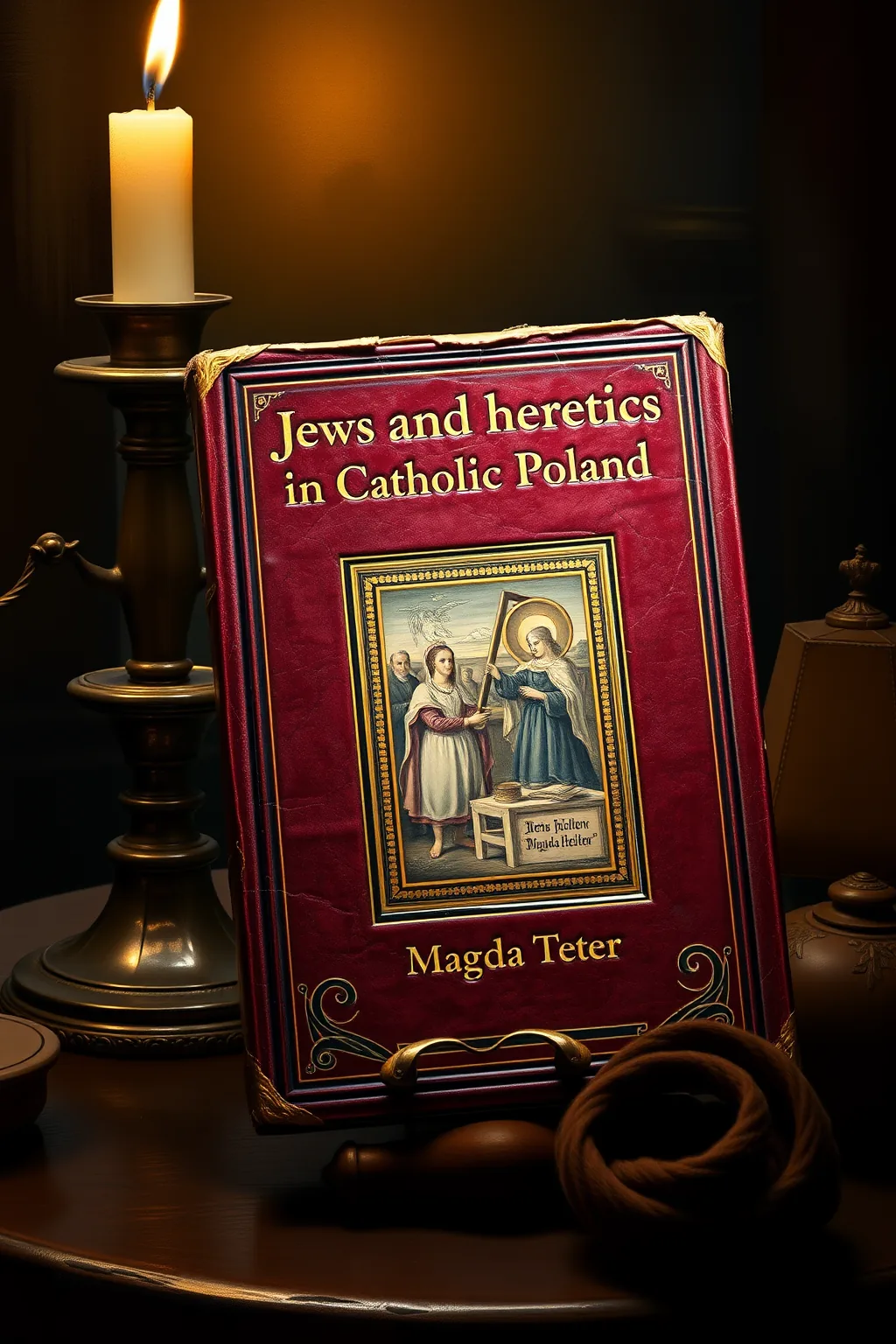
Jews and heretics in Catholic Poland
 62
62

Jews and heretics in Catholic Poland

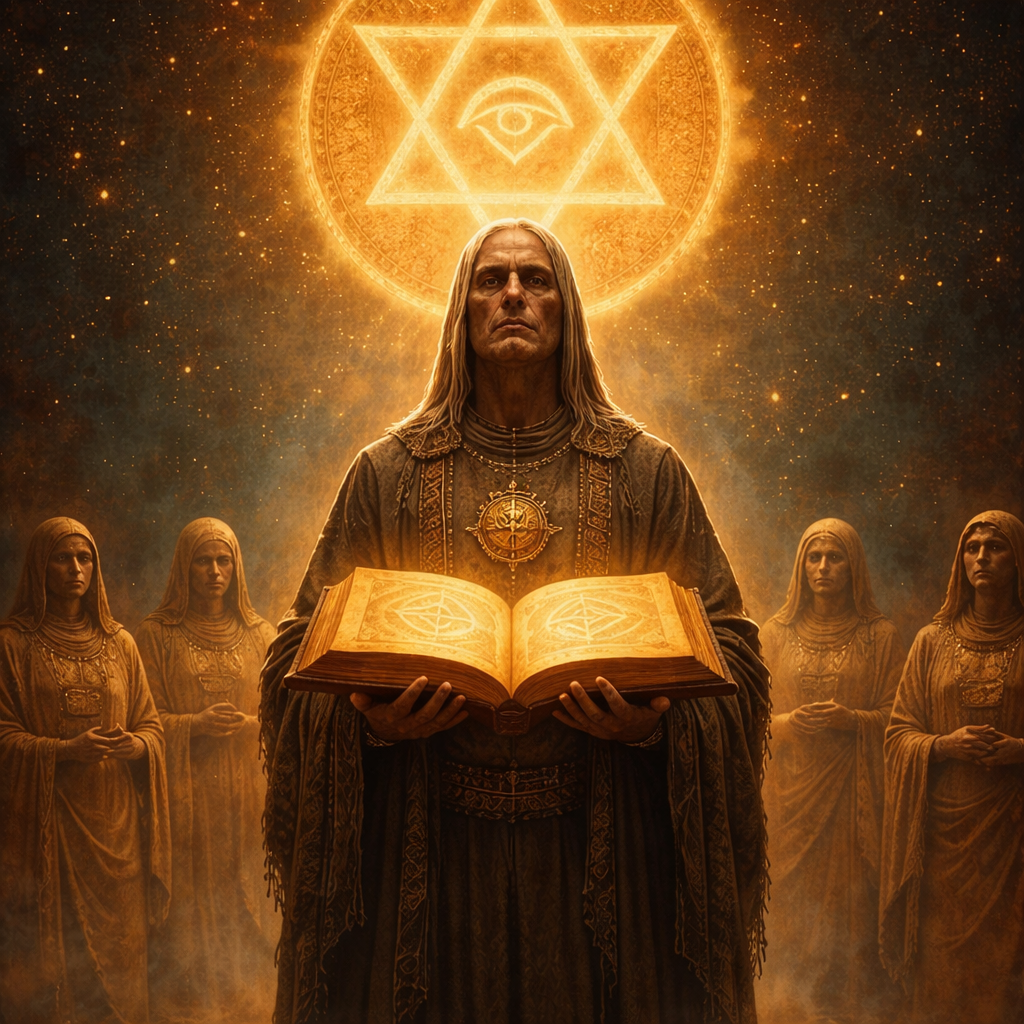

Sophia Crane, Associate Editor: Magda Teter's 'Jews and Heretics in Catholic Poland' is a revelatory exploration of spiritual porosity during a period of intense religious consolidation. Teter masterfully navigates the complex interactions between Catholic authorities, Jewish communities, and those deemed heretical, revealing a fascinating exchange of ideas and anxieties. The book uncovers the subtle yet significant influence of Kabbalistic thought on Christian esoteric traditions and the anxieties it provoked. Its strength lies in its nuanced portrayal of these encounters, moving beyond simplistic binaries. This work is indispensable for scholars of religious history, mysticism, and early modern European studies, offering profound insights into the dynamics of belief and the enduring human search for the sacred.
📝 Description
62
Magda Teter's 2005 book examines Jewish and heretical influences on Catholic Poland.
Magda Teter's 'Jews and Heretics in Catholic Poland' analyzes the complex religious interactions in early modern Poland. The book focuses on the period when Catholic orthodoxy sought to solidify its position, encountering both established Jewish traditions and emerging heterodoxies. Teter details how esoteric currents, particularly from Kabbalah, intertwined with the Counter-Reformation's efforts to control spiritual expression.
The research highlights a world of clandestine discussions and symbolic interpretations. Ancient Hebrew wisdom, often veiled in mystery, had a subtle yet significant impact on prevailing theological structures. The book reveals that figures deemed 'the other' were not simply rejected but were also secretly engaged with, feared, and sometimes imitated. This dynamic interaction profoundly shaped Polish religious identity.
This work situates itself within the study of how esoteric traditions interact with dominant religious frameworks. It examines the transmission and adaptation of Kabbalistic ideas in a Christian context, particularly during a period of intense theological scrutiny. The book looks at how marginalized or hidden spiritual knowledge could nonetheless shape the discourse and practice of the established church, demonstrating a less direct, more permeable boundary between orthodox and heterodox belief systems than might be assumed.
💡 Why Read This Book?
Uncover the hidden spiritual exchanges that shaped early modern Poland. 'Jews and Heretics in Catholic Poland' offers a unique lens into the complex interplay between Kabbalah, Catholicism, and heresy. Ideal for scholars, seekers of esoteric knowledge, and anyone fascinated by the nuanced evolution of religious thought and the historical dialogue between disparate faith traditions.
⭐ Reader Reviews
Honest opinions from readers who have explored this book.
❓ Frequently Asked Questions
What is the primary focus of 'Jews and Heretics in Catholic Poland'?
The book primarily examines the complex spiritual, social, and intellectual interactions between Jewish communities, the Catholic Church, and various heretical groups in early modern Poland, with a particular emphasis on the influence of Jewish mysticism.
Does the book discuss Kabbalah directly?
Yes, it explores how Kabbalistic concepts and symbolism were perceived, debated, and sometimes even adopted or feared by Christian thinkers and theologians within the Polish context.
Who was Magda Teter?
Magda Teter was a distinguished historian and professor specializing in early modern European religious and intellectual history, with a focus on Jewish-Christian relations and the Reformation.
What historical period does the book cover?
The book focuses on the early modern period in Poland, roughly spanning the 16th and 17th centuries, a time of significant religious upheaval and change across Europe.
Is this book suitable for beginners interested in mysticism?
While academically rigorous, the book offers accessible insights into esoteric themes for those new to the subject, provided they have a general interest in religious history and comparative spirituality.
🔮 Key Themes & Symbolism
Cross-Cultural Spiritual Exchange
This theme studies the often clandestine or contentious dialogues between Jewish, Catholic, and heterodox spiritual traditions in early modern Poland. It highlights how 'other' belief systems were not always met with outright rejection but could become objects of curiosity, fear, and even subtle intellectual appropriation. The book reveals the permeable boundaries of spiritual thought, demonstrating how ideas, symbols, and interpretive methods could traverse denominational lines, influencing theological discourse and mystical practices in unexpected ways, particularly concerning the transmission of Kabbalistic insights.
The Specter of Heresy and Hidden Knowledge
Central to the narrative is the Catholic Church's fervent effort to define and combat heresy, especially during the Counter-Reformation. This theme examines how Jewish mysticism, particularly Kabbalah, was often conflated with or perceived as a source of dangerous, esoteric knowledge that could lead Christians astray. Teter explores the anxieties surrounding hidden meanings, secret rituals, and alternative paths to divine illumination, illustrating the constant vigilance required by Church authorities to maintain doctrinal purity and the ways in which marginalized spiritualities were perceived as threats to established order.
Kabbalah's Influence and Christian Reception
This theme focuses on the specific impact of Kabbalah on Christian thought and esotericism in Poland. It investigates how Christian scholars and mystics engaged with Hebrew texts, seeking to understand divine mysteries and cosmic order through a Jewish lens. The book illuminates the intellectual currents that led to Christian Kabbalah and the ways in which Jewish esoteric traditions offered alternative frameworks for understanding creation, the divine, and the human soul, often existing in a complex relationship of admiration, fear, and distortion within the broader Catholic intellectual landscape.
💬 Memorable Quotes
Direct passages from the work, attributed to the author.
“Hidden knowledge, once unearthed, could reshape the very foundations of faith.”
— This speaks to the transformative power of esoteric or suppressed information. When such knowledge emerges, it has the potential to challenge and fundamentally alter established religious doctrines and practices.
“Fear and fascination often walked hand-in-hand when encountering the spiritual 'other'.”
— This highlights the dualistic human response to unfamiliar or marginalized belief systems, where apprehension about the unknown is intertwined with a compelling curiosity.
“Symbolism served as a universal language, bridging chasms of dogma.”
— This emphasizes the role of symbolic interpretation as a means of communication and connection across different religious and philosophical divides, offering a common ground for understanding.
“The quest for divine truth often led down unexpected, shadowed paths.”
— This metaphor suggests that the pursuit of spiritual enlightenment is not always straightforward and can involve exploring less conventional, esoteric, or even controversial avenues of inquiry.
💡 Key Ideas
Editorial paraphrase of the work's core concepts — not direct quotes.
The boundaries of belief were not as rigidly drawn as we might imagine.
This quote suggests that historical religious divisions were more fluid and permeable than modern perceptions might imply, allowing for unexpected interactions and influences between different faith traditions.
🌙 Esoteric Significance
Tradition
This work is deeply situated within the study of Christian Kabbalah and the broader European esoteric tradition that emerged in the Renaissance and Reformation periods. It explores how Jewish mystical texts and concepts were reinterpreted and integrated into Christian frameworks, often seeking to find hidden allegorical meanings and divine correspondences. The significance lies in understanding how these mystical traditions interacted, influencing Christian hermeticism, alchemy, and theosophical thought, even as they were viewed with suspicion by mainstream religious authorities.
Symbolism
The book illuminates the rich symbolic language inherent in Kabbalah and its reception within Christian contexts. Key symbols such as the Tree of Life (Sephirot), divine names, and gematria (numerological interpretation of Hebrew letters) are explored not just as theological concepts but as potent tools for accessing hidden spiritual truths and understanding the structure of the cosmos. The interpretation of these symbols by both Jewish and Christian thinkers reveals a shared quest for divine knowledge, even when their ultimate theological aims differed.
Modern Relevance
In an era increasingly characterized by a search for diverse spiritual paths and a reconnection with ancient wisdom traditions, 'Jews and Heretics in Catholic Poland' offers profound modern relevance. It demonstrates the historical reality of cross-cultural spiritual dialogue and the enduring human impulse to seek meaning beyond conventional dogma. The book's exploration of how esoteric knowledge was perceived, suppressed, and transmitted provides valuable context for contemporary discussions about religious pluralism, the nature of belief, and the ongoing fascination with mysticism and hidden lore.
👥 Who Should Read This Book
This volume is essential for academic historians specializing in early modern Europe, religious studies, and Jewish history. For scholars of mysticism and esoteric traditions, it offers critical insights into the historical reception and adaptation of Kabbalah. Spiritual seekers and practitioners interested in the intersection of different faith traditions and the historical development of esoteric thought will find this book useful. Beginners curious about the complex relationship between Judaism and Christianity, or the Counter-Reformation's impact on spiritual diversity, will gain a foundational understanding from its detailed research.
📜 Historical Context
The early modern period in Poland (roughly 16th-17th centuries) was a time of profound religious dynamism and intellectual ferment. The Polish-Lithuanian Commonwealth was renowned for its relative religious tolerance, a stark contrast to much of contemporary Europe gripped by the religious wars of the Reformation and Counter-Reformation. This unique environment fostered a complex interplay of diverse spiritual traditions, including a significant Jewish population and various Christian denominations, alongside emerging Protestant movements and dissenting Catholic groups. The Catholic Church, in its Counter-Reformation push, sought to reassert its authority and define orthodox belief, yet it simultaneously encountered the rich, often esoteric, currents of Jewish mysticism, particularly Kabbalah. This era witnessed not only persecution and exclusion but also instances of intellectual borrowing, mutual fascination, and the subtle permeation of ideas, shaping a distinct religious and cultural landscape.
📔 Journal Prompts
Reflect on a time you encountered a belief system vastly different from your own. What were your initial reactions, and how did they evolve?
Consider the concept of 'hidden knowledge.' In what ways does it exist in contemporary society, and how is it perceived?
Explore a symbol from your own spiritual or philosophical tradition. What are its deeper meanings and potential interpretations?
How might the historical anxieties surrounding religious 'heresy' manifest in modern societal judgments or exclusions?
Imagine you are a scholar in early modern Poland. What would be your primary concerns when studying texts from a different religious tradition?
🗂️ Glossary
Kabbalah
A system of Jewish mysticism that explores the nature of God, the creation of the universe, and the relationship between the divine and the human through esoteric interpretations of scripture and symbolic lore.
Counter-Reformation
The period of Catholic resurgence initiated in response to the Protestant Reformation, characterized by efforts to reform the Church from within and combat the spread of Protestantism.
Heretic
An individual who holds beliefs or opinions contrary to the established doctrines of a religion, often leading to excommunication or persecution by religious authorities.
Sephirot
In Kabbalah, the ten divine emanations or attributes through which God is understood to interact with the created universe, often depicted as a mystical diagram known as the Tree of Life.
Gematria
A method of Kabbalistic interpretation that assigns numerical values to Hebrew letters and words to derive hidden meanings or connections between different texts and concepts.
This book appears in 1 collection
🔮 Readers Also Liked
Browse all →








From the “Kabbalah” Collection
View all →






More Free Kabbalah & Jewish Mysticism Books
View all →