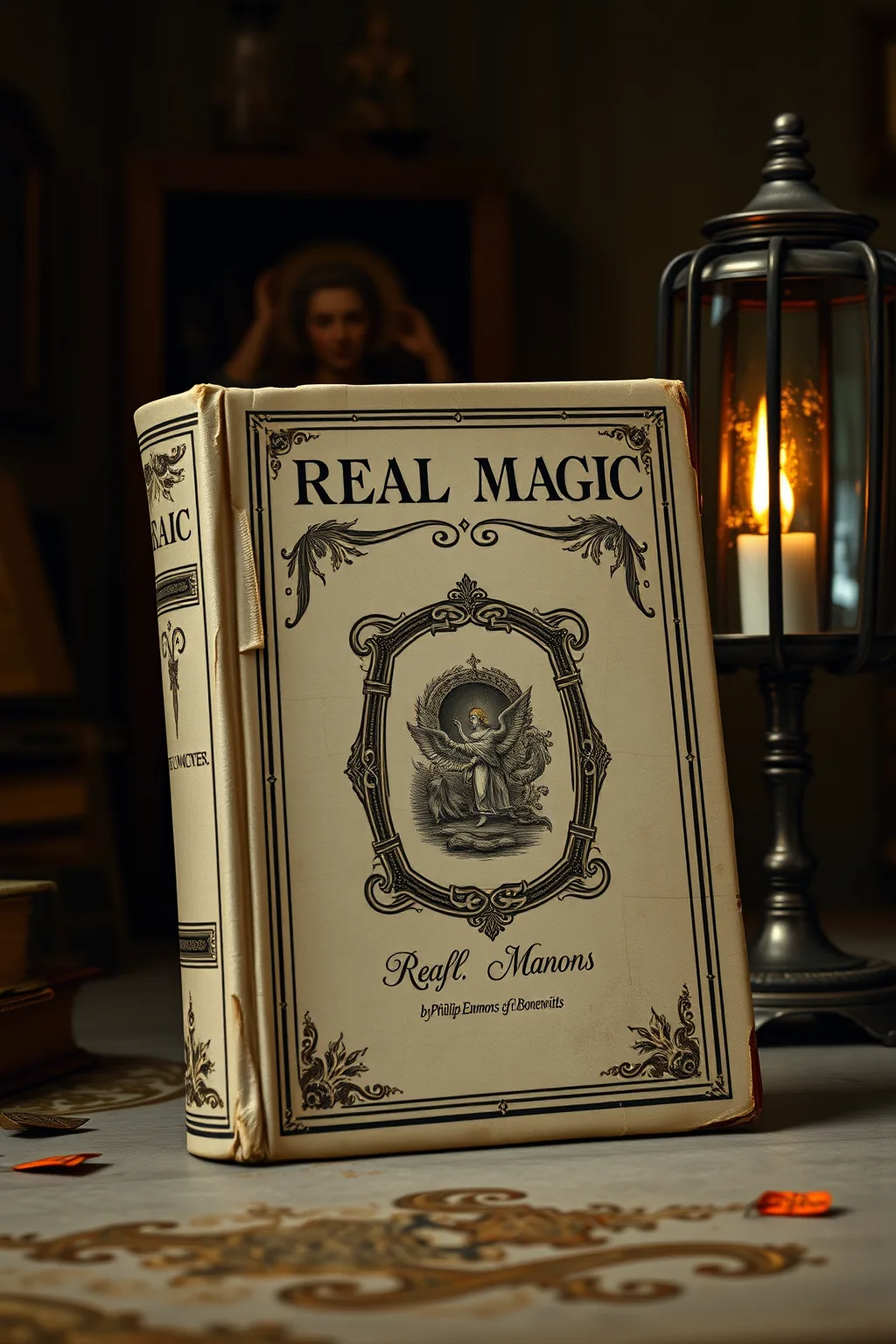
Real Magic
 64
64

Real Magic


By Alaric Kestrel (Metaphysical Studies Reviewer) — Philip Emmons Isaac Bonewits' 'Real Magic' is a seminal work for those seeking to understand the true essence of magical practice. Moving beyond superficial notions, Bonewits delves into the theoretical underpinnings and psychological mechanics of magic, presenting a rigorously researched and deeply insightful perspective. He masterfully bridges the gap between arcane traditions and contemporary parapsychology, offering a nuanced exploration of consciousness, belief, and intentionality. This book is a vital resource for serious students of occultism, practitioners looking to refine their understanding, and skeptics open to genuine inquiry. Its strength lies in its intellectual honesty and its ability to provoke profound self-reflection, challenging readers to redefine their understanding of what is truly possible.
📝 Description
64
Philip Bonewits published 'Real Magic' in 1979, challenging occult dogma.
Philip Bonewits' 1979 book 'Real Magic' moves beyond simple spellcraft. It examines the foundations of magical theory and practice, drawing on parapsychology and historical ritual. Bonewits, a practicing occultist, aims to demystify magic by grounding it in principles of consciousness and belief. The book approaches these subjects with academic seriousness and a sense of discovery.
It encourages readers to reconsider their assumptions about the mind's capabilities and the nature of reality. The work is structured to engage those seriously studying the occult or philosophy. Bonewits seeks to connect the reader with what he views as fundamental mystical forces. The book emphasizes how focused intent can influence one's experience of the world.
Published in 1979, 'Real Magic' emerged during a period of renewed interest in occultism and alternative spiritualities. It stands apart from many contemporary works by attempting a systematic, almost scientific, approach to magic. Bonewits grounds his discussion in concepts from parapsychology and comparative religion, rather than solely relying on traditional esoteric texts or channeling. The book engages with the idea that magic is an inherent human faculty, tied to consciousness and belief systems, a perspective that aligns with certain strands of Western esotericism and Western magical traditions.
💡 Why Read This Book?
Embark on an intellectual odyssey that redefines magical theory and practice. 'Real Magic' offers a profound exploration of consciousness, belief, and the mechanics of manifestation, appealing to serious seekers, academic researchers, and dedicated practitioners. If you yearn to move beyond simplistic spellwork and delve into the philosophical and psychological foundations of the arcane, this book is your essential guide to unlocking deeper truths and potential.
⭐ Reader Reviews
Honest opinions from readers who have explored this book.
❓ Frequently Asked Questions
What is the primary focus of 'Real Magic'?
The book's primary focus is a rigorous, research-based exploration of the theoretical underpinnings and psychological mechanisms of magic, moving beyond superficial ritual to examine the nature of belief, consciousness, and intentionality.
Is this book suitable for beginners in magic?
While accessible, 'Real Magic' is best suited for those with a serious interest and a willingness to engage with complex ideas. Beginners may find it a challenging but rewarding introduction to deeper magical theory.
Does the book provide practical spells or rituals?
The emphasis is on understanding the 'why' and 'how' of magic rather than providing a compendium of spells. It equips readers with the knowledge to develop their own effective practices.
What is the author's background?
Philip Emmons Isaac Bonewits is a highly respected practitioner, scholar, and author in the fields of magic, occultism, and parapsychology, known for his research-driven approach.
How does 'Real Magic' differ from other occult books?
It distinguishes itself through its scholarly rigor, its integration of parapsychological research, and its focus on the underlying principles of magic rather than just the application of techniques.
🔮 Key Themes & Symbolism
The Psychology of Belief and Manifestation
This theme studies how our deeply held beliefs, both conscious and subconscious, act as powerful engines for shaping reality. Bonewits explores the intricate psychological architecture that underpins magical phenomena, positing that understanding and consciously directing one's inner landscape is paramount to effective magical practice. It examines the role of expectation, conviction, and the creation of internal states that align with desired outcomes, presenting magic not as external manipulation but as an internal art of profound self-mastery and perception alteration.
Bridging Esoteric Traditions and Scientific Inquiry
Bonewits masterfully navigates the perceived divide between ancient esoteric wisdom and modern scientific understanding, particularly in the area of parapsychology. This theme highlights how centuries-old magical principles can find resonance and explanation within contemporary research into consciousness, quantum physics, and the mind-body connection. The book advocates for an integrated approach, suggesting that a holistic understanding of magic requires acknowledging both the subjective experience of the practitioner and the objective observable phenomena, fostering a dialogue between the spiritual and the empirical.
The Nature of Consciousness as the Ultimate Tool
Fundamentally, , 'Real Magic' posits that consciousness itself is the primary instrument and medium of all magical operation. This theme explores the vast, untapped potential of the human mind to perceive, influence, and interact with the energetic and material realms. Bonewits unpacks how focused intent, altered states of awareness, and the directed use of imagination can transcend conventional limitations, revealing consciousness not merely as an observer but as an active participant in the co-creation of reality. It's an exploration of the mind's latent powers and its profound connection to the universe.
💬 Memorable Quotes
Direct passages from the work, attributed to the author.
“Magic is the art of consciously influencing reality.”
— This foundational statement frames magic not as a passive reception of external forces, but as an active, intentional engagement with the fabric of existence.
“Belief is the engine of manifestation.”
— This highlights the crucial role of conviction and unwavering faith in the process of bringing desired outcomes into being.
“The universe is far stranger than we imagine.”
— An invitation to embrace the unknown and acknowledge the vastness of reality beyond our current comprehension.
“True power lies in understanding, not just doing.”
— Emphasizes the importance of theoretical knowledge and insight as the bedrock for effective and ethical magical practice.
“The greatest magic is the transformation of the self.”
— Points to inner growth and personal evolution as the ultimate outcome and purpose of engaging with esoteric arts.
🌙 Esoteric Significance
Tradition
While drawing from a wide spectrum of esoteric thought, 'Real Magic' is particularly resonant with modern occultism, Neo-Paganism, and psychological approaches to magic. It synthesizes elements from Western esotericism, ceremonial magic, and psychological theory, aiming to create a unified framework. Its emphasis on personal gnosis, the power of belief, and the subjective experience of reality aligns with practices that seek direct communion with the divine or the exploration of inner landscapes, making it a key text for those interested in the evolution of these traditions.
Symbolism
The book's symbolism is not derived from a single, rigid system but rather from the inherent symbolic nature of consciousness and belief itself. Bonewits uses concepts like 'belief systems' and 'mental constructs' as symbolic frameworks to understand how magic operates. The act of ritual, the intentionality behind a spell, and the archetypal patterns we engage with are all explored as symbolic languages that the mind uses to communicate with itself and the universe, facilitating transformation and manifestation.
Modern Relevance
In an age increasingly dominated by digital information and external stimuli, 'Real Magic' offers a potent reminder of the internal power of consciousness and focused intention. Its insights into the psychology of belief and manifestation are highly relevant to personal development, mindfulness practices, and even fields like positive psychology and manifestation coaching. The book's call for critical inquiry and research-based understanding of esoteric subjects continues to resonate with contemporary practitioners and scholars seeking a more sophisticated and integrated approach to the occult.
👥 Who Should Read This Book
This profound work is essential for the serious seeker of hidden knowledge, the diligent student of occult philosophy, and the dedicated practitioner aiming to deepen their understanding of magical principles. Scholars of parapsychology and comparative religion will find its research-driven approach invaluable. Beginners with a strong intellectual curiosity and a desire to move beyond superficial explanations of magic will benefit immensely, as will experienced practitioners looking to refine their theoretical framework and enhance the efficacy of their work through a deeper comprehension of the underlying mechanics.
📜 Historical Context
Published during a period of burgeoning interest in occultism and New Age philosophies, Philip Emmons Isaac Bonewits' 'Real Magic' emerged as a significant contribution to the late 20th-century intellectual landscape. The era saw a growing dissatisfaction with purely materialistic worldviews, leading many to explore alternative spiritualities, ancient wisdom traditions, and the untapped potential of the human mind. Bonewits' work stood out by offering a more academically rigorous and psychologically grounded approach to magic, distinguishing itself from purely dogmatic or sensationalist accounts. It reflected a broader cultural shift towards self-discovery and the integration of spiritual practices into daily life, challenging conventional paradigms and encouraging a more nuanced understanding of phenomena often relegated to the fringes of society.
📔 Journal Prompts
Reflect on a core belief you hold. How might this belief be influencing your reality, both positively and negatively?
Describe a time when you felt a strong sense of 'knowing' or intuition. What was the context, and how did you act upon it?
Consider the concept of 'intentionality.' How can you consciously direct your intent in a specific aspect of your life this week?
What does 'magic' mean to you after reading this book? How has your definition evolved?
Explore a personal challenge. How could understanding the 'psychology of belief' help you approach this challenge differently?
🗂️ Glossary
Gnosis
Direct, intuitive knowledge or spiritual insight, often considered a fundamental aspect of esoteric traditions and personal magical experience.
Parapsychology
A field of study that investigates purported psychic phenomena and other paranormal claims, such as telepathy, clairvoyance, precognition, and psychokinesis.
Manifestation
The process by which thoughts, beliefs, and intentions are brought into tangible reality through conscious effort and alignment with energetic principles.
Esotericism
A broad category of mystical or spiritual traditions that are concerned with the inner workings of the spirit and the universe, often involving secret knowledge or practices accessible only to initiates.
Consciousness
The state of being aware of and responsive to one's surroundings; the totality of one's thoughts, feelings, and sensations; the mind.
This book appears in 2 collections
🔮 Readers Also Liked
Browse all →





From the “Ritual Magic” Collection
View all →








More Free Magic & Ritual Books
View all →