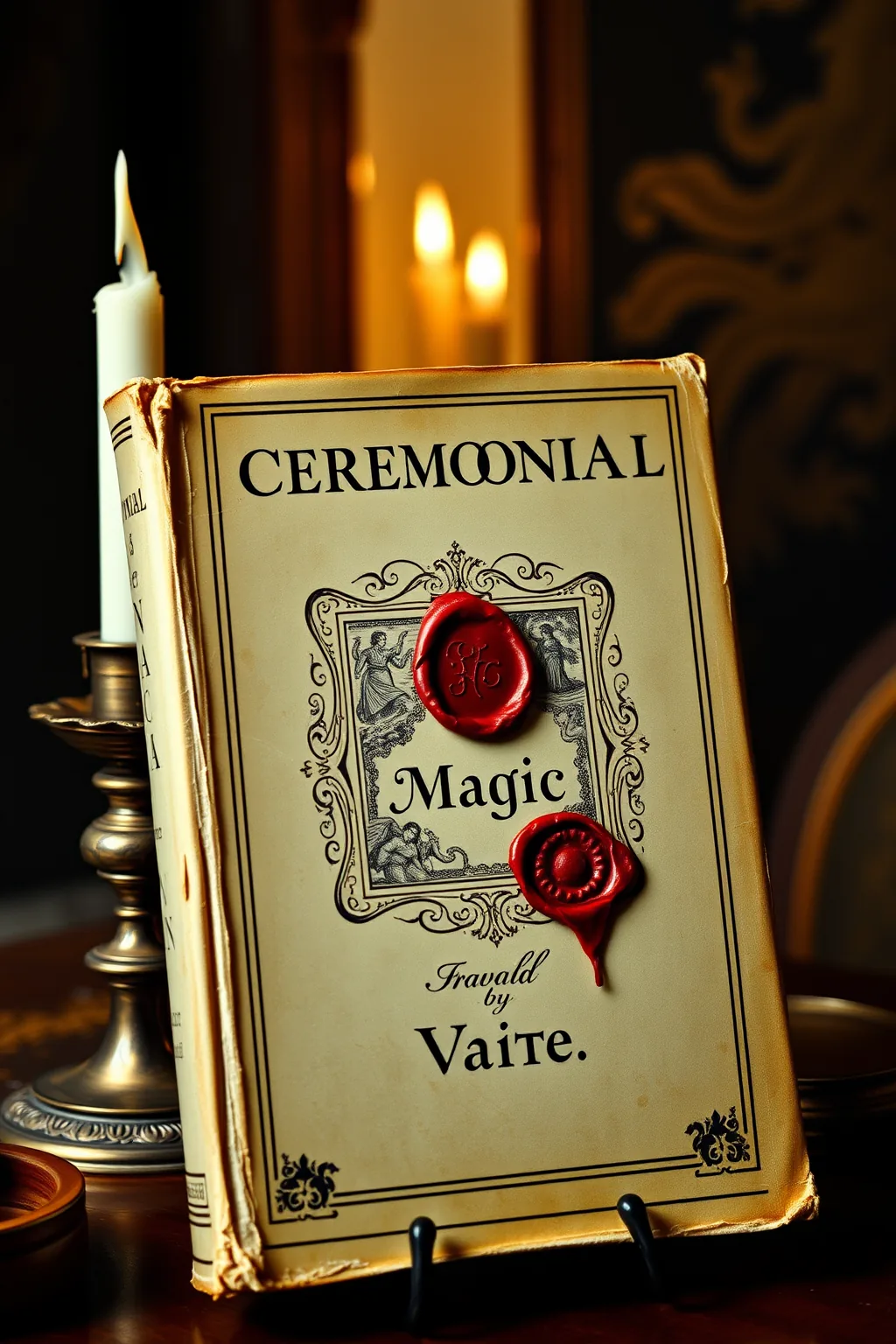
Ceremonial Magic
 61
61

Ceremonial Magic


Aurelia Blackwood (Occult Philosophy Critic): Waite's 'Ceremonial Magic' remains an indispensable cornerstone for any serious student of the occult. With scholarly precision and an undeniable reverence for his subject, Waite meticulously dissects the historical and philosophical underpinnings of ritual magic. He masterfully navigates complex symbolism, offering profound insights into the structure and intent behind ancient ceremonies. This text is particularly valuable for its comprehensive approach, bridging historical context with practical understanding. While demanding, it rewards diligent readers with a clarified vision of the magical art, making it essential for practitioners seeking depth and scholars exploring the esoteric landscape.
📝 Description
61
Arthur Edward Waite's 1911 book 'Ceremonial Magic' examines Western ritual traditions.
Arthur Edward Waite’s 1911 work, 'Ceremonial Magic', details the structure and meaning of Western magical rituals. Waite, a prolific writer on the occult, presents an analysis of the symbolism and philosophical ideas embedded within these practices. He focuses on the mechanics of ritual as a way to understand spiritual forces and transformations.
The book covers various aspects of ceremonial magic, from the preparation of the magician to the invocation of powers. Waite discusses the historical development and theoretical underpinnings of these rites. His approach seeks to demystify the subject, presenting it as a system of symbolic action with specific aims and methods. The text is aimed at readers interested in the serious study of occult philosophy and the practical aspects of ritual work.
Published in 1911, 'Ceremonial Magic' situates itself within the burgeoning field of occult studies at the turn of the 20th century. Waite, a prominent figure in the Hermetic Order of the Golden Dawn, was deeply involved in the revival and systematization of Western esotericism. This book reflects his interest in codifying magical practices, drawing on sources ranging from Kabbalah to Christian mysticism. It stands as an example of scholarly attempts to interpret and organize the complex history of magical traditions, distinguishing between different approaches and their purported effects.
💡 Why Read This Book?
Delve into the foundational principles of ritual magic and unlock ancient wisdom. 'Ceremonial Magic' by Waite offers a scholarly yet accessible exploration of arcane practices, essential for understanding the evolution of Western esotericism. Ideal for practitioners seeking to deepen their understanding of ritual, scholars of occult history, and seekers yearning for a comprehensive guide to the sacred arts. Discover the profound symbolism and philosophical underpinnings that connect us to timeless mystical traditions.
⭐ Reader Reviews
Honest opinions from readers who have explored this book.
❓ Frequently Asked Questions
What is ceremonial magic according to Waite?
Waite defines ceremonial magic as a highly structured and symbolic system of ritualistic practice aimed at invoking spiritual forces and achieving specific transformative or manifestational goals through sacred operations and divine invocation.
Is this book suitable for beginners?
While comprehensive, 'Ceremonial Magic' is best suited for individuals with a foundational understanding of occult concepts or a strong academic interest. Beginners may find it more beneficial after exploring introductory texts on magic and esotericism.
What are the main traditions discussed?
Waite's work delves into various historical traditions, including Kabbalistic magic, Hermeticism, and elements of Qabalistic rituals, often referencing historical grimoires and esoteric movements.
Does the book provide practical instructions?
The book focuses more on the theoretical, historical, and philosophical aspects of ceremonial magic. While it illuminates the principles, it does not serve as a step-by-step grimoire for direct ritual performance.
What is the role of symbolism in Waite's work?
Symbolism is paramount. Waite emphasizes that the rich tapestry of symbols within ceremonial magic serves as a language of the soul, a conduit for understanding and interacting with divine energies and cosmic principles.
🔮 Key Themes & Symbolism
The Architecture of Ritual
Waite meticulously details the structural components of ceremonial magic, emphasizing the critical importance of precise timing, sacred space, appropriate vestments, and the invocation of divine names and intelligences. He elucidates how these elements create a potent matrix for spiritual work, transforming mundane acts into sacred operations. This theme highlights magic not as mere incantation, but as a deeply symbolic and ordered process designed to align the practitioner with cosmic forces.
The Language of Symbolism
Central to Waite's exploration is the profound role of symbolism in ceremonial magic. He unpacks the complex visual, numerical, and verbal symbols that act as keys to understanding the hidden meanings within rituals. From astrological correspondences to alchemical imagery, Waite reveals how these symbols serve as a bridge between the human psyche and the divine, enabling communication with higher realms and facilitating inner transformation.
The Quest for Spiritual Illumination
Beyond the mechanics of ritual, Waite underscores the ultimate aim of ceremonial magic: spiritual illumination and the realization of the divine within. He presents magic as a path of self-discovery and union with the Absolute, arguing that through disciplined practice and profound understanding, the practitioner can transcend ordinary limitations and achieve a higher state of consciousness, drawing parallels with mystical and religious traditions.
💬 Memorable Quotes
Direct passages from the work, attributed to the author.
“To know is to possess the key.”
— This highlights the intellectual and gnosis-driven aspect of magic, suggesting that true power and understanding stem from acquiring esoteric knowledge and comprehending the underlying principles of the universe and its workings.
“The veil between worlds is thin.”
— This evocative phrase points to the permeable nature of reality in magical thought, suggesting that with the right attunement and practice, one can perceive and interact with unseen spiritual dimensions and entities.
“Symbolism is the divine handwriting.”
— Waite emphasizes that the intricate symbols found in magical traditions are not human constructs but emanations of divine thought, offering profound truths and insights into the nature of existence for those who can decipher them.
“The Great Work is within.”
— This classic alchemical and mystical tenet, often referenced in ceremonial magic, signifies that the ultimate transformation and attainment sought through external rituals are fundamentally an inner, psychological, and spiritual process.
💡 Key Ideas
Editorial paraphrase of the work's core concepts — not direct quotes.
The Ritual is the language of the soul.
This quote captures Waite's view that ritualistic actions and symbolic representations are not arbitrary but form a profound, innate language through which the human spirit communicates with the divine and expresses its deepest aspirations.
🌙 Esoteric Significance
Tradition
Waite's work is deeply rooted in the Western Esoteric Tradition, drawing heavily from Hermeticism, Kabbalah, Neoplatonism, and alchemical philosophy. He meticulously examines how these ancient streams of thought have been synthesized and expressed through the formalized practices of ceremonial magic, offering a bridge between theoretical gnosis and practical ritual application within these venerable lineages.
Symbolism
Symbolism is the very currency of Waite's exploration. He elucidates the potent archetypal imagery, geometric forms, divine names, and astrological correspondences that form the bedrock of ceremonial magic. These symbols are presented not as mere decoration, but as active agents, keys that unlock hidden potentials within the practitioner and the cosmos, facilitating a profound dialogue between the human and the divine.
Modern Relevance
Despite its historical focus, 'Ceremonial Magic' remains profoundly relevant. It offers a rigorous framework for understanding ritual as a psychological and spiritual technology, applicable to contemporary seekers grappling with meaning and purpose. The book's emphasis on inner transformation through structured practice provides valuable insights for modern mindfulness, self-development, and those seeking a deeper connection to the sacred in an increasingly secular world.
👥 Who Should Read This Book
This important work is essential for serious students of the occult, historians of religion, and dedicated practitioners of magic. For the **beginner**, it provides a comprehensive historical and philosophical overview, though it may be challenging without prior grounding. **Scholars** will find Waite's meticulous research and synthesis important for understanding the development of Western esoteric traditions. **Seekers** yearning for a deeper understanding of the sacred arts will benefit from its clear insights into ritual and symbolism. **Practitioners** looking to refine their theoretical knowledge and grasp the underlying principles of their craft will find this an indispensable guide.
📜 Historical Context
Arthur Edward Waite penned 'Ceremonial Magic' during a period of intense interest in the occult and spiritualism in late Victorian and Edwardian England. This era saw a resurgence of esoteric societies like the Hermetic Order of the Golden Dawn, of which Waite was a prominent member, and a fascination with ancient mystery traditions, Kabbalah, and Rosicrucianism. The academic study of religion and folklore also contributed to a climate where examining mystical practices in a scholarly yet appreciative manner was possible. Waite's work emerged from this milieu, seeking to synthesize and critically analyze the diverse currents of Western magical thought, offering a comprehensive overview that would influence generations of occult scholars and practitioners.
📔 Journal Prompts
Reflect on a personal ritual or practice: how does it align with the principles of ceremonial magic as described by Waite?
Analyze a recurring symbol in your dreams or waking life: what might its esoteric meaning be within a ceremonial context?
Consider the purpose of invocation in magic: what does it mean to you to call upon higher powers or inner potentials?
How can the structured elements of ceremonial magic (timing, space, intent) be applied to non-magical goals in your life?
Explore the concept of the 'Great Work' as an internal process: what steps can you take today towards your own spiritual transformation?
🗂️ Glossary
Kabbalah
A system of Jewish mysticism and esoteric teaching that deals with the nature of God and the creation of the universe, often represented through the Tree of Life diagram.
Hermeticism
A philosophical and religious tradition based on the purported teachings of Hermes Trismegistus, emphasizing divine wisdom, the unity of all things, and the principles of correspondence and transformation.
Invocation
The act of calling upon a deity, spirit, or higher power, often with the intent of inviting their presence, assistance, or influence into one's life or ritual space.
Gnosis
Spiritual knowledge or insight, particularly that which is considered essential for salvation or enlightenment, often attained through direct experience or intuition.
Theurgy
A branch of magic focused on divine worship and the performance of rites intended to invoke the gods and achieve spiritual union or purification, distinct from goetia (lower magic).
This book appears in 3 collections
🔮 Readers Also Liked
Browse all →








More by Waite
All books →


From the “Ritual Magic” Collection
View all →









More Free Magic & Ritual Books
View all →