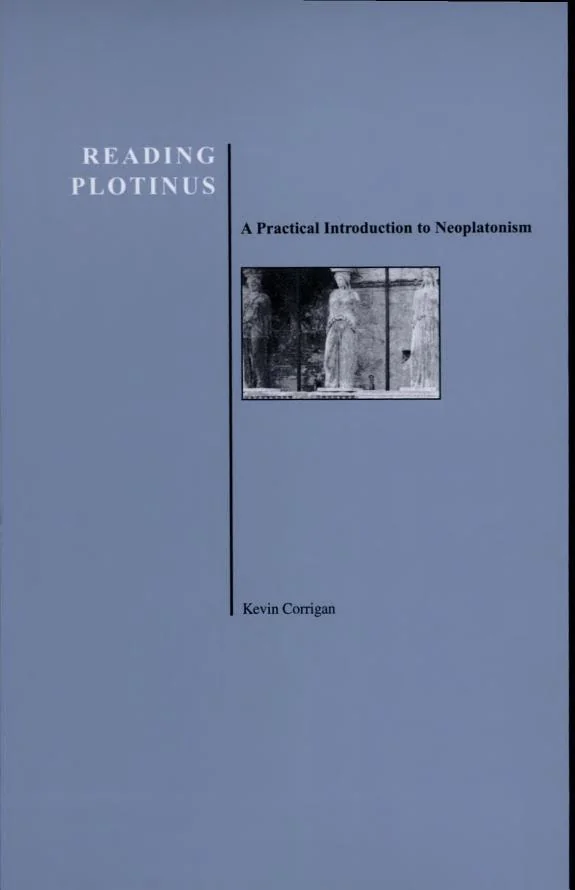
Reading Plotinus
 78
78

Reading Plotinus
Kevin Corrigan's Reading Plotinus offers a much-needed practical guide to the Enneads, moving beyond abstract philosophical discourse to engage directly with Plotinus's textual output. The strength of this work lies in its methodical approach, breaking down dense material into digestible components. Corrigan’s explanation of the concept of the ‘One’ as the absolute, transcendent source of all being is particularly clear, providing a solid foundation for understanding subsequent emanations like Intellect and Soul. A minor limitation, however, is that while the book aims for accessibility, some passages may still prove challenging for absolute beginners without a prior philosophical background. The discussion of Plotinus's critique of Gnosticism in the context of his own system is a highlight, offering a nuanced historical perspective. Corrigan provides a valuable service by demystifying a cornerstone of Western metaphysical thought.
📝 Description
78
Kevin Corrigan's 2005 book helps readers engage with Plotinus's complex philosophy.
Published in 2005, Kevin Corrigan's Reading Plotinus offers a way into the philosophical system of the 3rd-century thinker Plotinus. The book does more than just present summaries; it guides readers through Plotinus's collected writings, the Enneads. Corrigan explains Plotinus's intellectual background and the main ideas of his metaphysics.
This volume is suitable for students and scholars of philosophy, especially those interested in ancient Greek thought, Neoplatonism, and the philosophical foundations of early Christian and Gnostic traditions. It will also benefit anyone wanting to understand metaphysical ideas that have shaped Western esotericism over centuries.
Plotinus taught in Roman Egypt and Italy around the 204/5 to 270 CE period. His philosophy appeared during a time of philosophical and religious mixing, combining Platonic concepts with Stoic, Aristotelian, and Eastern mystical influences. His student Porphyry compiled his writings into the Enneads, a core text for later philosophical and mystical groups.
Plotinus's philosophy, compiled in the Enneads, became a cornerstone for later mystical and esoteric traditions. His ideas about emanation from a supreme, ineffable One, the levels of reality (Intellect, Soul), and the soul's return to its source deeply influenced Gnosticism, Hermeticism, and various strands of Western mysticism. Corrigan's work makes these influential metaphysical concepts accessible, showing their historical role in shaping esoteric thought.
💡 Why Read This Book?
• Gain a structured understanding of Plotinus's emanational cosmology, learning how the One, Intellect (Nous), and Soul are presented in the Enneads. • Grasp Plotinus's theory of evil as mere privation, a concept crucial for understanding his ethical and metaphysical system, as detailed in Corrigan's analysis. • Explore the historical relationship between Plotinus's philosophy and early Christian thought, understanding his influence as documented by Porphyry, his dedicated student.
⭐ Reader Reviews
Honest opinions from readers who have explored this book.
❓ Frequently Asked Questions
What are the Enneads and why are they important?
The Enneads are the collection of Plotinus's philosophical treatises, compiled and edited by his student Porphyry. They are crucial because they represent the culmination of Neoplatonic thought and have profoundly influenced Western philosophy, theology, and esoteric traditions for centuries.
Who was Plotinus and when did he live?
Plotinus was a major philosopher of the 3rd century CE (c. 204/5 – 270 CE), considered the founder of Neoplatonism. He taught in Rome and his ideas synthesized Platonic philosophy with mystical and other influences.
What is the concept of 'the One' in Plotinus's philosophy?
In Plotinus's system, 'the One' is the ultimate, transcendent, and ineffable source of all reality. It is beyond being, intellect, and description, yet it is the origin from which all existence emanates.
How does Plotinus explain the origin of the material world?
Plotinus describes a process of emanation where the One gives rise to Intellect (Nous), which then gives rise to Soul, and finally, Soul produces the physical universe. The material world is seen as the furthest and least perfect emanation.
What is Neoplatonism?
Neoplatonism is a philosophical system that flourished in the Roman Empire, drawing heavily on Plato's dialogues but also incorporating mystical and other traditions. Plotinus is considered its most important figure.
Is Reading Plotinus suitable for beginners?
Yes, Kevin Corrigan's book is specifically designed to guide readers through Plotinus's complex ideas, making it suitable for those new to his philosophy, though some familiarity with philosophical concepts is beneficial.
🔮 Key Themes & Symbolism
The Transcendence of the One
This theme centers on Plotinus's concept of the One, the ultimate principle from which all reality emanates. Corrigan's work emphasizes the ineffable and transcendent nature of the One, explaining how it exists beyond all categories of being and thought. It is the absolute, simple, and perfect source, from which the multiplicity of the universe unfolds through a process of divine generation, not creation. Understanding this foundational concept is key to unlocking Plotinus's entire metaphysical system and its subsequent influence on mystical traditions.
Emanation and the Triad
A core concept explored is Plotinus's doctrine of emanation, detailing the procession of reality from the One. Corrigan clarifies the divine triad: the One, Intellect (Nous), and Soul. Intellect contains the Platonic Forms, and Soul acts as the intermediary, animating the cosmos and striving for return to the higher hypostases. This hierarchical structure explains the derivation of all things, from the highest spiritual realms down to the material world, without the One itself diminishing.
The Nature of Evil
Reading Plotinus addresses Plotinus's distinctive view of evil not as a positive force, but as a privation or absence of good, inherently tied to matter and distance from the One. Corrigan unpacks how Plotinus argues that evil has no independent existence but arises from the soul's turning away from the intelligible realm towards the material. This perspective offers a framework for understanding suffering and imperfection within a divinely ordered cosmos.
The Soul's Ascent
The book studies Plotinus's ethical and spiritual teachings concerning the soul's journey back to its source. Corrigan explains the Neoplatonic path of purification and contemplation, guiding the soul through intellectual and moral virtues towards ecstatic union with the One. This upward movement involves detachment from the material world and a reorientation of the soul towards its divine origin, a concept central to many later mystical practices.
💬 Memorable Quotes
Direct passages from the work, attributed to the author.
“The soul's aim is to return to the Good.”
— This succinctly captures Plotinus's ethical and spiritual telos. It suggests that the ultimate purpose of human existence, as conceived by Plotinus, is a homecoming to the ultimate source of all goodness, implying a process of spiritual purification and philosophical ascent.
“Evil is not a being, but a privation of being.”
— This highlights Plotinus's ontological understanding of evil. It posits that evil does not possess an independent reality of its own but exists as a deficiency or absence of the good, stemming from the furthest remove from the ultimate source of existence.
“The universe is a manifestation of the divine Intellect.”
— This statement reflects the Neoplatonic view of the cosmos as an ordered emanation from the divine mind. It suggests that the structure and intelligibility of the world are derived from the eternal Forms and ideas present within Nous.
“All things strive towards the Good.”
— This expresses the inherent drive within existence towards its source, the ultimate Good. It implies a teleological aspect to reality, where even the lowest forms of existence, in their own way, seek a form of perfection or fulfillment.
💡 Key Ideas
Editorial paraphrase of the work's core concepts — not direct quotes.
We must turn inward to find the divine.
This paraphrase points to Plotinus's emphasis on interiority and contemplation as the path to spiritual realization. True knowledge and connection with the divine are found not through external observation but through introspection and the purification of the soul.
🌙 Esoteric Significance
Tradition
Plotinus is the foundational figure of Neoplatonism, a philosophical system that became a central to Western esotericism. While not an 'esoteric' school in the modern sense, his hierarchical cosmology and emphasis on the soul's ascent toward the ineffable One provided a metaphysical blueprint later adopted and adapted by Hermeticists, Gnostics, Kabbalists, and Renaissance occultists. His work offered a sophisticated intellectual framework for mystical experience and the pursuit of gnosis.
Symbolism
Key symbols in Plotinus's system, as explored in Reading Plotinus, include the 'One' itself, representing absolute unity and transcendence, and the 'Intellect' (Nous), often symbolized by light or a perfect divine mind containing all Forms. The 'Soul' acts as a mediator, often depicted as a bridge between the intelligible and material realms. Matter, conversely, is associated with darkness and absence, representing the furthest point from divine illumination and the source of perceived evil.
Modern Relevance
Contemporary thinkers and spiritual practitioners continue to draw heavily on Plotinus. His ideas on consciousness, the nature of reality, and the pursuit of higher states of being inform modern philosophical discussions and are central to various contemplative and mystical traditions. His influence can be seen in thinkers who explore consciousness studies, comparative mysticism, and the development of non-dualistic philosophies, making his work relevant to those seeking deeper self-understanding and spiritual insight.
👥 Who Should Read This Book
• Students of ancient philosophy and comparative religion seeking to understand the intellectual roots of Western metaphysics and mysticism. • Aspiring practitioners of esoteric traditions who wish to grasp the philosophical underpinnings of concepts like emanation, divine unity, and spiritual ascent. • Scholars of late antiquity and the history of ideas looking for a clear guide to Plotinus's complex system and its historical context.
📜 Historical Context
Plotinus lived and taught in the 3rd century CE, a period of significant intellectual and spiritual ferment in the Roman Empire. His philosophy, Neoplatonism, emerged as a powerful synthesis of Platonic thought with elements drawn from Stoicism, Aristotelianism, and Eastern mystical traditions, offering a coherent metaphysical framework in an era marked by diverse religious and philosophical currents, including Gnosticism and emerging Christianity. His intellectual milieu included figures like Ammonius Saccas, his presumed teacher, and his devoted student Porphyry, who meticulously compiled and edited Plotinus's writings into the Enneads. Plotinus's work was a direct engagement with the philosophical legacy of Plato, aiming to systematize and deepen its insights. While not always in direct conflict, his ideas offered an alternative metaphysical system to the burgeoning Christian theology and various Gnostic schools of the time, often critiquing their views on matter and the divine.
📔 Journal Prompts
The concept of the One as the source of all being.
Plotinus's understanding of evil as privation.
The soul's journey of ascent towards the Good.
The role of Intellect (Nous) in Plotinus's emanational cosmology.
The relationship between the material world and the divine emanations.
🗂️ Glossary
Neoplatonism
A philosophical school founded by Plotinus, which synthesized Platonic ideas with mystical and other traditions. It posits a hierarchical structure of reality emanating from an ultimate, transcendent One.
The One
In Plotinus's philosophy, the absolute, ineffable, and transcendent source of all reality. It is beyond being and description, the ultimate principle from which all existence emanates.
Nous (Intellect)
The second hypostasis in Plotinus's system, emanating from the One. It is the field of the Platonic Forms and the divine mind, containing all intelligible realities.
Soul
The third hypostasis, emanating from Nous. It acts as a mediator between the intelligible and material worlds, animating individual beings and possessing both a higher, contemplative aspect and a lower, active aspect.
Emanation
The process by which reality flows or proceeds from a higher source, such as the One, without diminishing the source itself. It describes the hierarchical unfolding of existence.
Privation
In Plotinus's thought, the concept that evil is not a positive force but an absence or lack of good, akin to darkness being the absence of light.
Enneads
The collection of Plotinus's philosophical treatises, compiled and organized into nine books (enneads) by his student Porphyry. It is the primary source for his philosophy.
This book appears in 1 collection
🔮 Readers Also Liked
Browse all →








From the “Neoplatonism” Collection
View all →








More Free Occult Philosophy Books
View all →