Numerology
 73
73

Numerology
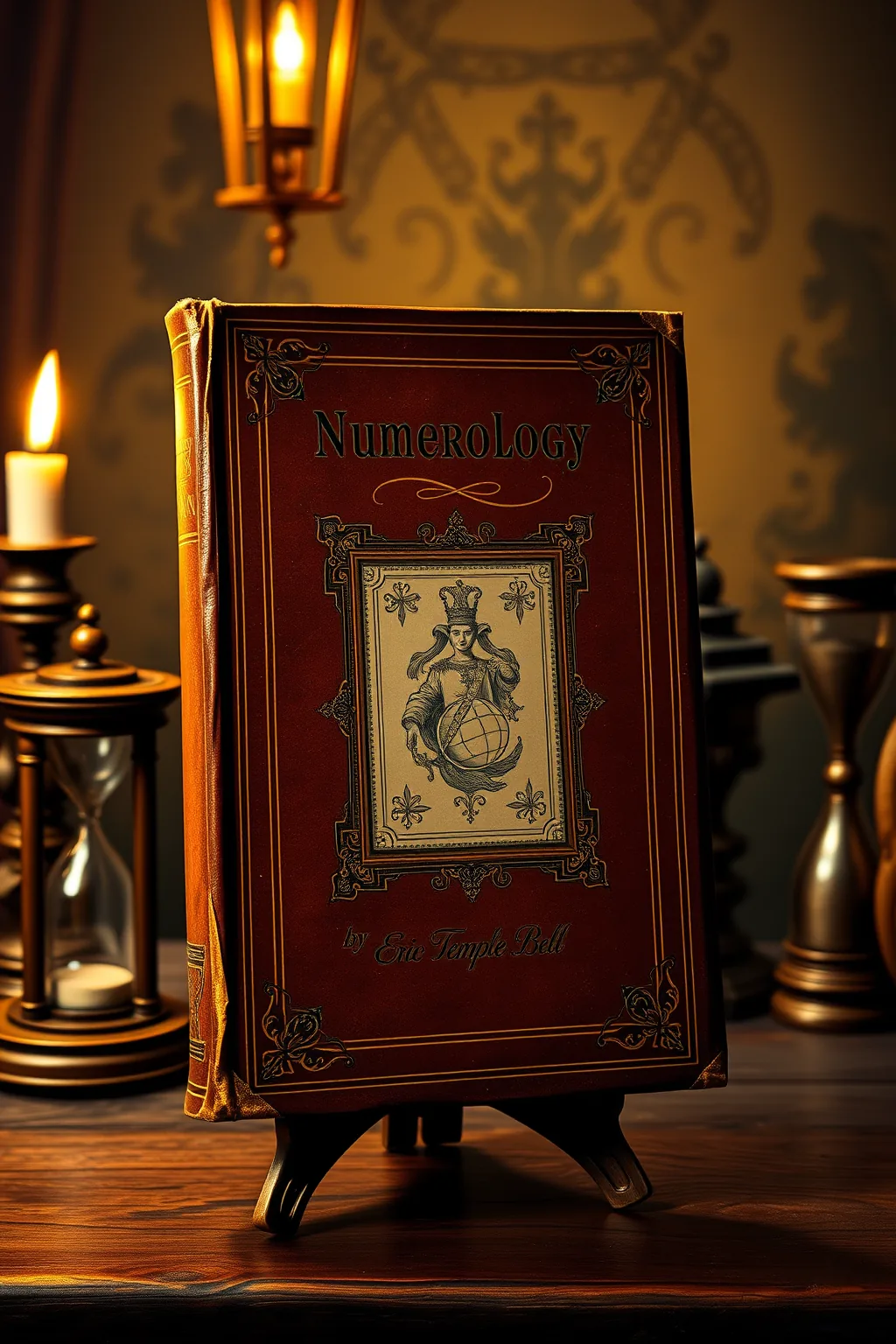
Eric Temple Bell’s *Numerology* attempts to map the symbolic universe through the lens of number, a task fraught with both potential and peril. The book's strength lies in its ambitious scope, attempting to connect Pythagorean thought with later mystical traditions. However, its primary limitation is the difficulty in substantiating many of the symbolic connections presented. Bell’s discussion of the number seven, for instance, as a symbol of spiritual perfection across diverse cultures, is illustrative of his approach—broad and suggestive, but often lacking granular evidence or rigorous comparative analysis. While it provides a historical overview of numerical symbolism, it occasionally feels like an assertion of belief rather than a critical examination of evidence. Ultimately, *Numerology* serves as a historical overview of numerical mysticism rather than a definitive guide to its practice.
📝 Description
73
Eric Temple Bell published 'Numerology' in 1991, examining numbers as symbolic language.
Eric Temple Bell's 1991 book, 'Numerology,' examines numbers not just as mathematical tools but as a symbolic language with historical and philosophical roots. The work investigates how different cultures and thinkers have assigned meaning to numerical systems, viewing them as frameworks for understanding the universe and human life. Bell traces the historical use of numerical symbolism, showing how quantities, shapes, and patterns were considered fundamental principles of reality.
This text is for readers interested in the esoteric and historical aspects of number theory. It will appeal to those who connect mathematics, philosophy, and mysticism, looking for links between abstract ideas and their presence in ancient traditions and contemporary thought. Individuals curious about the deeper, symbolic meanings of numbers, beyond their practical uses, will find this book valuable.
Bell's work follows a tradition of thought reaching back to Pythagoreanism and continuing through Neoplatonism, Kabbalah, and later esoteric movements. Published in 1991, it coincided with a renewed interest in esoteric studies, often seen as a contrast to strictly materialist scientific views. The book discusses how numerical symbolism has been interpreted across many centuries, from classical Greek philosophy to medieval mystical thought.
💡 Why Read This Book?
• Understand the historical lineage of numerical symbolism, tracing its roots from Pythagorean philosophy to later esoteric interpretations, providing context absent in modern numerology guides. • Grasp the concept of 'number as essence,' learning how different cultures have viewed digits not just as quantities but as carriers of qualitative meaning and cosmic order. • Explore specific numerological systems, such as those found in Kabbalistic traditions, gaining insight into how these symbolic frameworks were historically used for interpretation and understanding.
⭐ Reader Reviews
Honest opinions from readers who have explored this book.
❓ Frequently Asked Questions
What is the historical origin of numerology as discussed in Eric Temple Bell's book?
Eric Temple Bell's *Numerology* traces the origins of numerical symbolism back to ancient Greek thinkers, most notably Pythagoras and his followers, who believed numbers were the fundamental essence of the universe.
Does 'Numerology' by Eric Temple Bell cover modern psychological interpretations of numbers?
While the book focuses on historical and esoteric interpretations of numbers, it does not extensively cover modern psychological theories such as those developed by Carl Jung regarding archetypes and numbers.
Is Eric Temple Bell's 'Numerology' a practical guide for calculating personal numbers?
No, the book is more of a historical and philosophical exploration of numerical symbolism rather than a step-by-step guide for calculating personal birth numbers or destiny numbers.
What is the significance of the number seven in the context of Bell's 'Numerology'?
Bell highlights the number seven across various traditions as a symbol of spiritual perfection, completion, or divinity, reflecting its recurring presence in religious and cosmological systems.
When was Eric Temple Bell's 'Numerology' first published?
Eric Temple Bell's work on numerology was first published in 1991, placing it within a period of renewed interest in esoteric and metaphysical subjects.
Does the book discuss the Kabbalistic use of numbers?
Yes, the book explores the symbolic use of numbers within traditions like the Kabbalah, examining how numerical values were assigned to letters and words for mystical interpretation.
🔮 Key Themes & Symbolism
Number as Cosmic Principle
The work posits that numbers are more than mere quantities; they represent fundamental principles or 'essences' that structure reality. This perspective, drawing heavily from Pythagorean and Neoplatonic thought, suggests that understanding numerical relationships is key to comprehending the order of the universe. Bell explores how this idea permeated ancient philosophies and mystical systems, viewing numbers as archetypal forces that manifest in both the macrocosm and the microcosm, influencing creation and destiny.
Cross-Cultural Numerical Symbolism
A significant theme is the recurring symbolic meaning attributed to specific numbers across disparate cultures and historical periods. Bell examines how digits like three, seven, and twelve appear consistently in religious texts, mythology, and philosophical systems, often signifying concepts such as divinity, completeness, or cosmic cycles. This cross-cultural resonance is presented as evidence for an underlying universal language of number, a shared symbolic grammar of existence.
Numerology in Esoteric Traditions
The book looks at the practical and theoretical application of numerical symbolism within various esoteric traditions, including Hermeticism and Kabbalah. It discusses how these systems utilize numbers for divination, spiritual insight, and understanding hidden meanings within sacred texts. Bell highlights the Gematria as an example of a method where numerical values assigned to letters unlock deeper layers of significance, revealing connections between the mundane and the divine.
The Philosophical Underpinnings of Number
Bell engages with the philosophical questions surrounding number, exploring its relationship to form, space, and time. The text examines how thinkers have grappled with whether numbers are discovered or invented, and how their abstract nature relates to the tangible world. This philosophical inquiry underscores the book's approach: viewing numerology not just as a predictive tool, but as a profound system for metaphysical contemplation and understanding the nature of being.
💬 Memorable Quotes
Direct passages from the work, attributed to the author.
“The number seven often signifies spiritual perfection or divine completion.”
— This highlights a recurring symbolic association for the number seven across various religious and philosophical traditions, as explored within the book's comparative analysis of numerical meaning.
“Gematria unlocks hidden meanings through numerical equivalence.”
— This interpretation refers to the Kabbalistic practice of assigning numerical values to Hebrew letters, a method used to find esoteric connections and deeper interpretations within religious texts.
“The harmony of the spheres reflects cosmic order through numerical ratios.”
— This concept, derived from ancient Greek cosmology, suggests that the movements of celestial bodies produce a divine music, governed by mathematical proportions that mirror the order of the universe.
“Quantity and quality are intrinsically linked in numerical symbolism.”
— This reflects the book's exploration of how numbers are not just measures but also possess inherent qualities and influences, shaping the nature of phenomena they represent.
💡 Key Ideas
Editorial paraphrase of the work's core concepts — not direct quotes.
Numbers are the essence of all things.
This paraphrased concept expresses the Pythagorean ideal that numerical relationships form the foundational structure of the cosmos, suggesting that reality itself is reducible to mathematical harmony.
🌙 Esoteric Significance
Tradition
This work fits within the Western Esoteric tradition, drawing heavily from Pythagoreanism and Neoplatonism, which viewed numbers as archetypal principles. It connects these ancient ideas to later developments in Hermeticism and Kabbalah, exploring how numerical symbolism served as a key to understanding cosmic order and hidden divine truths. Bell’s approach bridges philosophical speculation with mystical interpretation, positioning numbers as a universal language accessible to the initiated.
Symbolism
Key symbols include the Tetractys, the sacred triangle representing the first four numbers (1, 2, 3, 4) and their sum (10), embodying cosmic perfection and the generation of reality. The number seven is often presented as a symbol of spiritual completion and divine order, appearing frequently in religious cosmologies. The concept of 'number as essence' itself functions as a central motif, suggesting that each digit carries a unique qualitative meaning and influence.
Modern Relevance
Contemporary practitioners of Western Esotericism, particularly those interested in Hermeticism and Kabbalistic studies, continue to find value in Bell's historical overview. His work informs modern interpretations of sacred geometry and the symbolic language of Tarot and astrology, where numbers play a crucial role. Thinkers exploring the philosophical underpinnings of mathematics and consciousness also engage with these historical perspectives on number as a fundamental aspect of reality.
👥 Who Should Read This Book
• Students of ancient philosophy and mathematics: Those seeking to understand the historical evolution of number theory beyond its purely scientific applications, particularly the Pythagorean and Neoplatonic perspectives. • Esoteric practitioners and occultists: Individuals interested in the symbolic and metaphysical meanings of numbers as applied in traditions like Kabbalah and Hermeticism for spiritual insight and divination. • Comparative religion scholars: Researchers exploring the recurring presence and significance of numerical symbolism across diverse religious texts, mythologies, and cosmological systems worldwide.
📜 Historical Context
Eric Temple Bell's *Numerology*, first published in 1991, arrived during a period of renewed Western interest in esoteric thought, often seen as a reaction against post-war materialism. The book engages with a lineage of numerical mysticism stretching back to ancient Greece, particularly the Pythagorean school, and its influence through Neoplatonism. Bell situates his exploration against the backdrop of philosophical traditions that viewed numbers as fundamental essences of reality, contrasting with the purely quantitative approach prevalent in modern science. While not a contemporary of figures like Eliphas Lévi or Helena Blavatsky, Bell's work revisits the ground they covered, examining how numerical symbolism was integrated into systems like the Kabbalah and Hermeticism. The publication date also places it after the mid-20th century academic re-evaluation of ancient philosophies, allowing it to draw on a broader historical scholarship, yet it maintains a focus on the esoteric interpretations rather than purely historical or mathematical analysis.
📔 Journal Prompts
The Tetractys as a foundational symbol of creation.
The qualitative essence attributed to the number three.
Recurring numerical patterns in ancient mythologies.
The Kabbalistic use of Gematria for interpretation.
The philosophical distinction between number as discovery versus invention.
🗂️ Glossary
Pythagoreanism
An ancient Greek philosophical and religious movement, founded by Pythagoras of Samos, that held that numbers are the ultimate reality and that all things can be expressed in numerical relationships.
Neoplatonism
A philosophical system that developed from Plato's writings, emphasizing the transcendent nature of the One and the hierarchical emanation of reality from it, often incorporating mystical and numerological elements.
Kabbalah
A system of Jewish mysticism that claims to reveal the hidden meanings of the Torah through a complex system of symbolism, including numerology (Gematria) and divine emanations (Sefirot).
Hermeticism
A philosophical and religious tradition based primarily upon writings attributed to Hermes Trismegistus, advocating for divine knowledge and the interconnectedness of all things, often employing symbolic language and numerology.
Gematria
A method of Kabbalistic interpretation that assigns a numerical value to each Hebrew letter and word, used to find hidden meanings and connections within sacred texts.
Tetractys
A triangular figure composed of ten dots arranged in four rows (1+2+3+4=10), considered a sacred symbol by the Pythagoreans, representing cosmic harmony and the generative principles of the universe.
Number as Essence
The concept that numbers are not merely abstract quantities but possess inherent qualities, energies, and archetypal meanings that define the nature of phenomena.
🔮 Readers Also Liked
Browse all →









More by Eric Temple Bell
All books →
More Free Occult Philosophy Books
View all →