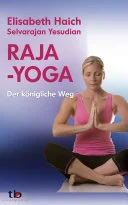
Raja-Yoga: Der königliche Weg
 75
75

Raja-Yoga: Der königliche Weg
Elisabeth Haich and Selvarajan Yesudian's "Raja-Yoga: Der königliche Weg" presents a rigorous, introspective path to spiritual realization, eschewing the physical postures of Hatha Yoga for a direct engagement with consciousness. The authors, particularly Haich in her extensive biographical context, ground the abstract philosophy in lived experience, offering a rare glimpse into the practical application of Raja Yoga beyond mere theoretical discussion. While the book excels in its detailed exposition of inner disciplines, its dense philosophical nature might present a barrier to those seeking a more immediately accessible guide to meditation. A notable strength lies in the meticulous step-by-step progression, leading the practitioner from basic concentration to the ultimate realization of the divine light within. The work's primary limitation, however, is its demanding intellectual framework, which requires sustained focus from the reader. The section detailing the stages of Samyama, for instance, while crucial, requires significant prior study to fully appreciate.
This is a serious text for serious seekers, offering a direct route to inner discovery for those willing to commit to its disciplined approach.
📝 Description
75
### What It Is ### Who It's For ### Historical Context ### Key Concepts
💡 Why Read This Book?
• You will learn the precise distinction between Hatha Yoga and Raja Yoga, understanding why Haich and Yesudian prioritized internal transformation over physical asana, as detailed in the book's initial chapters. • You will gain practical techniques for concentration and meditation, moving beyond superficial mindfulness to the deeper states described in the sections on Dharana and Dhyana. • You will explore the concept of Samyama, a critical yogic practice for achieving higher states of consciousness, as explained through the authors' interpretations of Patanjali's Yoga Sutras.
⭐ Reader Reviews
Honest opinions from readers who have explored this book.
❓ Frequently Asked Questions
What is the 'royal path' mentioned in Raja-Yoga: Der königliche Weg?
The 'royal path' (Raja Yoga) refers to the direct, internal path of spiritual realization focused on mental discipline and consciousness transformation, as opposed to the physical practices of Hatha Yoga, as detailed by Haich and Yesudian.
Who were Elisabeth Haich and Selvarajan Yesudian?
Elisabeth Haich was a Hungarian-born esotericist and author, while Selvarajan Yesudian was an Indian yogi and spiritual teacher. They collaborated on this work, bridging Eastern and Western esoteric traditions.
When was Raja-Yoga: Der königliche Weg first published?
The original German edition of "Raja-Yoga: Der königliche Weg" was first published on July 9, 2020, though the concepts and teachings it contains are ancient.
Does this book focus on physical yoga poses?
No, this book specifically focuses on Raja Yoga, which deliberately omits the physical exercises (asana) of Hatha Yoga, concentrating instead on the inner, mental, and spiritual aspects of yogic practice.
What is the primary goal of the Raja Yoga path described?
The primary goal is deep insight and conscious inner recognition, leading to the practitioner seeing the divine light within their own heart, as articulated throughout the book's progression.
Is this book suitable for beginners in yoga?
While accessible, the book demands a focused, introspective approach. Beginners interested in the philosophical and meditative aspects of yoga, rather than physical practice, will find it most beneficial.
🔮 Key Themes & Symbolism
The Royal Path of Consciousness
This work elucidates Raja Yoga as the 'royal path,' distinct from the physical disciplines of Hatha Yoga. It emphasizes inner transformation through focused concentration, meditation, and the direct recognition of the divine light within. The authors guide the practitioner through stages designed to purify the mind and achieve profound self-awareness, aiming for a state where the individual's true nature is realized, aligning with ancient Indian spiritual philosophies that prioritize mental control over corporeal exercises.
Inner Recognition and Divine Light
A central theme is the attainment of inner recognition, described as seeing the divine light in one's heart. This is not a metaphorical concept but an experiential state achieved through dedicated yogic practice. Haich and Yesudian detail the process of spiritual purification and self-discovery, where external distractions are minimized to allow for the internal illumination of consciousness, a core tenet in many contemplative traditions seeking ultimate truth.
Concentration and Inner Transformation
The book systematically outlines the techniques for developing concentration (Dharana) and meditation (Dhyana) as the primary tools for inner transformation. Unlike approaches that focus on physical postures, Raja Yoga's emphasis is on mastering the mind's fluctuations and directing its energy inward. This disciplined approach is presented as a direct method for achieving higher states of consciousness and profound self-understanding, bypassing the need for extensive physical training.
Bridging East and West
Authored by Elisabeth Haich, a European esotericist, and Selvarajan Yesudian, an Indian yogi, this work represents a significant bridge between Eastern spiritual traditions and Western seekers. It translates complex yogic philosophy into accessible language for a broader audience, contextualizing ancient Indian wisdom within a framework understandable to those from different cultural backgrounds, fostering a more inclusive approach to spiritual study.
💬 Memorable Quotes
Direct passages from the work, attributed to the author.
“The 'Raja-Yoga path' is considered the 'royal path' in India.”
— This foundational statement sets the stage for understanding the book's core subject: Raja Yoga, presented as the most direct and regal route to spiritual realization, distinct from other yogic branches.
“In 'Raja-Yoga', the practitioner forgoes Hatha Yoga's body exercises, focusing entirely on inner-soul transformation.”
— This highlights the fundamental difference in approach, emphasizing that the book's path is internal and mental, prioritizing the evolution of consciousness over physical discipline.
“The goal is for the individual to see the divine light shining in their heart.”
— This expresses the ultimate aim of the Raja Yoga practice described, pointing towards an experiential realization of the divine presence within oneself.
“Elisabeth Haich and Selvarajan Yesudian describe this venerable path step by step.”
— This emphasizes the pedagogical nature of the book, suggesting a structured, guided progression through the complex teachings of Raja Yoga.
“The work particularly fascinates with its detailed exploration of inner spiritual processes.”
— This points to a key aspect of the book's appeal: its in-depth examination of the subtle workings of the mind and spirit during yogic practice.
🌙 Esoteric Significance
Tradition
This work firmly belongs to the lineage of Raja Yoga, a system deeply rooted in ancient Indian yogic philosophy, particularly as codified by Patanjali in the Yoga Sutras. It represents a transmission of these teachings, filtered through the lens of European esoteric thought via Elisabeth Haich and presented with the authority of Indian yogic practice by Selvarajan Yesudian. It aligns with Hermetic principles of inner alchemy and Gnostic emphasis on gnosis (knowledge) as a path to liberation, though its primary framework is distinctly yogic.
Symbolism
The central symbol is the 'divine light' in the heart, representing the indwelling consciousness or Atman, the true self. This light is the ultimate goal of the Raja Yoga path, signifying enlightenment and realization. Another key motif is the 'royal path' itself, symbolizing the direct, unhindered, and sovereign journey of the soul towards its divine source, contrasting with more circuitous or externally focused spiritual methods.
Modern Relevance
Modern practitioners of mindfulness and contemplative traditions, as well as those exploring non-dual philosophies, can find resonance in the book's emphasis on inner awareness and the mastery of consciousness. Thinkers and teachers within the broader yoga and meditation communities who seek to move beyond purely physical practices to understand the deeper psychological and spiritual dimensions of yogic systems draw upon this work. It remains relevant for those interested in the historical cross-pollination of Eastern spirituality and Western esoteric thought.
👥 Who Should Read This Book
['• Students of comparative religion and philosophy seeking to understand the theoretical underpinnings of Raja Yoga beyond physical practice.', '• Dedicated practitioners of meditation and mindfulness looking to deepen their practice with structured techniques for concentration and inner realization.', '• Readers interested in the historical interplay between Eastern spirituality and Western esoteric thought, particularly concerning the transmission of yogic knowledge in the 20th century.']
📜 Historical Context
Published in 2020, "Raja-Yoga: Der königliche Weg" by Elisabeth Haich and Selvarajan Yesudian engages with a long-standing tradition of translating and disseminating Indian yogic philosophy to Western audiences. This endeavor gained significant momentum in the late 19th and early 20th centuries, influenced by figures like Helena Blavatsky and the Theosophical Society, which actively promoted Eastern spiritual systems. While the book itself is a modern publication, its subject matter places it within a lineage that includes seminal works like Swami Vivekananda's "Raja Yoga" (1896), which also sought to explain Patanjali's Yoga Sutras to a Western readership. The emphasis on Raja Yoga, distinct from the increasingly popular Hatha Yoga practices that gained traction in the mid-20th century, positions this work as a revival or re-emphasis on the deeper meditative and philosophical aspects of yoga. The authors' collaboration itself reflects a cross-cultural dialogue that characterized much of esoteric studies during the period when Haich and Yesudian were active.
📔 Journal Prompts
The divine light in the heart: what forms does this inner illumination take for you?
Inner transformation through concentration: how does controlling mental fluctuations alter your perception of reality?
The 'royal path' versus other spiritual disciplines: how does the focus on inner work distinguish this approach?
The concept of 'inner recognition': what does it mean to truly recognize the self?
Bridging East and West: how do Haich and Yesudian's backgrounds shape the presentation of Raja Yoga?
🗂️ Glossary
Raja Yoga
The 'royal path' of yoga, focused on mental control, meditation, and direct spiritual insight, as distinguished from Hatha Yoga's emphasis on physical postures.
Hatha Yoga
A branch of yoga that emphasizes physical postures (asana), breathing techniques (pranayama), and purification methods, often serving as preparation for Raja Yoga.
Dharana
The yogic practice of concentration, focusing the mind on a single point or object to steady and control its fluctuations.
Dhyana
The yogic practice of meditation, a sustained state of concentration where the mind becomes absorbed in the object of focus.
Samadhi
A state of profound meditative absorption and self-realization, considered the highest goal of yogic practice, achieved after mastery of Dharana and Dhyana.
Inner Recognition
The core experiential understanding achieved through Raja Yoga, involving the direct perception of one's true spiritual nature and its connection to the divine.
Divine Light
A symbolic or literal experience of inner illumination, representing the presence of the divine or the true self within the practitioner's heart.
This book appears in 1 collection
🔮 Readers Also Liked
Browse all →








From the “Raja Yoga” Collection
View all →



More Free Occult Philosophy Books
View all →