The Templar Archive
 76
76

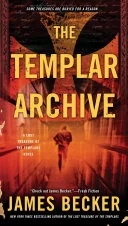
The Templar Archive
Becker's "The Templar Archive" opens with a compelling proposition: the Templars' ultimate legacy might be information, not bullion. The narrative races forward, propelled by the familiar dynamic between Robin Jessop and David Mallory. While the pacing is relentless, a particular strength lies in Becker's skillful integration of historical minutiae, such as the likely fate of Templar assets following their suppression around 1312. However, the plot occasionally strains credulity in its rapid-fire revelations, sometimes sacrificing nuanced character development for the sake of plot expediency. A passage describing the deciphering of a coded manuscript, hinting at alchemical processes rather than a king's ransom, exemplifies the book's ambition to redefine the Templar mythos. Ultimately, "The Templar Archive" delivers a propulsive, if occasionally overstuffed, thriller that engages with historical conspiracy.
📝 Description
76
James Becker's 2005 novel, 'The Templar Archive,' centers on a quest for a legendary Templar treasure.
Antiquarian bookseller Robin Jessop and encryption expert David Mallory pursue a fabled Templar "treasure" in James Becker's 2005 novel, 'The Templar Archive.' As they decipher ancient clues, their investigation shifts. They begin to suspect the ultimate prize is not material wealth but something far more esoteric, with potentially world-altering implications. This story functions as a thriller, but its core is the enduring mystery of the Knights Templar. Becker uses the historical intrigue surrounding the order's suppression in the early 14th century to build a narrative that balances intellectual engagement with action.
The novel questions the nature of hidden knowledge and the lengths some groups will go to control it. The central idea challenges the idea of historical "treasure" as merely monetary. The book suggests the Templars' true legacy might be lost knowledge, philosophical, scientific, or spiritual. This redefinition of the Templar quest drives the plot toward a revelation that goes beyond typical adventure story conclusions.
This work engages with a long tradition of speculative fiction and historical fiction that examines secret societies and their supposed hidden legacies. Like authors who have fictionalized the Rosicrucians or Freemasons, Becker uses the Knights Templar as a vehicle to explore ideas about concealed wisdom and power structures that operate outside mainstream history. The narrative taps into the enduring fascination with ancient orders and the possibility of lost knowledge that could reshape understanding of the past or future.
💡 Why Read This Book?
• Gain a speculative understanding of the Knights Templar's true legacy, moving beyond monetary wealth to consider the impact of hidden knowledge, as explored through the deciphering of clues in "The Templar Archive." • Experience a fast-paced thriller that directly engages with historical events like the Templar suppression in 1312, offering a fictional narrative that contextualizes these significant historical moments. • Explore the intersection of cryptography and ancient mysteries, appreciating how skills like those of David Mallory are portrayed as essential tools for unlocking secrets of historical significance.
⭐ Reader Reviews
Honest opinions from readers who have explored this book.
❓ Frequently Asked Questions
What is the central mystery in James Becker's "The Templar Archive"?
The central mystery revolves around the true nature of the legendary Templar "treasure." Instead of gold or jewels, the protagonists Robin Jessop and David Mallory uncover clues suggesting the Templars’ most valuable legacy might be lost knowledge or esoteric secrets.
Who are the main characters in "The Templar Archive"?
The main characters are Robin Jessop, an antiquarian bookseller with a knack for uncovering historical secrets, and David Mallory, an expert in cryptography and encryption who helps decipher ancient clues.
What historical events does "The Templar Archive" reference?
The novel references the historical suppression of the Knights Templar, which largely occurred in 1307 and concluded with their official dissolution by Pope Clement V in 1312.
Is "The Templar Archive" a standalone novel or part of a series?
While "The Templar Archive" features recurring characters like Robin Jessop and David Mallory from previous books such as "The Lost Treasure of the Templars," it can be read as a distinct thriller with its own self-contained plot.
What kind of "treasure" is suggested in the book?
The book suggests the "treasure" is not material wealth but rather esoteric knowledge, possibly related to ancient secrets, lost sciences, or spiritual wisdom that the Templars may have safeguarded.
What skills are highlighted in the book's protagonists?
The book highlights Robin Jessop's skills in historical research and antiquarian knowledge, alongside David Mallory's expertise in cryptography, code-breaking, and deciphering complex patterns within ancient texts.
🔮 Key Themes & Symbolism
The Nature of Hidden Legacy
This work interrogates the concept of "treasure" not as material wealth but as concealed knowledge. The protagonists' quest shifts from seeking riches to deciphering secrets, suggesting that the true legacy of organizations like the Knights Templar lies in their accumulated wisdom, philosophical insights, or even forgotten sciences. The narrative proposes that such knowledge, if rediscovered, could possess a power far exceeding that of any earthly fortune, prompting reflection on what humanity truly values and seeks to preserve across centuries.
Cryptography and Ancient Codes
The novel places significant emphasis on the role of cryptography and code-breaking in accessing historical truths. Encryption expert David Mallory's skills are central to unlocking the Templars' secrets, illustrating how complex ciphers and hidden messages served as guardians of sensitive information. This theme highlights the intellectual rigor required to penetrate historical veils, positioning cryptography not merely as a plot device but as a vital key to understanding esoteric traditions and challenging established historical narratives.
The Enduring Enigma of the Templars
Becker taps into the persistent fascination with the Knights Templar, an order whose abrupt dissolution in 1312 left numerous questions unanswered. The book explores the speculative theories surrounding their alleged hidden archives and secret knowledge. By combining a fictional narrative around these historical ambiguities, "The Templar Archive" engages readers with the enduring mystique of the Templars, inviting contemplation on what secrets might have been deliberately obscured or lost to time.
Redefining Historical Quests
The narrative actively challenges conventional adventure tropes by redefining the ultimate goal. The "treasure" sought is revealed to be intangible, focusing on esoteric understanding rather than tangible rewards. This reorientation encourages readers to consider the value of intellectual discovery and the pursuit of lost wisdom as a more profound and impactful endeavor than the acquisition of material possessions or historical artifacts.
💬 Memorable Quotes
Direct passages from the work, attributed to the author.
“Every cipher cracked was a door opened to a past they tried to erase.”
— This highlights the critical role of cryptography in the narrative. It implies that the suppression of the Templars was an attempt to obliterate their history and knowledge, and that code-breaking is the key to reclaiming this suppressed past.
“They sought relics, but found revelations.”
— This concisely captures the protagonists' journey. Their initial pursuit of tangible historical artifacts or wealth evolves into a deeper uncovering of profound truths and esoteric understanding connected to the Templar order.
“The archive wasn't stone and parchment, but a network of whispers across centuries.”
— This interpretation suggests the Templar legacy is not a physical location but a dispersed, living tradition of knowledge passed down through generations, accessible through understanding subtle connections and historical echoes.
“Gold buys power, but knowledge dictates its use.”
— This phrase emphasizes the book's core philosophical argument: true power lies not in wealth but in understanding. It positions the esoteric knowledge of the Templars as a far greater force than any material riches they might have possessed.
💡 Key Ideas
Editorial paraphrase of the work's core concepts — not direct quotes.
The real treasure wasn't buried in the earth, but hidden in the words.
This paraphrased concept underscores the novel's central theme: the shift from material wealth to intellectual or esoteric knowledge as the true prize. It suggests that the Templars' most significant legacy was their wisdom, encoded and preserved for those capable of deciphering it.
🌙 Esoteric Significance
Tradition
The work engages with the Western esoteric tradition, particularly themes associated with secret societies and Gnostic ideas of hidden knowledge. While not explicitly aligning with a single lineage like Hermeticism or Kabbalah, it draws upon the popular mystique surrounding the Knights Templar, often linked in esoteric lore to ancient mysteries, the Holy Grail, and pre-Christian wisdom. Becker's narrative positions the Templars as custodians of a knowledge that transcends conventional religious dogma, a common trope in esoteric interpretations seeking a unified, hidden spiritual history.
Symbolism
Key symbols often explored in relation to the Templars, and implicitly referenced in "The Templar Archive," include the Baphomet (often misunderstood), the double-headed eagle, and the cross itself, reinterpreted beyond its Christian meaning. The concept of the "archive" itself functions symbolically, representing not just physical documents but a repository of lost wisdom, spiritual attainment, or even alchemical secrets. The number nine, significant in Templar symbolism, also frequently appears, alluding to divine completion or hidden orders.
Modern Relevance
Contemporary thinkers and practitioners in fields like comparative mythology, speculative history, and certain branches of modern occultism continue to draw inspiration from the Templar mythos. Organizations and individuals exploring Western esotericism often reference the Templars as a historical archetype for secret knowledge-keepers or initiatory orders. Works like Becker's contribute to this ongoing cultural fascination, keeping the Templar enigma alive in popular consciousness and inspiring further research into the historical and symbolic layers of the order's legacy.
👥 Who Should Read This Book
• Enthusiasts of historical thrillers who appreciate narratives interwoven with real-world historical enigmas, particularly the persistent mysteries surrounding the Knights Templar. • Readers interested in speculative fiction that explores the concept of hidden knowledge and secret societies, moving beyond conventional treasure hunt tropes. • Fans of James Becker's previous works, such as "The Lost Treasure of the Templars," who enjoy his blend of action, historical detail, and esoteric intrigue.
📜 Historical Context
Published in 2016, James Becker's "The Templar Archive" emerged during a period of sustained public interest in Knights Templar conspiracy theories, fueled by popular fiction and documentaries. The novel taps into the historical suppression of the order, which began in earnest in 1307 under Philip IV of France and culminated in Pope Clement V's dissolution decree in 1312. Becker operates within a literary tradition that includes authors like Umberto Eco, whose "Foucault's Pendulum" (1988) similarly explored secret societies and esoteric interpretations of history, albeit with a more postmodern and skeptical lens. Unlike purely academic histories, Becker's work prioritizes narrative drive, using historical frameworks as launchpads for speculative fiction. The reception of such novels often highlights their entertainment value over strict historical accuracy, though they frequently reference real historical figures and events to ground their fantastical plots.
📔 Journal Prompts
Robin Jessop's pursuit of the Templar Archive suggests knowledge is the ultimate treasure; consider what forms of knowledge you deem most valuable.
David Mallory's cryptographic skills unlock secrets; reflect on how modern tools can reveal hidden patterns in historical data.
The novel challenges the idea of tangible treasure; identify a personal "treasure" that is intangible but holds immense value.
Consider the historical suppression of the Templars in 1312; how might powerful entities attempt to control or erase knowledge today?
The "archive" is depicted as more than just a collection of documents; explore the concept of a living, transmitted legacy.
🗂️ Glossary
Knights Templar
A medieval Catholic military order founded around 1119, active during the Crusades. Officially dissolved by Pope Clement V in 1312, their rapid rise and dramatic fall have fueled centuries of speculation and conspiracy theories.
Antiquarian Bookseller
A professional who buys and sells rare, old, or collectible books. This role often involves deep knowledge of history, literature, and the provenance of valuable texts.
Cryptography
The practice and study of techniques for secure communication in the presence of adversaries. In the context of the book, it refers to deciphering coded messages and ancient scripts.
Esoteric
Intended for or likely to be understood by only a small number of people with a specialized knowledge or interest. Pertaining to inner, secret, or mysterious knowledge.
The Lost Treasure
A recurring concept in the series, referring to a legendary hidden legacy or secret of the Knights Templar, which the protagonists seek to uncover.
The Templar Archive
The central focus of the novel, representing the repository of the Knights Templar's most significant secrets, which may not be material wealth but lost knowledge.
Encryption Expert
An individual skilled in the field of cryptography, responsible for creating and breaking codes and ciphers to protect or reveal information.
This book appears in 1 collection
🔮 Readers Also Liked
Browse all →






From the “Templar Knights” Collection
View all →





More Free Occult Philosophy Books
View all →