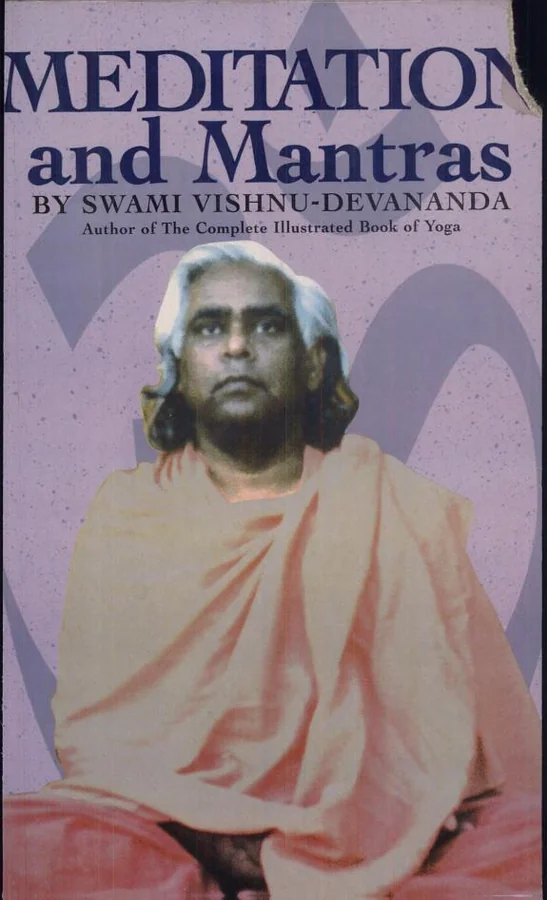
Meditation and Mantras
 76
76

Meditation and Mantras
Swami Vishnu Devananda's "Meditation and Mantras" eschews the contemporary clamor for spiritual fads, instead offering a disciplined exposition of yogic principles. Its strength lies in its directness; the book doesn't equivocate about the rigorous nature of the practices it outlines, drawing from the "classic four paths" of Yoga. The author’s intention to present these paths in their "uncorrupted form" while adapting them for the "Western mind" is largely successful. However, some sections might feel dense to absolute beginners, requiring a sustained effort to fully absorb the philosophical underpinnings. A notable passage discusses the subtle energies activated by specific mantras, a concept explained with clarity but demanding attentive study. Ultimately, this is a no-nonsense guide for the earnest seeker, prioritizing depth over accessibility.
📝 Description
76
Published around 1999, Meditation and Mantras presents yogic paths for a modern audience.
Swami Vishnu Devananda's Meditation and Mantras clarifies the practice of meditation and mantra use, drawing from classical yogic traditions. The book explains the integrated nature of spiritual development through Raja Yoga, Karma Yoga, Jnana Yoga, and Bhakti Yoga. It aims to make these disciplines understandable for Western readers, particularly those with a scientific background. The volume is for individuals seeking a genuine understanding and application of these practices, not superficial trends. It appeals to those interested in established spiritual traditions, presented with an awareness of Western intellectual sensibilities.
Students of comparative religion and serious practitioners of contemplative arts will find value in this work. It emerges from the lineage of Swami Vishnu Devananda, a disciple of Swami Sivananda Saraswati, who helped popularize Yoga in the West. Devananda's teachings provided accessible introductions to complex yogic philosophy, bridging Eastern spirituality and Western audiences. The book focuses on the systematic, integrated practice derived from the four yogic paths and the application of mantras for concentration and transformation.
This book is rooted in the Hatha Yoga tradition as taught by Swami Sivananda Saraswati and his disciple Swami Vishnu Devananda. Devananda was instrumental in bringing yogic philosophy and practice, particularly Raja Yoga and Kriya Yoga, to Western countries starting in the mid-20th century. His approach emphasized practical techniques for spiritual growth, often simplified for accessibility without losing the essence of the original teachings. This work reflects that effort to convey complex spiritual concepts to a global audience.
💡 Why Read This Book?
• You will learn to differentiate between genuine yogic discipline and superficial spiritual trends, understanding the distinct contributions of Raja, Karma, Jnana, and Bhakti Yoga as presented in the book's classical framework. • Gain practical methods for meditation and mantra recitation, directly applicable from the techniques outlined by Swami Vishnu Devananda, enabling focused practice. • Understand the integration of these four yogic paths, recognizing how they complement each other for holistic spiritual growth, a concept central to the book's approach.
⭐ Reader Reviews
Honest opinions from readers who have explored this book.
❓ Frequently Asked Questions
What are the four paths of Yoga discussed in "Meditation and Mantras"?
The book details Raja Yoga (meditation and mind control), Karma Yoga (selfless action), Jnana Yoga (wisdom and knowledge), and Bhakti Yoga (devotion). These paths are presented as distinct yet interconnected approaches to spiritual development.
Is "Meditation and Mantras" suitable for beginners?
Yes, it is suitable for beginners who are serious about learning foundational meditation and mantra techniques. While it emphasizes traditional methods over novelties, the explanations are structured to be understandable to those new to these practices.
Who was Swami Vishnu Devananda?
Swami Vishnu Devananda (1927-1993) was a renowned yoga master and disciple of Swami Sivananda Saraswati. He was instrumental in bringing Yoga and Vedanta to the West, establishing numerous centers and teaching internationally.
What is the role of mantras according to this book?
The book explains mantras as sacred sounds or phrases used to focus the mind, invoke spiritual energies, and facilitate deeper states of meditation. They are presented as integral tools within the yogic disciplines.
Does the book offer "secret short-cuts" for self-development?
No, the book explicitly states it does not offer secret short-cuts, novel innovations, or fads. It focuses on established, classical yogic methods derived from ancient traditions.
How does the book consider the "Western mind"?
The work attempts to present yogic principles in a manner that is accessible and comprehensible to individuals accustomed to Western scientific traditions and intellectual frameworks, bridging Eastern philosophy and Western logic.
🔮 Key Themes & Symbolism
The Four Paths of Yoga
This book centers on the classic yogic framework of four distinct yet complementary paths: Raja Yoga, the path of mental discipline and meditation; Karma Yoga, the path of selfless action; Jnana Yoga, the path of wisdom and self-inquiry; and Bhakti Yoga, the path of devotion. Swami Vishnu Devananda presents these not as separate disciplines but as integrated aspects of a complete spiritual practice, emphasizing that a balanced approach across all four fosters holistic growth and deeper self-understanding. The work aims to clarify their individual roles and synergistic potential for practitioners.
Authentic Meditation Practice
Meditation is presented as a systematic discipline rather than a fleeting trend. The book clarifies the principles behind effective meditation, moving beyond superficial interpretations. It stresses the importance of intention, concentration, and the foundational yogic techniques that support sustained practice. By focusing on the core methodologies rooted in tradition, it guides readers away from transient spiritual fads towards a more robust and enduring engagement with inner stillness and awareness.
The Power of Mantras
Mantras are explored as powerful tools within the yogic system, serving to focus the mind and unlock deeper spiritual states. The book explains their function not merely as chanted sounds but as vibratory keys that can influence consciousness. It details how the correct recitation and understanding of mantras can aid concentration, purify the mind, and facilitate connection with the divine or inner self, integrating them as essential components of yogic discipline.
Bridging East and West
A significant aspect of the book's approach is its consideration for the "Western mind and scientific tradition." Swami Vishnu Devananda aims to present the ancient yogic teachings in a way that is accessible and logical to an audience often grounded in empirical thinking. This involves explaining abstract spiritual concepts with clarity and practicality, ensuring that the methods derived from Eastern philosophy can be understood and applied by those from different cultural and intellectual backgrounds.
💬 Memorable Quotes
Direct passages from the work, attributed to the author.
“The methods presented here stem from the classic four path of Raja Yoga, Karma Yoga, Jnana Yoga and Bhakti Yoga.”
— This statement highlights the book's commitment to traditional yogic teachings, grounding its practices in established lineages rather than novel interpretations. It signifies an emphasis on the foundational pillars of yogic philosophy and practice.
“Those who are looking for secret short-cuts, novel innovations, exciting new trends and fads in the area of self-development may be disappointed.”
— This preemptive declaration sets the book's tone: it prioritizes authenticity and depth over superficiality or fleeting spiritual trends, appealing to those seeking genuine, time-tested wisdom.
“This volume is intended to dispel the cloud of confusion that has accumulated around the subject of meditation.”
— The author's primary aim is to offer clarity and straightforward instruction on meditation, cutting through common misunderstandings and misinformation that often surround the practice.
“These are given in their uncorrupted form, yet with consideration for the Western mind and scientific tradition.”
— This indicates a dual focus: preserving the integrity of ancient yogic teachings while making them comprehensible and relatable to a modern, Western audience familiar with scientific reasoning.
💡 Key Ideas
Editorial paraphrase of the work's core concepts — not direct quotes.
Meditation and Mantras are essential tools for self-realization.
This paraphrase underscores the book's central thesis that dedicated practice of meditation and the use of mantras are not mere techniques but vital instruments for achieving ultimate spiritual understanding.
🌙 Esoteric Significance
Tradition
This work is firmly rooted in the Advaita Vedanta tradition, specifically through the lineage of Swami Sivananda and his disciple Swami Vishnu Devananda. It adheres to the classical yogic system, integrating the four primary paths (Raja, Karma, Jnana, Bhakti Yoga) as understood within the broader Hindu philosophical framework. While not strictly Hermetic or Gnostic, its emphasis on inner transformation, mind control, and the realization of the Self aligns with perennial philosophies found across various esoteric traditions.
Symbolism
Key symbols include the "four paths" themselves, representing distinct yet interconnected yogic disciplines. Raja Yoga symbolizes the disciplined mind, Karma Yoga the ethical framework of action, Jnana Yoga the pursuit of ultimate knowledge, and Bhakti Yoga the devotional heart. Mantras function as potent symbols, representing divine sound or primal vibrations that can unlock consciousness. The overarching goal of self-realization can be seen as the ultimate symbol of unity and transcendence.
Modern Relevance
Contemporary practitioners and teachers of Yoga, mindfulness, and meditation often draw upon the foundational principles presented by Swami Vishnu Devananda. His accessible approach to classical yogic philosophy continues to inform modern interpretations and applications of meditation techniques. Thinkers and institutions focused on integrating Eastern contemplative practices with Western psychology and neuroscience often reference the systematic methods detailed in works like this, highlighting the enduring value of these time-tested disciplines.
👥 Who Should Read This Book
• Aspiring practitioners of traditional Yoga seeking a clear, non-dogmatic introduction to meditation and mantra techniques, moving beyond superficial trends. • Students of comparative religion and philosophy interested in understanding the classical yogic paths (Raja, Karma, Jnana, Bhakti Yoga) from a reputable lineage. • Individuals looking for practical, disciplined methods for self-development and inner peace, grounded in ancient wisdom but explained for a contemporary audience.
📜 Historical Context
Published around 1999, "Meditation and Mantras" emerges from the fertile ground of the late 20th-century global interest in Eastern spirituality, particularly Yoga and meditation. Swami Vishnu Devananda, a disciple of the prolific Swami Sivananda Saraswati, was himself a significant figure who popularized Hatha Yoga and Raja Yoga in the West from the 1950s onwards. His approach, often characterized by direct, practical instruction, aimed to make these ancient disciplines accessible to a broad audience. This work fits within a broader movement that saw figures like Paramahansa Yogananda and Maharishi Mahesh Yogi also introducing Indian spiritual traditions to Western cultures. While competing schools offered varied interpretations of meditation, Devananda's emphasis remained steadfast on the classical yogic paths, presented with clarity for those accustomed to Western scientific paradigms. The book's reception likely aligned with the growing demand for authentic spiritual practices amidst a proliferation of less rigorous self-help movements.
📔 Journal Prompts
The integration of Raja Yoga, Karma Yoga, Jnana Yoga, and Bhakti Yoga: How can these four paths be balanced in daily life?
Reflect on the concept of "uncorrupted form" in spiritual practice. What does this mean for your own approach to meditation?
Consider the role of mantras. What potential does the repetition of sacred sound hold for focusing your awareness?
Analyze the "cloud of confusion" around meditation. Identify one common misconception and how this book clarifies it.
Evaluate the "Western mind and scientific tradition" consideration. How does this approach aid your understanding of yogic principles?
🗂️ Glossary
Raja Yoga
The 'royal path' of Yoga, focusing on meditation, mind control, and the systematic practice of the eight limbs of Yoga (Ashtanga Yoga) to achieve self-mastery and enlightenment.
Karma Yoga
The path of selfless action. It involves performing duties and actions without attachment to the results, dedicating the fruits of one's labor to a higher purpose or the divine.
Jnana Yoga
The path of knowledge and wisdom. It emphasizes self-inquiry, study, and contemplation to discern the true nature of reality and the Self, leading to liberation.
Bhakti Yoga
The path of devotion. It involves cultivating intense love and surrender to the divine through practices like chanting, prayer, worship, and service.
Mantra
A sacred sound, syllable, word, or phrase, often in Sanskrit, used in meditation and spiritual practices to focus the mind, invoke spiritual energy, or achieve specific states of consciousness.
Self-realization
The ultimate spiritual goal in many Indian traditions, referring to the realization of one's true nature as divine or identical with Brahman, transcending ego and illusion.
Western mind
Refers to the intellectual and cultural orientation prevalent in Western societies, often characterized by logical reasoning, scientific inquiry, and empirical observation, which the book attempts to address.
This book appears in 1 collection
🔮 Readers Also Liked
Browse all →








From the “Yoga” Collection
View all →




More Free Occult Philosophy Books
View all →