The Zen way to the martial arts
 81
81

The Zen way to the martial arts
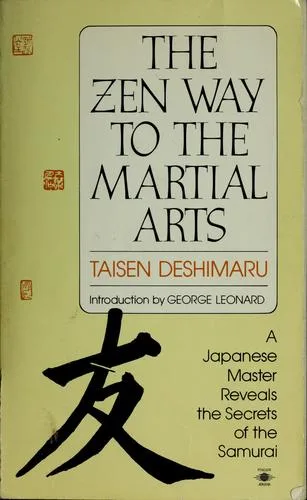
Taisen Deshimaru’s The Zen Way to the Martial Arts offers a compelling argument for martial training as a spiritual discipline, a perspective often overshadowed by the focus on combat efficacy in popular Western understanding. Deshimaru, a Soto Zen master, skillfully connects the rigorous demands of martial arts with the introspective practices of Zen Buddhism, particularly through the concept of *zazen*. He posits that the discipline required to master a physical technique is directly transferable to the cultivation of a tranquil, focused mind. The strength of this work lies in its directness; it doesn't shy away from the demanding nature of both paths. A notable limitation, however, is that the book might be less accessible to absolute beginners in either martial arts or Zen, as it assumes a certain familiarity with the terminology and underlying principles. For instance, Deshimaru’s explanation of *mushin* (no-mind) as a state of pure, unhindered action is powerful, but requires context to fully appreciate its significance beyond a simple lack of thought. Ultimately, Deshimaru provides a valuable, albeit challenging, bridge between physical embodiment and spiritual awakening.
📝 Description
81
Taisen Deshimaru's 1980 book connects Zen Buddhist philosophy with martial arts practice.
Published in 1980, The Zen Way to the Martial Arts by Taisen Deshimaru offers a perspective on martial arts that goes beyond physical technique. Deshimaru, a Soto Zen master, presents martial training not as combat, but as a path toward self-discovery, discipline, and enlightenment. The book bridges Eastern spirituality and physical discipline. It suggests that demanding martial training can lead to understanding one's own mind and the nature of reality. This work functions more as a philosophical guide than a technical manual for practitioners seeking deeper meaning.
This book appeals to martial artists interested in the philosophical aspects of their practice, moving beyond mere physical mechanics. Zen Buddhists will find connections to their contemplative path and physical discipline. It also interests those studying comparative religion and philosophy, particularly the relationship between Eastern spiritual traditions and embodied practices. Individuals pursuing self-improvement, discipline, focus, and a better understanding of the mind-body connection will also find value. The book is for dedicated practitioners seeking depth in their training.
The Zen Way to the Martial Arts emerged during the 1980s, a time when Western interest in Eastern philosophies, including Zen Buddhism and martial arts like Karate and Aikido, was significant. This period saw many Westerners seeking alternatives to traditional Western thought, often finding spiritual resonance in Asian traditions. Masters like Taisen Deshimaru played a role in bringing these teachings to a wider audience outside of Asia. Deshimaru's work highlights the integration of contemplative practices with rigorous physical training, a common theme in various esoteric traditions that emphasize the body as a vehicle for spiritual development.
💡 Why Read This Book?
• Learn how *zazen*, or seated meditation, forms the essential foundation for developing true martial skill, providing a practice for mental clarity that directly impacts physical execution. • Understand the concept of *mushin* (no-mind) as a state of spontaneous action achieved through rigorous training, enabling intuitive responses unburdened by conscious thought. • Explore the cultivation of *ki* (vital life force) through a combination of martial movements and meditative states, offering a path to harnessing internal energy for both discipline and efficacy.
⭐ Reader Reviews
Honest opinions from readers who have explored this book.
❓ Frequently Asked Questions
What is the primary focus of Taisen Deshimaru's "The Zen Way to the Martial Arts"?
The book's primary focus is on integrating Zen Buddhist philosophy with martial arts practice, presenting martial arts as a path to spiritual enlightenment and self-discovery rather than solely combat.
When was "The Zen Way to the Martial Arts" first published?
The book was first published in 1980, a period of growing Western interest in Eastern spiritual disciplines and practices.
What is the role of zazen in the martial arts according to Deshimaru?
Deshimaru emphasizes zazen (seated meditation) as the essential foundation for martial arts, arguing that it cultivates the mental discipline and clarity necessary for effective physical practice.
What does the concept of 'mushin' mean in the context of this book?
Mushin, or 'no-mind,' refers to a state of spontaneous, intuitive action achieved through deep training, where the practitioner reacts without conscious deliberation or egoic interference.
Is this book a practical guide to martial arts techniques?
No, it is primarily a philosophical and spiritual exploration. While it references martial arts, it focuses on the underlying principles and mindset rather than providing detailed technical instruction.
Who was Taisen Deshimaru?
Taisen Deshimaru (1914-1982) was a prominent Japanese Soto Zen master who played a significant role in introducing Zen Buddhism to Europe, particularly France, where he founded the International Zen Association.
🔮 Key Themes & Symbolism
Zazen as Foundation
The book posits that seated meditation, or zazen, is not separate from but integral to the effective practice of martial arts. Deshimaru argues that the stillness and focus cultivated during zazen are the bedrock upon which true martial skill is built. It’s through the discipline of confronting one's own mind in meditation that a practitioner develops the concentration, patience, and mental clarity required to execute complex physical techniques with precision and intention. This theme challenges the common perception of martial arts as purely physical, embedding it within a contemplative framework.
The State of Mushin
Central to Deshimaru's philosophy is the concept of 'mushin,' often translated as 'no-mind.' This state is characterized by action that is spontaneous, intuitive, and free from the interference of conscious thought, ego, or emotion. It is not a state of vacancy, but one of pure, unadulterated response honed through relentless practice. The book explains how martial training, when approached with Zen principles, can lead a practitioner towards this state, allowing for fluid, efficient, and uninhibited movement that arises naturally from the situation.
Cultivating Ki
The concept of 'ki' (or 'chi') is explored as the vital life force that animates all beings. In The Zen Way to the Martial Arts, Deshimaru illustrates how both meditation and martial practice serve to cultivate and harmonize this energy. Through precise movements, focused breathing, and a calm, centered mind, practitioners can learn to generate, direct, and utilize their ki. This not only enhances physical power and resilience but also contributes to overall well-being and a deeper connection to the present moment, aligning physical action with vital energy flow.
Martial Arts as a Path
Deshimaru frames the martial arts not as an end in themselves, but as a profound spiritual path, akin to monastic training. The discipline, perseverance, and confrontation with one's limitations inherent in martial practice are presented as vehicles for self-realization and understanding Buddhist concepts like impermanence and emptiness. By engaging fully in the demanding physical and mental challenges, practitioners are guided towards confronting their own ego, fears, and attachments, ultimately leading to personal transformation and a deeper insight into existence.
💬 Memorable Quotes
Direct passages from the work, attributed to the author.
“The true meaning of martial arts is to live fully in the present moment.”
— This statement underscores the book's central theme: martial arts, when practiced with Zen awareness, are not about past regrets or future anxieties, but about complete engagement with the 'now'.
“Zazen is the root of all martial arts.”
— This highlights the primacy of meditation in Deshimaru's philosophy, positioning the disciplined stillness of zazen as the essential prerequisite for genuine mastery in any physical discipline.
“To fight without fighting is the highest skill.”
— This refers to the state of 'mushin,' where one’s presence and actions deter conflict or resolve it with minimal force, demonstrating mastery over self and situation.
“Your opponent is your own ego.”
— This interpretation points to the internal nature of the struggle described in the book, where the greatest obstacles to mastery are one's own attachments, fears, and self-doubt.
💡 Key Ideas
Editorial paraphrase of the work's core concepts — not direct quotes.
When the mind is calm, the body moves with precision.
This paraphrase captures the essence of the mind-body connection emphasized throughout the book, linking mental tranquility directly to physical effectiveness and control in martial practice.
🌙 Esoteric Significance
Tradition
This work fits within the broader Esoteric Buddhist tradition, specifically the Mahayana school, and its practical application through Zen (Ch'an) Buddhism. It connects to the lineage of masters who emphasized direct experience and embodied practice as paths to enlightenment. While not strictly Hermetic or Kabbalistic, its focus on mind-body integration, vital energy (*ki*), and achieving states of consciousness through discipline aligns with universal esoteric principles found across various traditions seeking inner transformation.
Symbolism
The practice of *zazen* itself functions as a core symbol, representing stillness, introspection, and the confrontation with the self. The empty space within a dojo or meditation hall symbolizes the void or emptiness (*sunyata*) central to Buddhist thought. The precise, often minimalist, movements in martial arts can symbolize the economy of action and the elimination of extraneous thought or ego, reflecting the path of non-attachment.
Modern Relevance
Contemporary mindfulness practices, secularized versions of meditation, and the continued global popularity of martial arts all draw upon the principles explored in this book. Thinkers and practitioners in fields ranging from sports psychology to somatic therapy echo Deshimaru's emphasis on the mind-body connection and the power of focused, present-moment awareness cultivated through disciplined physical and mental training.
👥 Who Should Read This Book
• Martial artists seeking to deepen their practice beyond physical technique, gaining insight into the philosophical and spiritual dimensions that inform effective movement and self-mastery. • Zen practitioners interested in integrating meditation and mindfulness with embodied disciplines, finding practical ways to apply Buddhist principles to physical challenges. • Students of comparative religion and philosophy looking to understand the historical and conceptual links between Eastern spiritual traditions and physical disciplines like Karate or Aikido.
📜 Historical Context
The Zen Way to the Martial Arts, published in 1980, emerged from a fertile period of cross-cultural exchange. The late 20th century saw a surge in Western fascination with Eastern spiritual and physical disciplines, partly fueled by the post-war era's search for alternative philosophies. Taisen Deshimaru, a Soto Zen master who established the International Zen Association in Europe, was a key figure in bringing authentic Zen teachings to the West. His work arrived when martial arts were often viewed through the lens of cinema or simplified self-defense, contrasting with the deeply spiritual and philosophical traditions from which they originated in countries like Japan. Deshimaru’s approach offered a counterpoint to more secular or combat-focused interpretations, emphasizing the meditative and self-cultivation aspects. This period also saw figures like D.T. Suzuki already popularizing Zen concepts, creating an audience receptive to Deshimaru’s integrated view of mind and body, though his direct engagement with specific Western martial arts schools was less documented than his broader philosophical outreach.
📔 Journal Prompts
The cultivation of *mushin* through martial practice.
The role of *zazen* in developing mental clarity for physical disciplines.
Reflecting on the concept of *ki* as vital life force.
The martial artist's greatest opponent: the ego.
Integrating present-moment awareness into daily physical activities.
🗂️ Glossary
Zazen
Seated meditation practice central to Zen Buddhism, involving precise posture and focused awareness, used to cultivate concentration and insight.
Mushin
Literally 'no-mind,' a state of spontaneous, intuitive action achieved through deep training, free from conscious thought, ego, or emotion.
Ki
The vital life force or energy believed to flow through all living beings, cultivated and directed through mindful practice and movement.
Dojo
A training hall or space for martial arts practice, often viewed as a place for discipline, self-improvement, and spiritual development.
Soto Zen
One of the two major schools of Zen Buddhism, emphasizing Shikantaza ('just sitting') and the integration of practice into daily life.
Bodhisattva
In Mahayana Buddhism, an enlightened being who delays their own nirvana to help others achieve enlightenment.
Sunyata
Emptiness; the concept that all phenomena lack inherent existence, a core tenet in Mahayana Buddhism.
🔮 Readers Also Liked
Browse all →








More by Taisen Deshimaru
All books →
More Free Occult Philosophy Books
View all →