The Holy Grail

 74
74

The Holy Grail
James Augustin Brown Scherer’s "The Holy Grail," first published in its collected form in 2015, is less a singular narrative and more a constellation of essays orbiting the central, often elusive, symbol of the Grail. Scherer posits this quest as a unifying motif, extending its influence beyond Arthurian legend to encompass the lives and works of other seekers. The book particularly focuses on the "two Southern poets" whose artistic endeavors, tragically cut short, are presented as a modern echo of the knightly pursuit. While the intention to bind these disparate pieces through the Grail theme is clear, the execution occasionally feels more like a thematic suggestion than a rigorous argument. The strength lies in Scherer's attempt to broaden the scope of Grail scholarship beyond purely medievalist concerns. A limitation is the occasional lack of deep engagement with the specific poets mentioned, leaving their connection to the Grail somewhat underdeveloped. Scherer’s exploration of the Grail as a symbol of lost spiritual nourishment offers a compelling perspective. This collection serves as a curious, if uneven, examination of spiritual yearning across different eras.
📝 Description
74
### What It Is ### Who It's For ### Historical Context ### Key Concepts
💡 Why Read This Book?
• Gain a unique perspective on the Grail legend as a binding theme for diverse intellectual and artistic pursuits, as explored in the "Six Kindred Addresses and Essays." • Understand the connection Scherer draws between the medieval quest for the Grail and the artistic sacrifices of early 20th-century Southern poets, offering a comparative study of spiritual dedication. • Explore the concept of the Grail not just as a relic, but as a symbol of profound spiritual hunger and a lost ideal, as presented through Scherer's unifying thesis.
⭐ Reader Reviews
Honest opinions from readers who have explored this book.
❓ Frequently Asked Questions
What is the central theme uniting the essays in James Augustin Brown Scherer's "The Holy Grail"?
The central theme is the "binding theme" of the Holy Grail, which Scherer intends to connect his various essays and addresses, extending the concept of the quest beyond its Arthurian origins.
Who are the "two Southern poets" mentioned in the book?
The book refers to two Southern poets whose "early death" deprived the world of "mystical rich music," linking their artistic quest to the broader theme of the Grail.
When was "The Holy Grail" by James Augustin Brown Scherer first published?
The collected work, "The Holy Grail: Six Kindred Addresses and Essays," was first published on July 11, 2015.
Does the book focus solely on medieval Grail legends?
No, Scherer explicitly states his intention for the Grail to be a "binding theme that unites" essays beyond the first, suggesting a broader application of the quest's symbolism.
What is the author's approach to the Grail in this collection?
Scherer approaches the Grail as a unifying motif for essays that explore spiritual quests and artistic endeavors, suggesting its relevance extends to modern figures and concepts.
What kind of "addresses and essays" are included in the collection?
The collection includes "Six Kindred Addresses and Essays," with the first bearing the title "The Holy Grail," and the others using the Grail quest as their underlying motive.
🔮 Key Themes & Symbolism
The Grail as Unifying Motif
Scherer proposes the Holy Grail not merely as a relic of Arthurian legend but as a conceptual anchor for disparate essays. This approach seeks to demonstrate how the 'quest of the Grail' functions as a metaphor for various forms of spiritual and artistic seeking, regardless of historical period or specific subject matter. The work endeavors to show that the inherent drive to find something sacred or profoundly meaningful, akin to the knights Galahad and Percivale, manifests in diverse human endeavors, from literary creation to philosophical inquiry. The collection uses the Grail to bridge these different expressions of a universal longing.
Artistic Quest as Spiritual Pursuit
A significant aspect of Scherer's thesis involves equating the intense dedication of artistic creation with the knightly quest for the Grail. He highlights "two Southern poets" whose tragically curtailed careers are framed as a modern manifestation of this profound, almost sacred, pursuit. The implication is that the creation of "mystical rich music" through poetry requires a similar devotion, sacrifice, and immersion as the medieval search for the divine chalice. This perspective elevates artistic output to a spiritual practice, suggesting that artists, like knights errant, are engaged in a deep, often perilous, journey toward an ideal.
The Symbolism of Lost Ideals
The Holy Grail, in Scherer's interpretation, represents more than just a legendary artifact; it embodies a lost ideal or a profound spiritual nourishment that humanity continually seeks. The 'quest' itself becomes symbolic of this enduring human desire to recover something essential that has been misplaced or forgotten. Whether this ideal is spiritual, artistic, or intellectual, the act of seeking it defines the individual and collective human condition. The book suggests that the failure to find or the loss of this ideal is a source of great sorrow, as seen in the untimely end of promising artists.
Comparative Spirituality and Literature
Scherer's work functions as a bridge between literary analysis and esoteric philosophy. By using the Grail as a unifying thread, he implicitly invites comparisons between medieval religious quests and the modern pursuit of artistic and intellectual excellence. The collection explores how figures from different eras, driven by distinct goals—be it spiritual salvation or artistic expression—are engaged in fundamentally similar quests for meaning and transcendence. This comparative approach highlights the recurring patterns of human aspiration and the enduring power of symbolic narratives across centuries.
💬 Memorable Quotes
Direct passages from the work, attributed to the author.
“I intend the Holy Grail to be the binding theme that unites this sheaf of essays and addresses.”
— This statement directly outlines the author's structural and thematic intent, positioning the Grail not just as a subject of the first essay, but as the conceptual glue holding the entire collection together.
“the quest of the Grail is no less the real motive of the five other chapters in this book.”
— This reinforces the author's thesis that the symbolism and narrative drive of the Grail quest permeate the entire collection, extending its influence beyond explicit mentions.
“no men since the days of Galahad and Percivale have more utterly lost themselves in the knightly quest than those two Southern poets whose early death deprived the world of mystical rich music”
— This highlights a core argument: the intense dedication of certain artists to their craft is presented as a modern equivalent to the medieval knights' all-consuming pursuit of the Grail, emphasizing sacrifice and lost potential.
“For example, no men since the days of Galahad and Percivale have more utterly lost themselves in the knightly quest than those two Southern poets whose early death deprived the world of mystical rich music”
— This provides a specific example, drawing a powerful parallel between the legendary knights and unnamed modern poets, framing their artistic endeavors as a profound, almost spiritual, "quest."
💡 Key Ideas
Editorial paraphrase of the work's core concepts — not direct quotes.
The first bears that especial title, but the quest of the Grail is no less the real motive of the five other chapters in this book.
This quote directly asserts the comprehensive thematic reach of the Grail within the collection, indicating that its symbolic resonance is intended to be felt throughout all the essays.
🌙 Esoteric Significance
Tradition
Scherer's work situates itself within the broad tradition of Western Esotericism, particularly in its exploration of archetypal symbols and their manifestation across different eras and disciplines. While not strictly adhering to a single lineage like Hermeticism or Kabbalah, the book engages with the perennial theme of the spiritual quest, a concept central to many esoteric paths. The Grail, as a symbol of ultimate spiritual attainment or divine knowledge, is a recurrent motif in various mystical traditions. Scherer's innovation lies in using it as a conceptual bridge, linking the medieval chivalric ideal to modern artistic and intellectual strivings, thereby expanding its symbolic resonance beyond its Christian origins.
Symbolism
The primary symbol is, of course, the Holy Grail itself, representing the object of ultimate spiritual desire, divine grace, or profound truth. The 'quest' associated with it symbolizes the arduous journey of the seeker, characterized by trials, devotion, and self-loss. The book also implicitly uses the symbolism of "mystical rich music" generated by the "Southern poets" as a metaphor for spiritual or artistic revelation—a form of divine expression that is lost when the seeker or creator is prematurely taken from their path. The concept of "losing oneself" in the quest mirrors esoteric ideas of ego dissolution and absorption into the divine or the Absolute.
Modern Relevance
Contemporary interest in archetypal psychology (drawing from Carl Jung's work on symbols and the collective unconscious), comparative mythology, and the resurgence of interest in chivalric orders and esoteric spirituality all find resonance in Scherer's approach. Thinkers and practitioners exploring the intersection of art, spirituality, and the search for meaning in a secularized world can find valuable perspectives here. The idea of the "quest" as a metaphor for personal growth and the pursuit of ideals continues to be relevant in modern self-help, spiritual development, and artistic discourse, making Scherer's unifying theme applicable today.
👥 Who Should Read This Book
• Students of comparative literature and mythology interested in how archetypal symbols like the Holy Grail are reinterpreted across historical periods and applied to diverse subjects. • Esoteric philosophy enthusiasts seeking to understand the Grail beyond its traditional Christian context and explore its function as a symbol of spiritual yearning and artistic dedication. • Literary scholars and cultural historians examining the connections between spiritual quests, artistic creation, and the concept of "lost ideals" in Western thought.
📜 Historical Context
The collected essays of James Augustin Brown Scherer, first published in 2015, draw upon a long tradition of interpreting the Holy Grail, a symbol that has captivated Western imagination for centuries. While the original essays likely stem from an earlier period, their compilation in 2015 places them within a contemporary range of renewed interest in esoteric symbolism and comparative mythology. During the late 19th and early 20th centuries, a period marked by movements like Theosophy and the rise of literary criticism exploring archetypes (think of Jessie Weston's influential "From Ritual to Romance" published in 1920), the Grail underwent significant reinterpretation. Scherer's approach, focusing on the Grail as a unifying motif for diverse intellectual and artistic pursuits, aligns with this broader scholarly and spiritual trend. His comparison of the Grail quest to the dedication of "Southern poets" suggests an engagement with literary scholarship that saw spiritual and artistic endeavors as intertwined.
📔 Journal Prompts
The Grail as a binding theme: How might the concept of a unifying quest apply to disparate areas of your own life?
The dedication of the "Southern poets": Reflect on the intensity of artistic pursuit as a form of spiritual quest.
The symbolism of "mystical rich music": What forms of revelation or profound expression do you associate with lost potential?
The "utterly lost themselves" aspect of the quest: Explore the balance between self-abandonment and personal identity in pursuit of a goal.
Scherer's intent for the Grail as a "binding theme": Identify a personal symbol or concept that could unify diverse aspects of your experience.
🗂️ Glossary
Holy Grail
In Arthurian legend, the sacred cup or dish used by Christ at the Last Supper and later sought by knights like Galahad and Percivale, symbolizing spiritual perfection and divine revelation.
Quest
A prolonged search for something, especially a spiritual or mystical goal; in the context of the Grail, it signifies a journey of spiritual purification and attainment.
Binding Theme
A central idea or concept that connects and unifies various separate parts of a larger work, such as essays or addresses, providing coherence and a common focus.
Galahad and Percivale
Two of the most famous knights of King Arthur's Round Table, renowned for their purity and their successful quests for the Holy Grail.
Southern poets
Refers to specific, unnamed poets from the American South whose "early death" is presented by Scherer as an example of profound artistic dedication akin to the Grail quest.
Mystical rich music
A metaphorical description of the profound, spiritually infused artistic output that is lost when creative individuals die prematurely, as suggested in the context of the Southern poets.
Knightly quest
The pursuit undertaken by knights, often characterized by chivalry, courage, and a search for honor, adventure, or a sacred objective like the Holy Grail.
This book appears in 1 collection
🔮 Readers Also Liked
Browse all →









From the “Holy Grail” Collection
View all →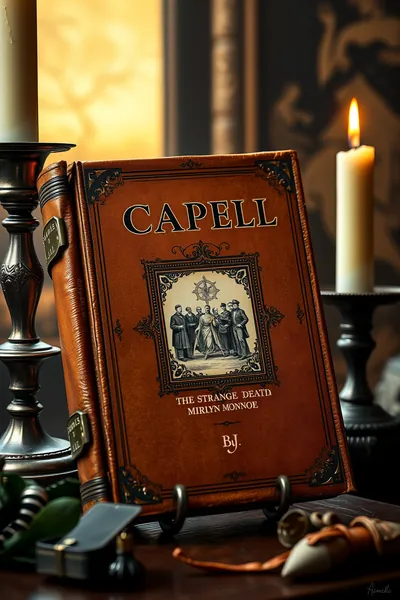








More Free Occult Philosophy Books
View all →