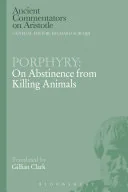
Porphyry: On Abstinence from Killing Animals
 72
72

Porphyry: On Abstinence from Killing Animals
Porphyry's treatise on animal abstinence is less a devotional text and more a rigorous philosophical dismantling of anthropocentric ethics. The strength of this translation lies in its scholarly apparatus, which contextualizes Porphyry's arguments within the dense intellectual landscape of late antiquity. A particularly compelling section is the detailed examination of animal sacrifice as a flawed offering to the gods, arguing that true piety involves cultivating a benevolent disposition rather than performing violent rites. The limitation, however, is the density of the philosophical prose, which, despite the scholarly notes, can still present a challenge for readers unfamiliar with Neoplatonic terminology. The work's insistence on the rational soul's connection to all living things offers a potent ethical framework. Ultimately, 'On Abstinence from Killing Animals' provides a crucial, albeit demanding, philosophical argument for a life free from animal harm.
📝 Description
72
Porphyry's 'On Abstinence from Killing Animals' argues for vegetarianism based on Neoplatonic ethics.
Written in the 3rd century CE, Porphyry's treatise 'On Abstinence from Killing Animals' presents a philosophical case for not consuming or sacrificing animals. This work, which was part of his larger commentary on Aristotle, grounds its argument in Neoplatonic principles of piety, justice, and the pursuit of divine understanding. Porphyry critiques the common practices of animal sacrifice and meat consumption, viewing them as obstacles to spiritual progress and a balanced relationship with the world.
The text addresses the nature of the soul and its purification through asceticism. It touches upon the concept of theurgy, suggesting that abstaining from harm aligns individuals with the divine. Porphyry engages with earlier Greek philosophical traditions like Pythagoreanism and Stoicism, which also discussed animal welfare, contrasting his views with the prevalent sacrificial rituals of Roman state religion. The book is relevant for students of ancient philosophy, Neoplatonism, the history of vegetarianism, and comparative religion.
As a student of Plotinus, Porphyry was a key figure in the development of Neoplatonism, a philosophical and mystical system that sought to synthesize Platonic ideas with other traditions. His work on abstinence from killing animals fits within this context by emphasizing ascetic practices and the purification of the soul as a path toward the divine. This aligns with esoteric aims of spiritual ascent and a harmonious connection with the cosmos, moving away from practices seen as material or corrupting.
💡 Why Read This Book?
• Gain a philosophical rationale for vegetarianism rooted in 3rd-century Neoplatonism, distinct from modern ethical arguments. • Understand Porphyry's critique of animal sacrifice and its connection to spiritual purification, as discussed in the text's arguments against traditional rites. • Explore the concept of the soul's purification through ascetic practice, a core tenet of Porphyry's philosophy that informs his stance on animal welfare.
⭐ Reader Reviews
Honest opinions from readers who have explored this book.
❓ Frequently Asked Questions
What is Porphyry's main argument against eating meat?
Porphyry argues that abstaining from killing animals is essential for the soul's purification and its ascent towards the divine. He posits that harming living beings hinders spiritual progress and is contrary to true piety and justice.
When was Porphyry's 'On Abstinence from Killing Animals' originally written?
The work was originally written in the 3rd century CE, during the height of Neoplatonic philosophy, with Porphyry being a student of Plotinus.
How does Porphyry connect animal abstinence to philosophy?
He connects it by arguing that a virtuous life, essential for philosophical pursuit, necessitates extending justice and benevolence to all sentient beings, not just humans.
What philosophical school is Porphyry associated with?
Porphyry is a key figure in Neoplatonism, a philosophical school that developed from the teachings of Plato, particularly through the work of Plotinus.
Does this book discuss vegetarianism from a health perspective?
While Porphyry's arguments have implications for health, the primary focus is on ethical and spiritual reasons for abstaining from animal flesh, rather than dietary benefits.
Is this a translation of an ancient Greek text?
Yes, the original work 'On Abstinence from Killing Animals' (Περὶ ἀποχῆς τῶν ἀπὸ τῶν ζῴων βρωμάτων) is an ancient Greek philosophical text by Porphyry.
🔮 Key Themes & Symbolism
Soul Purification
The text posits that abstaining from animal slaughter is a crucial ascetic practice for purifying the soul. Porphyry argues that acts of violence, particularly the taking of innocent life, create spiritual impediments. By renouncing meat consumption and animal sacrifice, the individual can move closer to the divine intellect and achieve a more virtuous existence, aligning with the Neoplatonic goal of returning the soul to its origin.
Ethical Kinship
Porphyry extends the concept of justice beyond human interactions, advocating for a form of ethical kinship with all sentient beings. He challenges the arbitrary division between humans and animals, suggesting that beings capable of suffering and possessing a degree of soul deserve moral consideration. This perspective critiques anthropocentrism and lays groundwork for a universal ethical framework.
Critique of Sacrifice
A significant portion of the work is dedicated to dismantling the practice of animal sacrifice, prevalent in ancient religions. Porphyry argues that such rites are not only morally objectionable but also philosophically unsound, failing to appease or honor the divine. He contrasts these violent rituals with a more refined, intellectual form of worship centered on reason and contemplation.
Theurgy and Piety
While not explicitly detailed as later theurgical texts, Porphyry's work implies a connection between ethical living and divine communion. Abstinence from killing is presented as an act of piety, demonstrating reverence for the natural order and the divine source of all life. This aligns with the broader Neoplatonic aim of achieving union with the One through virtuous action and intellectual contemplation.
💬 Memorable Quotes
Direct passages from the work, attributed to the author.
“Justice extends to all beings capable of suffering.”
— This interpretation emphasizes Porphyry's expansive ethical view. It suggests that moral consideration is not limited to humans but includes animals, as they possess the capacity for pain and distress, demanding a compassionate response.
“We should not offer animal flesh to the gods, for they are pure.”
— This concept critiques the practice of animal sacrifice by asserting the inherent purity of the divine. Offering impure substances like animal flesh is presented as incongruous with the nature of the gods.
💡 Key Ideas
Editorial paraphrase of the work's core concepts — not direct quotes.
The gods are pleased with the pious soul, not with the blood of victims.
This paraphrased concept highlights Porphyry's rejection of animal sacrifice as a means to appease deities. He argues that true reverence comes from inner disposition and virtuous action, not from violent offerings that offend the divine order.
Abstinence from killing aids the soul's ascent.
This paraphrased core idea underscores the link between non-violence and spiritual progress in Neoplatonism. Harming other creatures is seen as a defilement that obstructs the soul's journey towards the divine intellect.
The rational soul should not be nourished by the irrational.
This paraphrased principle contrasts the human rational soul with the less complex souls of animals. It suggests that consuming animals is a form of exploitation that contradicts the higher nature of humanity and its philosophical aspirations.
🌙 Esoteric Significance
Tradition
This work is a central to Neoplatonic ethics, a philosophical tradition deeply intertwined with esoteric practices aimed at achieving union with the divine. It fits within the Hermetic and Gnostic currents that sought liberation of the soul from material bondage through asceticism and intellectual contemplation. Porphyry's text provides a philosophical justification for practices that minimize harm and cultivate spiritual purity, essential steps in the soul's ascent.
Symbolism
The primary symbolic act discussed is the abstention from killing animals. This represents a rejection of the material, instinctual world and a conscious choice towards spiritual refinement. The animal itself, particularly in the context of sacrifice, symbolizes the unthinking, purely material existence that the aspiring philosopher must transcend. The act of eating meat is thus symbolic of participation in this lower, corporeal realm.
Modern Relevance
Contemporary ethical vegans, animal rights advocates, and practitioners of various spiritual paths (e.g., certain branches of modern occultism, yoga, and Buddhist-influenced philosophies) draw upon Porphyry's arguments. His sophisticated philosophical reasoning provides an ancient, non-sectarian basis for compassion towards animals and a critique of exploitative practices, resonating with modern concerns for ecological balance and non-violence.
👥 Who Should Read This Book
• Students of ancient philosophy and the history of ethics seeking to understand Neoplatonic moral arguments. • Practitioners of esoteric traditions interested in the philosophical foundations of asceticism and non-violence. • Individuals exploring the historical development of vegetarianism and its ethical dimensions.
📜 Historical Context
Written in the 3rd century CE, Porphyry's 'On Abstinence from Killing Animals' emerged from the vibrant intellectual environment of Neoplatonism, a school founded by Plotinus. This period saw a synthesis of Platonic philosophy with mystical and religious ideas, influencing thinkers like Iamblichus. Porphyry, a devoted student of Plotinus, engaged with existing ethical traditions, including Pythagoreanism, which also advocated for vegetarianism. His work directly challenged the widespread Greco-Roman practice of animal sacrifice integral to state cults and festivals. While other philosophical schools like Stoicism offered ethical frameworks, Porphyry's Neoplatonic approach uniquely integrated the pursuit of divine union with a radical ethical stance on animal welfare, positioning it as essential for spiritual purification.
📔 Journal Prompts
The concept of ethical kinship with all sentient beings.
Porphyry's critique of animal sacrifice as a flawed offering.
The role of abstinence from killing in the soul's purification.
Connecting the rational soul's nourishment to ethical choices.
How does the rejection of anthropocentrism in 'On Abstinence' challenge modern societal norms?
🗂️ Glossary
Neoplatonism
A philosophical system originating in the 3rd century CE, building upon Plato's teachings. It emphasizes the transcendence of the One and the soul's journey back to its divine source through intellectual and ethical practices.
Asceticism
A lifestyle characterized by severe self-discipline and avoidance of all forms of indulgence, typically for religious or spiritual reasons. In this context, it includes practices like vegetarianism.
Theurgy
A system of ritual practices aimed at invoking divine powers and facilitating the soul's ascent. While not the primary focus, Porphyry's ethics align with the purificatory aspects of theurgy.
Piety
Religious devotion characterized by reverence for the divine, fulfillment of religious obligations, and virtuous conduct towards both gods and fellow beings.
Anthropocentrism
The belief that human beings are the central or most significant entities in the universe. Porphyry's work challenges this by advocating for moral consideration of non-human animals.
Rational Soul
In Neoplatonic philosophy, the highest part of the human soul, capable of reason, intellect, and philosophical contemplation. Its purity is central to spiritual progress.
Vegetarianism
The practice of abstaining from the consumption of meat, poultry, and fish. Porphyry's treatise is one of the earliest detailed philosophical arguments for this practice.
This book appears in 1 collection
🔮 Readers Also Liked
Browse all →









From the “Neoplatonism” Collection
View all →






More Free Occult Philosophy Books
View all →