The Dead Sea Scrolls
 81
81

The Dead Sea Scrolls
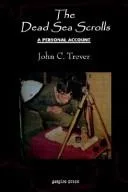
John C. Trever’s The Dead Sea Scrolls offers a solid, if somewhat dated, introduction to the foundational discoveries. Its strength lies in its meticulous presentation of the scrolls’ physical evidence and the narrative of their initial retrieval, a critical aspect often lost in later, more interpretative works. The initial chapters detailing the discovery in the caves near Qumran are particularly compelling, grounding the reader in the tangible reality of these ancient artifacts. However, the work’s 1977 publication date means it predates significant later scholarship and debates that have reshaped our understanding of the scrolls, particularly concerning the precise nature of the Qumran community and its relationship with broader Jewish and early Christian movements. While Trever meticulously lays out the early evidence, the interpretative frameworks have evolved considerably since. Nevertheless, for understanding the initial impact and physical documentation, it remains a valuable reference.
📝 Description
81
John C. Trever's 1977 book presents the Dead Sea Scrolls, a major archaeological find.
John C. Trever's 1977 publication offers an introduction to the Dead Sea Scrolls, a significant archaeological discovery. The book details the physical nature of the ancient manuscripts found near the Dead Sea, the circumstances of their discovery, and the early academic work to interpret their meaning. It covers the diverse contents of the scrolls, including biblical texts, sectarian writings, and other religious documents that illuminate Judaism during the Second Temple era.
This volume is suitable for those beginning studies in ancient Near Eastern religious texts or seeking a comprehensive overview of the scrolls' discovery and importance. It serves as an accessible entry point for students of biblical studies, early Christianity, and Jewish history. Readers interested in the historical setting for the development of religious traditions will find the accounts of the scrolls' origins and contents valuable, especially those who appreciate scholarship based on textual analysis and archaeological evidence.
While not strictly an esoteric text itself, Trever's work engages with materials that have deeply influenced esoteric traditions. The Dead Sea Scrolls, particularly sectarian documents like those attributed to the Essenes, reveal diverse interpretations of Jewish law and messianic expectation during a formative period. These texts have been scrutinized by scholars and mystics alike for insights into early Jewish mysticism, the lineage of spiritual practices, and the historical context of movements that later informed Gnosticism and other mystical paths. Trever's factual presentation thus provides a necessary grounding for understanding the historical backdrop from which such spiritual ideas emerged.
💡 Why Read This Book?
• Understand the initial discovery narrative, learning the specific circumstances of the scrolls' unearthing in the caves near Qumran, a detail crucial for appreciating their historical fragility. • Grasp the fundamentals of paleography, the study of ancient scripts, as Trever explains how scholars began to date and attribute the manuscripts based on handwriting. • Appreciate the early scholarly debates surrounding the Essenes and the Qumran sect, gaining insight into how these ancient texts informed understanding of Second Temple Judaism's diversity.
⭐ Reader Reviews
Honest opinions from readers who have explored this book.
❓ Frequently Asked Questions
When were the Dead Sea Scrolls first discovered?
The Dead Sea Scrolls were first discovered in 1947 by Bedouin shepherds in caves near the ancient settlement of Qumran, on the northwestern shore of the Dead Sea.
What languages are the Dead Sea Scrolls written in?
The vast majority of the Dead Sea Scrolls are written in Hebrew. However, significant portions are also in Aramaic, and a few are in Greek.
Who was John C. Trever and what is his contribution?
John C. Trever was an American scholar and curator who played a key role in the initial identification and study of several of the most important Dead Sea Scrolls, including the Great Isaiah Scroll.
What is paleography in relation to the Dead Sea Scrolls?
Paleography is the study of ancient handwriting. For the Dead Sea Scrolls, it's crucial for dating the manuscripts by analyzing the evolution of scripts and letter forms used by scribes during the Second Temple period.
What is the significance of the Qumran community?
The Qumran community is the settlement near the caves where many scrolls were found. Scholars widely believe it was inhabited by a Jewish sect, possibly the Essenes, who are thought to have produced or collected the scrolls.
Are the Dead Sea Scrolls religious texts only?
While many scrolls are religious, including biblical texts and sectarian documents, the collection also includes legal texts, calendars, and commentaries, offering a broader picture of life and thought during the Second Temple era.
🔮 Key Themes & Symbolism
Textual Preservation & Authenticity
Trever's work emphasizes the astonishing survival of these ancient documents, detailing the physical conditions of the caves and the materials used. The book highlights the painstaking efforts in paleography and textual criticism required to authenticate and date the scrolls, such as the Great Isaiah Scroll. This focus underscores the tangible link to antiquity and the challenges of reconstructing historical religious narratives from fragmented evidence, appealing to those interested in the material reality of esoteric knowledge transmission.
Sectarian Diversity in Second Temple Judaism
The volume explores the implications of the scrolls for understanding the varied range of Jewish belief and practice during the Second Temple period. It introduces the Qumran community and its potential identification with the Essenes, a group known for its distinct interpretations of Jewish law and messianic expectations. This theme provides a lens into how different groups interpreted sacred texts and developed unique theological frameworks, offering insights relevant to comparative mysticism and the formation of religious identities.
The Birth of Biblical Criticism
By presenting the scrolls, Trever's book implicitly engages with the nascent field of biblical criticism in the mid-20th century. The discovery provided exceptional ancient witnesses to the Hebrew Bible, allowing scholars to compare later texts with much earlier versions. This process of comparison, evident in the discussion of textual variations, is fundamental to understanding the historical development of religious scriptures and the methods used to establish their authenticity and lineage, a core concern for esoteric textual scholars.
Archaeological Discovery and Scholarly Response
The narrative of discovery is central, detailing how the scrolls were found and the subsequent international scholarly race to acquire, study, and publish them. Trever's account positions the book within this historical moment, illustrating the excitement and the challenges faced by early researchers. This aspect appeals to those interested in the history of archaeology and the reception of ancient texts, showing how material finds can dramatically shift academic paradigms and public understanding of religious history.
💬 Memorable Quotes
Direct passages from the work, attributed to the author.
“The Great Isaiah Scroll is the only ancient manuscript of a prophetic book...”
— This highlights the singular importance of this specific scroll among the Dead Sea discoveries. It emphasizes its value as a near-complete, ancient witness to a major biblical text, offering exceptional insight into its transmission.
“The manuscripts were found in a series of caves...”
— This simple statement underscores the archaeological context of the discovery. It points to the physical environment that preserved these fragile documents for millennia, connecting the textual content to a specific place and time.
“Scholarly opinion has linked the Qumran community with the Essenes.”
— This reflects a key interpretative hypothesis arising from the scrolls' content. It suggests a specific sectarian identity for the presumed inhabitants of Qumran, influencing understandings of Jewish life and belief in the period.
“Paleography plays a vital role in dating these ancient writings.”
— This points to the critical scientific method used to establish the age of the scrolls. It signifies that dating is not arbitrary but relies on the analysis of script evolution and scribal practices.
“The discovery opened up new avenues for understanding the Hebrew Bible.”
— This statement emphasizes the transformative impact of the scrolls on biblical studies. It indicates that the texts provided new data and perspectives that fundamentally altered previous scholarly conclusions and interpretations.
🌙 Esoteric Significance
Tradition
While not explicitly aligned with a single esoteric lineage, The Dead Sea Scrolls work touches upon traditions that later influenced Hermeticism and Gnosticism through its exploration of sectarian Jewish thought. The emphasis on hidden knowledge, apocalyptic visions, and distinct community rules found within some scrolls speaks to esoteric preoccupations. The potential Essene connection, with their asceticism and scriptural interpretations, aligns with a broader historical current of seeking purer, more direct spiritual understanding outside mainstream religious structures.
Symbolism
The scrolls often contain strong symbolism, though Trever's work focuses more on textual content and discovery. Concepts like the dualistic struggle between light and darkness, prevalent in some sectarian texts, echo Gnostic themes. The meticulous organization and preservation of the scrolls themselves can be seen as symbolic of the enduring nature of sacred knowledge, a core tenet in many esoteric traditions, representing the divine spark hidden within the material world awaiting rediscovery.
Modern Relevance
Contemporary esoteric practitioners and scholars continue to draw from the Dead Sea Scrolls for their insights into early messianic movements, ritual purity laws, and alternative interpretations of biblical prophecy. Thinkers in comparative mysticism and those exploring the roots of Western esotericism find value in the scrolls' evidence of diverse religious expressions during a central historical period. The ongoing study of the scrolls informs discussions on spiritual communities and the transmission of sacred texts in any era.
👥 Who Should Read This Book
• Students of Second Temple Judaism: Individuals seeking to understand the diverse religious range of ancient Israel, including groups like the Essenes and their unique scriptural interpretations. • Early Biblical Scholars: Researchers interested in the textual history of the Hebrew Bible and the earliest manuscript evidence available, providing a baseline for critical analysis. • History of Religions Enthusiasts: Readers fascinated by archaeological discoveries that reshape our understanding of ancient belief systems and the origins of major world religions.
📜 Historical Context
John C. Trever's 1977 publication emerged in the wake of intense scholarly activity surrounding the Dead Sea Scrolls, which began their discovery in 1947. The mid-20th century was a period ripe for such finds, as archaeology and textual studies were increasingly converging to illuminate the history of ancient religions. The scrolls offered an unprecedented window into Judaism during the Second Temple period (c. 516 BCE–70 CE), a time of significant theological ferment and the formative stages of both Rabbinic Judaism and early Christianity. Trever's work was part of a broader effort to synthesize initial findings and make them accessible, following pioneering figures like Eleazar Sukenik and Yigael Yadin. This era also saw ongoing debates with established views on the Hebrew Bible's transmission and the nature of Jewish sects, such as the Essenes, whose connection to the scrolls was a major point of discussion. The reception, while largely positive for its detailed presentation, occurred within a competitive academic environment focused on deciphering and contextualizing these ancient documents.
📔 Journal Prompts
The Qumran community's rules and their implications for modern communal living.
Paleographic analysis: How does the study of ancient handwriting inform our understanding of authenticity?
The Great Isaiah Scroll's significance compared to later biblical manuscripts.
Reflections on the discovery narrative: What does the preservation of these scrolls suggest about human endeavors?
Dualistic concepts in sectarian texts and their echoes in later esoteric thought.
🗂️ Glossary
Second Temple Period
The era in Jewish history from the rebuilding of the Jerusalem Temple by Zerubbabel (c. 516 BCE) until its destruction by the Romans in 70 CE. This period saw diverse religious movements and the development of texts like those found among the Dead Sea Scrolls.
Paleography
The study of ancient handwriting. In the context of the Dead Sea Scrolls, it is essential for dating the manuscripts by analyzing the evolution of scripts, letter forms, and scribal practices.
Qumran
An archaeological site on the northwest shore of the Dead Sea, near the caves where the Dead Sea Scrolls were discovered. It is believed to have been inhabited by a Jewish sect during the Second Temple period.
Essenes
A Jewish ascetic sect that flourished in Judea during the Second Temple period. Many scholars associate the Qumran community with the Essenes, based on textual and archaeological evidence.
Textual Criticism
The scholarly analysis of ancient texts to determine their original wording and identify variations or corruptions. Applied to the Dead Sea Scrolls, it helps reconstruct the earliest forms of biblical and other ancient writings.
Sectarian Documents
Texts found among the Dead Sea Scrolls that are not part of the standard Hebrew Bible but reflect the specific beliefs, rules, and theology of particular Jewish groups, such as the Essenes.
Community Rule (Serekh HaYahad)
A key sectarian document from the Dead Sea Scrolls outlining the laws, organization, and initiation rites of the Qumran community, providing insight into their communal life and ideology.
🔮 Readers Also Liked
Browse all →







More by John C. Trever
All books →

More Free Occult Philosophy Books
View all →