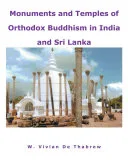
Monuments and Temples of Orthodox Buddhism in India and Sri Lanka
 71
71

Monuments and Temples of Orthodox Buddhism in India and Sri Lanka
W. Vivian De Thabrew’s "Monuments and Temples of Orthodox Buddhism in India and Sri Lanka" offers a much-needed photographic catalog of sacred sites, moving beyond generalized overviews. The author’s direct engagement with the material, evidenced by recent color photographs, provides a fresh perspective on familiar structures. A particular strength lies in the clarity with which the book distinguishes between regional stylistic variations in stupas and temple architecture, a detail often glossed over in broader surveys. However, the accompanying text, while informative, sometimes feels secondary to the visual content, occasionally lacking the depth required to fully contextualize the architectural evolution for a non-specialist audience. The section on the development of Buddhist images, while descriptive, could benefit from deeper engagement with the philosophical underpinnings of iconographic representation. Despite this, the book serves as a valuable visual reference for anyone studying or appreciating the built environment of Orthodox Buddhism.
This work is an indispensable visual atlas for understanding the material culture of Buddhist heritage.
📝 Description
71
W. Vivian De Thabrew’s 2019 book visually documents Orthodox Buddhist monuments in India and Sri Lanka.
This book offers a detailed visual survey of Orthodox Buddhist monuments across India and Sri Lanka. It highlights the diverse architectural styles and characteristics of these sacred sites. Through extensive color photography, the work captures the specific details of Buddhist imagery, stupas (dagobas), and temples. The accompanying text explains the architectural heritage, tracing the origins and evolution of these structures and their iconic representations.
The book is intended for students of religious studies, art history, architecture, and those interested in the physical expressions of Buddhist devotion. It examines the historical development of Buddhist iconography and monumental architecture within India and Sri Lanka. The work notes the transmission and adaptation of styles and practices over centuries, serving as a visual and textual record of this spiritual tradition. The focus is on the tangible heritage that has shaped Buddhist practice and pilgrimage.
Central to the book is an analysis of fundamental Buddhist architectural and iconographic elements. It clarifies the purpose and development of stupas, explaining their role as reliquaries and symbolic representations of the Buddha's enlightenment. The book also considers the evolution of Buddhist sculpture and temple design, providing context for the diverse forms found throughout India and Sri Lanka.
This work situates itself within the contemplative traditions of Orthodox Buddhism, a path emphasizing direct experience and understanding of reality. The focus on monuments and their iconography is not merely academic; it connects the physical forms to the underlying principles of Buddhist cosmology and the path to enlightenment. The book's visual documentation serves as a guide for contemplating the symbolic language embedded in these sacred structures, reflecting their role in supporting meditation and spiritual practice.
💡 Why Read This Book?
• Gain an appreciation for the specific architectural lineages of Buddhist monuments in India and Sri Lanka, as captured through the author's recent photography, offering a visual understanding distinct from purely textual accounts. • Understand the historical trajectory of stupa construction and Buddhist image development, informed by the 2013 publication’s focus on the oldest Buddhist countries. • Identify and differentiate key Buddhist architectural forms like stupas and temples, learning about their origins and stylistic evolution as presented in the book's detailed photographic and textual analysis.
⭐ Reader Reviews
Honest opinions from readers who have explored this book.
❓ Frequently Asked Questions
What is the primary focus of "Monuments and Temples of Orthodox Buddhism in India and Sri Lanka"?
The book is mainly a pictorial work featuring recent color photographs of Buddhist images, stupas (dagobas), and temples in India and Sri Lanka, accompanied by brief text explaining their architectural heritage and development.
Who is the author, W. Vivian De Thabrew?
W. Vivian De Thabrew is the author of "Monuments and Temples of Orthodox Buddhism in India and Sri Lanka," which was first published on July 10, 2013. He is known for his photographic documentation of religious sites.
What makes the photography in this book notable?
The book features recent color photographs taken by the author himself, offering a contemporary visual record of the diverse styles and features of Buddhist monuments across India and Sri Lanka.
Does the book explain the origin of Buddhist images and stupas?
Yes, the accompanying text describes the architectural heritage of Buddhism and explains the origin and development of Buddhist images and stupas found in the featured countries.
Is this book suitable for academic study?
Yes, it serves as a valuable resource for students of religious studies, art history, and architecture, providing a visual and textual overview of Orthodox Buddhist monuments.
What distinguishes this book from other publications on Buddhism?
Its specific focus on the monuments and temples of Orthodox Buddhism in India and Sri Lanka, combined with extensive recent color photography and concise explanations, sets it apart from more general works.
🔮 Key Themes & Symbolism
Architectural Diversity
The work meticulously documents the varied architectural styles of Buddhist monuments across India and Sri Lanka. It highlights how different regions and historical periods have influenced the design of temples, stupas, and the iconography of Buddhist images. The author’s focus on Orthodox Buddhism ensures a deep dive into traditions that have remained relatively consistent, allowing for comparative analysis of subtle yet significant stylistic evolutions.
Iconography and Symbolism
Beyond mere structures, the book explores the meaning embedded within Buddhist imagery and architectural forms. It explains the origin and development of stupas (dagobas) as symbolic representations of the Buddha's enlightenment and relics. The depiction of Buddhist deities and narrative scenes within temples is also addressed, offering insights into the visual language used to convey spiritual teachings and narratives.
Preservation of Heritage
By capturing recent color photographs of these significant sites, the book serves as a vital record of India and Sri Lanka's rich Buddhist architectural heritage. It underscores the importance of these monuments not just as religious artifacts but as crucial elements of cultural history. The work implicitly advocates for the continued study and preservation of these ancient structures for future generations.
Spiritual Geography
The book maps the spiritual range of Orthodox Buddhism by focusing on two of Asia's oldest Buddhist nations. It illustrates how geography has shaped the development and dissemination of Buddhist art and architecture. The comparative approach between Indian and Sri Lankan sites offers a unique perspective on the interconnectedness and distinctiveness within the broader Buddhist world.
💬 Memorable Quotes
Direct passages from the work, attributed to the author.
“The book features recent colour photographs taken in the main by the author of the many different styles and features of Buddhist images, stupas or dagobas and temples.”
— This highlights the author's direct, visual approach, emphasizing the contemporary documentation of ancient Buddhist architectural and iconographic forms across India and Sri Lanka.
“Accompanying the photographs is a brief text describing the magnificent architectural heritage of Buddhism.”
— This indicates that while photography is central, the written content provides essential context, framing the visual evidence within the broader historical and cultural significance of Buddhist structures.
“The text also explains the origin and development of the images and stupas.”
— This points to the book's educational value, offering insights into the historical evolution and foundational concepts behind key elements of Buddhist art and architecture.
“Very little has been published specifically on these subjects in a single work.”
— This statement underscores the book's unique contribution by consolidating information and imagery on Buddhist monuments in India and Sri Lanka into one comprehensive volume, addressing a perceived gap in existing literature.
“The work focuses on the two oldest Buddhist countries in Asia.”
— This specifies the geographical and historical scope, directing the reader's attention to the foundational regions for Buddhist tradition and its material manifestations.
🌙 Esoteric Significance
Tradition
While Orthodox Buddhism itself is not typically categorized within Western esoteric traditions like Hermeticism or Kabbalah, this work engages with Buddhist iconography and architecture, which possess profound symbolic and contemplative dimensions. Its relevance to esoteric study lies in its detailed presentation of visual forms that have been historically interpreted through allegorical and meditative lenses in various Buddhist schools, including those that inform certain Theosophical or Anthroposophical understandings of Eastern spirituality.
Symbolism
The stupa, or dagoba, is a central symbol, representing the Buddha's enlightened mind and the path to Nirvana. Its architectural components, from the base to the spire, are often imbued with cosmological significance. Buddhist images, such as the serene Buddha depictions or wrathful deities in Mahayana traditions, serve as focal points for meditation, embodying specific virtues or cosmic principles, and their iconography is rich with symbolic meaning related to enlightenment and spiritual power.
Modern Relevance
Contemporary practitioners of mindfulness and contemplative arts, along with scholars of comparative religion and symbology, can draw from this work. Those interested in the physical embodiment of spiritual ideals, or in understanding the visual language that has guided centuries of Buddhist devotion, will find the detailed photographic evidence important for contemporary study and practice.
👥 Who Should Read This Book
['• Students of Buddhist art and architecture: Gain access to a curated collection of high-quality photographs and concise explanations of key monuments in India and Sri Lanka.', '• Religious studies scholars: Utilize the book as a visual reference for understanding the material culture and historical development of Orthodox Buddhism in its foundational regions.', '• Travelers and pilgrims: Enhance your appreciation and understanding of the sacred sites you visit with detailed visual and textual information about their significance and design.']
📜 Historical Context
Published in 2013, W. Vivian De Thabrew's work emerges at a time when scholarly and popular interest in Buddhist art and architecture remains strong, yet accessible, visually rich syntheses are less common. The book enters a field populated by detailed academic studies and broader surveys, seeking to occupy a niche with its focused photographic approach to Orthodox Buddhist sites in India and Sri Lanka. Its publication date places it in an era where digital photography and online dissemination are prevalent, making its emphasis on physical print and author-led photography a deliberate choice. While not engaging directly with contemporary theoretical debates in art history or religious studies, the work implicitly supports the ongoing scholarly project of documenting and understanding Buddhist material culture, a field influenced by scholars like Ananda Coomaraswamy who explored Buddhist iconography earlier in the 20th century. Reception of such works often hinges on their utility as visual resources for both academic and amateur enthusiasts.
📔 Journal Prompts
The architectural evolution of stupas as depicted across India and Sri Lanka.
The stylistic variations in Buddhist images presented in the book's photographic collection.
The significance of temple design in conveying Orthodox Buddhist teachings.
The author's photographic approach to documenting Buddhist monuments.
The relationship between the physical structure of a dagoba and its symbolic meaning.
🗂️ Glossary
Stupa (Dagoba)
A mound-like or hemispherical structure containing Buddhist relics, serving as a place of worship and meditation. Dagoba is the Sinhalese term, commonly used in Sri Lanka.
Orthodox Buddhism
Refers to Buddhist traditions that adhere closely to the earliest teachings and practices, often contrasted with later developments or reform movements. In this context, it emphasizes the long-standing traditions in India and Sri Lanka.
Iconography
The visual images and symbols used in the study or representation of sacred subjects, particularly in religious art. It involves the identification, description, and interpretation of the meaning of these images.
Architectural Heritage
The collection of historical buildings, structures, and sites that represent the artistic, cultural, and technological achievements of past civilizations, particularly in the context of religious or spiritual practices.
Buddhist Images
Sculptural or pictorial representations of the Buddha, bodhisattvas, deities, or narrative scenes used in Buddhist worship, meditation, and teaching. Their style and form vary significantly by region and historical period.
Color Photographs
Images captured using color film or digital sensors, providing a realistic representation of hues and tones. In this book, they are used to document the visual details of Buddhist monuments.
Temples
Buildings or structures dedicated to religious or spiritual activities. In Buddhism, temples often house images, relics, and serve as centers for community worship and monastic life.






![Tales of Mystery and Imagination [29 stories]](/img/thumb/tales-of-mystery-and-imagination-29-stories-edgar-allan-poe-397462.webp)