Just So Stories

 83
83

Just So Stories
Kipling's "Just So Stories" offers a unique literary confection, a playful yet insightful exploration of origins. The strength lies in its linguistic virtuosity and the sheer inventiveness of its narrative premises. For instance, the tale of the 'Cat who Walked by Herself' brilliantly uses anthropomorphism to explore independence and societal contracts, a concept that can be read through a proto-feminist lens. However, the book is not without its limitations. Some of the explanations, particularly concerning the development of the alphabet in 'The Sing-Song of Old Man Kangaroo,' can feel strained, relying on a whimsical logic that might frustrate those seeking straightforward etymology. Despite this, the power of Kipling's prose, especially in passages describing the primordial world in 'The Elephant's Child,' remains potent. The work serves as an engaging, if sometimes idiosyncratic, primer on how humans have historically sought to explain the world through narrative.
📝 Description
83
Rudyard Kipling published 'Just So Stories' in 1902, offering imaginative explanations for animal traits.
First appearing in 1902, Rudyard Kipling's 'Just So Stories for the Youngest of Readers' presents a series of inventive origin myths. These tales humorously explain how animals and natural phenomena acquired their present characteristics. The narratives, while whimsical and anthropomorphic, engage with ideas of cause and effect, adaptation, and the underlying logic of the natural world, all framed within fantasy. Kipling's distinctive rhythmic prose and original vocabulary contribute to a unique literary experience.
This collection appeals to readers of any age who enjoy sophisticated narratives that connect myth and natural history. It is particularly suited for those curious about the origins of language, the development of animal features, and the imaginative roots of scientific thought. Readers who appreciate clever wordplay and creative storytelling will find much to enjoy. Educators can also use these engaging stories to introduce concepts of etymology and comparative mythology.
Published in 1902, 'Just So Stories' taps into a cultural moment where scientific ideas like Darwinian evolution intersected with a renewed interest in global folklore. Kipling's work can be seen as engaging with an esoteric tradition of creating elaborate origin narratives, similar to those found in comparative mythology. The stories' focus on how things 'came to be,' and the notion of 'magic words' shaping reality, echoes themes found in various occult and philosophical systems that explore the fundamental nature of existence and the power of spoken intent.
💡 Why Read This Book?
• You will learn how Rudyard Kipling, through the 'magic words' of his narrative, explains the origins of animal features, offering a unique perspective on adaptation that goes beyond scientific textbooks, as seen in 'The Elephant's Child.' • You will feel the power of linguistic invention as Kipling crafts rhythmic tales that explore the relationship between sound and meaning, particularly in the story 'How the First Letter Was Written.' • You will gain an appreciation for early 20th-century attempts to reconcile scientific discovery with myth-making, understanding how works like this engaged with concepts of evolution and folklore, exemplified by its publication in 1902.
⭐ Reader Reviews
Honest opinions from readers who have explored this book.
❓ Frequently Asked Questions
What is the historical publication date of Rudyard Kipling's Just So Stories?
Rudyard Kipling's "Just So Stories for the Youngest of Readers" was first published in 1902, a period of significant scientific and cultural change.
What kind of explanations does Just So Stories offer for animal characteristics?
The book offers imaginative, anthropomorphic origin myths that explain how animals and natural phenomena acquired their distinct features, often through a series of whimsical events and choices.
Are Just So Stories considered esoteric literature?
While not explicitly occult, their exploration of primal origins, 'magic words,' and the symbolic explanation of natural phenomena gives them an esoteric resonance for some readers.
Who are the key characters or figures in Just So Stories?
Key figures include the 'Eldest Ones,' primal forces, and the various animals whose origins are explained, such as the Elephant's Child, the Leopard, and the Cat who walked by herself.
What literary style is used in Just So Stories?
Kipling employs his signature rhythmic prose, inventive neologisms, and a playful, often anthropomorphic narrative voice, making the stories distinct and memorable.
What is the significance of 'magic words' in Just So Stories?
In the stories, 'magic words' possess a creative or transformative power, capable of influencing events and shaping the reality of the characters, reflecting an ancient belief in the potency of language.
🔮 Key Themes & Symbolism
The Power of Language
The stories consistently highlight the potency of words, particularly 'magic words,' which possess the ability to effect change and define existence. This echoes esoteric traditions where the spoken or written word is seen as a creative force. In 'How the First Letter Was Written,' the invention of writing itself is framed as a monumental act of power, enabling communication across distance and time. This theme suggests a belief in the inherent magical quality of language, where naming and describing can shape reality.
Primal Origins and Transformation
At their core, the 'Just So Stories' are origin myths explaining the 'why' and 'how' of the natural world. They depict a primordial state and trace the transformations that led to the present forms of animals and natural phenomena. This process often involves interaction with ancient, elemental forces or 'Eldest Ones,' suggesting a belief in a foundational, almost divine, order from which all things emerged. The narrative structure itself mimics the act of creation, moving from chaos to defined form.
The Logic of Nature
Despite their fantastical elements, the stories often present a kind of internal logic governing the natural world and animal behavior. The adaptations of animals are frequently explained as responses to environmental pressures or social contracts, albeit anthropomorphized. For example, the Elephant's Child's trunk develops as a tool to reach food, and the Leopard's spots serve as camouflage. This reflects an underlying respect for the inherent order and evolutionary processes at play in the world, presented through a narrative lens.
Independence and Societal Roles
The concept of individual autonomy versus societal belonging is explored, most notably in 'The Cat who Walked by Herself.' The Cat insists on her independence, negotiating her terms of association with humans and animals. This narrative touches upon themes of self-determination and the establishment of boundaries, which can be interpreted as exploring the individual's place within a larger cosmic or social order, a common concern in philosophical and esoteric thought.
💬 Memorable Quotes
Direct passages from the work, attributed to the author.
“And so, from that day forward, all crocodiles had that wide, heaving, gasping mouth.”
— This concluding statement from 'The Crocodile' illustrates the narrative's function: to provide a mythic explanation for a physical characteristic. It posits a specific, albeit fantastical, event that permanently altered the crocodile's appearance, cementing its origin story.
“The Elephant's Child had great big, mean, long, tall, cool, wet, watery, whangly ears.”
— This descriptive exaggeration from 'The Elephant's Child' showcases Kipling's playful use of language to emphasize a character's developing features. It's a prime example of how the stories use hyperbole and rhythmic phrasing to create memorable imagery.
“It was the best way to learn.”
— This concise statement, often implied or stated in various contexts, underscores the educational, albeit unconventional, nature of the narratives. It suggests that the unique, often arduous, experiences of the characters are the most effective means of acquiring knowledge and understanding.
“And the Cat said, 'Truly, my Lord, I am sorry, but I cannot come. I am walking by myself.'”
— This declaration from 'The Cat who Walked by Herself' expresses the theme of individual agency. The Cat prioritizes her autonomy over immediate comfort or societal expectation, demonstrating a fundamental aspect of her character and the story's message.
💡 Key Ideas
Editorial paraphrase of the work's core concepts — not direct quotes.
We are all beginning of the First Cat's Cat. We walk by Ourselves, and we go our own soft little ways, and we do not hang on the door-posts any more.
This paraphrase from 'The Cat who Walked by Herself' highlights the enduring legacy of primal independence. It suggests that the inherent nature of cats, their self-sufficiency and solitary tendencies, are a direct inheritance from their earliest ancestors who established their autonomy.
🌙 Esoteric Significance
Tradition
While not overtly occult, "Just So Stories" aligns with esoteric traditions that emphasize the power of narrative and symbolic interpretation to understand the cosmos. The concept of 'magic words' and the explanation of origins through primal forces echo Gnostic and Hermetic ideas about the Logos and the creative power of divine utterance. The anthropomorphic explanations of natural phenomena can be seen as a form of sympathetic magic, where understanding the story of creation brings one closer to its essence.
Symbolism
Key symbols include the 'Eldest Ones,' representing the primordial forces of creation, and the 'Great Mother,' symbolizing nature's nurturing and transformative power. The transformation of animals—the Elephant's Child's trunk, the Leopard's spots, the Camel's hump—serves as potent symbols of adaptation and the consequences of action or inaction, reflecting a universal principle of cause and effect inherent in many esoteric philosophies. The very act of storytelling becomes symbolic of the human drive to impose order and meaning on the universe.
Modern Relevance
Contemporary thinkers and practitioners in fields like ecopsychology and animism find resonance in Kipling's personification of nature and his exploration of humanity's relationship with the animal kingdom. The stories' emphasis on the inherent logic and narrative embedded within the natural world appeals to those seeking to decolonize their understanding of science and embrace more holistic, mythopoetic worldviews. Modern mythologists and literary critics continue to analyze the work's mix of scientific curiosity and imaginative storytelling.
👥 Who Should Read This Book
• Curious minds seeking imaginative explanations for natural phenomena: Readers who enjoy understanding the 'why' behind animal traits and natural occurrences through captivating, anthropomorphic tales. • Students of comparative mythology and folklore: Those interested in how cultures have historically constructed origin stories and myths to explain the world around them. • Lovers of linguistic play and rhythmic prose: Readers who appreciate masterful use of language, inventive vocabulary, and the musicality of narrative, finding joy in Kipling's unique storytelling style.
📜 Historical Context
Rudyard Kipling's "Just So Stories," published in 1902, arrived during a vibrant period of intellectual ferment. The late Victorian and Edwardian eras saw a surge in both scientific rationalism, particularly Darwinian evolution, and a concurrent fascination with folklore and comparative mythology, exemplified by scholars like Sir James George Frazer. Kipling's work engages with this duality by offering fantastical explanations for natural phenomena that, at their root, often touch upon principles of adaptation and cause-and-effect. His contemporaries included H.G. Wells, who was also exploring scientific themes in fiction, and Arthur Conan Doyle, known for his rational detective stories. While "Just So Stories" was generally well-received for its wit and imagination, its anthropomorphic approach to origins might have been viewed by some as a charming counterpoint to more rigorous scientific explanations. The book's success cemented Kipling's status as a master storyteller for all ages.
📔 Journal Prompts
The Elephant's Child's insatiable curiosity and its consequences.
The concept of 'magic words' and their role in shaping reality.
The Cat's insistence on walking by herself and its implications.
The transformation of animal forms as explained by the Eldest Ones.
The invention of the first letter and its impact on communication.
🗂️ Glossary
Eldest Ones
In the context of the 'Just So Stories,' these are primal, ancient beings or forces embodying the fundamental laws and elements of the early world. They often serve as arbiters or creators in the origin myths.
Magic Words
Specific utterances or phrases within the stories that possess inherent power to influence events, grant abilities, or effect transformation, reflecting a belief in the potency of language.
Anthropomorphism
The attribution of human characteristics, emotions, and behaviors to animals or other non-human entities, a primary narrative technique used by Kipling in these stories.
Origin Myth
A symbolic narrative explaining the cosmological origins of the universe, humanity, animals, or natural phenomena, often involving supernatural beings or events.
Neologism
The creation or invention of new words or phrases, a technique Rudyard Kipling frequently employed to enrich his narrative style and add unique flavor to his stories.
Sympathetic Magic
A form of magic based on the principle that like produces like, or that a cause affects its distant effects. In the stories, explaining an origin can be seen as a symbolic act of connecting with that origin.
Primordial
Existing at or from the beginning of time; primeval. The stories often describe a primordial state of the world before its current form was established.
🔮 Readers Also Liked
Browse all →








More by Rudyard Kipling
All books →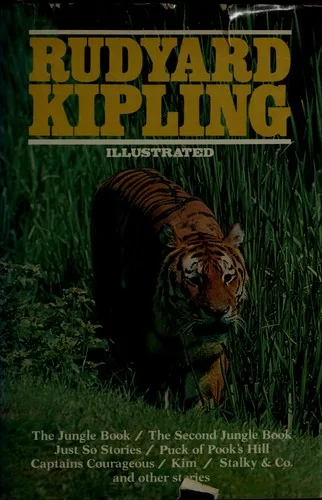





More Free Occult Philosophy Books
View all →