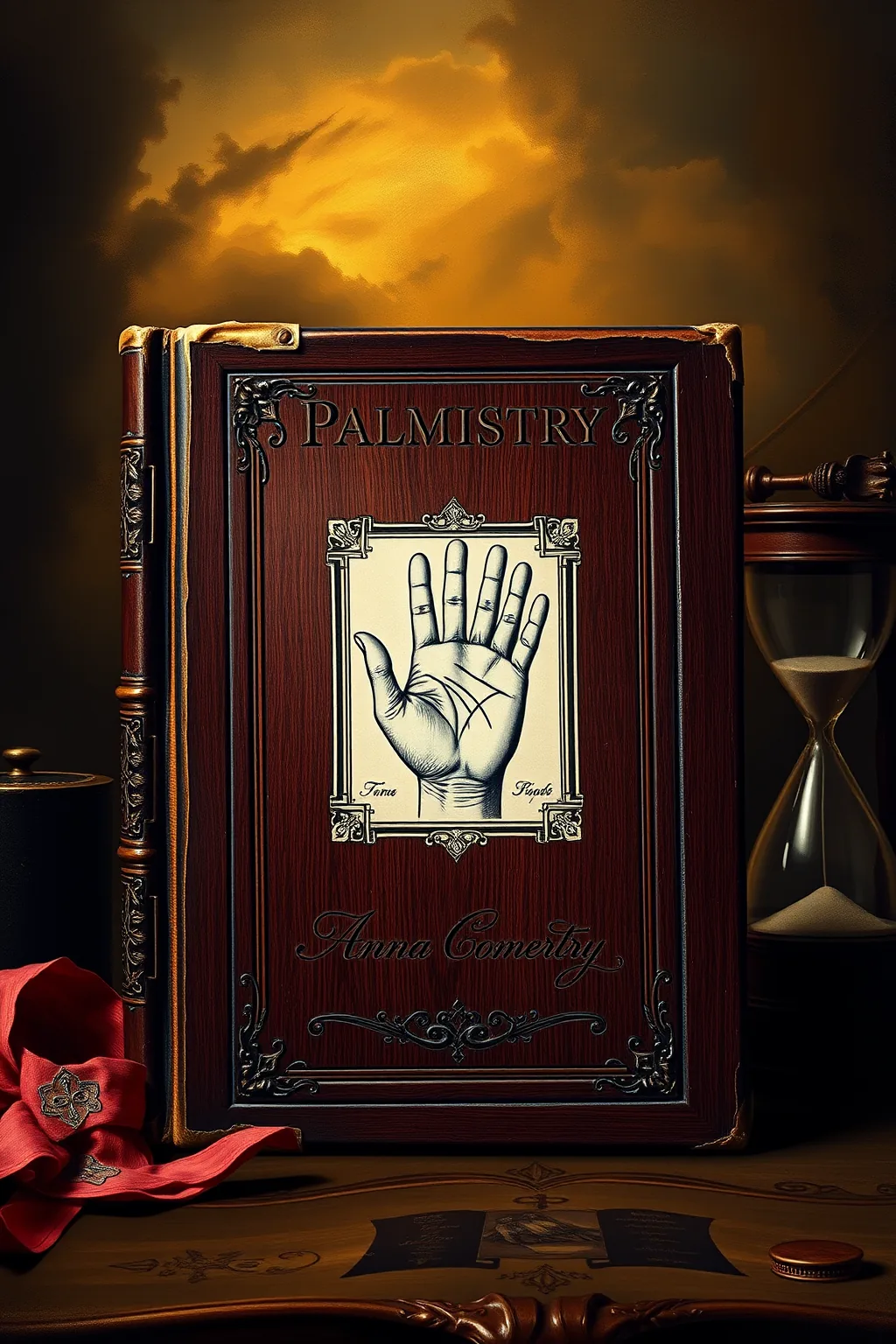
Palmistry
 84
84

Palmistry
Anna Comerford's 'Palmistry' endeavors to bridge the gap between the esoteric tradition and practical application, a commendable goal. The integration of hand reflexology and chakra theory is particularly strong, offering a fresh lens on well-trodden ground. However, the section on increasing psychic energy feels somewhat generalized, lacking the specific, actionable advice one might hope for after engaging with the more detailed palmographic elements. The discussion of the Life Line, for instance, is clear and grounded in established practice, providing a solid foundation. Comerford's approach is accessible, though it occasionally leans towards a somewhat clinical tone when discussing the more subtle energetic aspects. It is a competent, if not revolutionary, addition to the palmistry bookshelf.
📝 Description
84
Anna Comerford's 2021 'Palmistry' reinterprets ancient chiromancy for today.
Anna Comerford's 'Palmistry' provides a thorough guide to reading hands, moving past simple line interpretations. The book views the hand as a complete chart of a person's abilities and current energy. Comerford blends old palmistry methods with modern ideas, intending to give readers the tools for readings that use intuition and focus on the heart.
This book suits people interested in palm reading, whether for personal insight or a career. It will also appeal to those who practice other esoteric arts like energy healing or chakra work and want to see how these connect to the hand. Comerford's work examines major and minor hand lines, mounts, finger forms, and palm designs. It also covers hand reflexology, how chakras appear on the palm, and meridian pathways in relation to hand features.
Palmistry has ancient roots, with major developments occurring during the Renaissance and a revival in the late 19th and early 20th centuries. This period saw palmistry gain traction alongside movements like Spiritualism and Theosophy. Comerford's 2021 book engages with this historical tradition, updating classical palmistry interpretations for a contemporary readership. It connects the physical hand to broader energetic systems and personal potential.
💡 Why Read This Book?
• Gain a foundational understanding of palmistry, learning to identify key lines and mounts, as detailed in the book's early chapters on hand anatomy. • Explore the intersection of palmistry with chakra and meridian systems, understanding how energetic blockages might manifest on the hand, as discussed in the section on chakras and meridians. • Develop a more intuitive approach to reading, learning techniques to enhance psychic energy for heart-based interpretations, as outlined in the chapters focusing on intuitive development.
⭐ Reader Reviews
Honest opinions from readers who have explored this book.
❓ Frequently Asked Questions
When was Anna Comerford's 'Palmistry' first published?
Anna Comerford's 'Palmistry' was first published on March 8, 2021, making it a contemporary guide to this ancient practice.
What are the main subjects covered in 'Palmistry' by Anna Comerford?
The book covers traditional palmistry, modern techniques, hand reflexology, chakra and meridian systems, and methods for increasing psychic energy for intuitive readings.
Is 'Palmistry' suitable for absolute beginners?
Yes, the book is designed to create a strong foundation for palm readings, making it suitable for those new to the subject as well as those seeking to refine their skills.
Does the book discuss the scientific basis of palmistry?
The book mentions science in relation to palmistry, exploring how concepts like hand reflexology connect to the practice.
How does this book differ from other palmistry guides?
It differentiates itself by integrating hand reflexology, chakra theory, and meridian pathways, alongside techniques to enhance psychic energy for more accurate, heart-based readings.
What is the author's approach to teaching palmistry?
Anna Comerford aims to teach palmistry for both personal use and professional client readings, emphasizing a foundation in traditional and modern techniques for intuitive interpretation.
🔮 Key Themes & Symbolism
Holistic Hand Mapping
Comerford presents the hand not just as a collection of lines, but as a complex map reflecting an individual's entire being. The work explores how major and minor lines, finger shapes, and palm mounts interrelate to depict personality traits, life path potentials, and energetic blockages. This holistic approach encourages readers to see the hand as a dynamic interface between the physical and the subtle bodies, moving beyond simple fortune-telling to a deeper form of self-understanding and energetic assessment.
Integration of Esoteric Systems
A significant aspect of 'Palmistry' is its innovative integration of diverse esoteric systems. The book bridges classical palmistry with concepts from hand reflexology, the chakra system, and traditional meridian energy pathways. This interdisciplinary approach allows for a richer interpretation, suggesting how imbalances in one system might be mirrored or understood through the features of the hand, offering a multi-layered diagnostic and therapeutic perspective.
Developing Intuitive Reading
Beyond the technical aspects of line and mount interpretation, Comerford places emphasis on cultivating intuitive abilities. The book guides readers on how to increase their psychic energy, fostering a connection that allows for more accurate and heart-centered readings. This focus on energetic cultivation aims to transform the practice of palmistry from a purely analytical skill into a deeply empathetic and insightful form of communication.
Modern Palmistry Practice
Published in 2021, 'Palmistry' offers a contemporary perspective on an ancient art. It balances traditional knowledge with modern psychological and energetic understandings, making it relevant for today's practitioners and self-explorers. The book addresses how to apply these insights both for personal growth and for professional client work, providing a practical framework for contemporary esoteric practitioners.
💬 Memorable Quotes
Direct passages from the work, attributed to the author.
“The hand is a mirror of the soul's journey, reflecting both challenges and potentials.”
— This interpretation highlights the book's view of palmistry as a tool for self-discovery, suggesting that the lines and patterns on the hand are not fixed destinies but rather symbolic representations of an individual's inner landscape and life path.
“Chakras and meridians offer a vital energetic overlay to physical hand analysis.”
— This highlights the book's integration of Eastern energetic concepts into Western palmistry. It suggests that a comprehensive reading involves assessing not only the lines but also the energetic centers and pathways as they relate to the hand's features.
“Cultivating psychic energy is key to heart-based, intuitive palmistry.”
— This interpretation focuses on the development of the reader's inner faculties. It suggests that true insight in palmistry comes not just from knowledge, but from an attuned energetic state that allows for empathetic and accurate perception.
💡 Key Ideas
Editorial paraphrase of the work's core concepts — not direct quotes.
Understanding hand reflexology enhances the accuracy of palm readings.
This paraphrased concept emphasizes the book's unique approach, linking the well-established practice of reflexology to palmistry. It implies that by recognizing corresponding points on the hand, one can gain deeper insights into physical and energetic well-being.
Modern techniques complement traditional palmistry for a richer interpretation.
This paraphrased concept underscores the book's balanced approach, indicating that it respects the historical foundations of palmistry while incorporating newer methods and perspectives to provide a more comprehensive and nuanced understanding.
🌙 Esoteric Significance
Tradition
Comerford's 'Palmistry' engages with the Hermetic and Neo-Platonic traditions, which view the human body, including the hand, as a microcosm reflecting the macrocosm. It extends beyond simple divinatory practices to incorporate principles found in energetic healing modalities, echoing the holistic philosophies of Theosophy and modern New Age thought that seek to unify physical, mental, and spiritual aspects of being.
Symbolism
Key symbols in the work include the major hand lines (Life, Head, Heart) which represent fundamental aspects of vitality, intellect, and emotion. The mounts (Venus, Jupiter, Saturn, etc.) symbolize different archetypal energies and potentials. Furthermore, the book integrates symbols from the chakra system, interpreting hand features in relation to energy centers, and meridian pathways, linking palmistry to the flow of vital energy (Qi/Prana).
Modern Relevance
Contemporary practitioners of energy medicine, holistic psychology, and intuitive development often draw upon works like Comerford's. Her integration of hand reflexology and chakra theory appeals to modern wellness movements that seek complementary approaches to health and self-awareness. Thinkers exploring embodied cognition and the body's role in consciousness may also find value in the book’s perspective on the hand as a map of inner states.
👥 Who Should Read This Book
['• Aspiring palm readers seeking a structured introduction that combines historical methods with contemporary energetic concepts.', '• Holistic wellness practitioners interested in expanding their diagnostic tools by integrating hand reflexology and chakra analysis.', '• Individuals engaged in self-discovery and personal growth who wish to understand their potential and energetic patterns through the lens of the hand.']
📜 Historical Context
Palmistry, or chiromancy, has a history stretching back millennia, with significant codifications appearing in ancient India and Greece. Its popularity surged during the European Renaissance, particularly with Johann Christoph Wagenseil’s *ChiroLogia* (1665), which attempted a more systematic approach. The late 19th and early 20th centuries saw a resurgence, fueled by the Theosophical movement and figures like Cheiro (William John Warner), who popularized palmistry as a form of psychological analysis and spiritual insight. This period also saw palmistry positioned alongside other esoteric practices like astrology and tarot, often facing skepticism from mainstream science. Anna Comerford’s 2021 work, 'Palmistry,' arrives in an era where renewed interest in esoteric traditions coexists with a demand for practical, integrated knowledge, building upon this rich, albeit sometimes controversial, lineage.
📔 Journal Prompts
The Life Line's curvature and depth: what energetic patterns does it suggest for your vitality?
Reflect on the Mount of Venus: how does its prominence correlate with your expressions of love and desire?
Consider the intersection of your Head Line and Heart Line: what insights emerge about your emotional logic?
Analyze the symbolism of your major hand lines in relation to the energetic flow of chakras.
Explore the concept of hand reflexology: which palm areas correspond to zones of tension you currently experience?
🗂️ Glossary
Chiromancy
The practice of reading palms to interpret character and predict future events, an ancient art with a long history across various cultures.
Hand Reflexology
A practice that applies reflexology principles to the hands, believing that specific points on the hands correspond to different organs and body systems.
Chakras
Energy centers within the subtle body, traditionally associated with yoga and Eastern spiritual practices, which are believed to influence physical and emotional well-being.
Meridians
Pathways in traditional Chinese medicine through which vital energy (Qi) is believed to flow, influencing health and bodily functions.
Psychic Energy
An esoteric concept referring to the subtle or intuitive energy that practitioners believe can be cultivated to enhance perception and connection during readings.
Mounts
The fleshy pads at the base of the fingers and palm on a hand, each named after a planet or classical deity, believed to represent specific personality traits and potentials.
Heart Line
The uppermost horizontal line on the palm, typically running across the palm below the fingers, often interpreted as relating to emotional capacity, relationships, and heart health.