The Spirit Transcendent
 77
77

The Spirit Transcendent
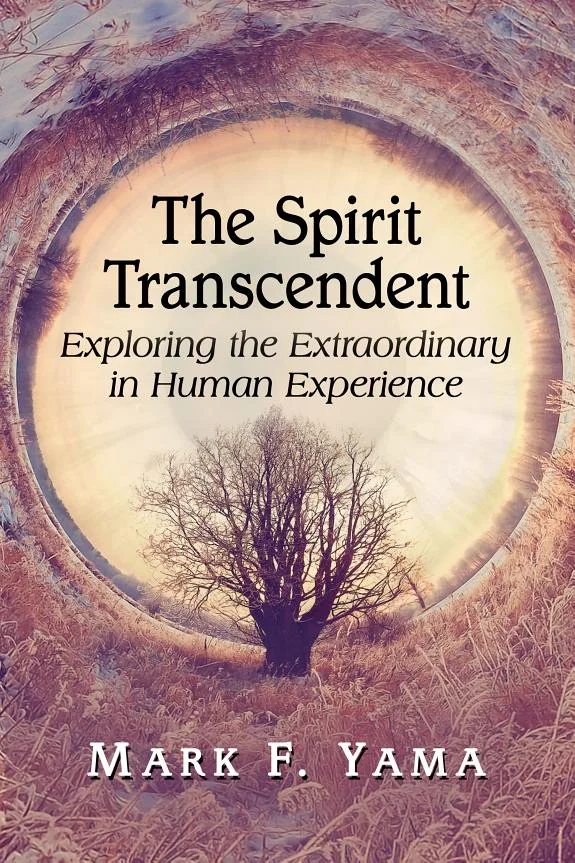
Mark F. Yama’s "The Spirit Transcendent" offers a courageous counterpoint to the prevailing skeptical scientific narrative surrounding direct spiritual experience. Instead of shying away from accounts of visionary states, Yama, a practicing clinical psychologist, foregrounds them, arguing they reveal a coherent spiritual reality. The strength of the book lies in its grounding of these profound claims in clinical observation, moving beyond mere philosophical speculation. One particularly striking passage details the experience of a patient who perceived the future, illustrating Yama's assertion that such visions are not random neurological events but manifestations of an ordered spiritual plane. A limitation, however, might be the occasional reliance on anecdotal evidence, which, while compelling, may not satisfy staunch materialists. Nevertheless, Yama’s work provides a vital psychological framework for understanding phenomena often relegated to the fringes of discourse. It is a significant contribution to the literature exploring the bridge between subjective experience and objective reality.
📝 Description
77
Mark F. Yama's 2020 book, The Spirit Transcendent, challenges the scientific dismissal of spiritual experiences.
Clinical psychologist Mark F. Yama's book, The Spirit Transcendent, questions the standard scientific view that dismisses spiritual experiences. Instead of labeling visions of heaven or encounters with angelic beings as mere hallucinations, Yama, drawing on his extensive clinical practice, suggests a unified spiritual reality that exists apart from the material world. The book uses case studies to show this underlying order.
This work is for individuals who question the nature of consciousness, have had experiences that resist materialistic explanations, or are interested in the connections between psychology and spirituality. It offers a framework that validates direct spiritual encounters, moving beyond purely empirical or reductionist perspectives. Yama's work engages with thinkers who have tried to connect subjective spiritual experience with objective observation, like William James.
Published in 2020, The Spirit Transcendent enters a field where neuroscience, psychology, and metaphysical study increasingly overlap. Yama's research connects with a historical line of thought that seeks to bridge subjective spiritual encounters and objective observation. This tradition includes figures such as William James, who studied religious experience around the turn of the 20th century. The book provides a contemporary psychological viewpoint distinct from earlier, more religiously focused explanations.
💡 Why Read This Book?
• Gain a psychological framework for understanding spiritual experiences, moving beyond simplistic explanations of hallucination, as demonstrated by Yama's analysis of patient accounts like seeing the future. • Explore the concept of a unifying spiritual reality that exists apart from the material world, supported by clinical case studies presented in the book. • Understand how direct spiritual encounters, previously dismissed by traditional science, can be interpreted as valid expressions of consciousness, referencing the work's challenge to empirical reductionism.
⭐ Reader Reviews
Honest opinions from readers who have explored this book.
❓ Frequently Asked Questions
What is the primary argument of Mark F. Yama's "The Spirit Transcendent"?
The book argues that direct spiritual experiences, such as visions or encounters with spiritual beings, are not mere hallucinations but indicate a genuine, unifying spiritual reality that is distinct from the material world.
What is the author's background and how does it inform the book?
Mark F. Yama is a clinical psychologist. His background allows him to approach accounts of spiritual experiences through a lens of psychological observation and interpretation, rather than purely theological or skeptical viewpoints.
What kind of evidence does "The Spirit Transcendent" present?
The book primarily presents evidence through interviews and case studies with Yama's patients, detailing their direct spiritual experiences and his psychological interpretations of them.
Does the book offer a specific methodology for accessing spiritual reality?
While the book focuses on interpreting existing experiences, it implicitly suggests that direct spiritual experiences, when understood correctly, can serve as pathways to perceiving this transcendent reality.
How does Yama's work contrast with traditional scientific views?
Yama directly contrasts with traditional science, which often labels spiritual experiences as delusions. He proposes that these experiences are evidence of a deeper, spiritual order rather than psychological disorders.
When was "The Spirit Transcendent" first published?
"The Spirit Transcendent" by Mark F. Yama was first published on March 26, 2020.
🔮 Key Themes & Symbolism
Spiritual Experience as Valid Reality
Yama challenges the reductionist view that spiritual experiences are solely neurological events or delusions. He asserts that direct encounters with a spiritual dimension, whether visions of heaven or meetings with angelic figures, point to an authentic, non-material reality. The book examines the phenomenology of these states, suggesting they possess an internal coherence and informational content that transcends ordinary material perception. This theme is crucial for readers who have had such experiences and felt they were invalidated by conventional thought.
The Unifying Spiritual Plane
A central concept is the existence of a unified spiritual reality that underlies and connects diverse individual experiences. Yama proposes that behind the varied narratives of spiritual encounters lies a single, ordered spiritual plane. This perspective offers a way to synthesize seemingly disparate mystical accounts into a coherent whole, suggesting a universal spiritual substrate accessible through direct experience. The work implies that understanding this plane can lead to a more integrated view of consciousness.
Psychology and the Transcendent
This theme explores the role of clinical psychology in understanding and validating spiritual phenomena. Yama, as a psychologist, uses his professional expertise to bridge the gap between psychological science and esoteric experience. He argues that psychological frameworks can be expanded to encompass these profound subjective states, demonstrating that they are not necessarily pathological. The book highlights how clinical insights can illuminate the nature of consciousness and its potential for accessing realities beyond the physical.
Phenomenology of Spiritual States
The book examines the subjective qualities and characteristics of various spiritual experiences. This includes examining the sensory, emotional, and cognitive aspects reported by individuals. By detailing these phenomena, Yama aims to establish their distinct nature and their potential to reveal truths about existence. The focus on the lived experience of the individual, as reported in clinical settings, serves as the primary evidence for the existence of a transcendent realm.
💬 Memorable Quotes
Direct passages from the work, attributed to the author.
“What are we to make of direct spiritual experience?”
— This question sets the stage for the book's central inquiry, challenging readers and science alike to consider the validity and meaning of encounters that fall outside empirical norms.
“Traditional science would call these hallucinations or delusions.”
— This highlights the conflict between conventional scientific paradigms and anomalous subjective experiences, framing the book as a direct challenge to materialistic explanations.
“Dr. Mark Yama argues the opposite.”
— This positions Yama as a contrarian voice within clinical psychology, advocating for a serious consideration of spiritual experiences as evidence of a deeper reality.
“Through interviews with his patients, he shows that underneath the visions and experiences there is a unifying spiritual reality apart from the material world.”
— This expresses the core thesis: that subjective spiritual phenomena are not random but indicative of an ordered, non-material dimension that can be accessed and understood.
“One of the stories recounted in this book is the experience of a woman who could see the future.”
— This specific anecdote serves as a concrete example of the extraordinary phenomena discussed, illustrating the book's commitment to exploring the diverse manifestations of spiritual experience.
🌙 Esoteric Significance
Tradition
While not explicitly aligning with a single named tradition like Hermeticism or Gnosticism, "The Spirit Transcendent" speaks to the broader esoteric endeavor to validate and explore non-ordinary states of consciousness. It reflects the perennial philosophy's idea that diverse spiritual experiences point to a common, underlying reality. Yama's work departs from traditional esoteric texts by framing its arguments through modern clinical psychology, seeking to reconcile subjective spiritual insights with empirical observation, thereby offering a bridge between esoteric knowledge and contemporary scientific discourse.
Symbolism
The book does not heavily rely on specific esoteric symbols but focuses more on the direct experience itself as a form of revelation. However, the concept of 'seeing the future' as described in one patient's account can be interpreted symbolically as a metaphor for expanded perception or clairvoyance, often explored in traditions like Hermeticism and various forms of divination. The idea of a 'unifying spiritual reality' itself functions as a potent symbol for wholeness and interconnectedness, a concept found across many mystical traditions, suggesting an ultimate ground of being.
Modern Relevance
Yama's work is highly relevant to contemporary thinkers and practitioners interested in consciousness, psychology, and spirituality. It speaks to modern discussions in fields like transpersonal psychology and integral theory, which seek to integrate spiritual and transcendent experiences into a broader understanding of human potential. Contemporary researchers exploring altered states of consciousness, psychedelic-assisted therapy, and the neuroscience of meditation may find Yama's psychological framework for interpreting these phenomena valuable.
👥 Who Should Read This Book
• Individuals who have had profound spiritual or mystical experiences and seek a psychological framework to understand them, moving beyond dismissal as mere delusion. • Students of comparative religion and psychology of religion who are interested in how clinical practice can inform theories of spiritual phenomena. • Skeptics and open-minded researchers interested in the intersection of consciousness studies and empirical evidence for non-material realities, offering a psychologist's perspective.
📜 Historical Context
Published in 2020, "The Spirit Transcendent" arrives at a moment of renewed interest in consciousness studies and the limitations of purely materialistic scientific frameworks. Mark F. Yama's work engages with a long-standing debate concerning the nature of subjective experience, a field historically explored by figures like William James, whose 1902 "The Varieties of Religious Experience" documented similar phenomena. Yama's approach, grounded in clinical psychology, offers a contemporary perspective that distinguishes itself from earlier philosophical or theological treatments. The book emerges in an intellectual climate where disciplines like neuroscience are increasingly confronting the hard problem of consciousness, and where alternative paradigms, such as those explored by researchers in parapsychology, are gaining tentative consideration. While not directly engaging with a specific contemporary author's critique, Yama's work implicitly responds to the ongoing scientific skepticism that characterized much of the 20th century, particularly the behaviorist and reductionist approaches that dominated psychology for decades.
📔 Journal Prompts
Direct spiritual experiences: What qualities suggest a unifying spiritual reality?
The concept of a unifying spiritual plane: How might it connect disparate mystical accounts?
Phenomenology of spiritual states: Reflect on the sensory and cognitive aspects of your own profound experiences.
Psychology and the transcendent: Consider how clinical observation can validate extraordinary states of consciousness.
The woman who could see the future: Explore the implications of precognitive experiences for our understanding of time and reality.
🗂️ Glossary
Spiritual Experience
Direct, subjective encounters with what is perceived as a spiritual or transcendent reality, often involving altered states of consciousness, clear insights, or encounters with non-physical entities.
Hallucination
A perception in the absence of external stimulus that has the sensory qualities of a real perception; often considered a symptom of psychological disorder in conventional medicine.
Delusion
A fixed, false belief that is resistant to reason or confrontation with actual fact, typically a symptom of psychosis.
Unifying Spiritual Reality
Yama's concept for an underlying, coherent spiritual dimension that connects and explains diverse individual spiritual experiences, existing independently of the material world.
Material World
The physical universe of matter and energy as understood by contemporary science, considered separate from any spiritual or non-physical realms.
Phenomenology
The philosophical study of the structures of experience and consciousness as experienced from the first-person point of view.
Clinical Psychology
The branch of psychology concerned with the assessment and treatment of mental illness and abnormal behavior, focusing on empirical observation and therapeutic intervention.
This book appears in 1 collection
🔮 Readers Also Liked
Browse all →








From the “Out-of-Body Experience” Collection
View all →








More Free Occult Philosophy Books
View all →