Oníric Control
 83
83

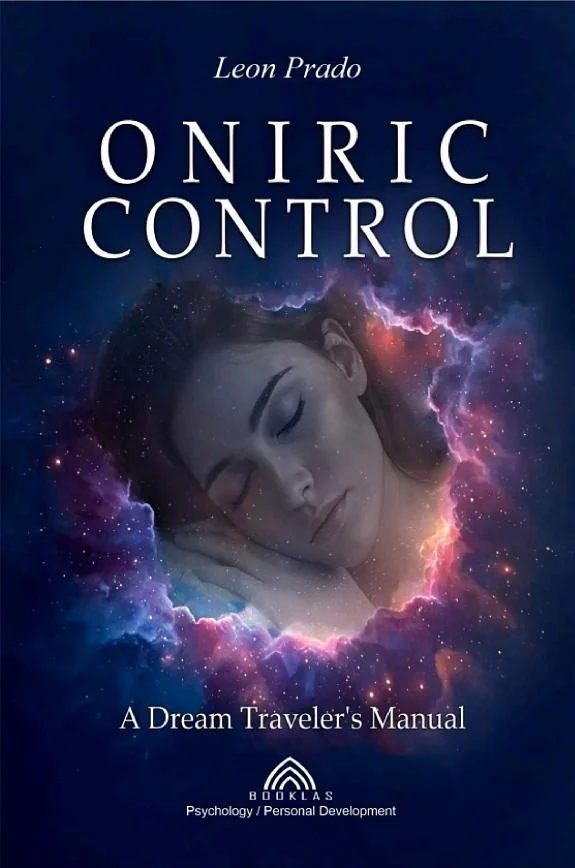
Oníric Control
Oníric Control makes a bold claim: that the ethereal realm of dreams can be mapped and manipulated. The authors, Leon Prado and Luis Santos, present a manual that attempts to demystify the process of lucid dreaming. Their introduction of techniques like MILD and WBTB is clear, drawing from established methodologies. The assertion that the mind shapes dream reality is a familiar one in esoteric circles, but the book's strength lies in its structured approach to achieving conscious agency within this space. However, the text occasionally veers into overly grand pronouncements about accessing "limitless universes," which, while evocative, lack the precise grounding one might expect from a practical manual. A particular passage detailing the transformation of a nightmare into a controlled exploration of a personal fear exemplifies the book's potential. Ultimately, Oníric Control offers a functional framework for dreamers willing to undertake disciplined practice.
📝 Description
83
Oníric Control, published in 2025, is a guide to mastering the dream state.
This manual offers practical methods for achieving lucidity within dreams. The authors propose that conscious awareness during sleep allows individuals to shape their dream reality. The book details techniques designed to help readers enter dreams consciously, transform dream scenarios, and confront nightmares. It also provides guidance on actively exploring the subconscious mind through these controlled dream experiences. The core idea is that the ability to become lucid in dreams is a skill that can be trained.
Oníric Control targets individuals interested in the direct application of altered states of consciousness, specifically lucid dreaming. It is for those who wish to understand and interact with their subconscious through firsthand dream experiences. The book's methodologies are relevant for readers aiming to improve dream recall, induce lucidity, and engage in conscious dream exploration. It may also assist those dealing with recurring nightmares or seeking a more direct, personal understanding of their own psyche.
While dreams have been a subject of inquiry across many traditions, Oníric Control emerges in 2025 following a late 20th century resurgence of interest in lucid dreaming. This interest was influenced by scientific work and popular fascination. The book builds upon earlier psychological and esoteric investigations into consciousness and its potential during sleep, drawing a line from early 20th century psychoanalysis to contemporary explorations of altered states.
💡 Why Read This Book?
• You will learn specific, actionable techniques like Mnemonic Induction of Lucid Dreams (MILD) to consciously trigger lucidity, offering a structured method for dream control that goes beyond passive observation. • You will gain practical strategies for confronting and transforming nightmares, as detailed in the book's sections on dream scenario manipulation, providing tools to address internal anxieties within the dream state. • You will understand the theoretical underpinnings of the dream state as a mind-shaped reality, as presented in the 2025 publication, offering a contemporary esoteric perspective on consciousness exploration.
⭐ Reader Reviews
Honest opinions from readers who have explored this book.
❓ Frequently Asked Questions
What is the primary goal of the techniques presented in Oníric Control?
The primary goal is to achieve 'dream lucidity,' the state of being consciously aware that you are dreaming. This awareness is presented as the gateway to controlling and actively shaping your dream experiences, transforming them from passive events into conscious explorations.
Can Oníric Control help with recurring nightmares?
Yes, the book explicitly addresses overcoming nightmares. By learning to achieve lucidity, dreamers are empowered to consciously transform frightening scenarios within the dream, thereby neutralizing their negative impact and potentially resolving underlying psychological issues.
Are the techniques in Oníric Control scientifically proven?
The book references scientific studies that indicate lucid dreaming can be trained. Techniques like MILD and WBTB are based on methodologies that have been explored and validated in psychological research concerning sleep and consciousness.
Who are Leon Prado and Luis Santos, the authors of Oníric Control?
Leon Prado and Luis Santos are presented as the authors of Oníric Control, first published in 2025. Information regarding their specific backgrounds or previous works is not detailed in the provided blurb.
What does 'Oníric Control' mean?
'Oníric Control' translates to 'Oneiric Control' or 'Dream Control.' It refers to the ability to consciously direct and influence the events, environment, and one's own actions within a dream state.
What is the significance of the mind shaping reality in the context of lucid dreaming?
The book posits that in a lucid dream, the perceived reality is a direct projection of the dreamer's mind. This means that conscious intention, belief, and imagination have immediate and tangible effects on the dream environment and narrative.
🔮 Key Themes & Symbolism
Lucid Dream Induction
The core of Oníric Control lies in its systematic approach to achieving dream lucidity. It moves beyond passive dream recall to active engagement, presenting techniques such as Mnemonic Induction of Lucid Dreams (MILD) and Wake Back To Bed (WBTB). These methods are framed not as mere suggestions but as trainable skills, offering readers concrete steps to recognize the dream state while it is occurring. The book emphasizes that consistent practice is key to enhancing one's ability to become aware within the dream narrative.
Conscious Exploration of the Subconscious
Oníric Control frames the dream state as a direct portal to the subconscious mind. By achieving lucidity, the dreamer gains the agency to consciously explore this inner landscape. The work suggests that the symbols, scenarios, and emotions encountered in dreams are manifestations of deeper psychological processes. The ability to control the dream environment allows for a deliberate investigation of personal fears, desires, and unresolved issues, fostering self-understanding through direct, experiential interaction.
Mind Shaping Dream Reality
A central tenet of the book is that the dream universe is malleable, directly shaped by the dreamer's consciousness. Once lucidity is achieved, the mind's ability to construct and alter reality becomes apparent. Oníric Control teaches readers to harness this power, transforming dream scenarios at will, overcoming challenging dream content, and even manifesting desired experiences within the dream. This perspective elevates dreaming from a passive experience to an active, creative endeavor.
Overcoming Nightmares
The book offers a practical framework for confronting and neutralizing nightmares. Instead of being passive victims of frightening dream imagery, lucid dreamers are encouraged to recognize the illusory nature of the nightmare and to actively intervene. This might involve transforming the threatening elements, confronting the source of fear within the dream, or simply changing the dream's narrative to a more empowering one. This approach turns a source of distress into an opportunity for psychological growth and mastery.
💬 Memorable Quotes
Direct passages from the work, attributed to the author.
“Becoming lucid within your own dream means accessing a limitless universe where the mind shapes reality and everything becomes possible.”
— This statement captures the book's core promise: that conscious awareness within a dream unlocks profound creative potential. It suggests that the perceived limitations of waking life do not apply in the dream state, where subjective experience is directly influenced by mental faculties.
“Scientific studies prove that lucid dreaming can be trained.”
— This assertion grounds the esoteric practice of lucid dreaming in empirical research. It assures the reader that the ability to become lucid is not an innate talent but a skill that can be cultivated through dedicated methods and practice, making it accessible.
“The sensations experienced by a dream traveler cannot be explained in words.”
— This highlights the ineffable, subjective nature of profound dream experiences. It suggests that while techniques can be taught, the ultimate understanding and impact of lucid dreaming are deeply personal and transcend ordinary linguistic description.
“transform scenarios, overcome nightmares, and consciously explore their subconscious.”
— This phrase outlines the primary practical benefits of mastering lucid dreaming according to the book. It presents a tripartite promise: therapeutic control over negative dream content, active engagement with inner psychological material, and creative alteration of dream environments.
“Techniques such as Mnemonic Induction of Lucid Dreams (MILD), Wake Back”
— This points to the specific, actionable methods detailed within the manual. By naming established techniques like MILD and WBTB, the book signals its reliance on recognized practices within the field of lucid dreaming research and training.
🌙 Esoteric Significance
Tradition
While not explicitly tied to a single lineage, Oníric Control draws from traditions that explore the nature of consciousness and altered states, including aspects of Hermeticism's focus on mental mastery and Gnosticism's exploration of inner realities. It departs from strictly interpretive schools by emphasizing direct agency and manipulation within the dreamscape, treating the dream world as a tangible, albeit subjective, domain for conscious interaction and transformation.
Symbolism
The book implicitly utilizes the dreamscape itself as a symbolic arena. Nightmares, for instance, can be viewed as symbolic representations of unresolved fears or psychological conflicts. The act of transforming these scenarios symbolizes the dreamer's growing mastery over their inner world. The 'limitless universe' concept functions as a symbol for the boundless potential of the human mind when freed from the constraints of waking perception.
Modern Relevance
Contemporary practices in mindfulness, consciousness studies, and even therapeutic approaches that utilize imagery and guided visualization echo the principles found in Oníric Control. Thinkers and practitioners exploring non-ordinary states of consciousness, neurofeedback, and the plasticity of the mind may find its structured approach to dream manipulation relevant for understanding subjective reality creation.
👥 Who Should Read This Book
• Individuals interested in practical psychology and self-improvement who wish to leverage their sleep state for personal growth and stress management. • Aspiring practitioners of esoteric arts seeking tangible methods to explore consciousness beyond the physical body and to understand subconscious processes directly. • Those troubled by nightmares or seeking deeper self-knowledge who are looking for proactive techniques to engage with their inner world rather than passive interpretation.
📜 Historical Context
Oníric Control emerges in 2025, a period building on over a century of diverse explorations into consciousness. Its focus on practical dream control reflects the late 20th-century resurgence of interest in lucid dreaming, heavily influenced by figures like Stephen LaBerge, whose scientific investigations into the phenomenon gained traction from the 1970s onwards. This contrasts with earlier psychoanalytic approaches, such as Sigmund Freud's 1899 work, which primarily focused on dream interpretation as a window into repressed desires. While Freud saw dreams as primarily symbolic messages from the unconscious, Oníric Control views them as interactive environments. The book's direct methods for manipulating dream content could also be seen as a departure from more passive or purely interpretive traditions within esoteric literature, offering a proactive engagement with the dream state.
📔 Journal Prompts
The concept of the mind shaping dream reality: how does this apply to your waking perceptions?
Reflect on the potential of overcoming nightmares using the techniques outlined.
Consider the 'limitless universe' of the dream state: what uncharted territories within yourself might you explore?
Analyze the effectiveness of MILD and WBTB for achieving dream lucidity in your personal practice.
What subconscious elements do you believe are most accessible through conscious dream exploration?
🗂️ Glossary
Oníric Control
The deliberate ability to exert conscious influence and direction over one's experiences within the dream state, turning passive dreaming into an active exploration.
Dream Lucidity
The state of awareness during a dream in which the dreamer recognizes that they are dreaming. This recognition is the foundation for achieving 'Oníric Control'.
Mnemonic Induction of Lucid Dreams (MILD)
A specific technique designed to increase the likelihood of becoming lucid in a dream by setting the intention to recognize the dream state before sleep.
Wake Back To Bed (WBTB)
A technique involving waking up briefly during the night and then returning to sleep with the intention of entering a lucid dream state more readily.
Dream Traveler
An individual who consciously navigates and experiences the dream state, particularly one who has achieved dream lucidity and exerts control.
Subconscious Mind
The part of the mind whose processes are not perceived by the individual but influence actions and feelings. Lucid dreaming is presented as a method to consciously access and interact with it.
Mind Shapes Reality
The principle that conscious thought, intention, and belief have the power to construct or alter perceived reality, particularly emphasized within the dream state in this context.
This book appears in 1 collection
🔮 Readers Also Liked
Browse all →









From the “Dream Yoga” Collection
View all →






More Free Occult Philosophy Books
View all →