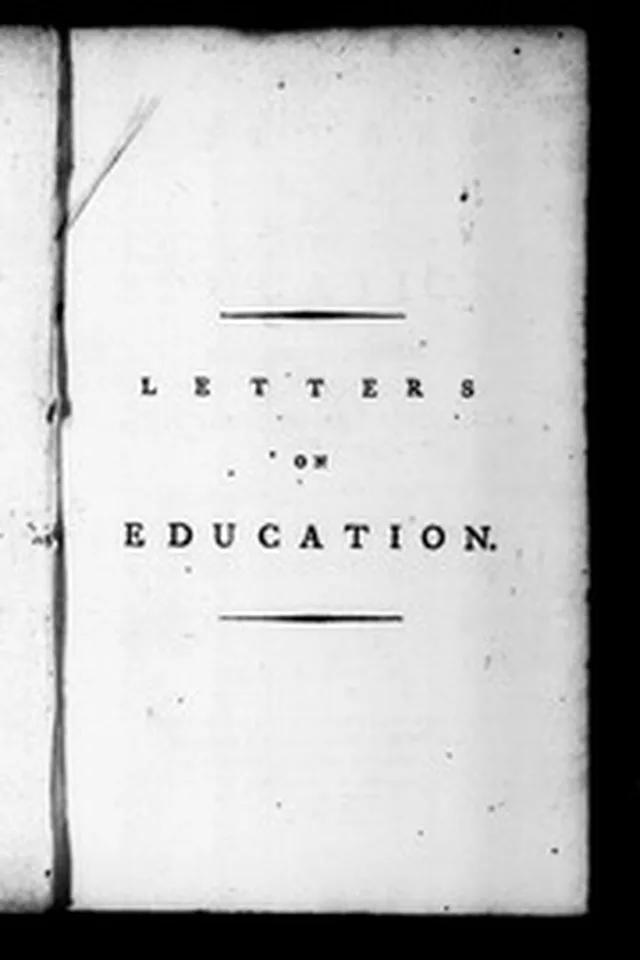
Letters on education. With observations on religious and metaphysical subjects. By Catherine Macaulay Graham. 1790
 71
71

Letters on education. With observations on religious and metaphysical subjects. By Catherine Macaulay Graham. 1790



Catherine Macaulay Graham's 'Letters on Education. With Observations on Religious and Metaphysical Subjects.' is a hidden gem for those interested in the esoteric and occult. Published in 1790, this book offers a unique blend of educational philosophy and metaphysical inquiry, making it a valuable resource for modern seekers. Graham's insights into the role of education in spiritual development are particularly relevant today, as many people seek to integrate their intellectual pursuits with their spiritual journeys. The book's historical context adds depth to its content, providing readers with a glimpse into the intellectual climate of the Enlightenment. For anyone interested in the history of esoteric thought or the intersection of education and spirituality, this book is a must-read. It offers a rich tapestry of ideas that can inspire and inform contemporary esoteric seekers.
📝 Description
71
Catherine Macaulay Graham published 'Letters on Education' in 1790, addressing religious and metaphysical subjects.
This 1790 work by Catherine Macaulay Graham, titled 'Letters on Education. With Observations on Religious and Metaphysical Subjects', engages with complex ideas about learning, faith, and the nature of reality. Graham wrote during a period of significant intellectual and social change, and her letters reflect a deep consideration of how individuals develop their understanding of the world and their place within it. She connects the process of education to broader metaphysical questions, suggesting that true knowledge requires an awareness of spiritual and unseen dimensions.
The book is structured as a series of letters, a common format for intellectual exchange in the 18th century. Graham’s arguments are grounded in philosophical reasoning, and she examines how religious doctrines shape perceptions and influence moral development. Her inquiry extends beyond conventional pedagogy, seeking to uncover underlying principles that govern human consciousness and its relationship to the divine or the absolute. The text invites readers to consider these connections seriously.
Published in 1790, Macaulay Graham's work engages with strains of thought that sought to understand the universe and human existence through principles beyond the purely material. This includes Neoplatonic ideas about emanation and the divine, as well as early modern discussions on vitalism and the animating spirit. Her focus on the 'unseen worlds' and the 'hidden knowledge' within religious and metaphysical systems places her within a tradition that saw spiritual insight as a crucial component of true education, distinct from mere factual acquisition. This perspective was part of a broader intellectual current that questioned Enlightenment materialism and sought deeper, often Gnostic or Hermetic, understandings of reality.
💡 Why Read This Book?
Reading 'Letters on Education. With Observations on Religious and Metaphysical Subjects.' today offers a deep dive into the esoteric philosophies of the eighteenth century. Catherine Macaulay Graham's insights into education and spirituality provide a historical foundation for understanding the interplay between intellectual and spiritual pursuits. This book is particularly valuable for those interested in the history of esoteric thought and the role of education in personal and spiritual development.
⭐ Reader Reviews
Honest opinions from readers who have explored this book.
❓ Frequently Asked Questions
Who was Catherine Macaulay Graham?
Catherine Macaulay Graham was a prominent eighteenth-century writer known for her political and philosophical works. She was a strong advocate for educational reform and explored the intersection of education, religion, and metaphysics in her writings.
What are the main themes of this book?
The main themes of 'Letters on Education' include the importance of a well-rounded education, the role of spirituality in personal development, and the exploration of metaphysical concepts. Graham's work reflects the intellectual ferment of the Enlightenment era.
Is this book relevant for modern esoteric seekers?
Yes, this book is highly relevant for modern esoteric seekers. It provides a historical foundation for understanding how educational and spiritual pursuits have been intertwined throughout history, offering valuable insights into the esoteric philosophies of the eighteenth century.
🔮 Key Themes & Symbolism
Esoteric Education
Graham looks at the mystical aspects of education, proposing that true learning involves the pursuit of hidden knowledge and spiritual enlightenment. This theme emphasizes the idea that education is not merely about acquiring information but about understanding the deeper, esoteric dimensions of existence.
Religious Mysticism
The book explores the mystical underpinnings of religious belief, offering insights into the symbolic and esoteric elements of various religious traditions. Graham's observations challenge readers to look beyond surface-level interpretations and seek the hidden truths within religious texts and practices.
Metaphysical Inquiry
Graham's metaphysical observations provide a profound exploration of the nature of reality, the self, and the universe. This theme invites readers to engage in a deep philosophical inquiry, questioning the boundaries between the seen and unseen worlds and seeking to understand the esoteric principles that govern existence.
💬 Memorable Quotes
Direct passages from the work, attributed to the author.
“Education, to be truly effective, must awaken the soul to the mysteries of the universe.”
— Graham emphasizes the transformative power of education in revealing hidden truths and spiritual insights.
“Symbolism is the language of the soul, speaking in whispers of the unseen.”
— Graham highlights the importance of symbolism in conveying esoteric truths and connecting with the divine.
“Religion, when understood esoterically, becomes a bridge to the divine.”
— Graham suggests that a deeper, mystical understanding of religion can lead to a more profound spiritual connection.
💡 Key Ideas
Editorial paraphrase of the work's core concepts — not direct quotes.
The pursuit of knowledge is a sacred journey into the depths of the divine.
This quote underscores the mystical dimension of intellectual inquiry, suggesting that true knowledge is a path to spiritual enlightenment.
The mysteries of the universe are revealed to those who seek with an open heart and mind.
This quote encourages readers to approach the pursuit of knowledge with humility and an open spirit, ready to receive hidden wisdom.
🌙 Esoteric Significance
Tradition
This book belongs to the Hermetic tradition, which emphasizes the pursuit of hidden knowledge and the exploration of the mystical dimensions of existence. It draws on Hermetic principles to offer insights into education, religion, and metaphysics.
Symbolism
Key symbols in the book include the symbol of the soul's journey, the language of the divine, and the mysteries of the universe. These symbols are used to convey esoteric truths and guide readers on their spiritual quest.
Modern Relevance
This book remains relevant today for modern practitioners of the occult who seek to understand the deeper dimensions of education and religion. Its insights continue to influence contemporary esoteric thought and practice.
👥 Who Should Read This Book
Beginners in esoteric studies will find this book an accessible entry point into the mystical dimensions of education and religion. Scholars of occult philosophy will appreciate its deep philosophical insights and historical significance. Spiritual seekers will be inspired by its exploration of hidden knowledge and symbolism. Practitioners of the occult will find valuable guidance for their spiritual journeys.
📜 Historical Context
Published in 1790, 'Letters on Education' reflects the intellectual fervor of the Enlightenment and the growing interest in esoteric and mystical thought. During this era, thinkers were exploring the boundaries of knowledge and seeking to understand the deeper dimensions of human existence. Graham's work was important as it provided a philosophical foundation for understanding the esoteric aspects of education and religion, influencing future generations of scholars and seekers.
📔 Journal Prompts
Reflect on how the mystical dimensions of education have influenced your own learning experiences.
Consider the esoteric aspects of your religious beliefs and how they connect to the divine.
Explore the role of symbolism in your spiritual practices and how it helps you understand hidden truths.
Write about a moment when you felt a deep connection to the mysteries of the universe.
Reflect on the significance of the Hermetic tradition in your spiritual journey.
🗂️ Glossary
Esoteric Education
The mystical and hidden dimensions of learning that focus on spiritual enlightenment and the pursuit of hidden knowledge.
Religious Mysticism
The exploration of the symbolic and esoteric elements within religious traditions to uncover hidden truths.
Metaphysical Inquiry
The philosophical exploration of the nature of reality, the self, and the universe, seeking to understand the esoteric principles that govern existence.
Hermetic Tradition
A philosophical and spiritual tradition that emphasizes the pursuit of hidden knowledge and the exploration of the mystical dimensions of existence.
Symbolism
The use of symbols to convey esoteric truths and connect with the divine, often seen as the language of the soul.
This book appears in 3 collections
🔮 Readers Also Liked
Browse all →









From the “Occultism” Collection
View all →







More Free Occult Philosophy Books
View all →