Lucid Dreaming
 82
82

Lucid Dreaming
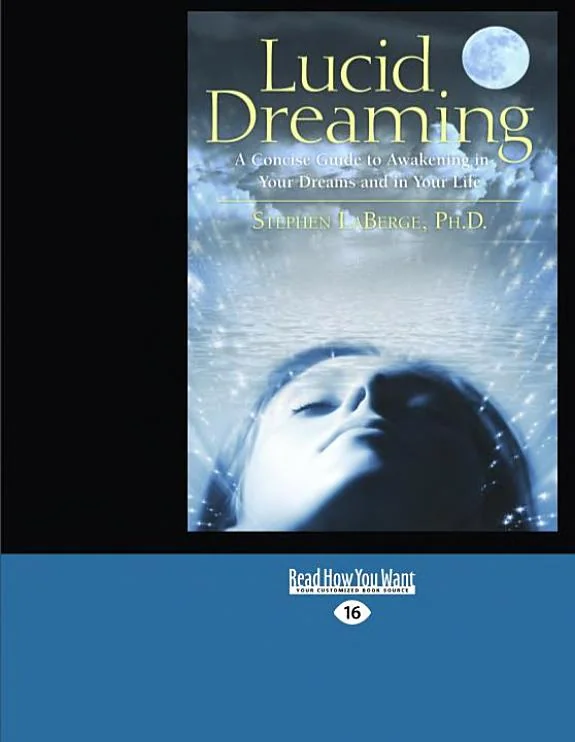
Stephen LaBerge’s "Lucid Dreaming" is less a philosophical treatise and more a meticulously charted course for navigating one's own nocturnal theater. The strength lies in its systematic, almost laboratory-like approach, transforming what might seem mystical into a set of actionable instructions. LaBerge’s 20+ years of research at the Lucidity Institute are evident in the clarity of his method, particularly the MILD technique. However, the book's clinical tone, while precise, sometimes undersells the sheer wonder of the experience. A passage detailing the precise steps for initiating a lucid dream through pre-sleep intention feels both empowering and slightly sterile, lacking the evocative prose one might associate with exploring the subconscious. It’s an indispensable guide for the aspiring somnaut, though perhaps less so for those seeking purely lyrical explorations of the dreamscape. A pragmatic tool for an extraordinary undertaking.
📝 Description
82
Stephen LaBerge's 1985 book, Lucid Dreaming, made conscious dreaming accessible through scientific methods.
First published in 1985, Stephen LaBerge's Lucid Dreaming presents a structured approach to achieving awareness within the dream state. LaBerge, conducting research at Stanford University and founding the Lucidity Institute, demystified the practice, framing it as a skill anyone can learn rather than a mysterious art. The book offers practical techniques for initiating and maintaining these conscious dreams.
This guide is for anyone interested in the mind's potential during sleep. Whether you seek to explore different states of consciousness, boost creativity, resolve personal challenges, or simply interact more intentionally with your dreams, this book offers a starting point. It requires no prior background in dream analysis or spiritual traditions.
LaBerge's work builds on scientific study of consciousness, particularly sleep states. His research in the 1980s positioned lucid dreaming as a subject for psychological and neurological investigation. This approach moved the topic away from speculation towards empirical evidence, aligning with a broader interest in altered states during that era.
While presented through a scientific lens, LaBerge's work engages with traditions that have long recognized the significance of dreams for inner exploration. Practices aiming for conscious dreaming exist in various forms across Tibetan Buddhism, indigenous shamanism, and certain Western esoteric schools. These traditions often view dreams as a space for spiritual development, insight, and even direct experience of non-ordinary reality. LaBerge's contribution was to bridge these practices with empirical research, offering a systematic method for achieving a state that mystics and yogis have sought for centuries.
💡 Why Read This Book?
• Gain verifiable techniques like MILD, developed through LaBerge's research at Stanford University, to reliably trigger conscious awareness within your dreams. • Understand the specific physiological states, such as REM sleep, that facilitate lucid dreaming, moving beyond anecdotal accounts to scientific understanding. • Learn practical methods for stabilizing the dream environment, preventing premature waking or loss of lucidity, as detailed in the book's sections on dream control.
⭐ Reader Reviews
Honest opinions from readers who have explored this book.
❓ Frequently Asked Questions
What is the primary benefit of practicing lucid dreaming as described by LaBerge?
The primary benefit is the ability to achieve conscious awareness while dreaming, enabling exploration of the dream state, personal problem-solving, and skill rehearsal, as detailed in LaBerge's research from the Lucidity Institute.
How does Stephen LaBerge's research at Stanford University inform his lucid dreaming techniques?
LaBerge's work at Stanford in the 1980s provided empirical data on the neurological correlates of lucid dreaming, allowing him to develop specific, repeatable techniques like MILD based on scientific observation of dream states.
Is lucid dreaming a spiritual practice or a scientific one according to this book?
The book presents lucid dreaming primarily as a psychological and neurological phenomenon, grounded in scientific research. While it acknowledges the profound personal experiences, its focus is on the learnable techniques derived from empirical study.
What is the MILD technique mentioned in "Lucid Dreaming"?
MILD (Mnemonic Induction of Lucid Dreams) is a technique where one sets the intention to remember they are dreaming and visualizes themselves becoming lucid, often performed before returning to sleep after waking during the night.
Can anyone learn to have lucid dreams using LaBerge's methods?
Yes, the book is structured to make lucid dreaming accessible to a wide audience. LaBerge emphasizes that with consistent practice of the techniques he developed, most individuals can learn to experience lucidity.
When was Stephen LaBerge's "Lucid Dreaming" first published?
The original publication date for Stephen LaBerge's "Lucid Dreaming" was May 14, 2009, though his foundational research dates back much earlier to his work at Stanford University.
🔮 Key Themes & Symbolism
Conscious Dream Navigation
The central theme is achieving and maintaining awareness within the dream state. LaBerge provides systematic methods, such as reality testing and intention setting, to bridge the gap between waking consciousness and the dream world. This allows for active participation rather than passive observation, transforming dreams into opportunities for exploration and self-discovery.
Scientific Approach to Dreams
This work grounds the phenomenon of lucid dreaming in empirical research, particularly LaBerge's work at Stanford University and the Lucidity Institute. It clarifies the experience by presenting it as a scientifically observable and learnable skill, focusing on cognitive and physiological factors rather than purely mystical interpretations.
Dream Recall and Stability
A significant focus is placed on improving dream recall, the foundational step for recognizing dream states. Furthermore, the book offers techniques to stabilize the dream once lucidity is achieved, preventing the dream from collapsing or the dreamer from waking prematurely, ensuring a more robust experience.
Practical Applications of Lucidity
Beyond mere exploration, the book outlines practical uses for lucid dreaming. These include overcoming nightmares by confronting dream figures, rehearsing skills, fostering creativity by accessing novel imagery, and gaining self-understanding through direct interaction with one's subconscious.
💬 Memorable Quotes
Direct passages from the work, attributed to the author.
“The intention to remember is the key to remembering.”
— This highlights the power of focused mental resolve. LaBerge suggests that clearly deciding and intending to recall one's dreams upon waking is a critical factor in improving dream recall.
“Recognizing that you are dreaming is the first step to becoming lucid.”
— This emphasizes the critical moment of insight. The ability to question one's reality within the dream and identify incongruities is the gateway to conscious dream control.
“Reality testing is a skill that can be practiced both waking and dreaming.”
— LaBerge advocates for integrating reality checks into daily life. By habitually questioning reality while awake, the habit transfers to the dream state, triggering lucidity.
“Dreams are a part of consciousness, and lucid dreaming is a way to explore that part.”
— This frames dreaming not as an external phenomenon but an integral aspect of one's own mind. Lucid dreaming, therefore, becomes a tool for self-exploration within the broader range of consciousness.
“The dream state is a malleable environment.”
— This points to the potential for agency within dreams. Once lucid, the dreamer can learn to influence or alter the dream scenery and narrative, demonstrating the mind's creative power.
🌙 Esoteric Significance
Tradition
While "Lucid Dreaming" is rooted in scientific methodology, its exploration of consciousness aligns with certain Hermetic and Gnostic principles concerning the mastery of inner states and the potential for expanded awareness. It reflects the Hermetic idea of 'As Above, So Below,' applying it to the microcosm of the dreaming mind and its potential for self-knowledge and transformation, albeit through empirical means rather than purely mystical initiation.
Symbolism
Within the context of lucid dreaming, the dream environment itself becomes a symbolic landscape generated by the subconscious. Figures encountered, settings, and events are not merely random occurrences but can be interpreted as symbolic representations of the dreamer's inner state, fears, desires, or unresolved issues, offering a personalized symbolic language for self-understanding.
Modern Relevance
LaBerge's work remains foundational for contemporary researchers and practitioners in fields ranging from sleep science and cognitive psychology to virtual reality design and therapeutic applications. His techniques are widely adopted by individuals seeking personal growth, creativity enhancement, and novel forms of consciousness exploration, influencing modern mindfulness practices and even biofeedback technologies.
👥 Who Should Read This Book
• Aspiring explorers of consciousness seeking a scientifically grounded method for achieving lucidity within their dreams. • Individuals interested in overcoming nightmares or anxieties through direct interaction with their dream imagery and narratives. • Creatives and innovators looking to harness the unique imaginative potential of the dream state for inspiration and problem-solving.
📜 Historical Context
Stephen LaBerge's work on lucid dreaming emerged during a period of burgeoning interest in consciousness studies, particularly in the late 20th century. While figures like J.B. Rhine were exploring parapsychology and early sleep researchers like Eugene Aserinsky had identified REM sleep in the 1950s, LaBerge's unique contribution was to systematically link these observations to practical, verifiable techniques for inducing lucidity. His research at Stanford University in the 1980s, supported by grants and published in scientific journals, provided empirical validation, moving the concept beyond anecdotal accounts prevalent in earlier esoteric traditions or the more speculative writings of figures like Marquis d'Hervey de Saint Denys. Unlike the purely psychoanalytic interpretations of dreams championed by Freudian psychology, LaBerge focused on cognitive and behavioral methods. The reception was largely positive within scientific circles interested in altered states, though mainstream psychology remained somewhat skeptical of the subjective nature of the experience.
📔 Journal Prompts
The intention to remember dreams, a core concept from LaBerge's MILD technique.
Recognizing dream signs within a dream narrative.
Practicing reality testing: what subtle cues indicate you might be dreaming?
The experience of stabilizing a lucid dream.
Interpreting a recurring symbol encountered during a lucid dream.
🗂️ Glossary
Lucidity
The state of being aware that one is dreaming while the dream is in progress. This awareness allows for varying degrees of conscious control over the dream experience.
Reality Testing
A technique involving habitually questioning one's reality throughout the day to develop a habit that may carry over into dreams, triggering lucidity.
REM Sleep
Rapid Eye Movement sleep, the stage of sleep characterized by rapid eye movements, vivid dreaming, and temporary muscle paralysis. Lucid dreams most commonly occur during REM sleep.
MILD (Mnemonic Induction of Lucid Dreams)
A specific technique developed by LaBerge involving setting the intention to remember dreaming and visualizing oneself becoming lucid, often performed during WBTB.
WBTB (Wake Back To Bed)
A technique where one wakes up after several hours of sleep, stays awake for a short period (e.g., 20-60 minutes), and then returns to sleep with the intention of becoming lucid.
Dream Sign
An anomaly or recurring element within a dream that signals the dreamer they are likely dreaming, often identified through consistent reality testing.
Dream Stabilization
Techniques used to maintain lucidity and prolong the dream experience once it has been achieved, preventing premature waking or loss of awareness.
This book appears in 1 collection
🔮 Readers Also Liked
Browse all →









From the “Lucid Dreaming” Collection
View all →






More Free Occult Philosophy Books
View all →