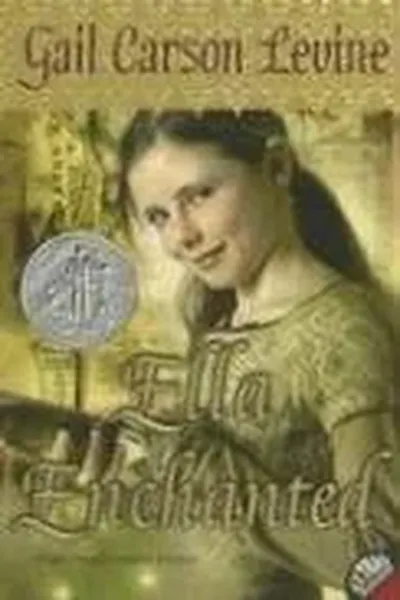
Ogre Enchanted

 71
71

Ogre Enchanted
Gail Carson Levine's Ogre Enchanted presents a compelling, if somewhat familiar, reimagining of transformation narratives. The strength of the novel lies in its empathetic portrayal of Augusta's struggle. Levine avoids easy resolutions, forcing the reader to confront the visceral realities of Augusta's physical and social alienation. A particular passage detailing Augusta’s initial attempts to interact with her village, her ogre form causing fear and disgust, highlights the book’s success in depicting the harshness of prejudice. However, the narrative arc, while satisfying, adheres closely to established fairy tale conventions, offering few surprises for seasoned readers of the genre. The resolution, while earned, feels predictable. Despite this, Ogre Enchanted remains a solid entry for younger readers seeking a story about embracing one's true self, even when that self is monstrous.
📝 Description
71
Gail Carson Levine's 2018 novel, Ogre Enchanted, imagines a young woman's transformation into a creature of myth.
Augusta, the protagonist of Ogre Enchanted, faces a sudden and drastic physical change, becoming an ogre. This transformation forces her to confront a world that now sees her as monstrous, challenging her sense of self and her place within society. Levine's story follows Augusta as she grapples with her altered appearance and the prejudices it evokes.
The novel delves into Augusta's internal struggle to reconcile her new form with her identity. It examines the deep-seated human need for acceptance and belonging, even when faced with extreme external alteration. Readers will find a narrative that questions the surface level of perception, contrasting outward monstrosity with inner worth. The story is about finding strength and identity in the face of profound change and social rejection.
Ogre Enchanted draws on the enduring archetype of the monstrous other, a figure often found in folklore and mythology across cultures. These figures frequently embody societal fears or represent individuals cast out from the community. Levine uses the ogre trope to examine themes of otherness and the human capacity for both fear and empathy. The narrative engages with the tradition of fairy tale retellings, reinterpreting familiar monstrous figures to explore contemporary concerns about difference and belonging.
💡 Why Read This Book?
• Learn how to confront societal judgment through Augusta’s journey from human to ogre, understanding the emotional weight of prejudice as detailed in the narrative's early chapters. • Feel the power of self-acceptance by following Augusta’s internal shift, a process that demonstrates how embracing one's altered state, even the monstrous, can lead to inner peace. • Discover that true belonging is not tied to appearance, a lesson exemplified by Augusta’s eventual relationships, proving that connection can be found beyond superficial judgments.
⭐ Reader Reviews
Honest opinions from readers who have explored this book.
❓ Frequently Asked Questions
What is the central conflict in Gail Carson Levine's Ogre Enchanted?
The central conflict is Augusta's transformation into an ogre and her subsequent struggle with her new appearance, societal rejection, and the quest to understand her altered identity.
What age group is Ogre Enchanted recommended for?
Ogre Enchanted is primarily recommended for young adult readers, typically ages 10 and up, who enjoy fantasy and fairy tale retellings.
Does Ogre Enchanted have a happy ending?
The novel concludes with a resolution where Augusta finds a measure of peace and acceptance, though not necessarily a conventional 'happily ever after' in the traditional fairy tale sense.
What are some themes explored in Ogre Enchanted?
Key themes include self-acceptance, prejudice, the nature of beauty, identity, and finding one's place in the world despite being an outcast.
Is Ogre Enchanted a retelling of a specific fairy tale?
While not a direct retelling of a single tale, it draws heavily on common motifs found in fairy tales, particularly those involving transformation and monstrous figures.
When was Ogre Enchanted first published?
Ogre Enchanted was first published in 2018 by HarperCollins.
🔮 Key Themes & Symbolism
The Monstrous Within
The work grapples with the idea of the 'monster' not as an external evil, but as an internal state or a physical manifestation that society rejects. Augusta's transformation into an ogre forces her to confront her own perceived ugliness and the fear it inspires. The narrative positions this outward monstrosity as a catalyst for inner growth, challenging the reader to consider what truly defines a monster. This theme is central to her interactions with the villagers and her own self-perception.
Societal Rejection and Belonging
A significant theme is how society reacts to difference. Augusta, once human, becomes an outcast due to her ogre form, experiencing ostracization and fear. The book explores the pain of not belonging and the desperate search for acceptance. Her journey highlights the arbitrary nature of social boundaries and the human need for connection, even when one is perceived as fundamentally 'other'.
Identity and Transformation
The core of Ogre Enchanted lies in Augusta's struggle to reconcile her former identity with her new reality. The physical transformation prompts a profound exploration of selfhood. Readers witness her process of adaptation, learning to live within her ogre skin while retaining her core self. This theme questions whether identity is fixed or fluid, and how external changes necessitate an internal redefinition.
The Nature of Beauty
Levine challenges conventional notions of beauty through Augusta's plight. The narrative implicitly asks what constitutes beauty and whether it is solely an external attribute. By portraying an ogre who possesses human emotions and desires, the book subtly critiques a society that prioritizes superficial appearances over inner qualities and kindness.
💬 Memorable Quotes
Direct passages from the work, attributed to the author.
“Perhaps being an ogre was not so different from being a girl with too few friends.”
— This interpretation suggests a moment of dawning realization for Augusta, finding common ground between her ogre state and her previous feelings of loneliness. It signifies a step towards self-acceptance and understanding that shared emotional experiences can transcend physical form.
“She longed for a place where her reflection did not make her flinch.”
— This poignant statement reveals Augusta's deep yearning for self-acceptance and a sense of belonging. It underscores the psychological impact of her transformation and her desire to be comfortable in her own skin, free from the constant reminder of her monstrous appearance.
💡 Key Ideas
Editorial paraphrase of the work's core concepts — not direct quotes.
She tried to smile, but her face felt too large, too bony, too strange.
This quote captures Augusta's immediate struggle with her new physical form. It highlights the disconnect between her internal sense of self and her external appearance, emphasizing the discomfort and alienation that accompany her transformation.
They saw the horns, the tusks, the green skin, and they saw only a monster.
This passage directly addresses the theme of societal prejudice. It illustrates how external features alone dictate perception, leading to immediate rejection and fear, regardless of the individual's true nature or intentions.
Her heart still beat with a girl's rhythm, even if her hands were now large and clawed.
This quote emphasizes the enduring essence of Augusta's identity despite her physical change. It suggests that core personality and emotional capacity remain intact, even when outward appearances are drastically altered, highlighting the resilience of the human spirit.
🌙 Esoteric Significance
Tradition
While *Ogre Enchanted* is primarily a young adult fantasy novel, its themes of transformation and the rejection of the 'other' can be loosely aligned with Gnostic and alchemical traditions. The Gnostic concept of the divine spark trapped within a flawed material world appeals to Augusta's human consciousness within an ogre's form. Alchemically, the transformation narrative mirrors the process of *nigredo* (blackening/decomposition) and subsequent stages, where base matter (the ogre) must be endured and integrated to achieve a higher state.
Symbolism
The ogre itself serves as a potent symbol. In many folklore traditions, ogres represent the primal, the untamed, and the feared aspects of the psyche or the external world. Augusta’s ogre form can symbolize the shadow self, the parts of oneself that are hidden, repressed, or deemed unacceptable by society. The forest setting often symbolizes the unconscious, a place of both danger and potential self-discovery where these primal aspects are confronted.
Modern Relevance
Contemporary thinkers and practitioners in fields like Jungian psychology, mythology studies, and even certain branches of neo-paganism find value in narratives like *Ogre Enchanted*. The book's exploration of the 'monster' as a misunderstood entity and its focus on integrating the shadow aspects of the self align with modern therapeutic and spiritual approaches that emphasize self-acceptance and the reclamation of disowned parts of the psyche.
👥 Who Should Read This Book
• Young adult readers grappling with feelings of being an outsider or misunderstood, seeking a narrative that validates their experiences of social alienation and self-doubt. • Fans of fairy tale retellings and fantasy literature who appreciate character-driven stories that offer a fresh perspective on classic tropes and explore themes of transformation. • Educators and parents looking for literature that sparks conversations about empathy, prejudice, body image, and the complexities of identity, using Augusta's journey as a relatable entry point.
📜 Historical Context
Gail Carson Levine's *Ogre Enchanted*, published in 2018, arrived at a time when young adult literature was increasingly exploring themes of identity, otherness, and challenging traditional beauty standards. This period saw a surge in retellings and reimaginings of classic fairy tales, often with a feminist or inclusive lens, a trend exemplified by authors like Marissa Meyer and Roshani Chokshi. Levine's work, while rooted in fairy tale traditions, aligns with this contemporary movement, offering a protagonist who embodies physical difference and societal marginalization. The book's reception was generally positive, contributing to the growing conversation around diverse representation in children's literature, contrasting with earlier eras where such themes might have been considered too challenging or niche for mainstream audiences. The era was also marked by active literary criticism surrounding representation, making Levine's exploration of monstrousness and acceptance particularly relevant.
📔 Journal Prompts
Augusta's initial fear of her ogre reflection.
The villagers' reactions to Augusta's changed appearance.
Moments where Augusta feels most like herself despite her ogre form.
The concept of 'monstrousness' as presented in the novel.
Finding solidarity with other characters who are marginalized.
🗂️ Glossary
Ogre
A large, grotesque, man-like monster, often depicted in folklore and fairy tales as fearsome and primitive. In the book, it represents a physical transformation that leads to societal ostracization.
Transformation
The act of changing form, appearance, or nature. In the context of the book, it refers to Augusta's physical metamorphosis into an ogre and the internal changes it triggers.
Outcast
A person who is rejected by society or by a family or group. Augusta becomes an outcast due to her ogre form, facing fear and prejudice from her community.
Self-Acceptance
The acknowledgment and acceptance of one's strengths and weaknesses, including physical appearance and emotional states. This is a central theme as Augusta learns to live with her ogre form.
Prejudice
Preconceived opinion that is not based on reason or actual experience. The book illustrates prejudice directed at Augusta based solely on her frightening appearance.
Identity
The qualities, beliefs, personality, looks and/or expressions that make a person or group. Augusta's journey involves reconciling her internal identity with her external, monstrous form.
Fairy Tale Motifs
Recurring elements or themes found in fairy tales, such as magical transformations, curses, and quests. The book employs these motifs to explore contemporary issues.
🔮 Readers Also Liked
Browse all →








More by Gail Carson Levine
All books →

More Free Occult Philosophy Books
View all →