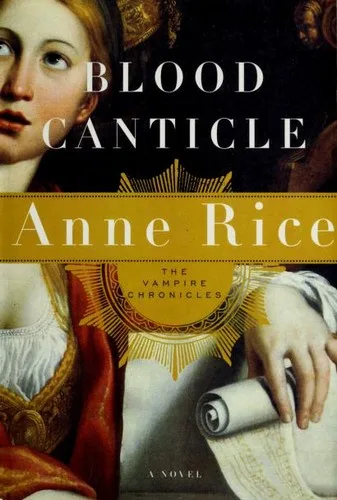
Blood Canticle
 80
80

Blood Canticle
Anne Rice's 'Blood Canticle' presents Lestat de Lioncourt at a spiritual crossroads, a concept the author has circled for years. The novel's strength lies in its unflinching examination of faith, doubt, and the divine from the perspective of an immortal. Rice masterfully renders Lestat’s internal turmoil, particularly as he grapples with the notion of a benevolent God while surrounded by the ancient, often cruel, world of vampires. A particularly compelling passage involves Lestat’s contemplation of the celestial spheres, questioning his place within a cosmic order. However, the narrative occasionally falters under the weight of its own extensive mythology, sometimes feeling less like a focused story and more like a continuation of ongoing debates within the series. The pacing can become uneven, with longueurs in philosophical exposition. Despite these moments, the book offers a potent, if sometimes rambling, meditation on the soul's eternal quest for meaning. It is a continuation of Rice's lifelong inquiry into the intersection of the sacred and the damned.
📝 Description
80
Anne Rice's 'Blood Canticle', published in 2021, continues Lestat's centuries-long struggle with faith and damnation.
Blood Canticle, published in 2021, finds Lestat de Lioncourt wrestling with his immortal existence and the nature of divinity. The novel revisits the ancient vampire's complex relationship with humanity and the divine, a theme Rice has consistently explored throughout her work. It examines the philosophical quandaries of immortality and the soul, using supernatural beings as a lens for these metaphysical questions. The narrative builds upon established threads from previous installments in the Vampire Chronicles, focusing on Lestat's internal conflicts.
This installment is for dedicated followers of Anne Rice's Vampire Chronicles, particularly those drawn to her philosophical and theological inquiries. Readers who enjoy character-driven stories grappling with fundamental questions of existence, morality, and spirituality within a gothic, supernatural setting will find resonance here. The book offers substantial material for those interested in the evolution of the vampire archetype beyond simplistic horror tropes. It reflects a mature engagement with themes Rice has long considered, influenced by her personal spiritual journey.
Published decades after Rice redefined vampire fiction, 'Blood Canticle' continues her engagement with the supernatural as a vehicle for exploring profound spiritual and existential questions. Her early work imbued vampires with psychological depth, moving them beyond simple monsters to complex figures burdened by their existence. This later novel reflects a more mature contemplation of themes influenced by Rice's personal spiritual evolution, re-examining her own mythology through a lens shaped by her Christian faith. The book engages with the eternal conflict between light and darkness, and the possibility of redemption for ancient beings.
💡 Why Read This Book?
• Gain insight into Lestat's complex spiritual evolution following the events concerning the Mayfair Witches and the Taltos, understanding his personal quest for divine understanding beyond mere vampiric existence. • Explore Rice's mature reflections on faith and doubt through the lens of immortality, particularly how an ancient being might confront existential crises and the nature of good and evil. • Appreciate the intricate world-building that connects the vampire sagas with other elements of Rice's broader fictional universe, offering a unique perspective on supernatural beings and their cosmic roles.
⭐ Reader Reviews
Honest opinions from readers who have explored this book.
❓ Frequently Asked Questions
Is 'Blood Canticle' a standalone novel or part of a series?
'Blood Canticle' is part of Anne Rice's extensive Vampire Chronicles series. It continues the narrative of the vampire Lestat and builds upon characters and events from earlier books like 'The Vampire Lestat' and 'The Queen of the Damned'.
What is the primary focus of 'Blood Canticle'?
The novel primarily focuses on Lestat de Lioncourt's spiritual and existential crisis, exploring his faith, his doubts about God, and his place in the universe as an immortal being.
When was 'Blood Canticle' first published?
'Blood Canticle' was first published in 2021, making it one of Anne Rice's later works in the Vampire Chronicles saga.
Does 'Blood Canticle' connect to other Anne Rice series?
Yes, 'Blood Canticle' subtly connects to other Anne Rice series, notably the Mayfair Witches and the Lives of the Mayfair Witches, through shared characters and overarching mythological elements.
What themes does Anne Rice explore in 'Blood Canticle'?
Anne Rice explores themes of faith, doubt, redemption, the nature of good and evil, the burden of immortality, and the search for divine meaning from an ancient perspective.
Is Lestat still a central character in 'Blood Canticle'?
Yes, Lestat de Lioncourt remains the central protagonist in 'Blood Canticle.' The narrative is deeply focused on his internal struggles and his journey through profound spiritual and existential questions.
🔮 Key Themes & Symbolism
Vampiric Faith and Doubt
The novel intensely probes the concept of faith through the eyes of an immortal. Lestat, having lived for centuries and witnessed countless human follies and triumphs, grapples with the existence of a benevolent God. His internal dialogue and external interactions explore whether divinity is real, if redemption is possible for beings like himself, and how faith can endure or collapse under the weight of eternal existence and immense suffering. This theme challenges traditional notions of good and evil within the vampire context.
The Burden of Immortality
'Blood Canticle' portrays immortality not as a gift, but as a profound burden. Lestat experiences the ennui of endless life, the sorrow of outliving all mortal connections, and the constant struggle against his own predatory nature. The novel examines the psychological toll of centuries of existence, the isolation it breeds, and the endless search for purpose when time is no longer a constraint. This perspective offers a stark contrast to the romanticized views of vampirism often found elsewhere.
Cosmic Order and Divine Intervention
The narrative studies questions of a larger cosmic order and the potential for divine intervention in the lives of supernatural beings. Lestat's quest for understanding leads him to question the very fabric of reality, the presence of angels and demons, and the ultimate fate of souls. The book explores how ancient beings perceive their place in the universe and whether forces beyond human or vampiric comprehension guide or influence their destinies, touching upon theological concepts within a gothic fantasy framework.
Redemption and the Soul
A central concern is the possibility of redemption for vampires, beings traditionally seen as damned. 'Blood Canticle' explores whether Lestat, despite his past actions, can find spiritual absolution or at least a form of peace. The novel questions the nature of the soul in immortal beings and whether it can be saved or corrupted beyond repair. This ties into broader theological discussions about sin, atonement, and the eternal afterlife, framed by Rice's unique mythological constructs.
💬 Memorable Quotes
Direct passages from the work, attributed to the author.
“The eternal question of God's existence haunts Lestat.”
— This captures Lestat's central conflict in the novel: his struggle to reconcile his long existence and the suffering he has witnessed with the concept of a benevolent deity. It highlights his deep philosophical and spiritual yearning.
“The line between angel and demon blurs in the ancient world.”
— This interpretation speaks to the moral ambiguity presented in the book, where beings of immense power and age often operate outside human conceptions of good and evil. It suggests a complex, perhaps chaotic, celestial hierarchy.
“Can a creature of the night find divine grace?”
— This question directly addresses the theme of redemption. It poses the core challenge for Lestat and other vampires: whether their supernatural nature precludes them from spiritual salvation or spiritual peace.
“Centuries of existence amplify the weight of one's soul.”
— This signifies how, for an immortal like Lestat, the accumulation of experiences and the potential for both good and evil deeds over vast spans of time create an immense spiritual gravity and responsibility.
💡 Key Ideas
Editorial paraphrase of the work's core concepts — not direct quotes.
Immortality offers endless time but no solace.
This paraphrased concept reflects the novel's portrayal of vampiric existence as a curse rather than a blessing. It emphasizes the profound loneliness and lack of fulfillment that comes with eternal life, a recurring theme for Rice's vampires.
🌙 Esoteric Significance
Tradition
While not strictly adhering to a single esoteric lineage, 'Blood Canticle' draws heavily from Gnostic and Christian mystical traditions, particularly in its exploration of duality, the nature of the soul, and the struggle between divine light and primordial darkness. Rice's work often features a unique cosmology that incorporates elements of ancient lore and heretical interpretations of religious texts, positioning her vampires as beings caught between fallen angels and humanity's quest for transcendence.
Symbolism
The novel employs potent symbols such as the 'Blood' itself, representing not just sustenance but also lineage, sin, and a corrupted form of eternal life. 'Light and Darkness' are paramount, symbolizing the eternal conflict between divine grace and demonic influence, often embodied by Lestat's internal battles. The concept of the 'Soul' is a central symbolic motif, questioned and sought after by immortal beings who fear its potential damnation or loss.
Modern Relevance
Contemporary thinkers and practitioners in occult and metaphysical circles often reference Anne Rice's vampires as complex allegories for the human condition, particularly the struggle with shadow selves and the search for meaning in a seemingly indifferent universe. Her exploration of faith and doubt appeals to modern spiritual seekers who question traditional dogma. The vampire archetype, as reimagined by Rice, continues to inform discussions on morality, immortality, and the eternal quest for enlightenment.
👥 Who Should Read This Book
• Devoted fans of Anne Rice's Vampire Chronicles seeking closure and further exploration of Lestat's spiritual journey, especially those interested in the character's evolution from 'The Vampire Lestat' onwards. • Readers of metaphysical fiction who appreciate complex theological debates and philosophical inquiries presented within a gothic, supernatural narrative framework. • Enthusiasts of comparative mythology and religious studies interested in how an author reimagines ancient concepts of good, evil, divinity, and redemption through unique fictional constructs.
📜 Historical Context
Published in 2021, 'Blood Canticle' emerges in a literary landscape significantly shaped by Anne Rice's own earlier contributions to vampire fiction. Her key work, 'Interview with the Vampire' (1976), revolutionized the genre by presenting vampires as complex, introspective beings grappling with existential dread, a stark contrast to the monstrous archetypes prevalent before. This shift influenced a generation of writers. By 2021, Rice had long since moved beyond pure horror, tying intricate theological and philosophical arguments into her narratives, a trajectory that saw her re-engage with her Christian faith in later life. This novel continues that mature exploration, building upon decades of character development and thematic consistency. While no specific contemporary author is directly cited as engaging with this particular work, the broader 'New Gothic' movement, which Rice helped pioneer, continues to explore themes of supernatural beings, hidden histories, and psychological depth, often with a spiritual or metaphysical bent.
📔 Journal Prompts
Lestat's confrontation with celestial beings prompts reflection on personal encounters with the numinous.
The concept of an immortal soul's potential for damnation invites contemplation of one's own spiritual legacy.
Consider the burden of ancient knowledge Lestat carries and its impact on his present desires.
The novel's depiction of the blurred lines between angelic and demonic forces encourages examination of moral relativism.
Reflect on the nature of faith Lestat clings to, and its role in sustaining hope amidst despair.
🗂️ Glossary
The Vampire Chronicles
Anne Rice's series of novels chronicling the lives and adventures of vampires, primarily Lestat de Lioncourt, exploring themes of immortality, love, loss, and spirituality.
Lestat de Lioncourt
The central protagonist of The Vampire Chronicles, an ancient, charismatic, and often conflicted vampire whose journey through centuries forms the core of the series.
The Mayfair Witches
Another prominent series by Anne Rice, focusing on a family of witches and their intertwined history with a powerful spirit named Lasher, which has narrative connections to the Vampire Chronicles.
Taltos
A race of beings from Anne Rice's novels, related to the Mayfair Witches, who possess psychic abilities and a unique connection to the spirit world, interacting with vampires in later works.
Celestial Spheres
In the context of the novel, refers to the spiritual realms or heavens, where divine beings and cosmic forces are believed to reside, a subject of Lestat's intense philosophical inquiry.
The Blood God
A concept explored in the series, representing a powerful, potentially malevolent, ancient entity associated with vampiric power and dark rituals, often contrasted with benevolent deities.
Spiritual Crisis
A period of intense doubt and questioning regarding one's faith, beliefs, and relationship with the divine, which Lestat undergoes profoundly throughout the novel.
🔮 Readers Also Liked
Browse all →
![Bidayah al-Hikmah (Arab-English) [The Elements of Islamic Metaphysics]](/img/thumb/bidayah-al-hikmah-arab-english-the-elements-of-islamic-metaphysics-allama-muhammad-husayn-tabatabai.webp)








More by Anne Rice
All books →





More Free Occult Philosophy Books
View all →