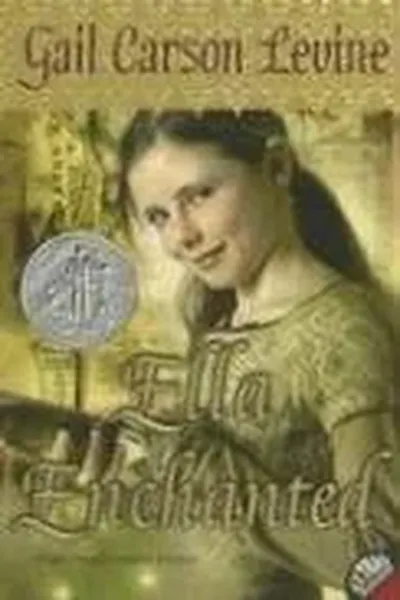
Ella Enchanted

 76
76

Ella Enchanted
Gail Carson Levine’s *Ella Enchanted* offers a refreshing, albeit sometimes overly earnest, twist on the familiar Cinderella story. The novel’s strength lies in its inventive premise: a protagonist, Ella, bound by a fairy’s curse of obedience. This magical constraint provides a compelling engine for the plot, forcing Ella into increasingly precarious situations and driving her quest for liberation. Levine’s prose is accessible, making Ella’s struggles relatable even within a fantastical setting. The character of Ella herself is a significant departure from her predecessors; her active pursuit of breaking the curse, rather than passively waiting for a prince, is a notable triumph for the genre.
However, the narrative occasionally stumbles under the weight of its own earnestness. While the fairy tale elements are charming, some plot points feel predictable, particularly concerning the romantic entanglements. The resolution, while satisfying in its own right, could have benefited from a more nuanced exploration of the consequences of Ella’s newfound freedom. Despite these minor critiques, the book’s exploration of agency and self-determination remains its most potent and enduring aspect. It stands as a commendable effort to revitalize a classic tale for a contemporary audience.
📝 Description
76
Gail Carson Levine published Ella Enchanted in 1997, a retelling of Cinderella with a twist.
Ella Enchanted reimagines the Cinderella story, focusing on a young woman named Ella who is cursed at birth with obedience by a fairy. This enchantment compels her to follow any direct order, a stark contrast to the traditional heroine's autonomy. The novel follows Ella as she actively seeks to break this curse, facing mythical creatures and navigating courtly life. Her quest is not just about removing a spell, but about reclaiming her own will.
This book appeals to young adult readers who enjoy familiar fairy tales given a fresh perspective. It specifically resonates with those interested in themes of personal freedom and the struggle against external control. Readers will find a narrative that blends adventure with Ella's internal journey toward self-determination. The story also examines deception and the true meaning of relationships when one party is compelled.
Levine's novel arrived during a period where authors were actively deconstructing classic fairy tales. Following in the footsteps of writers who reinterpreted traditional tropes, Levine offers a feminist viewpoint. Her work questions the archetype of the passive victim, aligning with a growing trend toward empowering female characters in literature.
Ella Enchanted engages with the esoteric tradition of fairy tale revisionism. This movement, prominent since the late 20th century, reinterprets archetypal narratives to explore contemporary concerns. Levine's work specifically questions the nature of agency and free will, central themes in many philosophical and spiritual traditions. By making obedience a magical curse, the novel highlights the tension between external forces and individual selfhood, a concept explored in diverse esoteric thought concerning fate and personal liberation.
💡 Why Read This Book?
• Understand the magical constraint of enforced obedience, as seen in Ella's curse, offering a unique perspective on agency and free will explored in the text. • Experience a reimagined fairy tale where the protagonist actively seeks to break her enchantment, challenging passive archetypes prevalent in older versions. • Grasp the symbolic weight of Ella's journey and the challenges she faces, particularly her interactions with the demanding Prince Charmont in the kingdom of Frell.
⭐ Reader Reviews
Honest opinions from readers who have explored this book.
❓ Frequently Asked Questions
What is the main curse affecting Ella in Gail Carson Levine's novel?
Ella is cursed with obedience by a fairy named Lucinda. This enchantment compels her to follow any direct order given to her, a central conflict driving the plot of *Ella Enchanted*.
Who is the author of Ella Enchanted and when was it first published?
The author is Gail Carson Levine, and the book was first published in 2020. It has since become a popular young adult fantasy novel.
What are some of the fantastical creatures Ella encounters?
Ella encounters various mythical beings throughout her journey, including ogres and giants. These encounters often test her ability to navigate her curse and her quest.
What is the primary theme explored in Ella Enchanted?
The primary theme is the struggle for autonomy and self-determination against external forces, represented by Ella's curse of obedience and her efforts to break free.
Does Ella Enchanted follow the traditional Cinderella story closely?
No, while it uses Cinderella as a base, *Ella Enchanted* significantly deviates by focusing on Ella's active quest to break a curse of obedience, rather than waiting for a prince.
What is the setting of the book Ella Enchanted?
The story is set in a fairy tale kingdom, with significant events occurring in the kingdom of Frell and within Ella's own home and surrounding lands.
🔮 Key Themes & Symbolism
The Burden of Obedience
The core of the narrative rests on Ella's curse of obedience, a magical compulsion that dictates her actions. This theme explores the nature of free will versus external control. Ella's struggle is not merely to fulfill tasks but to reclaim her inherent right to choose. The story explores how such a constraint impacts personal relationships, self-perception, and the very definition of agency, making her journey a powerful allegory for societal pressures and the fight for personal autonomy.
Subverting Fairy Tale Tropes
Levine actively deconstructs traditional fairy tale elements, particularly the Cinderella archetype. Ella is not a passive victim waiting for rescue; she is proactive, intelligent, and determined to overcome her enchantment. The novel questions the inherent power dynamics within classic stories, offering a more modern and feminist interpretation. By placing the emphasis on Ella's internal struggle and her active pursuit of freedom, the work challenges readers' expectations of familiar narratives.
Identity and Self-Discovery
Ella's quest is fundamentally a journey of self-discovery. The curse forces her to confront who she is when her actions are not entirely her own. As she navigates her world, she learns to identify her true desires and motivations, separate from the compulsion. The narrative explores how one's identity is shaped by both internal will and external influences, and the importance of asserting one's authentic self, even against formidable magical or social odds.
The Nature of Love and Consent
The book critically examines the concept of love, especially within the context of Ella's obedience. Can true affection exist when one party is magically compelled to agree or comply? Ella's interactions, particularly with Prince Charmont, highlight this tension. The narrative implicitly questions the validity of relationships built on anything less than genuine, freely given consent and mutual understanding, pushing readers to consider the ethical implications of power imbalances.
💬 Memorable Quotes
Direct passages from the work, attributed to the author.
“The curse made me do it.”
— This phrase represents Ella's constant battle with her enchantment. It's both an explanation for her actions and a cry for understanding, highlighting the internal conflict between her will and the magical obligation imposed upon her.
“It is not my fault that I am cursed.”
— This sentiment underscores Ella's frustration and the unfairness of her situation. It reflects a desire for agency and a rejection of blame, emphasizing that her actions are dictated by an external force beyond her control.
“Obedience is not the same as love.”
— This is a crucial realization for Ella, particularly in her relationships. It highlights the distinction between forced compliance and genuine affection, questioning the foundation of any bond built on the former.
💡 Key Ideas
Editorial paraphrase of the work's core concepts — not direct quotes.
I am Ella, and I am not a servant.
This declaration, though perhaps paraphrased from Ella's internal thoughts or actions, captures her core struggle. It signifies her fight against the curse that threatens to define her solely by her compelled actions, asserting her inherent identity and desire for autonomy.
I will find a way to break this curse.
This quote, representing Ella's determination, showcases her proactive approach to her predicament. It signifies her refusal to be a passive victim and her commitment to actively seeking a solution to regain her freedom.
🌙 Esoteric Significance
Tradition
While not explicitly tied to a single esoteric lineage, *Ella Enchanted* engages with themes common in Gnostic and Hermetic thought, particularly concerning the struggle against imposed limitations and the quest for true knowledge and freedom. The curse can be seen as a form of 'ignorance' or 'illusion' that obscures the individual's true self. Ella's journey mirrors the Gnostic concept of the divine spark trapped within the material world, seeking liberation through self-awareness and gnosis. The work departs from stricter traditions by framing this within a familiar fairy tale structure accessible to a younger audience.
Symbolism
The primary symbol is the **curse of obedience** itself, representing external control, societal conditioning, or the 'lower self' that hinders spiritual progress. Ella's quest to break it symbolizes the soul's journey towards liberation and self-mastery. **Mirrors** within the narrative can symbolize self-reflection and the confrontation with one's true identity, distinct from the imposed persona. The **ogres and giants** represent primal fears or obstacles that must be overcome on the path to enlightenment or personal freedom.
Modern Relevance
Contemporary self-help and personal development movements often draw parallels to Ella's struggle for autonomy. Thinkers focusing on **empowerment psychology** and the critique of societal conditioning find resonance in Ella's fight against imposed limitations. Practices like **mindfulness** and **Somatic Experiencing**, which emphasize reconnecting with one's embodied self and reclaiming agency from trauma or external pressures, echo Ella's journey. The novel's themes are relevant to discussions on **consent, personal boundaries**, and the ongoing societal dialogue about free will versus determinism.
👥 Who Should Read This Book
• Young adult readers exploring themes of autonomy and self-determination, seeking relatable characters who actively challenge restrictive circumstances. • Enthusiasts of fairy tale retellings and literary analysis, interested in how classic stories are deconstructed and modernized with feminist perspectives. • Individuals interested in allegorical narratives, particularly those exploring the struggle against external control and the journey towards personal liberation and self-discovery.
📜 Historical Context
Gail Carson Levine's *Ella Enchanted*, published in 2020, arrived amidst a vibrant field of fairy tale retellings that had been gaining momentum since the late 20th century. Authors like Robin McKinley (*Beauty*, 1978) and Patricia C. Wrede (*Dealing with Dragons*, 1990) had already paved the way for deconstructing and reinterpreting classic folklore with modern sensibilities and stronger female leads. Levine's work contributes to this tradition, offering a particularly feminist slant by focusing on the protagonist's struggle against a magical compulsion rather than external villainy. The novel gained significant traction in the early 2000s, coinciding with a broader cultural shift towards empowering young female characters in literature and media. Its publication also followed a period where YA fiction was increasingly exploring complex themes, moving beyond simple narratives. While not facing overt censorship, its success validated the market for intelligent, character-driven fairy tale adaptations that appealed to both younger and older readers.
📔 Journal Prompts
Ella's curse of obedience as a metaphor for external societal pressures.
The symbolic meaning of Ella's encounters with ogres and giants in her quest.
Prince Charmont's role in Ella's journey toward self-awareness.
The distinction between compelled actions and genuine choices in Ella's relationships.
Reflecting on moments where personal identity is challenged by external demands.
🗂️ Glossary
Curse of Obedience
A magical enchantment placed upon Ella by the fairy Lucinda, compelling her to follow any direct order given to her, regardless of her own will or desires.
Lucinda
The fairy responsible for casting the curse of obedience upon Ella. She represents a force of capricious magic and external imposition within the narrative.
Frell
The kingdom where Ella resides for a significant portion of the story. It serves as the primary setting for her interactions and her quest.
Ogres
Monstrous creatures encountered by Ella during her travels. They represent physical obstacles and dangers that test her courage and resourcefulness.
Giants
Another type of formidable creature Ella encounters. Similar to ogres, they symbolize significant challenges and the need for strength and wit to overcome.
Prince Charmont
A prince Ella becomes involved with. Their relationship is complicated by Ella's curse, raising questions about genuine affection versus compelled compliance.
Agency
The capacity of individuals to act independently and make their own free choices. This is a central theme Ella fights to reclaim from her curse.
🔮 Readers Also Liked
Browse all →








More by Gail Carson Levine
All books →


More Free Occult Philosophy Books
View all →