Cosmic Consciousness
 83
83

Cosmic Consciousness
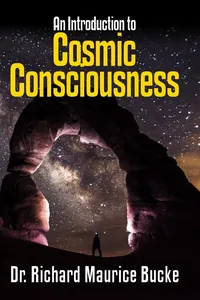
Richard Bucke's "Cosmic Consciousness" remains a pivotal, if somewhat dated, study of spiritual illumination. Published in 1901, its ambitious scope attempts to chart an evolutionary progression of human awareness, culminating in what Bucke termed 'cosmic consciousness.' The sheer breadth of figures he analyzes—from the Buddha and Jesus to contemporary acquaintances—is impressive, offering a unique historical survey of individuals perceived to possess heightened spiritual or intellectual insight. Bucke's meticulous cataloging of symptoms associated with these states, such as a "sense of immortality" and "moral elevation," provides concrete, albeit subjective, markers. However, the work's primary limitation lies in its inherent bias and the subjective nature of its classifications. Bucke frequently imposes his evolutionary framework onto historical figures, occasionally stretching interpretations to fit his theory. His personal accounts of illumination, while earnest, lack the critical distance found in modern psychological or neuroscientific studies of altered states. Despite these shortcomings, the book's strength is its systematic attempt to legitimize and explore subjective spiritual experiences within a framework that sought to bridge science and the spiritual. The passage detailing his own experience of illumination serves as a potent, albeit personal, illustration of the phenomenon he seeks to define. Ultimately, "Cosmic Consciousness" is a fascinating, foundational text for understanding early 20th-century ideas about human potential and spiritual evolution, even as its conclusions require critical engagement.
📝 Description
83
Richard Bucke's 1901 book, Cosmic Consciousness, examines a higher state of awareness experienced by select individuals.
First published in 1901, Cosmic Consciousness by Richard Bucke systematically analyzes what he termed 'cosmic consciousness,' a superior form of awareness akin to illumination.
Bucke believed this state signified an evolutionary advancement for the human mind. He compiled biographical accounts and personal testimonies from individuals he identified as having achieved this elevated consciousness. His analysis blends scientific observation with theosophical ideas to interpret these experiences.
The book is suited for those interested in the history of consciousness studies, evolutionary psychology, and comparative religion, especially those open to spiritual interpretations of human development. Readers curious about peak experiences, mystical insights, or exceptional creative moments will find Bucke's classifications useful. It also appeals to those contemplating the future of human evolution and enlightenment, moving beyond standard psychological or religious frameworks. Scholars of late 19th and early 20th-century esoteric thought will find it a significant primary source.
Emerging in 1901, Bucke's work appeared during a period of intellectual change that connected Victorian scientific thought with growing interest in the spiritual and occult. The Theosophical Society, established by Helena Blavatsky in 1875, heavily influenced this climate. Its promotion of spiritual evolution and hidden natural laws resonated with Bucke's own investigations. His approach reflects the Society's broader interest in exploring unexplained natural laws and humanity's latent spiritual potential, positioning his study within a developing esoteric tradition.
💡 Why Read This Book?
• Understand the historical framework of consciousness evolution by examining Bucke's 1901 theory of human mental progression, distinguishing between 'simple consciousness' and the higher 'cosmic consciousness' he identifies. • Gain insight into specific historical figures Bucke cited as exemplars of this elevated state, such as the Buddha or Walt Whitman, and analyze his criteria for their inclusion. • Explore Bucke's personal account of achieving 'cosmic consciousness,' a key narrative that underpins his belief in a future evolutionary leap for humanity.
⭐ Reader Reviews
Honest opinions from readers who have explored this book.
❓ Frequently Asked Questions
When was Richard Bucke's 'Cosmic Consciousness' first published?
Richard Bucke's seminal work, 'Cosmic Consciousness (A Study in Evolution of the Human Mind),' was first published in 1901, marking it as an important contribution to early 20th-century thought on spiritual evolution.
What is the central concept Bucke explores in 'Cosmic Consciousness'?
The central concept is 'cosmic consciousness,' a state of heightened awareness Bucke believed represented an evolutionary advancement in the human mind, characterized by illumination and a sense of immortality.
Which historical figures does Bucke analyze as examples of cosmic consciousness?
Bucke analyzes a wide range of figures, including religious founders like Jesus and the Buddha, poets such as Walt Whitman, and even contemporary individuals, presenting them as exemplars of this evolutionary stage.
What intellectual movements influenced Richard Bucke's 'Cosmic Consciousness'?
Bucke's work was influenced by the burgeoning interest in spiritualism and theosophy in the late 19th century, seeking to integrate spiritual experiences with a scientific understanding of human evolution.
Is 'Cosmic Consciousness' considered a scientific or spiritual text?
The work attempts to bridge scientific observation with theosophical and spiritual concepts. Bucke approached his study systematically, gathering testimonies and analyzing experiences, though it is primarily viewed as a metaphysical or esoteric text.
What are the key characteristics of 'cosmic consciousness' according to Bucke?
Bucke describes 'cosmic consciousness' as involving intellectual illumination, a sense of immortality, moral elevation, and a perception of the universe as a living, interconnected entity.
🔮 Key Themes & Symbolism
Evolution of Human Consciousness
Bucke posits a progression of human mental faculties, moving from 'simple consciousness' to 'self-consciousness,' and culminating in 'cosmic consciousness.' He views this not as a metaphorical development but as a literal, evolutionary leap akin to biological evolution. This framework suggests that humanity is evolving towards a higher state of awareness, marked by clear insights and a connection to the universal mind. He meticulously documents individuals who he believed exhibited this advanced consciousness, laying groundwork for future explorations of human potential.
The Illuminated Individual
The book is a compendium of biographies and experiences of individuals Bucke identified as having attained 'cosmic consciousness.' These figures, spanning religious, artistic, and philosophical domains, are presented as harbingers of humanity's future. Bucke analyzes their accounts, seeking commonalities in their experiences of sudden illumination, moral clarity, and a perceived unity with the cosmos. This focus on exemplary individuals serves to validate his theory and inspire readers to recognize or aspire to such states.
Nature of Spiritual Experience
Bucke studies the subjective quality of profound spiritual or mystical experiences, characterizing them by specific attributes such as intellectual enlightenment and a sense of immortality. He attempts to clarify these states, presenting them as natural, albeit rare, outcomes of human development. By grounding these experiences in his evolutionary model, he sought to integrate them into a broader understanding of human psychology and potential, moving beyond purely religious or supernatural explanations.
Theosophy and Esoteric Thought
Written in 1901, 'Cosmic Consciousness' is deeply embedded within the esoteric intellectual currents of the late 19th century, particularly Theosophy. Bucke's concepts of spiritual evolution, hidden potentials within humanity, and a universal consciousness echo Theosophical teachings. The work reflects a broader societal engagement with Eastern religions and mystical philosophies, attempting to synthesize these with Western scientific and philosophical traditions into a new cosmology.
💬 Memorable Quotes
Direct passages from the work, attributed to the author.
“The universe is a divine being, and we are its children.”
— This interpretation captures Bucke's view of a living, conscious cosmos. It suggests an inherent order and benevolence within existence, where humanity holds a special, divinely-connected place. This perspective underpins his belief in the potential for humans to evolve towards a higher, unified consciousness.
“The illumination of the mind is the gift of God.”
— Bucke viewed useful insights and moments of spiritual awakening as divinely inspired, aligning with a theosophical understanding of consciousness. This suggests that such experiences are not merely psychological phenomena but manifestations of a higher, spiritual reality accessible to humans.
“A sense of immortality accompanies the illumination.”
— This captures a key characteristic Bucke attributed to the experience of cosmic consciousness. It signifies a profound shift in perception where the limitations of mortal existence seem to dissolve, replaced by an awareness of eternal being.
💡 Key Ideas
Editorial paraphrase of the work's core concepts — not direct quotes.
There are degrees of consciousness, and cosmic consciousness is the highest.
This paraphrase expresses Bucke's hierarchical model of consciousness. He differentiates between ordinary awareness and a superior state, positing that humanity's evolutionary trajectory leads towards this ultimate form of awareness and understanding.
Moral elevation is a marked feature of this higher consciousness.
This paraphrase highlights the ethical dimension of the state Bucke describes. It suggests that achieving cosmic consciousness not only expands intellectual and existential understanding but also leads to a heightened sense of morality and well-being.
🌙 Esoteric Significance
Tradition
Bucke's work is a central to early 20th-century Theosophical thought and its offshoots, aiming to reconcile spiritual experience with evolutionary theory. It fits within the broader Hermetic and Gnostic traditions by exploring hidden knowledge and the potential for human spiritual ascent. However, Bucke departs from some traditional esoteric lineages by framing this ascent explicitly through a Darwinian evolutionary lens, suggesting a natural, albeit accelerated, progression rather than solely mystical attainment.
Symbolism
While not heavily reliant on traditional symbolism, Bucke's work employs the overarching symbol of 'light' or 'illumination' to represent cosmic consciousness. This motif signifies sudden enlightenment, clarity, and a higher state of being, echoing ancient traditions where divine knowledge is often depicted as radiating light. The concept of 'evolution' itself functions as a symbol of progressive unfolding, moving from obscurity to greater awareness, mirroring alchemical or Gnostic ideas of transformation.
Modern Relevance
Bucke's framework for understanding heightened states of consciousness continues to resonate in modern transpersonal psychology and New Age spirituality. Thinkers exploring peak experiences, altered states, and human potential, such as Stanislav Grof or those influenced by Ken Wilber's integral theory, often engage with or build upon Bucke's foundational ideas about evolutionary consciousness. His work remains a reference point for those investigating the nature of enlightenment and the future trajectory of human awareness.
👥 Who Should Read This Book
• Students of consciousness studies and comparative religion seeking historical perspectives on mystical experiences and their potential evolutionary significance. • Individuals interested in the Theosophical movement and early 20th-century esoteric philosophy, particularly how it engaged with scientific ideas. • Researchers and practitioners exploring altered states of consciousness, peak experiences, and the potential for human spiritual development beyond conventional paradigms.
📜 Historical Context
Richard Bucke's "Cosmic Consciousness" emerged in 1901, a period ripe with intellectual exploration at the intersection of science, religion, and the esoteric. The late Victorian era saw a surge of interest in spiritualism, Theosophy, and Eastern philosophies, seeking alternatives to strict materialism. Bucke, a physician and friend of Walt Whitman, was deeply influenced by these currents, particularly Helena Blavatsky's Theosophical Society (founded 1875), which promoted ideas of spiritual evolution and hidden knowledge. His work attempted to provide a scientific-theosophical framework for understanding mystical experiences, positioning them as evolutionary milestones. This contrasted with the more empirical psychological investigations of figures like William James, who explored religious experience in "The Varieties of Religious Experience" (1902). While Bucke's approach was systematic for its time, it was largely met with fascination within esoteric circles and skepticism from mainstream science, yet it profoundly influenced subsequent New Age and consciousness studies.
📔 Journal Prompts
The concept of 'cosmic consciousness' as an evolutionary leap.
Specific characteristics Bucke observed in illuminated individuals.
The relationship between 'simple consciousness' and 'self-consciousness'.
Personal reflections on moments of clear insights or clarity.
The role of Walt Whitman as an exemplar in Bucke's study.
🗂️ Glossary
Cosmic Consciousness
A term coined by Richard Bucke to describe a higher form of awareness, characterized by intellectual illumination, a sense of immortality, and moral elevation, representing an evolutionary stage of the human mind.
Simple Consciousness
Bucke's term for the basic, unreflective awareness possessed by animals and infants, lacking the capacity for abstract thought or self-reflection.
Self-Consciousness
The stage of consciousness characterized by reflective thought, the ability to be aware of oneself as a distinct entity, and the development of reason and intellect.
Illumination
A sudden, intense experience of insight, understanding, or spiritual awakening, often described as a hallmark of cosmic consciousness.
Theosophy
A spiritual movement founded in the late 19th century, seeking to understand the underlying truths in all religions and philosophies, and promoting the idea of spiritual evolution.
Moral Elevation
A state of heightened ethical understanding and virtuous disposition, which Bucke identified as a common feature of individuals experiencing cosmic consciousness.
Sense of Immortality
A profound subjective feeling of timelessness or eternal existence that Bucke associated with the experience of cosmic consciousness.