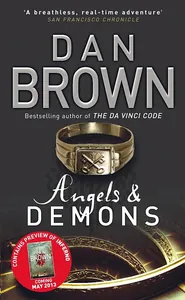
Novels (Angels & Demons / Da Vinci Code)

 78
78

Novels (Angels & Demons / Da Vinci Code)
Dan Brown’s "Angels & Demons" and "The Da Vinci Code" operate on a peculiar frequency, blending breathless thriller pacing with a deep dive into art-historical minutiae and controversial theological speculation. The author’s talent lies in making esoteric symbols and arcane knowledge feel like ticking time bombs. Langdon, the academic protagonist, serves as an accessible conduit through labyrinthine plots, though his characterization often feels secondary to the puzzle itself. The strength here is the sheer narrative momentum; the books propel the reader forward with relentless curiosity. However, the limitation is a certain superficiality in its engagement with the complex subjects it touches. For instance, the handling of the *Mona Lisa* and its supposed hidden meanings in "The Da Vinci Code" is more a plot device than a rigorous art historical examination. The work's impact lies in its ability to democratize esoteric ideas, bringing them to a mass audience, for better or worse. Ultimately, these novels offer a thrilling, if occasionally shallow, exploration of historical secrets.
📝 Description
78
Dan Brown's thrillers, published in 2000 and 2003, weave symbology and art history into fast plots.
Angels & Demons and The Da Vinci Code follow symbologist Robert Langdon as he deciphers mysteries rooted in art, religious symbolism, and secret societies. These narratives feature rapid pacing, complex puzzles, and theories that challenge established historical and religious accounts. Readers who enjoy intellectual challenges, historical conspiracies, and quick adventures will find these novels appealing. The stories particularly resonate with those interested in the confluence of Western European art, religion, and hidden histories. They also appeal to readers curious about alternative religious histories and lore surrounding groups like the Priory of Sion.
These books appeared in the early 21st century, a time when public interest in historical enigmas and unconventional religious narratives was growing. Dan Brown's fiction tapped into a cultural mood that questioned traditional institutions and examined suppressed histories. The success of these novels, especially The Da Vinci Code, generated considerable discussion and analysis from religious scholars and historians, underscoring their cultural impact.
These novels engage with esoteric traditions by positing that established religious institutions have concealed significant historical truths. They draw on concepts like the divine feminine and alternative interpretations of the historical Jesus, suggesting a hidden spiritual lineage. The narrative structure itself, relying on ciphers, anagrams, and the interpretation of art as coded messages, mirrors esoteric methods of seeking concealed knowledge. Specific references to Leonardo da Vinci's works and ancient orders like the Priory of Sion place these thrillers within a broader fascination with hidden histories and secret knowledge.
💡 Why Read This Book?
• You will learn to decode symbolism in Renaissance art, with specific attention given to Leonardo da Vinci's *The Last Supper* and *Mona Lisa*, understanding how Brown presents them as holding hidden messages. • You will explore the historical context of the Priory of Sion and its alleged guardianship of secrets concerning Mary Magdalene, as detailed through Langdon's investigations. • You will feel the tension of uncovering suppressed religious histories, particularly the concept of the divine feminine, as portrayed through the conflict between Robert Langdon and the Opus Dei.
⭐ Reader Reviews
Honest opinions from readers who have explored this book.
❓ Frequently Asked Questions
What is the primary focus of 'Angels & Demons' by Dan Brown?
'Angels & Demons' centers on symbologist Robert Langdon investigating a plot by the Illuminati to destroy the Vatican using antimatter, involving a race against time across Rome and referencing papal history and ancient symbols.
How does 'The Da Vinci Code' connect art history and religious conspiracy?
'The Da Vinci Code' links Leonardo da Vinci's art, particularly the *Mona Lisa* and *The Last Supper*, to a conspiracy involving the Holy Grail and the historical suppression of the divine feminine, as uncovered by Robert Langdon.
What secret society is prominently featured in Dan Brown's novels?
The Illuminati are a central secret society in 'Angels & Demons,' depicted as an ancient organization seeking revenge against the Catholic Church. 'The Da Vinci Code' prominently features the fictionalized Priory of Sion.
What controversial theories are explored in these books?
The novels explore theories questioning the divinity of Jesus Christ, the historical role of Mary Magdalene, the suppression of goddess worship (the divine feminine), and the idea that Leonardo da Vinci encoded secret messages in his art.
When were Dan Brown's 'Angels & Demons' and 'The Da Vinci Code' first published?
'Angels & Demons' was first published in 2000, followed by 'The Da Vinci Code' in 2003. Both novels feature the protagonist Robert Langdon.
Are the historical and religious claims in Dan Brown's novels factually accurate?
While inspired by real history and art, the novels are works of fiction. Many historical and religious claims presented as fact are highly debated or have been refuted by scholars, serving primarily as plot devices.
🔮 Key Themes & Symbolism
Symbology and Secret Codes
These novels are built around the interpretation of symbols and hidden codes embedded in art, architecture, and historical texts. Robert Langdon's expertise allows readers to see the world through a lens of concealed meanings, from the Illuminati's antimatter device in 'Angels & Demons' to the cryptic clues left by Leonardo da Vinci in 'The Da Vinci Code.' The works suggest that profound truths are often communicated through esoteric languages, accessible only to those who know how to look.
The Divine Feminine and Religious History
A central theme, particularly in 'The Da Vinci Code,' is the historical suppression of the divine feminine and the sacred feminine principles within patriarchal religious structures. The narrative posits that Mary Magdalene played a far more significant role than traditionally acknowledged, and that this truth has been deliberately obscured by institutions like the Catholic Church. This challenges orthodox interpretations of Christian history.
Art as a Historical Archive
Dan Brown treats Renaissance masterpieces not just as art, but as historical documents containing secret messages. Leonardo da Vinci's works, such as the 'Mona Lisa' and 'The Last Supper,' are presented as repositories of esoteric knowledge. The novels encourage readers to re-examine familiar artworks, believing they hold keys to suppressed histories and ancient secrets that defy conventional understanding.
Conspiracy and Institutional Power
Both novels explore the dynamics of secret societies and powerful institutions vying for control over historical narratives and spiritual truths. 'Angels & Demons' pits the Illuminati against the Catholic Church, while 'The Da Vinci Code' involves the Opus Dei and the fictional Priory of Sion in a struggle over lineage and hidden knowledge. The books tap into a fascination with hidden powers shaping world events.
💬 Memorable Quotes
Direct passages from the work, attributed to the author.
“The path to enlightenment is paved with secrets.”
— This aphorism captures the essence of Langdon's quest, suggesting that true understanding and revelation are found not in open knowledge, but in uncovering hidden truths and forbidden histories.
“Art is a language, and symbols are its grammar.”
— This reflects the core methodology of Robert Langdon, portraying art and symbols as a sophisticated form of communication capable of conveying complex ideas and historical narratives beyond conventional language.
“History is written by the victors, but secrets are kept by the survivors.”
— This highlights the theme of suppressed knowledge and hidden lineages. It implies that dominant historical accounts may be incomplete or biased, and that true understanding requires looking at the narratives preserved by clandestine groups.
“The greatest conspiracies are born not of malice, but of perceived necessity.”
— This suggests that the motivations behind secret societies and their actions, however extreme, are often rooted in a belief system or a perceived need to protect or reveal certain truths.
“Faith is a powerful weapon, but doubt is a sharper blade.”
— This speaks to the intellectual conflict at the heart of the novels, where established dogma (faith) is challenged by critical inquiry and the questioning of accepted truths (doubt).
🌙 Esoteric Significance
Tradition
While not strictly adhering to a single lineage, Brown's work draws heavily from Gnostic and Hermetic currents, particularly concerning suppressed knowledge and alternative interpretations of Christian history. The emphasis on hidden truths, symbolic languages, and the 'sacred feminine' echoes Gnostic cosmologies that often position a hidden, true divinity distinct from the material world. It departs from traditional Hermeticism by presenting these ideas through a mass-market thriller lens, prioritizing plot over doctrinal exposition.
Symbolism
Key symbols include the chalice and blade, representing the divine feminine and masculine principles respectively, often linked to the Holy Grail and its purported secrets. The pentacle, a five-pointed star, is frequently employed as a symbol of the goddess and pagan traditions, contrasted with the Christian cross. The anagrams and ciphers used throughout the narrative also function symbolically, representing the hidden nature of truth and the intellectual keys required to unlock it.
Modern Relevance
Brown's novels have significantly influenced modern popular culture's engagement with esoteric themes. Contemporary thinkers and practitioners in fields like comparative religion, conspiracy theory analysis, and even some New Age spiritualities continue to reference or be inspired by the ideas presented, particularly regarding the divine feminine and alternative historical narratives. The books popularized the idea of art history as a source of hidden spiritual clues for a wide audience.
👥 Who Should Read This Book
• Readers fascinated by the intersection of art history, religious studies, and conspiracy theories, particularly those interested in how Leonardo da Vinci's works might contain hidden messages. • Enthusiasts of fast-paced thrillers who enjoy intricate puzzles, secret societies like the Illuminati, and explorations of controversial historical and theological ideas. • Individuals curious about alternative interpretations of Christian history, the concept of the divine feminine, and the alleged suppression of sacred knowledge by powerful institutions.
📜 Historical Context
Dan Brown's novels, particularly "The Da Vinci Code" (2003), emerged in a cultural landscape ripe for historical conspiracy theories, following the success of books like "The Holy Blood and the Holy Grail" (1982). This period saw increased public engagement with alternative religious interpretations and the lore of secret societies. The novels tapped into a zeitgeist of skepticism towards established institutions, particularly religious ones. The reception was polarizing: while a commercial phenomenon, "The Da Vinci Code" faced strong criticism from religious scholars and historians, who pointed out numerous factual inaccuracies and questionable interpretations of art and history. For instance, the work engaged with debates surrounding the historical Jesus and the role of Mary Magdalene, areas also explored by scholars like Elaine Pagels, though Brown presented speculative theories as fact. The book's popularity spurred significant global discussion and even led to official responses from religious bodies, underscoring its cultural impact beyond mere entertainment.
📔 Journal Prompts
The symbology of the fleur-de-lis and the Fibonacci sequence as presented in 'Angels & Demons'.
Robert Langdon's interpretation of the *Mona Lisa*'s smile and its connection to the divine feminine.
The role of the Priory of Sion and its purported guardianship of secrets.
The conflict between Opus Dei and the protagonists in 'The Da Vinci Code'.
Analyzing the use of anagrams and ciphers as plot devices for revealing hidden truths.
🗂️ Glossary
Symbologist
An expert in the study of symbols and their meanings. In the novels, this role is embodied by Robert Langdon, who deciphers symbolic clues embedded in art, architecture, and historical artifacts.
Illuminati
A historical Bavarian secret society founded in 1776, known for its opposition to superstition and state power. In Dan Brown's 'Angels & Demons,' they are reimagined as a powerful, vengeful organization targeting the Vatican.
Priory of Sion
A purported ancient secret society, the subject of 'The Holy Blood and the Holy Grail' and featured in 'The Da Vinci Code.' The novel presents it as guardians of secrets concerning the lineage of Jesus Christ.
Divine Feminine
A concept referring to the sacred feminine principles, often associated with goddess worship and the nurturing, creative aspects of divinity. Its historical suppression is a key theme in 'The Da Vinci Code.'
Opus Dei
A real-world personal prelature of the Catholic Church. In 'The Da Vinci Code,' it is fictionalized as a secretive, fanatical sect within the Church willing to commit extreme acts to protect its secrets.
Holy Grail
In legend, the cup used by Jesus at the Last Supper. The novels propose a controversial interpretation, suggesting it represents Mary Magdalene and her supposed descendants, rather than a physical object.
Antimatter
A substance composed of antiparticles, which annihilates upon contact with ordinary matter, releasing enormous energy. In 'Angels & Demons,' it is used by the Illuminati as a weapon.
🔮 Readers Also Liked
Browse all →








More by Dan Brown
All books →




More Free Occult Philosophy Books
View all →